
Saudi Arabia Foodservice Market: How Are Urban Lifestyles and Digital Innovation Transforming Saudi Arabia’s Dining Industry?
Rapid urbanization, tourism expansion, digital food delivery growth, and changing consumer preferences are driving strong growth in the Saudi Arabia foodservice market through 2034.

Saudi Arabia is undergoing a remarkable economic and social transformation. As part of its Vision 2030 strategy, the Kingdom is diversifying its economy, investing heavily in tourism, entertainment, retail, and hospitality sectors. These developments are significantly reshaping consumer lifestyles and creating new opportunities across the foodservice industry.
Dining out is no longer limited to special occasions. Today, Saudi consumers increasingly view restaurants, cafes, food delivery platforms, and quick-service outlets as integral parts of daily life. Rising urbanization, growing disposable incomes, busy lifestyles, and a younger population are fueling demand for diverse culinary experiences.
At the same time, technological innovation is revolutionizing how consumers interact with foodservice providers. Mobile ordering, food delivery applications, cloud kitchens, and digital payment systems are transforming the industry's operational landscape and creating new avenues for growth.
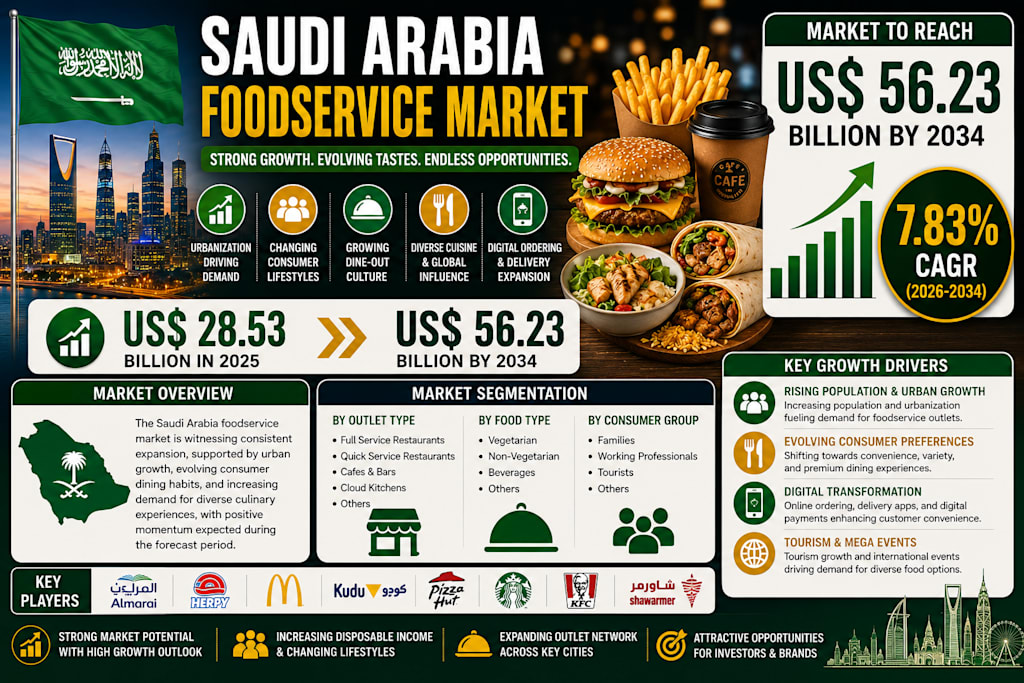
According to Renub Research, the Saudi Arabia Foodservice Market is expected to grow from US$ 28.53 billion in 2025 to US$ 56.23 billion by 2034, expanding at a CAGR of 7.83% from 2026 to 2034. Urban expansion, changing dining habits, tourism growth, and digital transformation are expected to continue supporting strong market growth throughout the forecast period.

Understanding Saudi Arabia’s Foodservice Industry
The foodservice industry encompasses businesses involved in preparing and serving food and beverages outside the home. This includes full-service restaurants, quick-service restaurants, cafes, bars, catering providers, cloud kitchens, institutional foodservice operators, and delivery-focused establishments.
Saudi Arabia's foodservice market has evolved into a highly dynamic ecosystem that serves a broad spectrum of consumers. The market features both international restaurant chains and local brands offering traditional Saudi cuisine, Middle Eastern specialties, Asian dishes, American fast food, European dining experiences, and fusion concepts.
The country's strong social culture also supports foodservice growth. Dining remains an important social activity where families, friends, and colleagues gather to share meals and experiences.
As consumer expectations continue evolving, foodservice operators are increasingly focusing on convenience, quality, innovation, and personalized customer experiences.
Urbanization Continues to Reshape Dining Habits
One of the most significant drivers of growth in Saudi Arabia's foodservice market is rapid urbanization.
Major cities such as Riyadh, Jeddah, Dammam, and Dhahran continue expanding as economic and population centers. Urban residents increasingly lead fast-paced lifestyles characterized by demanding work schedules and limited time for home cooking.
As a result, consumers are turning more frequently to restaurants, cafes, takeaway services, and food delivery platforms for everyday meals.
The growth of shopping malls, entertainment complexes, mixed-use developments, and commercial districts has further increased accessibility to foodservice outlets.
Urbanization has also exposed consumers to a wider variety of international cuisines and dining concepts, encouraging experimentation and more frequent restaurant visits.
These lifestyle shifts continue creating favorable conditions for sustained foodservice industry expansion.
Tourism Growth Is Creating New Opportunities
Tourism development represents another major catalyst for foodservice market growth.
Saudi Arabia is actively investing in tourism infrastructure, cultural attractions, entertainment projects, and hospitality developments as part of Vision 2030. These initiatives are attracting increasing numbers of domestic and international visitors.
Tourists often seek diverse culinary experiences ranging from local Saudi dishes to globally recognized restaurant brands. This demand creates significant opportunities for foodservice operators across multiple segments.
Hotels, resorts, entertainment venues, airports, and tourist attractions contribute substantially to foodservice revenues by offering a variety of dining formats.
Religious tourism also plays a crucial role. Millions of visitors travel annually to Mecca and Medina, generating consistent demand for restaurants, catering services, and quick-service dining options.
As tourism continues expanding, the foodservice sector is expected to benefit significantly from increased visitor spending.
Digital Transformation Is Revolutionizing the Industry
Technology has become one of the most influential forces shaping Saudi Arabia's foodservice landscape.
Consumers increasingly use smartphones and mobile applications to browse menus, place orders, track deliveries, and make payments. Digital convenience has fundamentally changed how consumers interact with restaurants.
Food delivery platforms have expanded the reach of foodservice providers, enabling them to serve customers far beyond traditional physical locations.
Real-time tracking, cashless payments, personalized recommendations, and loyalty programs have enhanced customer satisfaction and engagement.
Operators are also using data analytics to better understand consumer behavior, optimize menus, improve marketing effectiveness, and streamline operations.
Digital transformation is no longer optional—it has become essential for maintaining competitiveness within the modern foodservice industry.
Cloud Kitchens Are Changing Business Models
The rise of food delivery has accelerated the popularity of cloud kitchens throughout Saudi Arabia.
Cloud kitchens operate without traditional dine-in facilities and focus exclusively on delivery-based operations. This business model reduces overhead expenses associated with prime retail locations and front-of-house staffing.
Operators can launch multiple virtual restaurant brands from a single kitchen facility, improving efficiency and maximizing revenue potential.
Cloud kitchens are particularly attractive in densely populated urban areas where delivery demand remains strong.
As consumer preference for delivery continues growing, cloud kitchens are expected to become an increasingly important component of Saudi Arabia's foodservice ecosystem.
Younger Consumers Drive Demand for Variety
Saudi Arabia's youthful population is playing a major role in shaping industry trends.
Young consumers are increasingly adventurous when it comes to food choices. They actively seek new cuisines, unique dining concepts, limited-time menu offerings, and innovative food experiences.
Social media also plays a significant role in influencing dining decisions. Consumers frequently discover restaurants through digital content, influencer recommendations, and online reviews.
This demand for variety encourages operators to continuously innovate and diversify their menus.
Restaurants that successfully deliver unique experiences alongside high-quality food are often able to build strong customer loyalty among younger demographic groups.
International Brands Continue Expanding
Saudi Arabia remains one of the most attractive markets in the Middle East for international restaurant chains.
Global brands continue investing heavily in the Kingdom due to its large population, rising incomes, and strong economic outlook.
In April 2025, Pret A Manger opened its first Saudi Arabian location in Riyadh's Olaya Towers, marking a significant milestone in the brand's Gulf Cooperation Council expansion strategy.
Similarly, Dunkin reached its 800th Saudi Arabian outlet in October 2024 through its partnership with Shahia Food Limited Company.
These developments highlight the growing confidence international operators have in Saudi Arabia's foodservice market.
Local Brands Maintain Strong Market Presence
While international chains continue expanding, local restaurant brands remain highly influential.
Saudi consumers maintain strong connections to traditional flavors, regional specialties, and culturally relevant dining experiences.
Local operators often possess deep understanding of consumer preferences, enabling them to adapt menus and service models effectively.
Brands such as ALBAIK and Herfy have built loyal customer bases by offering products that resonate strongly with local tastes and cultural expectations.
The coexistence of international and domestic brands contributes to a vibrant and highly competitive marketplace.
Health and Wellness Trends Influence Menu Development
Health-conscious eating habits are becoming increasingly important throughout Saudi Arabia.
Consumers are paying greater attention to nutritional value, ingredient quality, calorie content, and food preparation methods.
As awareness regarding health and wellness grows, restaurants are introducing healthier menu options such as salads, grilled items, plant-based meals, low-calorie dishes, and fresh ingredients.
Transparency regarding sourcing and nutritional information is also becoming more important.
Although indulgent dining remains popular, operators increasingly recognize the need to balance taste, convenience, and health-conscious offerings.
Sustainability Is Becoming a Priority
Sustainability considerations are gaining importance across the foodservice industry.
Consumers increasingly expect restaurants to demonstrate environmental responsibility through waste reduction, sustainable sourcing, and eco-friendly packaging initiatives.
Operators are responding by investing in recyclable packaging materials, reducing food waste, and improving supply chain efficiency.
These efforts not only align with environmental goals but also strengthen brand reputation among socially conscious consumers.
Sustainability is expected to become an increasingly influential factor in shaping consumer preferences and business strategies.
Challenges Facing the Saudi Arabia Foodservice Market
Operational Complexity and Rising Costs
Operating a successful foodservice business in Saudi Arabia involves significant challenges.
High rental expenses, labor costs, inventory management requirements, and supply chain complexities can affect profitability.
Maintaining food quality, service consistency, hygiene standards, and operational efficiency requires substantial investment.
Additionally, fluctuations in ingredient prices and logistics costs can place pressure on margins.
Operators must continuously balance cost efficiency with customer satisfaction to remain competitive.
Changing Consumer Expectations
Consumer expectations continue evolving rapidly.
Customers increasingly demand diverse menus, premium ingredients, personalized experiences, fast delivery, and seamless digital interactions.
Meeting these expectations requires continuous innovation and investment.
Failure to adapt can result in reduced customer loyalty and loss of market share in an increasingly competitive environment.
Foodservice providers must remain agile and responsive to changing consumer preferences.
Riyadh Leads Market Growth
Riyadh represents the largest and most influential foodservice market in Saudi Arabia.
As the nation's capital and economic center, Riyadh offers a broad range of dining options, including luxury restaurants, casual dining establishments, cafes, cloud kitchens, and quick-service outlets.
The city's growing population, expanding workforce, and extensive commercial infrastructure create strong demand for foodservice offerings.
Digital ordering and delivery services are particularly popular among consumers seeking convenience and flexibility.
Jeddah Benefits from Tourism and Commerce
Jeddah plays a vital role within Saudi Arabia's foodservice landscape.
Its position as a commercial hub and gateway for international visitors supports demand for a diverse range of dining experiences.
Consumers in Jeddah embrace both traditional Saudi cuisine and international food concepts, encouraging menu diversity and innovation.
Urban development projects continue creating new opportunities for foodservice expansion throughout the city.
Dammam and Dhahran Continue Expanding
Dammam and Dhahran are emerging as important regional markets supported by economic growth, infrastructure development, and rising consumer spending.
Both cities benefit from growing populations, expanding commercial activity, and increasing adoption of digital food ordering services.
Restaurants, cafes, and delivery-focused operators continue expanding their presence to meet rising demand.
Future Outlook
The future of Saudi Arabia's foodservice market remains highly promising.
Urbanization, tourism development, digital innovation, changing consumer lifestyles, and economic diversification efforts are expected to continue driving strong growth through 2034.
Operators that successfully combine convenience, quality, technology, menu innovation, and customer-centric experiences will be best positioned to capture future opportunities.
As Saudi Arabia continues transforming its economy and society, the foodservice industry is expected to remain one of the country's most dynamic and rapidly evolving sectors.
Final Thoughts
Saudi Arabia's foodservice market is entering a new era of growth fueled by urban expansion, tourism development, digital transformation, and changing consumer expectations. From cloud kitchens and delivery platforms to premium dining experiences and international restaurant chains, the industry continues evolving at an impressive pace.
With the market projected to grow from US$ 28.53 billion in 2025 to US$ 56.23 billion by 2034, substantial opportunities exist for restaurant operators, franchise brands, investors, technology providers, and hospitality companies. Businesses that prioritize innovation, operational excellence, and customer satisfaction will be best positioned to thrive in Saudi Arabia's rapidly expanding foodservice market
About the Creator
Enjoyed the story? Support the Creator.
Subscribe for free to receive all their stories in your feed.
Comments
There are no comments for this story
Be the first to respond and start the conversation.