
Saudi Arabia Adult Vaccine Market to Reach US$ 426.22 Million by 2033 as Preventive Healthcare Gains Momentum
Vision 2030, expanding healthcare infrastructure, and growing awareness of disease prevention are accelerating adult vaccination adoption across Saudi Arabia

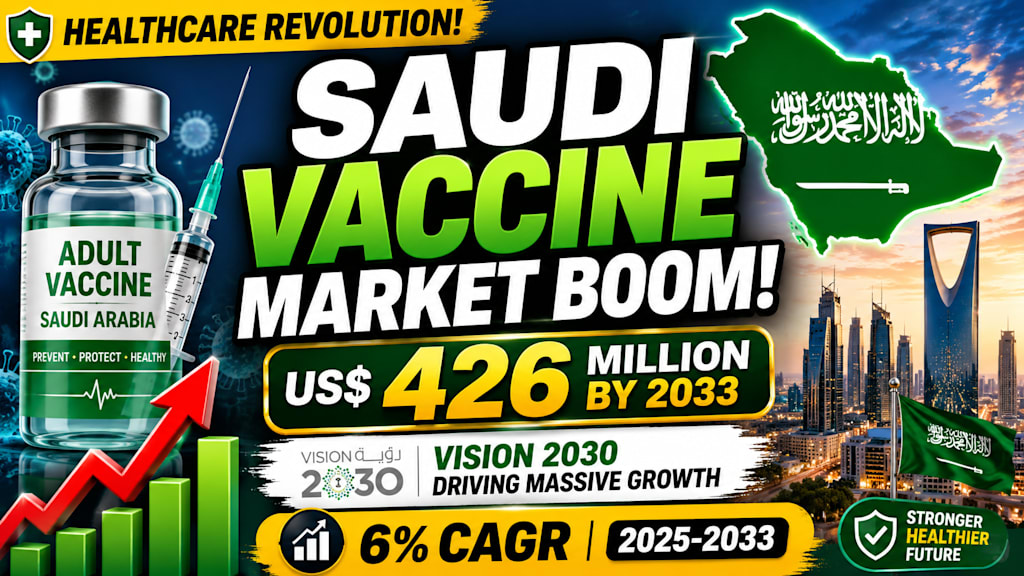
Saudi Arabia is undergoing a major transformation in healthcare, with preventive medicine becoming one of the central pillars of the Kingdom's long-term development strategy. As part of Vision 2030, healthcare authorities are shifting focus from treating illnesses to preventing them before they occur. This transition is creating significant opportunities for the adult vaccine market across the country.
According to Renub Research, the Saudi Arabia Adult Vaccine Market is expected to grow from US$ 252.28 million in 2024 to US$ 426.22 million by 2033, expanding at a CAGR of 6% between 2025 and 2033.
The growth reflects increasing awareness regarding infectious diseases, rising healthcare investments, government-supported immunization programs, and a growing emphasis on disease prevention among adults. As Saudi Arabia modernizes its healthcare ecosystem, adult vaccination is becoming a critical component of public health management.
Adult Vaccination Becomes a National Healthcare Priority
For many years, vaccination efforts around the world focused primarily on children. However, healthcare experts increasingly recognize that adults remain vulnerable to numerous infectious diseases that can lead to severe complications, hospitalization, and even death.
Saudi Arabia's healthcare authorities have responded by strengthening adult immunization programs targeting diseases such as influenza, hepatitis, meningococcal infections, pneumococcal diseases, shingles, and human papillomavirus (HPV).
The Kingdom's unique demographic profile further underscores the importance of adult vaccination. Saudi Arabia hosts millions of expatriate workers and welcomes millions of religious pilgrims annually, creating conditions that require robust disease prevention strategies.
Adult vaccination programs are now viewed as essential tools for reducing disease transmission, protecting vulnerable populations, and lowering healthcare costs associated with preventable illnesses.
Vision 2030 Driving Preventive Healthcare Investments
One of the strongest growth catalysts for the Saudi Arabia adult vaccine market is the government's ambitious Vision 2030 initiative.
Healthcare transformation under Vision 2030 emphasizes prevention, digitalization, accessibility, and quality of care. The government is investing heavily in healthcare infrastructure while simultaneously encouraging healthier lifestyles and proactive disease prevention measures.
Vaccination campaigns have become a key component of national healthcare objectives. Public health authorities continue expanding access to vaccines through hospitals, clinics, pharmacies, and specialized vaccination centers.
In addition, collaborations with global pharmaceutical companies are helping ensure that Saudi Arabia maintains access to innovative vaccines and advanced immunization technologies.
Government-sponsored awareness campaigns are also playing a significant role in educating citizens and residents about the benefits of adult vaccination.
Growing Burden of Infectious and Chronic Diseases Supports Market Expansion
The increasing prevalence of chronic diseases is another major factor driving demand for adult vaccines in Saudi Arabia.
Conditions such as diabetes, cardiovascular disease, obesity, and respiratory illnesses can weaken immune systems and increase susceptibility to infectious diseases. Vaccination provides an effective preventive measure for individuals with these underlying health conditions.
Influenza remains a major public health concern, particularly among older adults and high-risk populations. Seasonal influenza vaccination programs have therefore become increasingly important across the Kingdom.
Likewise, vaccines targeting hepatitis, pneumococcal disease, and meningococcal infections are receiving greater attention due to their ability to reduce severe disease outcomes and healthcare expenditures.
The COVID-19 pandemic also fundamentally changed public attitudes toward vaccination, increasing awareness regarding the value of immunization as a preventive healthcare tool.
Healthcare Infrastructure Expansion Strengthening Vaccine Accessibility
Saudi Arabia's healthcare sector has experienced rapid modernization over the past decade.
The country continues to invest heavily in hospitals, primary care centers, specialty clinics, and digital healthcare systems. These developments are helping improve vaccine distribution and accessibility across urban and semi-urban regions.
Private healthcare providers have become increasingly active participants in adult vaccination efforts. Many private hospitals and clinics now offer comprehensive immunization services as part of preventive healthcare packages.
At the same time, public healthcare institutions continue extending vaccination coverage to underserved populations through government-supported initiatives.
Digital health technologies are also contributing to market growth. Electronic health records, vaccination registries, appointment scheduling systems, and patient reminder programs are improving compliance and helping healthcare providers monitor immunization rates more effectively.
Technology Integration Enhancing Vaccine Delivery
Technology is becoming an essential element of Saudi Arabia's vaccination ecosystem.
Healthcare providers increasingly utilize digital platforms to track patient vaccination histories, identify at-risk populations, and improve follow-up care.
Mobile applications and digital healthcare portals allow patients to receive reminders about recommended vaccines and schedule appointments conveniently.
Centralized vaccination databases improve record accuracy while supporting public health surveillance efforts. These technologies help healthcare authorities identify coverage gaps and optimize immunization campaigns.
As digital healthcare adoption continues expanding, vaccine administration is expected to become even more efficient and accessible.
Challenges Limiting Market Growth
Despite strong growth prospects, several challenges continue affecting vaccine adoption across Saudi Arabia.
Limited Awareness and Cultural Hesitancy
While awareness regarding vaccination has improved significantly, misconceptions still exist within certain population groups.
Many adults continue to associate vaccines primarily with childhood immunization and may not fully understand the importance of receiving recommended vaccines later in life.
Concerns regarding vaccine safety, side effects, and effectiveness can also contribute to hesitancy.
Addressing these challenges requires ongoing educational initiatives, transparent communication strategies, and collaboration with community leaders and healthcare professionals.
Targeted awareness campaigns tailored to different demographic groups will be essential for improving vaccine acceptance and coverage rates.
Access and Affordability Concerns
Although major cities benefit from advanced healthcare facilities, access disparities remain in some rural and remote regions.
Certain adult vaccines may also present affordability challenges, particularly for expatriate workers and individuals lacking comprehensive healthcare coverage.
Ensuring equitable vaccine access across all geographic regions and socioeconomic groups remains a priority for healthcare policymakers.
Continued investments in distribution networks, healthcare infrastructure, and insurance coverage expansion will help address these barriers over the coming years.
Regional Analysis of the Saudi Arabia Adult Vaccine Market
Riyadh
As the capital city and administrative center of Saudi Arabia, Riyadh represents one of the largest adult vaccine markets in the Kingdom.
The city's advanced healthcare infrastructure, extensive hospital network, and strong public health programs support high vaccination rates. Demand for influenza, hepatitis, pneumococcal, and meningococcal vaccines remains particularly strong.
Riyadh also serves as an important pharmaceutical distribution hub, ensuring efficient vaccine availability across surrounding regions.
Jeddah
Jeddah plays a crucial role in Saudi Arabia's vaccination landscape due to its status as a commercial center and gateway for international travelers.
The city's proximity to pilgrimage destinations significantly increases the importance of disease prevention initiatives.
Strong healthcare infrastructure and active participation from private healthcare providers contribute to robust vaccine demand among residents and visitors alike.
Dammam
Dammam's industrial significance and large expatriate workforce support substantial demand for adult vaccination services.
Government investments in healthcare infrastructure and preventive care programs continue improving vaccine accessibility throughout the region.
Influenza and hepatitis vaccines remain among the most widely administered adult vaccines in Dammam.
Dhahran
Dhahran's concentration of energy-sector workers and multinational corporations creates unique healthcare requirements.
Many large employers actively support workforce vaccination programs, helping improve immunization rates among employees.
Modern healthcare facilities and strong corporate wellness initiatives continue driving adult vaccine adoption throughout the city.
Key Vaccine Segments Driving Market Growth
Several vaccine categories are expected to contribute significantly to future market expansion:
Influenza Vaccines
Cervical Cancer (HPV) Vaccines
Zoster (Shingles) Vaccines
MMR Vaccines
Pneumococcal Vaccines
Meningococcal Vaccines
Hepatitis Vaccines
TdaP Vaccines
Varicella Vaccines
Travel and Miscellaneous Vaccines
Among these categories, influenza vaccines currently represent one of the largest segments due to annual vaccination recommendations and widespread public health campaigns.
Meanwhile, HPV and shingles vaccines are expected to experience strong growth as awareness regarding long-term disease prevention continues increasing.
Competitive Landscape
The Saudi Arabia adult vaccine market is highly competitive, with leading global pharmaceutical companies strengthening their presence through innovation, strategic partnerships, and expanded vaccine portfolios.
Major market participants include:
GlaxoSmithKline plc
AstraZeneca plc
Sanofi Pasteur
Pfizer Inc.
CSL Limited
These companies continue investing in research, manufacturing capabilities, and strategic partnerships to address growing demand across the Kingdom.
10 Recent Developments from Leading Vaccine Companies
1. GlaxoSmithKline (GSK)
GSK continued expanding global adoption of its respiratory and adult immunization portfolio, focusing on vaccines that address aging populations and infectious disease prevention.
2. GSK
The company increased investments in next-generation vaccine technologies designed to enhance immune responses and improve long-term protection.
3. Pfizer
Pfizer strengthened its adult vaccine portfolio through continued development of pneumococcal and respiratory disease vaccines, targeting broader patient populations.
4. Pfizer
The company expanded digital healthcare collaborations to improve vaccine awareness, patient engagement, and immunization tracking capabilities.
5. Sanofi Pasteur
Sanofi continued advancing influenza vaccine innovation to improve protection against evolving viral strains.
6. Sanofi Pasteur
The company enhanced manufacturing capabilities to strengthen global vaccine supply reliability and meet growing demand.
7. AstraZeneca
AstraZeneca expanded partnerships supporting preventive healthcare initiatives and infectious disease management programs in multiple regions.
8. AstraZeneca
The company increased investments in research focused on immunology and long-term disease prevention strategies.
9. CSL Limited
CSL continued strengthening its vaccine business through expanded production capabilities and investments in innovative vaccine technologies.
10. CSL Limited
The company advanced strategic collaborations aimed at improving global vaccine accessibility and public health outcomes.
Future Outlook
The outlook for the Saudi Arabia adult vaccine market remains highly positive. Government healthcare reforms, expanding healthcare infrastructure, digital transformation initiatives, and increasing public awareness are creating favorable conditions for sustained market growth.
As Vision 2030 continues reshaping the healthcare sector, adult vaccination is expected to become even more deeply integrated into routine healthcare practices. Growing recognition of the economic and public health benefits of disease prevention will further encourage vaccine adoption among citizens and expatriates.
Healthcare providers, policymakers, and pharmaceutical companies are increasingly aligned in their efforts to improve vaccination coverage and reduce the burden of preventable diseases.
Final Thoughts
Saudi Arabia's transition toward preventive healthcare is transforming the country's healthcare landscape, with adult vaccination emerging as a critical pillar of public health strategy. Supported by Vision 2030 reforms, rising disease awareness, healthcare infrastructure investments, and expanding immunization programs, the market is positioned for steady long-term growth.
With the market projected to reach US$ 426.22 million by 2033, adult vaccines will play an increasingly important role in protecting public health, reducing healthcare costs, and supporting the Kingdom's broader goal of building a healthier and more resilient society.
About the Creator
Enjoyed the story? Support the Creator.
Subscribe for free to receive all their stories in your feed.
Comments
There are no comments for this story
Be the first to respond and start the conversation.