
Restoring Sight Through Innovation: How Advanced Ophthalmic Devices Are Transforming Eye Care Worldwide
Growing rates of cataracts, glaucoma, diabetic retinopathy, and age-related vision disorders are driving demand for cutting-edge ophthalmic technologies that improve diagnosis, treatment, and patient outcomes.

Vision is one of the most important senses that connects people to the world around them. Yet for hundreds of millions of individuals globally, eye diseases and vision impairments continue to affect daily life, productivity, and overall well-being.
From cataracts and glaucoma to diabetic retinopathy and age-related macular degeneration, eye disorders are becoming increasingly common as populations age and lifestyles change. At the same time, prolonged screen exposure, rising diabetes rates, and environmental factors are contributing to a growing burden of vision-related conditions.
Fortunately, remarkable advancements in ophthalmic technology are helping healthcare providers diagnose eye diseases earlier, perform safer surgeries, and deliver better outcomes than ever before.
Today’s ophthalmic devices range from highly sophisticated imaging systems capable of detecting microscopic retinal changes to minimally invasive surgical tools that can restore vision in a matter of minutes.
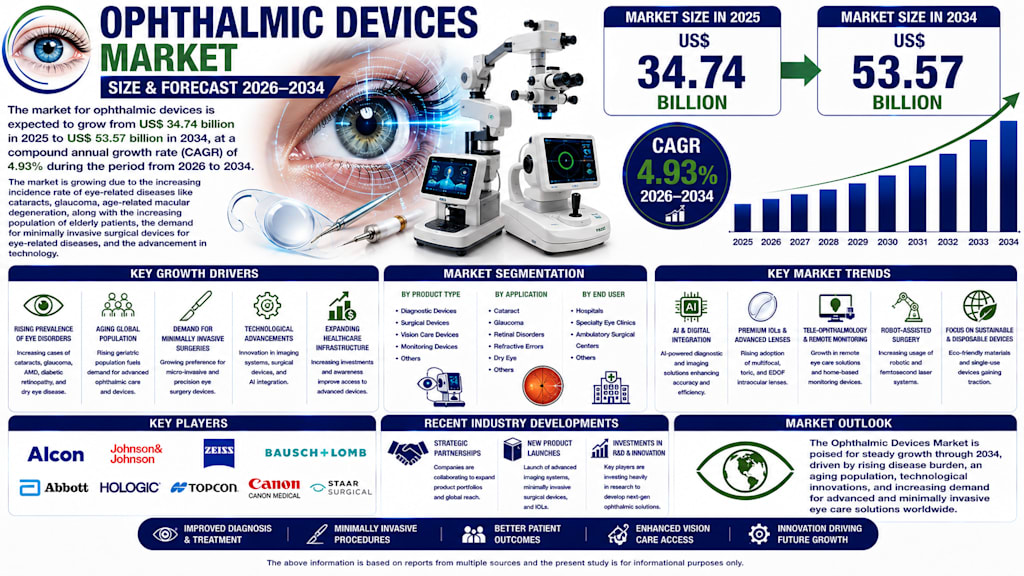
According to Renub Research, the Global Ophthalmic Devices Market is projected to grow from US$ 34.74 billion in 2025 to US$ 53.57 billion by 2034, expanding at a compound annual growth rate (CAGR) of 4.93% between 2026 and 2034. Rising prevalence of eye disorders, increasing geriatric populations, growing demand for minimally invasive procedures, and continuous technological innovation are among the key factors driving market growth.
As healthcare systems increasingly prioritize vision preservation and preventive care, ophthalmic devices are becoming indispensable tools in modern medicine.
The Growing Importance of Ophthalmic Devices
Ophthalmic devices are specialized medical technologies used to diagnose, monitor, and treat eye diseases and vision disorders.
These devices include:
Optical Coherence Tomography (OCT) scanners, fundus cameras, tonometers, autorefractors, phacoemulsification systems, intraocular lenses, laser surgery platforms, retinal surgery devices, and vision correction products such as contact lenses.
Their applications extend across numerous conditions, including:
Cataracts, glaucoma, diabetic retinopathy, age-related macular degeneration, refractive errors, retinal disorders, and other vision-threatening diseases.
As eye care becomes increasingly technology-driven, ophthalmic devices are helping clinicians provide more accurate diagnoses and personalized treatment plans.
Aging Populations Are Driving Demand
One of the most significant drivers of market growth is the rapidly expanding elderly population.
Many of the world's most common eye disorders are closely linked to aging.
Conditions such as cataracts, glaucoma, and age-related macular degeneration become increasingly prevalent as individuals grow older.
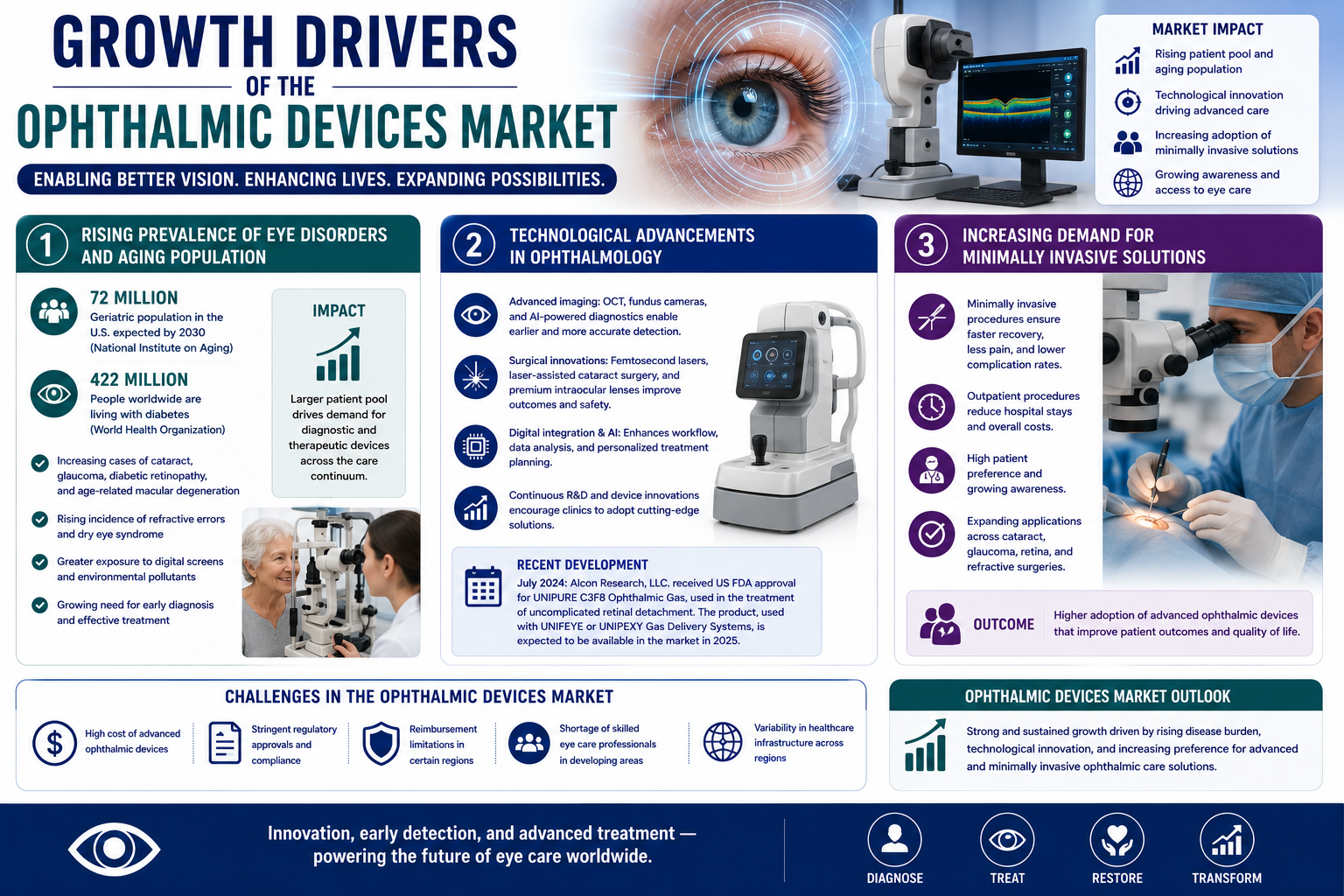
According to data referenced in the report, the global geriatric population is expected to reach approximately 72 million by 2030, creating substantial demand for ophthalmic services and technologies.
Longer life expectancy means more individuals require routine eye examinations, disease monitoring, and surgical interventions.
This demographic trend is creating sustained demand for advanced diagnostic and treatment devices capable of supporting lifelong vision care.
Diabetes Is Increasing the Need for Eye Care
The rising prevalence of diabetes is another major factor influencing the ophthalmic devices market.
According to the World Health Organization, approximately 422 million people worldwide are living with diabetes.
Diabetes significantly increases the risk of eye-related complications, particularly diabetic retinopathy, which remains a leading cause of vision loss.
Early detection is critical for preventing irreversible damage.
Advanced ophthalmic imaging systems enable clinicians to identify retinal abnormalities at early stages when treatment is most effective.
As diabetes rates continue increasing globally, demand for diagnostic devices and retinal monitoring technologies is expected to grow substantially.
Technological Innovation Is Transforming Eye Care
Few areas of healthcare have experienced technological advancement as rapidly as ophthalmology.
Modern eye-care technologies provide unprecedented levels of precision, safety, and efficiency.
Among the most influential innovations are:
Optical Coherence Tomography (OCT), femtosecond lasers, digital imaging systems, artificial intelligence-based diagnostics, advanced intraocular lenses, and minimally invasive surgical technologies.
OCT technology has revolutionized retinal imaging by providing high-resolution cross-sectional images of eye structures.
This capability enables early detection of glaucoma, macular degeneration, and retinal diseases.
Artificial intelligence is also beginning to play an increasingly important role in diagnosis and treatment planning.
These advancements continue improving clinical outcomes while reducing procedural risks.
Minimally Invasive Procedures Are Becoming the Standard
Patients increasingly prefer treatments that offer faster recovery times, less discomfort, and lower complication rates.
As a result, minimally invasive ophthalmic procedures are gaining widespread acceptance.
Modern technologies support:
Micro-incision cataract surgery, laser-assisted vision correction, minimally invasive glaucoma surgery (MIGS), and advanced retinal interventions.
These procedures typically require smaller incisions, shorter operating times, and faster patient recovery.
Healthcare providers also benefit from improved surgical precision and enhanced efficiency.
In July 2025, BVI announced the first clinical use of its FDA-cleared Leos Laser Endoscopy Ophthalmic System, highlighting continued innovation in minimally invasive eye surgery technologies.
As demand for safer and more comfortable procedures grows, minimally invasive devices will remain a major market driver.
Fundus Cameras Support Early Disease Detection
Fundus camera technology represents one of the most important segments within the ophthalmic diagnostics market.
Fundus cameras capture detailed images of the retina, optic nerve, and blood vessels located at the back of the eye.
These images help clinicians identify conditions such as:
Diabetic retinopathy, glaucoma, retinal disorders, and age-related macular degeneration.
Technological advancements including digital imaging, portable devices, and AI-assisted analysis have significantly improved diagnostic accuracy.
The growing emphasis on preventive eye care is further increasing demand for fundus camera systems.
As screening programs expand worldwide, these devices are becoming increasingly important for early disease detection and management.
Glaucoma Surgery Devices Are Experiencing Strong Growth
Glaucoma remains one of the leading causes of irreversible blindness globally.
Managing the disease often requires reducing intraocular pressure to prevent further optic nerve damage.
This need has fueled demand for glaucoma surgery devices, including:
Drainage implants, laser systems, and minimally invasive glaucoma surgery (MIGS) technologies.
Recent innovations have significantly improved safety profiles while reducing recovery times.
Patients increasingly favor less invasive treatment options that minimize surgical risks.
Growing awareness regarding early glaucoma diagnosis is also contributing to market expansion.
As populations age and glaucoma prevalence increases, demand for advanced treatment devices is expected to remain strong.
Contact Lenses Continue to Gain Popularity
The ophthalmic contact lens market remains one of the fastest-growing segments within the broader industry.
Millions of consumers prefer contact lenses because they provide convenience, aesthetic appeal, and broader peripheral vision compared with traditional eyeglasses.
Modern contact lens technologies include:
Silicone hydrogel lenses, daily disposable lenses, multifocal lenses, and specialty products designed for conditions such as keratoconus.
The increasing prevalence of refractive errors including myopia, hyperopia, and astigmatism continues supporting demand.
Additionally, extensive use of digital devices has contributed to rising vision-related concerns, encouraging greater adoption of corrective solutions.
Cataract Devices Remain a Cornerstone of the Market
Cataracts remain one of the most common causes of visual impairment worldwide.
As a result, cataract devices represent one of the largest segments of the ophthalmic devices market.
Modern cataract surgery relies on advanced technologies such as:
Phacoemulsification systems, premium intraocular lenses (IOLs), femtosecond lasers, and sophisticated surgical instruments.
Technological improvements have dramatically enhanced surgical outcomes, making cataract procedures safer and more effective than ever before.
Growing awareness regarding treatment options and government initiatives aimed at reducing preventable blindness continue supporting market growth.
Despite advances, affordability remains a challenge in certain regions where access to premium technologies remains limited.
Hospitals and Eye Clinics Lead Adoption
Hospitals and specialized eye clinics remain the largest end users of ophthalmic devices.
These facilities perform a wide range of services including:
Routine vision screening, disease diagnosis, cataract surgery, glaucoma treatment, retinal procedures, and refractive surgeries.
Growing patient awareness regarding preventive eye care is increasing demand for specialized ophthalmic services.
At the same time, healthcare providers are investing in advanced technologies to improve diagnostic accuracy and treatment outcomes.
The expansion of dedicated eye-care centers worldwide is further supporting adoption of sophisticated ophthalmic equipment.
United States Continues to Lead Innovation
The United States remains one of the world's largest and most technologically advanced ophthalmic devices markets.
Several factors contribute to this leadership position.
High healthcare spending, advanced medical infrastructure, strong research capabilities, and widespread adoption of innovative technologies continue driving growth.
The country also serves as a major hub for ophthalmic device development.
In February 2025, Alcon launched Voyager™ DSLT, the first FDA-approved Direct Selective Laser Trabeculoplasty device designed to improve glaucoma treatment accessibility and efficiency.
Such innovations highlight the dynamic nature of the U.S. ophthalmology sector.
India Emerges as a High-Growth Market
India's ophthalmic devices market is expanding rapidly due to increasing awareness of eye health and rising rates of vision disorders.
Cataracts remain highly prevalent throughout the country, creating substantial demand for diagnostic and surgical devices.
Government programs focused on blindness prevention and healthcare modernization continue supporting market growth.
India's growing medical tourism sector also contributes significantly.
Patients from around the world seek affordable, high-quality eye care services in India, encouraging investment in advanced ophthalmic technologies.
In March 2026, Alcon introduced the Hydrus® Microstent in India, providing a minimally invasive solution for managing intraocular pressure in glaucoma patients.
These developments demonstrate India's increasing importance within the global ophthalmic industry.
Challenges Continue to Affect Market Growth
Despite strong growth prospects, several challenges remain.
The high cost of advanced ophthalmic devices represents one of the most significant barriers.
Technologies such as OCT scanners, laser surgery platforms, and premium intraocular lenses require substantial investment.
Many healthcare facilities, particularly in developing regions, struggle to afford sophisticated equipment. Maintenance, training, and operational costs further increase financial burdens.
A shortage of skilled professionals also presents challenges.
Advanced ophthalmic technologies require trained ophthalmologists, surgeons, and technicians capable of operating increasingly complex systems.
Many regions continue facing shortages of qualified personnel, limiting access to advanced eye-care services despite technological availability.
Addressing these issues will be critical for ensuring broader access to vision-saving technologies.
Final Thoughts
The ophthalmic devices market is playing a crucial role in the global effort to preserve vision and improve quality of life.
Driven by rising rates of eye disease, aging populations, technological innovation, and growing demand for minimally invasive procedures, the industry continues to expand rapidly.
From advanced imaging systems and AI-assisted diagnostics to next-generation cataract surgery devices and glaucoma treatments, ophthalmic technologies are transforming every aspect of eye care.
With the market projected to grow from US$ 34.74 billion in 2025 to US$ 53.57 billion by 2034, opportunities for innovation and investment remain substantial.
As healthcare systems continue prioritizing preventive care and vision preservation, ophthalmic devices will remain at the forefront of medical innovation—helping millions of people around the world see more clearly and live more independently.
About the Creator
Enjoyed the story? Support the Creator.
Subscribe for free to receive all their stories in your feed.
Comments
There are no comments for this story
Be the first to respond and start the conversation.