
Respiratory Care Devices Market 2026–2034: Rising Demand as Global Health Priorities Shift
From chronic respiratory diseases to home-based care, innovation in breathing support technologies is driving steady global growth.

A Market Breathing New Life into Healthcare
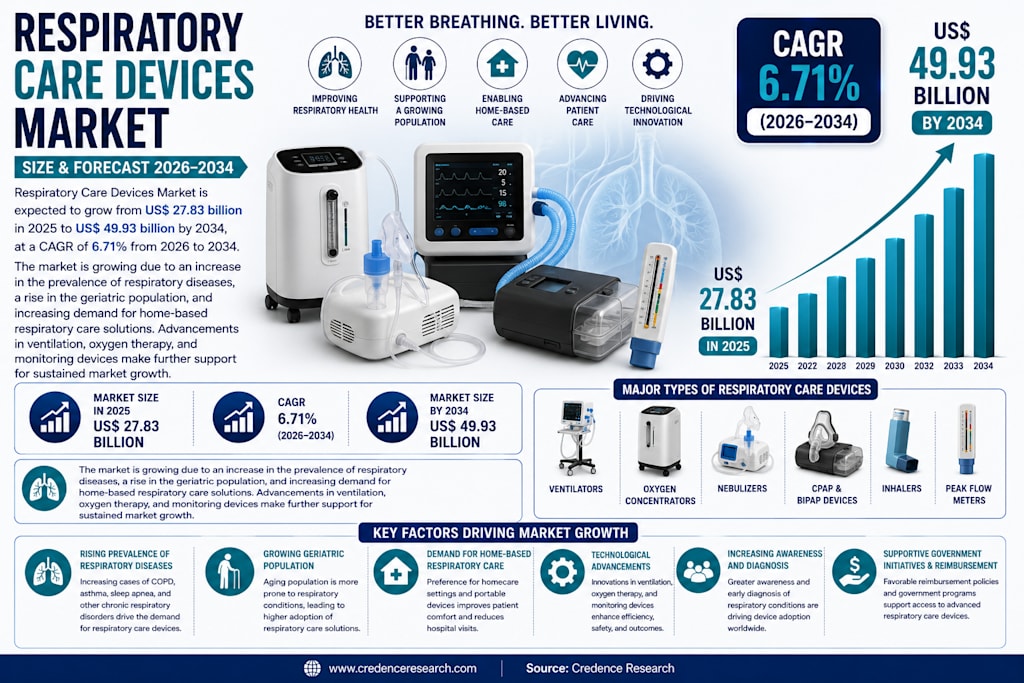
The global healthcare landscape is evolving rapidly, and respiratory care devices are becoming a critical component of modern treatment systems. According to Renub Research, the Respiratory Care Devices Market is expected to grow from US$ 27.83 billion in 2025 to US$ 49.93 billion by 2034, registering a CAGR of 6.71% from 2026 to 2034.
This steady expansion reflects a combination of demographic, environmental, and technological factors. Increasing cases of respiratory diseases, aging populations, and the growing demand for home healthcare solutions are reshaping how respiratory conditions are managed worldwide.
Once largely confined to hospital settings, respiratory care devices are now extending into homes, outpatient centers, and remote monitoring systems—marking a significant shift in healthcare delivery.
Understanding Respiratory Care Devices
Respiratory care devices are medical technologies designed to support, monitor, or improve breathing in patients suffering from acute or chronic respiratory conditions. These devices play a vital role in treating diseases such as asthma, chronic obstructive pulmonary disease (COPD), sleep apnea, pneumonia, and respiratory distress syndrome.
Common types of respiratory devices include:
- Ventilators and respirators
- Oxygen concentrators
- CPAP and BiPAP machines
- Nebulizers and inhalers
- Monitoring systems such as pulse oximeters
These tools are essential not only for emergency care but also for long-term disease management, improving patient outcomes and quality of life.
Key Growth Drivers Transforming the Market
1. Rising Burden of Chronic Respiratory Diseases
One of the most significant drivers of market growth is the increasing prevalence of chronic respiratory diseases worldwide. Conditions such as COPD, asthma, and sleep apnea are becoming more common due to factors like aging populations, smoking, occupational hazards, and air pollution.
In 2023 alone, chronic respiratory diseases accounted for 569.2 million cases and 4.2 million deaths globally, highlighting the urgent need for effective respiratory care solutions.
These conditions often require long-term management, which increases demand for devices like inhalers, oxygen therapy systems, and non-invasive ventilators. As awareness of early diagnosis and disease management grows, more patients are turning to these technologies for ongoing care.
2. Shift Toward Home-Based Healthcare
Healthcare systems worldwide are increasingly moving toward home-based care models. This shift is driven by the need to reduce hospital overcrowding, lower healthcare costs, and improve patient comfort.
Modern respiratory devices are now more portable, lightweight, and user-friendly, making them suitable for home use. Devices such as home ventilators, oxygen concentrators, and CPAP machines allow patients to manage their conditions outside traditional healthcare settings.
This trend is particularly important for aging populations and individuals with chronic illnesses, who require continuous monitoring and treatment. Home-based care not only enhances convenience but also reduces hospital readmissions and overall healthcare burden.
3. Technological Advancements and Innovation
Innovation is playing a crucial role in shaping the respiratory care devices market. The integration of smart technologies, digital monitoring, and wearable solutions is transforming how respiratory conditions are treated and managed.
Recent advancements include:
- Smart ventilators with automated adjustments
- Connected inhalers with usage tracking
- Wireless monitoring systems for remote patient care
- Battery-powered and portable devices for mobility
These innovations are improving treatment accuracy, patient compliance, and overall healthcare efficiency.
Market Segments Driving Demand
Respiratory Monitoring Devices
Monitoring devices are essential for tracking respiratory health and detecting complications early. Products such as pulse oximeters, spirometers, and capnography monitors are widely used in hospitals and home settings.
The rise of remote patient monitoring and wearable health devices is expected to further boost this segment, enabling continuous tracking of vital parameters.
Diagnostic Devices
Diagnostic equipment plays a critical role in identifying respiratory conditions at an early stage. Technologies such as spirometry and sleep studies help clinicians assess lung function and detect disorders like asthma and sleep apnea.
As preventive healthcare gains importance, demand for accurate and minimally invasive diagnostic tools is increasing.
Nebulizers: A Key Therapeutic Tool
Nebulizers are widely used for delivering medication directly into the lungs, making them particularly effective for treating asthma, COPD, and other respiratory conditions.
Technological improvements—such as mesh and ultrasonic nebulizers—have enhanced efficiency, reduced treatment time, and improved portability.
OSA Devices: Addressing Sleep Disorders
The market for obstructive sleep apnea (OSA) devices, including CPAP and BiPAP machines, is expanding rapidly. Increasing awareness of sleep disorders and their link to cardiovascular health is driving demand for these devices.
Improved comfort, reduced noise levels, and enhanced monitoring capabilities are making these devices more user-friendly, encouraging wider adoption.
Hospital vs. Home Care Usage
Hospitals remain a major end-user segment, particularly for critical care devices such as ventilators and oxygen delivery systems. However, home care is emerging as one of the fastest-growing segments due to convenience and cost-effectiveness.
This shift highlights a broader transformation in healthcare delivery, where patients are increasingly empowered to manage their conditions independently.
Regional Insights: Growth Across Key Markets
United States: Leading Innovation and Adoption
The United States is one of the largest markets for respiratory care devices, driven by high prevalence of respiratory diseases, advanced healthcare infrastructure, and strong reimbursement systems.
The adoption of smart and connected devices is particularly high, with growing demand for home-based care and telemedicine solutions.
Germany: Strong Healthcare Infrastructure
Germany’s respiratory care devices market benefits from a well-developed healthcare system and high awareness of early diagnosis and treatment. The country’s focus on innovation and quality manufacturing supports continued growth.
India: Rapid Growth Amid Rising Health Concerns
India is witnessing fast growth due to increasing air pollution, smoking rates, and respiratory disorders. Rising awareness and government initiatives to improve healthcare access are driving demand for affordable respiratory solutions.
Saudi Arabia: Expanding Healthcare Investments
Saudi Arabia’s market is growing steadily, supported by government investments in healthcare infrastructure and increasing demand for advanced medical equipment.
Challenges Limiting Market Expansion
High Cost of Advanced Devices
One of the major barriers to adoption is the high cost of advanced respiratory care devices. Equipment such as ventilators and monitoring systems require significant investment, limiting accessibility in low- and middle-income regions.
Regulatory Complexity and Skill Gaps
Strict regulatory requirements can slow product development and market entry. Additionally, many respiratory devices require skilled professionals for proper use, creating challenges in regions with limited healthcare workforce availability.
Competitive Landscape: Key Industry Players
The respiratory care devices market includes major global players such as Medtronic Plc, Koninklijke Philips, General Electric Company, Masimo Corporation, ResMed Inc., Becton Dickinson, Chart Industries Inc., Getinge AB, and Inogen Inc.
These companies are focusing on:
- Product innovation
- Digital health integration
- Strategic partnerships
- Expansion into emerging markets
Their efforts are shaping the future of respiratory care and driving advancements across the industry.
Final Thoughts
The respiratory care devices market is entering a new phase of growth, driven by rising health challenges and technological innovation. With projections reaching US$ 49.93 billion by 2034, the market reflects a strong and sustained demand for solutions that improve breathing and quality of life.
As healthcare systems continue to evolve, the focus will increasingly shift toward accessible, affordable, and patient-centric solutions. Home-based care, smart devices, and early diagnosis will play a crucial role in shaping the future of respiratory healthcare.
Ultimately, this market is not just about technology—it is about enabling millions of people around the world to breathe easier and live healthier lives.
About the Creator
Enjoyed the story? Support the Creator.
Subscribe for free to receive all their stories in your feed.
Comments
There are no comments for this story
Be the first to respond and start the conversation.