
Recreational Vehicle Market Set to Reach US$ 179.16 Billion by 2033 as Outdoor Tourism and Mobile Living Gain Momentum
Rising Demand for Flexible Travel, Remote Work Lifestyles, and Sustainable Tourism Drives Global Recreational Vehicle Industry Growth

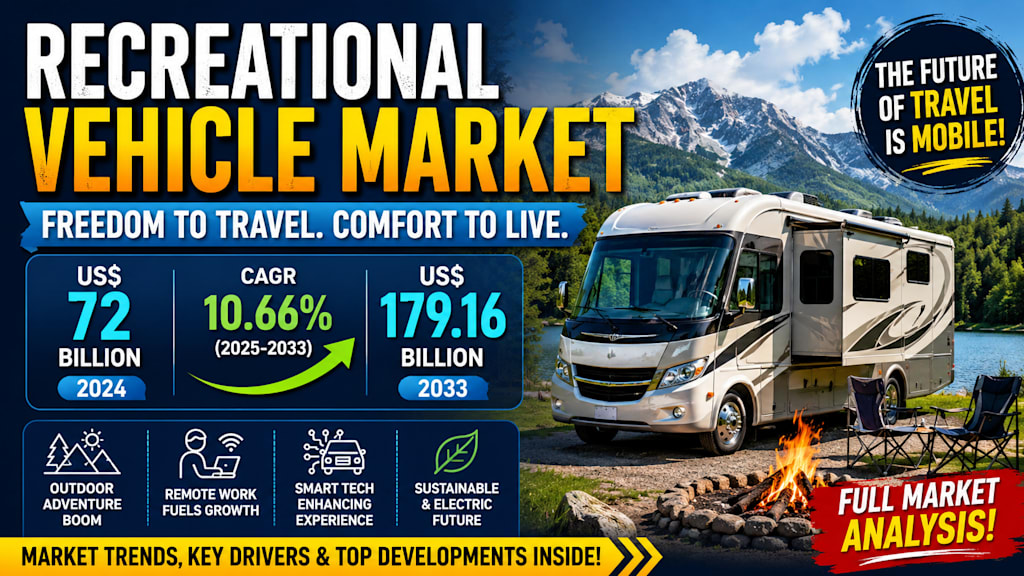
Recreational Vehicle Market Accelerates as Travelers Seek Freedom, Flexibility, and Adventure
The global travel industry is undergoing a major transformation, and recreational vehicles (RVs) are emerging as one of the biggest beneficiaries of this shift. As travelers increasingly prioritize flexibility, personalized experiences, and outdoor adventures, recreational vehicles are becoming a preferred mode of travel across multiple regions.
According to Renub Research, the Global Recreational Vehicle Market is projected to grow from US$ 72 Billion in 2024 to US$ 179.16 Billion by 2033, expanding at a remarkable CAGR of 10.66% during 2025–2033.
The growing popularity of camping, road trips, eco-tourism, and remote working lifestyles is creating strong momentum for RV adoption worldwide. Consumers are no longer viewing recreational vehicles solely as vacation assets; they are increasingly becoming lifestyle investments that support mobility, freedom, and convenience.
From luxurious motorhomes equipped with smart technology to compact travel trailers designed for adventure enthusiasts, the RV market is evolving rapidly to meet changing consumer preferences.
A New Era of Travel Is Reshaping the RV Industry
Modern travelers are looking beyond traditional vacations. Instead of crowded hotels and rigid itineraries, they are embracing experiences that offer independence and flexibility.
Recreational vehicles perfectly fit this trend by providing transportation, accommodation, and comfort in one package.
Whether exploring national parks in the United States, countryside destinations in Europe, desert landscapes in the Middle East, or scenic mountain routes in Asia-Pacific, RVs allow travelers to enjoy unique experiences while maintaining the comforts of home.
This growing preference for self-guided travel is particularly strong among:
Families seeking affordable vacations
Retirees pursuing extended travel experiences
Digital nomads working remotely
Outdoor adventure enthusiasts
Eco-conscious travelers interested in nature-based tourism
As these consumer groups continue to expand, the RV market is expected to witness sustained growth over the coming decade.
Outdoor Recreation Boom Creates Significant Market Opportunities
One of the most influential growth drivers for the recreational vehicle industry is the increasing participation in outdoor recreational activities.
Across the globe, people are spending more time engaging in activities such as:
Camping
Hiking
Fishing
Nature tourism
National park exploration
Road-tripping adventures
The growing emphasis on wellness, mental health, and healthy lifestyles has encouraged consumers to reconnect with nature. Recreational vehicles provide an ideal solution by combining outdoor experiences with convenience and comfort.
Countries such as the United States, Germany, the United Kingdom, and Australia have witnessed substantial growth in camping tourism. Governments are also supporting outdoor recreation by investing in campground infrastructure and tourism development projects.
For example, the Australian government approved funding initiatives aimed at upgrading campgrounds and enhancing visitor facilities, helping boost outdoor tourism participation and RV travel demand.
Remote Work Revolution Fuels Mobile Living Trend
The widespread adoption of remote work has fundamentally changed travel behavior.
Millions of professionals now have the flexibility to work from virtually anywhere with an internet connection. As a result, recreational vehicles are increasingly being used as mobile offices and living spaces.
The rise of digital nomads has created a new customer segment for RV manufacturers.
Today's RV owners can:
Attend virtual meetings while traveling
Work from national parks and scenic destinations
Extend vacations without sacrificing productivity
Enjoy a better work-life balance
Manufacturers are responding by integrating advanced connectivity features, ergonomic workspaces, and smart technologies into their vehicles.
As hybrid and remote work models become permanent for many organizations, the demand for RV-based lifestyles is expected to continue growing.
Technological Innovations Transform the RV Experience
Technology is playing a critical role in modernizing recreational vehicles and attracting a broader consumer base.
Today's RVs offer significantly more comfort, safety, and efficiency than previous generations.
Key innovations include:
Smart Home Integration
Modern RVs increasingly feature:
Smart lighting systems
Voice-controlled devices
Remote climate control
Connected entertainment systems
These technologies create a seamless user experience that resembles a traditional home environment.
Enhanced Connectivity
Reliable internet connectivity has become essential for modern travelers.
Manufacturers are incorporating:
Wi-Fi systems
Satellite internet solutions
Advanced navigation systems
Mobile network boosters
These features support remote working and digital lifestyles.
Improved Fuel Efficiency
Advancements in engine technologies and lightweight construction materials are helping improve fuel economy while reducing operational costs.
Solar and Battery Technologies
Many RVs now include:
Solar power systems
Advanced lithium-ion batteries
Energy management systems
These technologies enable extended off-grid travel while reducing environmental impact.
Sustainability Becomes a Major Industry Focus
Environmental awareness is reshaping consumer preferences across the travel and automotive sectors.
As concerns about climate change and carbon emissions increase, travelers are seeking greener transportation solutions.
RV manufacturers are responding through investments in sustainable technologies and alternative energy systems.
Electric recreational vehicles represent one of the most exciting developments within the industry.
Several manufacturers have introduced concept vehicles and prototypes designed to reduce emissions while maintaining travel convenience.
The emergence of electric RVs aligns with broader automotive electrification trends and could open substantial new growth opportunities in the coming years.
Consumers increasingly value products that support responsible tourism and environmental stewardship, making sustainability a key competitive advantage for manufacturers.
Market Challenges Continue to Influence Industry Dynamics
Despite strong growth prospects, the recreational vehicle market faces several challenges.
High Purchase Costs
One of the primary barriers to RV ownership is the significant upfront investment required.
Premium motorhomes can cost substantially more than traditional passenger vehicles, limiting accessibility for some consumers.
In addition to purchase expenses, owners must consider:
Insurance costs
Registration fees
Maintenance expenses
Storage charges
These factors can discourage first-time buyers.
Maintenance and Operating Costs
Recreational vehicles require ongoing servicing and maintenance.
Specialized components and advanced systems can increase repair costs, particularly for luxury models.
Environmental Concerns
Traditional RVs often rely on diesel or gasoline engines that consume significant fuel and generate emissions.
As sustainability expectations increase, manufacturers face pressure to improve fuel efficiency and accelerate electrification initiatives.
Infrastructure limitations, particularly electric charging availability, remain a challenge for widespread adoption of electric RVs.
North America Remains the Global Market Leader
North America continues to dominate the recreational vehicle market, supported by a well-established camping culture and extensive tourism infrastructure.
The United States represents the largest RV market globally.
Several factors contribute to the country's leadership:
Large network of RV parks
Strong outdoor recreation culture
High disposable incomes
Favorable road infrastructure
Growing interest in domestic tourism
American consumers continue to purchase travel trailers, fifth-wheel trailers, and motorhomes at significant rates.
Manufacturers in the region are also leading innovation efforts related to smart technologies and electric vehicle development.
Europe Experiences Strong Recreational Travel Demand
Europe remains another important market for recreational vehicles.
Countries including Germany, France, Italy, and the United Kingdom are witnessing increased interest in road travel and camping holidays.
The popularity of staycations has significantly contributed to RV adoption across Europe.
Travelers increasingly prefer exploring domestic destinations while maintaining flexibility and comfort.
The expansion of camping facilities and motorhome-friendly infrastructure is further supporting regional market growth.
Emerging Markets Present Future Growth Potential
Beyond North America and Europe, emerging economies are creating new opportunities for RV manufacturers.
India
India's RV market is gradually developing as domestic tourism gains momentum.
Growing interest in road trips, camping experiences, and flexible travel solutions is supporting market expansion.
Improving tourism infrastructure and increasing consumer awareness are expected to contribute to future growth.
Saudi Arabia
Saudi Arabia is experiencing rising demand for recreational travel and outdoor leisure activities.
Government initiatives focused on tourism diversification are encouraging investment in camping sites and tourism infrastructure.
As domestic travel grows, recreational vehicles are becoming increasingly attractive among adventure-focused travelers.
Competitive Landscape Remains Highly Dynamic
The global recreational vehicle industry features several established manufacturers competing through innovation, customization, and sustainability initiatives.
Leading companies continue investing in advanced technologies, product development, and strategic partnerships.
Major industry participants include:
Thor Industries
Forest River
Winnebago Industries
REV Group
NeXus RV
Tiffin Motorhomes
Triple E Recreational Vehicles
Dethleffs GmbH & Co. KG
Bürstner GmbH & Co. KG
The Swift Group
10 Recent Developments in the Recreational Vehicle Industry
1. Ford and Erwin Hymer Group Partnership
In January 2022, Ford partnered with Erwin Hymer Group to supply customer-ready motorhomes and recreational vehicles based on Ford Transit platforms.
2. Winnebago Electric RV Prototype
Winnebago showcased a fully electric, zero-emission RV concept during the Florida RV SuperShow.
3. Expansion of Smart RV Technologies
Manufacturers increasingly integrated voice controls, app-based monitoring, and automated systems into new RV models.
4. Solar-Powered RV Solutions
Leading brands expanded solar panel offerings to improve off-grid travel capabilities.
5. Enhanced Battery Systems
RV producers adopted advanced lithium battery technologies for longer energy storage and improved efficiency.
6. Lightweight Construction Innovations
Companies introduced lighter materials to improve fuel economy and towing performance.
7. Connected Vehicle Platforms
Manufacturers launched digital monitoring platforms allowing remote diagnostics and vehicle management.
8. Sustainable Interior Designs
Several brands introduced eco-friendly materials and energy-efficient appliances.
9. Expansion of Luxury Motorhome Segments
Premium RV manufacturers expanded high-end offerings featuring residential-style interiors.
10. Increased Investment in Electric Mobility
Industry leaders accelerated research and development efforts focused on electric and hybrid recreational vehicles.
Final Thoughts
The recreational vehicle market is entering an exciting period of growth driven by evolving travel preferences, outdoor recreation trends, and technological innovation. As consumers seek greater flexibility, personalized experiences, and sustainable travel solutions, RVs are becoming an increasingly attractive option worldwide.
With Renub Research forecasting the market to grow from US$ 72 Billion in 2024 to US$ 179.16 Billion by 2033, the industry is poised for substantial expansion. The convergence of remote work, eco-tourism, smart vehicle technologies, and electric mobility will continue reshaping the future of recreational travel.
Manufacturers that successfully balance innovation, sustainability, affordability, and customer experience are expected to emerge as leaders in this rapidly evolving global market.
About the Creator
Enjoyed the story? Support the Creator.
Subscribe for free to receive all their stories in your feed.
Comments
There are no comments for this story
Be the first to respond and start the conversation.