
Radiology Information System Market Set for Strong Growth as Healthcare Digitalization Accelerates Worldwide
Rising demand for diagnostic imaging, cloud-based healthcare solutions, and AI-powered workflow management is transforming radiology operations across hospitals and imaging centers.

Introduction: The Digital Backbone of Modern Radiology
Healthcare is undergoing a profound digital transformation, and few areas illustrate this shift more clearly than radiology. As imaging volumes continue to rise and healthcare providers seek faster, more efficient ways to manage patient information, Radiology Information Systems (RIS) have become an essential component of modern medical infrastructure.
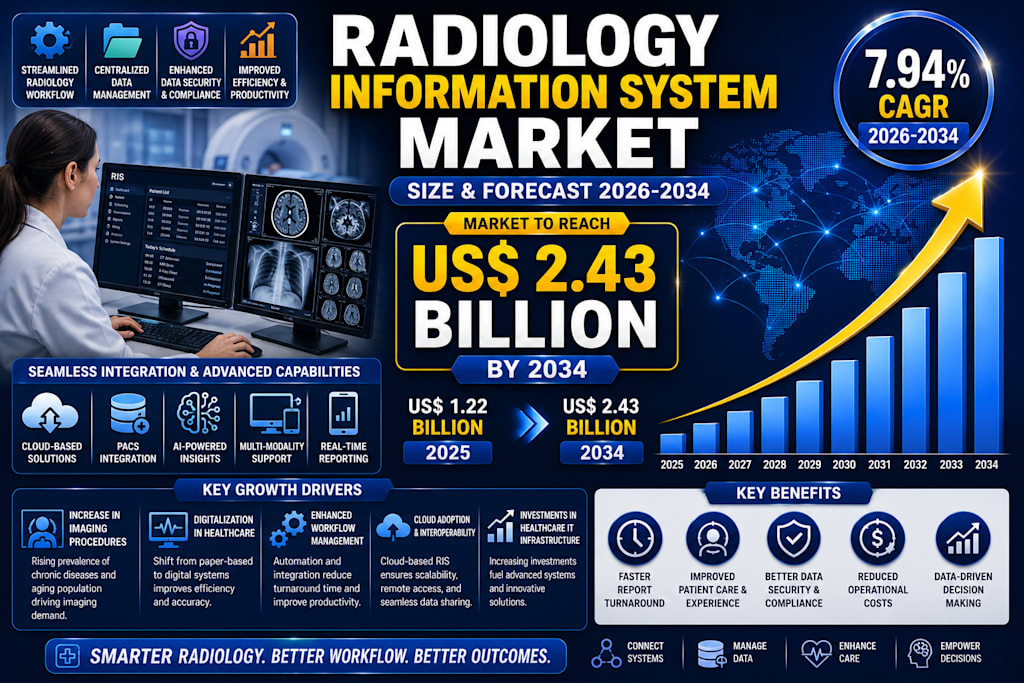
According to Renub Research, the Radiology Information System Market is expected to grow from US$ 1.22 billion in 2025 to US$ 2.43 billion by 2034, registering a compound annual growth rate (CAGR) of 7.94% between 2026 and 2034. The market's growth is being fueled by increasing diagnostic imaging procedures, healthcare digitalization, workflow optimization requirements, and the growing integration of cloud computing and artificial intelligence technologies.
As healthcare providers face mounting pressure to improve efficiency while maintaining high standards of patient care, Radiology Information Systems are becoming critical tools for managing imaging workflows, patient records, scheduling, reporting, and data integration.
Understanding the Role of Radiology Information Systems
A Radiology Information System is a specialized software platform designed to manage and streamline the operations of radiology departments within hospitals, clinics, and diagnostic imaging centers.
RIS supports a wide range of administrative and clinical functions, including patient registration, appointment scheduling, examination management, image tracking, report generation, billing, and patient record management. By centralizing these activities, RIS helps healthcare organizations improve workflow efficiency while reducing administrative burdens and human errors.
One of the most important advantages of RIS is its ability to integrate with other healthcare technologies, including Electronic Health Records (EHRs) and Picture Archiving and Communication Systems (PACS). This integration allows healthcare professionals to access patient information and imaging data through a unified digital environment.
As healthcare organizations increasingly prioritize interoperability and seamless information exchange, RIS has become an indispensable component of modern healthcare infrastructure.
Rising Diagnostic Imaging Demand Is Fueling Market Growth
One of the strongest drivers behind the Radiology Information System market is the growing demand for diagnostic imaging services worldwide.
Medical imaging procedures such as MRI scans, CT scans, X-rays, mammography, and ultrasound examinations are becoming increasingly important for diagnosing and monitoring chronic diseases. Healthcare providers rely on imaging technologies for early detection, treatment planning, and long-term patient management.
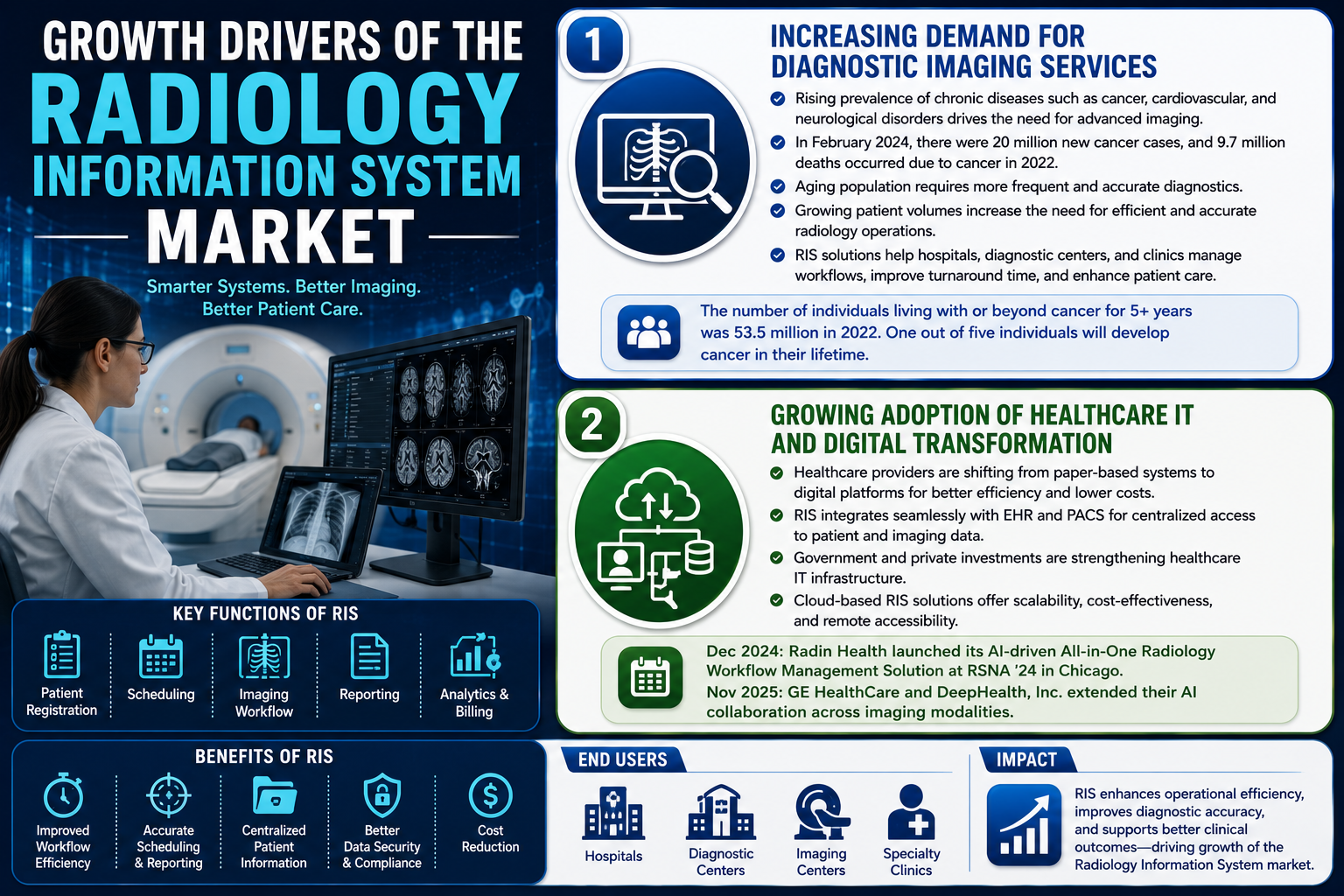
The report notes that approximately 20 million new cancer cases and 9.7 million cancer-related deaths occurred globally in 2022. In addition, around 53.5 million people were living with cancer or had been diagnosed with the disease within the previous five years. Such figures highlight the increasing need for advanced diagnostic imaging services.
As imaging volumes continue to increase, healthcare facilities require efficient systems capable of managing scheduling, reporting, image tracking, and patient information. RIS solutions help organizations handle growing workloads while maintaining accuracy and operational efficiency.
The rising prevalence of cardiovascular diseases, neurological disorders, orthopedic conditions, and age-related illnesses is expected to further strengthen demand for radiology information systems over the coming decade.
Digital Transformation Is Reshaping Healthcare Operations
The healthcare industry is rapidly transitioning from paper-based processes to digital workflows.
Governments, healthcare providers, and technology companies are investing heavily in healthcare IT infrastructure to improve patient outcomes, reduce operational costs, and increase efficiency. Radiology Information Systems play a central role in this transformation by automating processes that were previously managed manually.
RIS enables healthcare professionals to access patient information electronically, schedule imaging procedures more efficiently, and generate reports with greater speed and accuracy. The integration of RIS with Electronic Health Records and PACS systems allows seamless data exchange across departments, reducing duplication and improving coordination.
Cloud computing is also contributing significantly to market growth. Cloud-based RIS solutions offer scalability, lower infrastructure costs, and remote accessibility, making them increasingly attractive for healthcare providers of all sizes.
As healthcare digitalization continues worldwide, RIS adoption is expected to expand steadily across both developed and emerging markets.
Artificial Intelligence Is Revolutionizing Radiology Workflows
Artificial intelligence is becoming one of the most influential technologies shaping the future of radiology information systems.
AI-powered RIS solutions can automate routine administrative tasks, prioritize urgent cases, optimize workflow management, and assist healthcare professionals with image interpretation. These capabilities help reduce workload pressures while improving efficiency and diagnostic accuracy.
The report highlights several industry developments demonstrating the growing importance of AI in radiology. In December 2024, Radin Health introduced its AI-driven radiology workflow management solution featuring automated study distribution and AI-assisted reporting capabilities. Additionally, GE HealthCare and DeepHealth expanded their collaboration in November 2025 to advance AI applications across various imaging modalities.
AI is expected to play an increasingly important role as healthcare organizations seek faster turnaround times, improved productivity, and enhanced clinical decision-making capabilities.
Workflow Optimization Remains a Major Priority
Radiology departments face constant pressure to manage increasing patient volumes while maintaining service quality and diagnostic accuracy.
Radiology Information Systems help address these challenges by automating critical workflows, including appointment scheduling, patient registration, examination management, report generation, billing, and communication between departments.
Automation reduces administrative burdens, minimizes delays, and enables healthcare professionals to focus more on patient care. Faster report generation also supports quicker clinical decision-making, helping physicians develop treatment plans more efficiently.
Healthcare providers increasingly view workflow optimization as a strategic priority because improved efficiency directly impacts patient satisfaction, operational performance, and financial outcomes.
As imaging volumes continue to rise globally, demand for workflow-enhancing RIS solutions is expected to remain strong.
Integrated RIS Solutions Are Becoming the Industry Standard
Integrated Radiology Information Systems represent one of the most important segments within the market.
These solutions are designed to work seamlessly with other healthcare technologies such as PACS, EHR systems, and Hospital Information Systems (HIS). Integration enables healthcare providers to access comprehensive patient information through a single platform, reducing the need for manual data entry and improving overall workflow efficiency.
Integrated systems also improve communication between departments, allowing clinicians to access imaging results and patient records more quickly. This contributes to faster diagnosis, better treatment planning, and improved patient outcomes.
As healthcare organizations increasingly prioritize interoperability and connected healthcare ecosystems, demand for integrated RIS platforms is expected to grow significantly.
Cloud-Based Solutions Continue to Gain Momentum
Cloud computing is transforming how radiology departments manage data and infrastructure.
Traditional on-premise RIS installations require substantial investments in hardware, servers, storage systems, and maintenance. Cloud-based RIS solutions eliminate many of these requirements by providing secure online access to imaging data and operational tools.
Healthcare providers benefit from greater scalability, easier system updates, improved disaster recovery capabilities, and reduced infrastructure costs. Cloud platforms also support remote access, enabling radiologists and healthcare professionals to review information from multiple locations.
The growing popularity of telemedicine and remote diagnostics is further accelerating adoption of cloud-based RIS solutions worldwide.
For many healthcare organizations, cloud deployment has become a key component of broader digital transformation strategies.
Services Segment Plays a Critical Role
Beyond software and hardware, services represent an essential component of the Radiology Information System market.
Healthcare providers often require implementation support, staff training, maintenance services, cybersecurity management, and consulting assistance when deploying RIS solutions. These services help organizations maximize system performance while ensuring smooth integration with existing healthcare infrastructure.
Training services are particularly important because radiologists, technicians, and administrative personnel must understand how to use RIS effectively. Maintenance and support services help ensure continuous system availability and minimize operational disruptions.
As healthcare organizations continue investing in digital transformation initiatives, demand for specialized RIS-related services is expected to remain strong.
Regional Markets Continue to Expand
United States
The United States remains one of the most advanced Radiology Information System markets globally. Strong healthcare infrastructure, widespread adoption of healthcare IT solutions, and high imaging procedure volumes continue to support market growth.
Government initiatives promoting Electronic Health Records and healthcare interoperability have further accelerated RIS adoption. The implementation of the Health Information Technology Final Rule in March 2024 has reinforced the importance of digital healthcare systems across the country.
United Kingdom
The United Kingdom is witnessing steady market growth due to increasing adoption of digital healthcare technologies and modernization efforts within the National Health Service (NHS). Rising demand for diagnostic imaging services and growing investments in healthcare infrastructure continue to support RIS implementation across healthcare facilities.
India
India represents one of the fastest-growing opportunities in the market. Increasing healthcare investments, expanding diagnostic imaging services, and government initiatives promoting digital healthcare are driving adoption of RIS solutions.
Cloud-based RIS platforms are particularly attractive within India because they offer cost-effective scalability. The expansion of private healthcare networks and diagnostic centers is further contributing to market growth.
Saudi Arabia
Saudi Arabia is experiencing growing demand for RIS solutions as part of broader healthcare modernization initiatives under Vision 2030. Investments in healthcare infrastructure, digital transformation programs, and advanced diagnostic services are supporting market expansion across the Kingdom.
Challenges Continue to Impact Adoption
Despite strong growth prospects, several challenges remain.
One of the most significant barriers is the high cost associated with RIS implementation and maintenance. Healthcare organizations must invest in software licenses, hardware infrastructure, staff training, system integration, and ongoing support services. Smaller hospitals and healthcare providers often face financial constraints that limit adoption.
Data security and patient privacy concerns also remain critical issues. RIS platforms handle highly sensitive medical information, making them potential targets for cyberattacks and unauthorized access. Healthcare organizations must invest heavily in cybersecurity, encryption technologies, and access control systems to protect patient data.
Addressing these challenges will be essential for ensuring continued market expansion and maintaining trust among healthcare providers and patients.
Leading Companies Driving Innovation
The Radiology Information System market is highly competitive, with major healthcare technology companies investing heavily in innovation and digital transformation.
Key players highlighted in the report include Koninklijke Philips N.V., Siemens Healthcare GmbH, Oracle, McKesson Corporation, GE HealthCare, Fujifilm Holdings Corporation, Shimadzu Corporation, Hologic Inc., and Sectra AB. These organizations continue to develop advanced RIS solutions that improve workflow efficiency, interoperability, artificial intelligence integration, and patient care outcomes.
As competition intensifies, companies are increasingly focusing on cloud-based platforms, AI-powered analytics, and integrated healthcare ecosystems to differentiate their offerings.
Final Thoughts
The Radiology Information System market is entering a period of significant expansion as healthcare providers continue their digital transformation journeys. Rising imaging volumes, increasing demand for operational efficiency, growing adoption of cloud technologies, and advances in artificial intelligence are creating powerful growth opportunities across the industry.
With the market projected to increase from US$ 1.22 billion in 2025 to US$ 2.43 billion by 2034, RIS solutions are becoming increasingly vital for hospitals, imaging centers, and healthcare organizations worldwide.
As healthcare systems focus on delivering faster diagnoses, improving patient outcomes, and managing growing workloads, Radiology Information Systems will continue playing a central role in modern medical imaging operations. The coming decade is likely to bring even greater integration, automation, and intelligence to radiology departments, positioning RIS as one of the most important technologies in the future of healthcare.
About the Creator
Enjoyed the story? Support the Creator.
Subscribe for free to receive all their stories in your feed.
Comments
There are no comments for this story
Be the first to respond and start the conversation.