
Radiofrequency Ablation Device Market Expected to Surpass US$10 Billion by 2034 as Demand for Minimally Invasive Treatments Accelerates
Growing cases of chronic pain, cancer, and cardiovascular disorders are driving the global adoption of radiofrequency ablation technologies across hospitals and specialty clinics.

Healthcare providers worldwide are increasingly turning toward minimally invasive procedures that offer faster recovery, reduced complications, and improved patient outcomes. Among the technologies benefiting from this shift is radiofrequency ablation (RFA), a treatment method that uses controlled heat generated by high-frequency electrical currents to target and destroy abnormal tissue.
Over the past decade, radiofrequency ablation has become an important treatment option across several medical specialties, including pain management, cardiology, oncology, gynecology, and orthopedics. The technology provides physicians with an effective alternative to traditional surgical procedures while reducing hospital stays and recovery times.
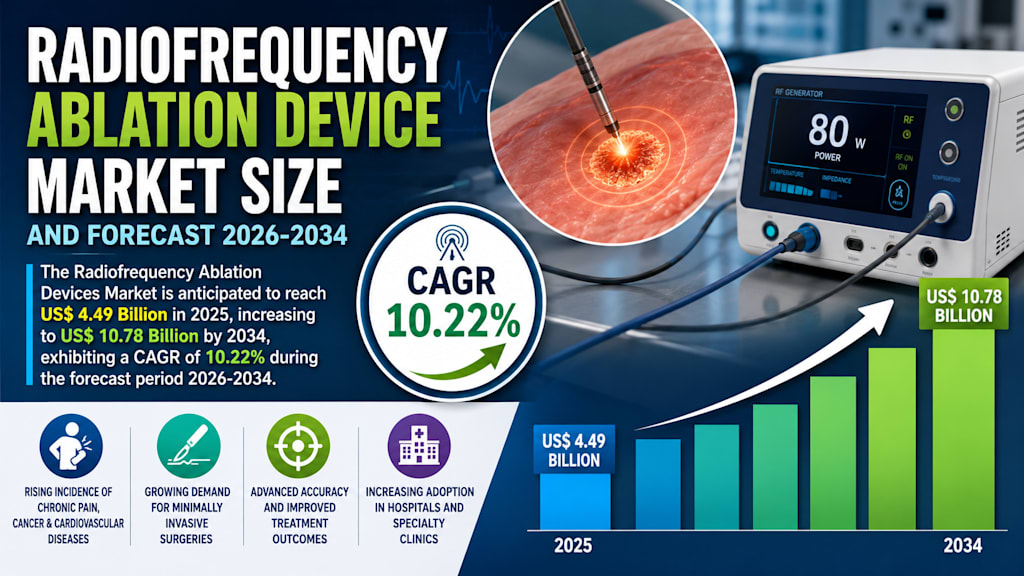
According to Renub Research, the global Radiofrequency Ablation Device Market is projected to grow from US$4.49 billion in 2025 to US$10.78 billion by 2034, expanding at a robust compound annual growth rate (CAGR) of 10.22% during the forecast period. The increasing prevalence of chronic diseases, growing preference for minimally invasive therapies, and continuous technological advancements are expected to fuel this remarkable growth.
Understanding Radiofrequency Ablation Devices
Radiofrequency ablation devices are specialized medical systems designed to generate heat through high-frequency electrical currents. The heat is delivered directly to targeted tissues, nerves, or abnormal cells, causing controlled destruction while minimizing damage to surrounding healthy tissue.
The technology is widely used to treat a variety of medical conditions, including chronic back pain, neck pain, arthritis, liver tumors, kidney tumors, cardiac arrhythmias, varicose veins, and other disorders that require precise tissue destruction.
Unlike traditional surgery, radiofrequency ablation procedures are minimally invasive and typically involve small incisions or catheter-based techniques. As a result, patients often experience shorter recovery periods, less postoperative discomfort, and reduced risks of complications.
The growing acceptance of radiofrequency ablation reflects the broader trend toward less invasive healthcare solutions that prioritize patient comfort and treatment efficiency.
Why the Market Is Growing Rapidly
Several factors are contributing to the strong expansion of the radiofrequency ablation device industry worldwide.
Rising Demand for Minimally Invasive Procedures
One of the most significant drivers of market growth is the increasing preference for minimally invasive treatment methods.
Both patients and healthcare providers are seeking alternatives to conventional surgery that reduce recovery times and minimize physical trauma. Radiofrequency ablation has emerged as an attractive solution because it allows physicians to treat complex conditions without extensive surgical intervention.
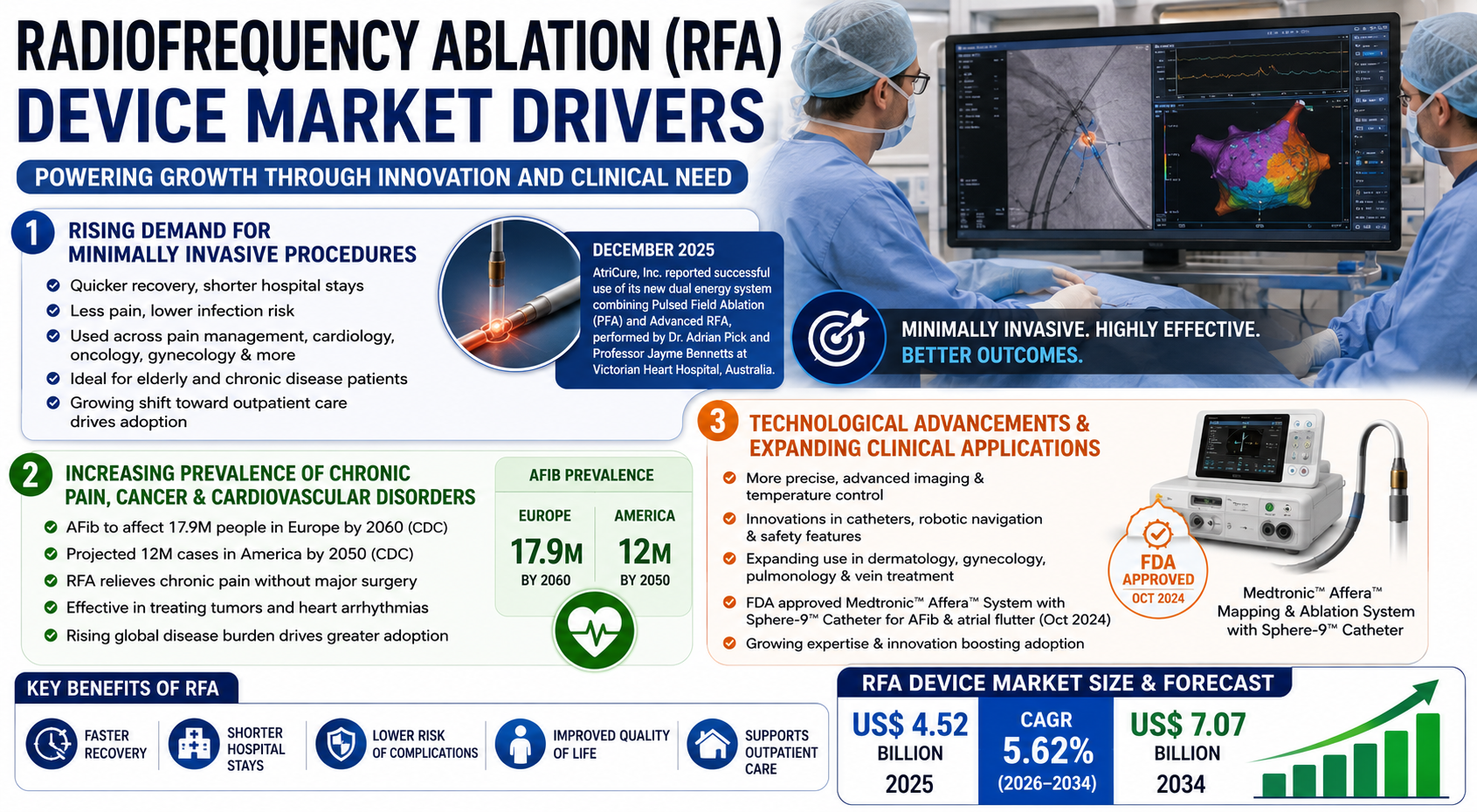
Compared to traditional operations, radiofrequency ablation procedures generally result in less pain, lower infection risks, shorter hospital stays, and faster returns to normal daily activities. These advantages are particularly important for elderly patients and individuals suffering from chronic illnesses who may face higher risks during major surgeries.
Healthcare facilities are also embracing minimally invasive procedures because they help reduce hospitalization costs and improve operational efficiency. As outpatient treatment models continue to expand globally, demand for radiofrequency ablation technologies is expected to increase further.
Growing Burden of Chronic Diseases
The increasing prevalence of chronic diseases represents another major growth catalyst for the market.
Conditions such as chronic pain disorders, cancer, and cardiovascular diseases affect millions of people worldwide and often require long-term treatment solutions.
According to data referenced in the market analysis, atrial fibrillation is expected to affect approximately 17.9 million individuals in Europe by 2060 and nearly 12 million people in the United States by 2050. The growing burden of cardiovascular disorders is creating substantial demand for effective treatment technologies such as radiofrequency ablation.
In pain management, radiofrequency ablation helps block pain signals by targeting specific nerves responsible for chronic discomfort. In oncology, the technology enables physicians to destroy cancerous tissue in patients who may not be suitable candidates for surgery. Within cardiology, radiofrequency ablation plays a crucial role in correcting abnormal heart rhythms and restoring normal cardiac function.
As chronic disease rates continue to rise globally, healthcare providers are increasingly adopting radiofrequency ablation as an effective treatment option.
Technological Advancements Expanding Clinical Applications
Technological innovation continues to transform the radiofrequency ablation device market.
Modern systems offer greater precision, improved temperature control, enhanced imaging capabilities, and advanced safety features. These improvements enable physicians to perform procedures more accurately while reducing treatment risks.
Innovations such as robotic navigation systems, ultrasound-guided targeting, computed tomography imaging integration, and advanced catheter technologies have significantly improved treatment outcomes.
Additionally, radiofrequency ablation is no longer limited to a handful of medical specialties. The technology is increasingly being used in dermatology, pulmonology, gynecology, cosmetic surgery, and vascular treatments, creating new growth opportunities for manufacturers and healthcare providers alike.
As clinical experience expands and technological capabilities improve, radiofrequency ablation is expected to play an even larger role in modern medicine.
Expanding Applications Across Healthcare
The versatility of radiofrequency ablation technology is one of its greatest strengths.
Pain Management
Chronic pain remains one of the leading causes of disability worldwide. Radiofrequency ablation provides long-lasting relief for patients suffering from spinal pain, arthritis, neck pain, and nerve-related conditions.
By targeting specific nerve pathways responsible for transmitting pain signals, physicians can significantly reduce discomfort without the need for extensive surgery or long-term medication dependence.
The increasing demand for non-opioid pain management solutions is further supporting growth in this application area.
Cardiology Treatments
Cardiology represents one of the largest application segments within the radiofrequency ablation market.
The technology is commonly used to treat arrhythmias such as atrial fibrillation, atrial flutter, and supraventricular tachycardia. During these procedures, physicians use radiofrequency energy to eliminate abnormal electrical pathways within the heart and restore normal rhythm.
Recent advancements, including force-sensing catheters and three-dimensional cardiac mapping systems, have improved procedural accuracy and clinical outcomes. As cardiovascular disease rates continue to rise, demand for radiofrequency ablation devices in cardiology is expected to remain strong.
Oncology Applications
Cancer treatment represents another important growth area for radiofrequency ablation.
The technology is frequently used to treat tumors located in organs such as the liver, kidney, lung, pancreas, and bone. By delivering heat directly to cancerous tissue, physicians can destroy tumors while preserving nearby healthy structures.
Radiofrequency ablation is particularly beneficial for patients who are unable to undergo traditional surgery due to age, medical conditions, or tumor location.
Its ability to provide effective treatment with shorter recovery periods and reduced surgical risks has contributed to growing adoption across oncology centers worldwide.
Product Segments Supporting Market Growth
The radiofrequency ablation device market includes multiple product categories designed to meet diverse clinical requirements.
Reusable Radiofrequency Ablation Devices
Reusable radiofrequency ablation systems are commonly used in hospitals and specialty centers that perform high volumes of procedures.
These devices offer long-term cost advantages because they can be sterilized and reused multiple times. Healthcare institutions often prefer reusable systems due to lower overall operational expenses and reduced medical waste generation.
However, proper maintenance and sterilization procedures are essential to ensure patient safety and prevent infection risks.
Disposable Radiofrequency Ablation Devices
Disposable devices include single-use catheters, probes, electrodes, and accessories designed for one-time procedures.
These products are increasingly popular because they eliminate cross-contamination risks and simplify clinical workflows. Hospitals and outpatient facilities often favor disposable solutions due to their convenience and ability to support strict infection-control protocols.
Growing awareness of patient safety and healthcare hygiene standards continues to drive demand within this segment.
Challenges Facing the Industry
Despite strong growth prospects, the radiofrequency ablation device market faces several obstacles.
High Equipment and Procedure Costs
One of the primary challenges involves the significant investment required for advanced radiofrequency ablation systems.
Modern generators, imaging equipment, navigation technologies, and specialized catheters can be expensive for healthcare facilities, particularly smaller hospitals and clinics operating under budget constraints.
Patients may also face financial barriers when insurance coverage is limited or reimbursement policies are inconsistent. These factors can restrict adoption, especially in developing regions.
Need for Skilled Specialists
Although radiofrequency ablation is considered minimally invasive, successful outcomes depend heavily on physician expertise.
Procedures require precise targeting and careful execution to avoid complications such as infection, bleeding, nerve damage, or incomplete tissue ablation.
Many developing countries continue to face shortages of healthcare professionals trained in advanced interventional procedures. Expanding education and training programs will be critical for ensuring broader access to radiofrequency ablation treatments worldwide.
Regional Market Outlook
United States
The United States remains one of the largest and most advanced markets for radiofrequency ablation devices.
Strong healthcare infrastructure, growing patient awareness, and increasing demand for minimally invasive procedures continue to support market growth. Rising cases of chronic pain, cancer, and cardiac arrhythmias have further accelerated adoption.
Technological innovation and continued investment by leading medical device manufacturers position the United States as a global leader in radiofrequency ablation therapies.
Germany
Germany's advanced healthcare system and strong clinical expertise make it one of Europe's key markets for radiofrequency ablation devices.
The country's emphasis on innovative medical technologies and outpatient treatment models supports ongoing market expansion. Despite regulatory complexities and competition from alternative therapies, Germany remains an important growth region for manufacturers.
India
India is emerging as a rapidly growing market due to increasing healthcare investments, rising awareness of minimally invasive procedures, and expanding private healthcare services.
Growing cases of liver cancer, chronic pain disorders, and cardiovascular diseases are driving demand for advanced ablation technologies. Although challenges such as limited rural access and high treatment costs remain, long-term market potential appears highly promising.
Saudi Arabia
Saudi Arabia's healthcare modernization efforts and increased investment in specialized medical services are supporting growth within the radiofrequency ablation device market.
Rising awareness of minimally invasive treatments, growing numbers of trained specialists, and government healthcare reforms are expected to create favorable market conditions in the coming years.
Competitive Landscape
The global radiofrequency ablation device market features several major medical technology companies competing through innovation, product development, and strategic expansion initiatives.
Leading market participants include Boston Scientific Corporation, Abbott Laboratories, AtriCure, Inc., Medtronic plc, Stryker, Smith & Nephew plc, Conmed Corporation, and Hologic, Inc.. These organizations continue investing in advanced ablation technologies to improve treatment precision and expand clinical applications.
Final Thoughts
Radiofrequency ablation technology is transforming the way healthcare providers treat chronic pain, cardiovascular diseases, and cancer. Its ability to deliver effective outcomes through minimally invasive procedures has made it one of the most valuable innovations in modern medicine.
As healthcare systems increasingly prioritize faster recovery times, lower complication rates, and improved patient experiences, radiofrequency ablation is expected to become an even more widely adopted treatment option.
With the global market forecast to grow from US$4.49 billion in 2025 to US$10.78 billion by 2034, the future of radiofrequency ablation appears exceptionally promising. Continued technological advancements, expanding clinical applications, and rising healthcare demand will likely position the industry for sustained growth throughout the next decade.
About the Creator
Enjoyed the story? Support the Creator.
Subscribe for free to receive all their stories in your feed.
Comments
There are no comments for this story
Be the first to respond and start the conversation.