
Radiation Dose Management Market Set for Remarkable Growth as Healthcare Prioritizes Patient Safety
Global market projected to surpass US$1 billion by 2034 as hospitals embrace advanced radiation monitoring technologies and AI-powered solutions

Medical imaging has transformed modern healthcare. From detecting life-threatening diseases to monitoring treatment progress, technologies such as CT scans, X-rays, fluoroscopy, and nuclear medicine have become indispensable tools for healthcare providers worldwide. Yet with the increasing use of these technologies comes a growing concern: radiation exposure.
As healthcare systems continue to expand diagnostic imaging services, the need to monitor and optimize radiation exposure has become more critical than ever. This challenge has created significant momentum for the radiation dose management industry, a rapidly growing sector focused on improving patient safety while maintaining diagnostic accuracy.
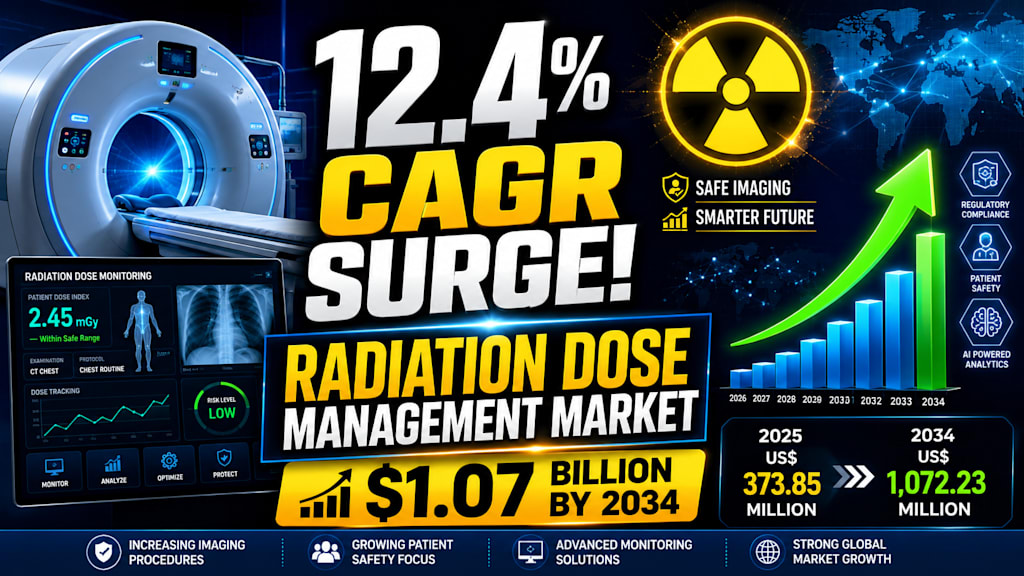
According to recent market findings, the global Radiation Dose Management Market is expected to grow from US$373.85 million in 2025 to US$1,072.23 million by 2034, registering a strong compound annual growth rate (CAGR) of 12.42% between 2026 and 2034. This remarkable expansion reflects the healthcare industry's increasing commitment to radiation safety, regulatory compliance, and technological innovation.
Why Radiation Dose Management Matters
Radiation is a powerful diagnostic tool, but excessive exposure can pose long-term health risks. While medical imaging procedures are generally safe when properly administered, repeated exposure over time has raised concerns among healthcare professionals, regulators, and patients alike.
Radiation dose management systems help healthcare providers monitor, track, analyze, and optimize radiation exposure during imaging procedures. These solutions provide detailed insights into radiation levels, allowing hospitals and clinics to ensure that patients receive only the necessary amount of radiation required for accurate diagnosis.
The importance of these systems extends beyond patient care. Medical professionals working in radiology departments and imaging centers are also exposed to radiation throughout their careers. Effective dose management helps safeguard healthcare workers while ensuring compliance with increasingly stringent regulatory standards.
As awareness of radiation risks grows, healthcare institutions are recognizing that dose management is no longer optional—it is becoming a critical component of modern medical practice.
Rising Demand for Diagnostic Imaging Drives Growth
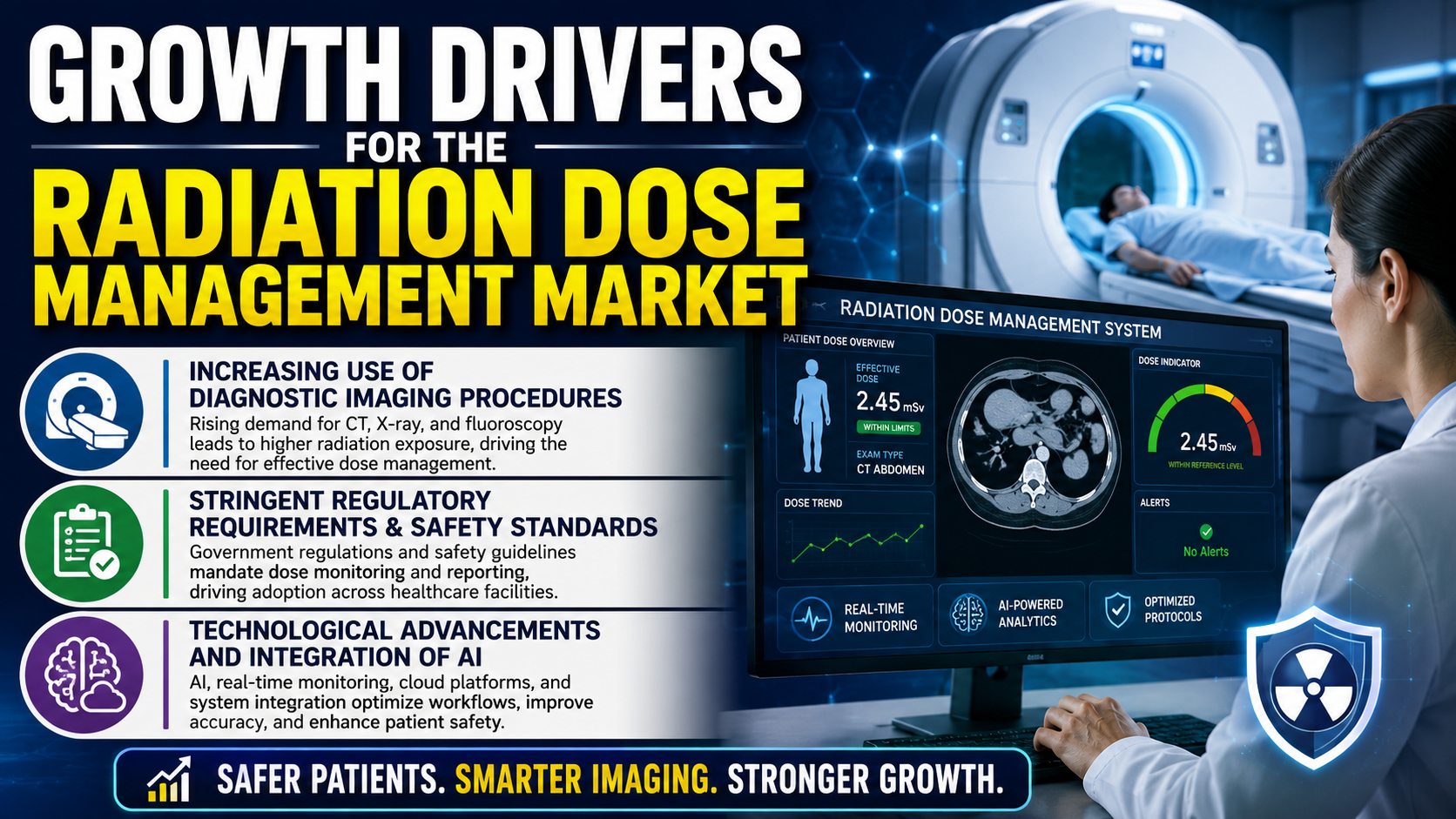
One of the most significant factors fueling market growth is the increasing volume of diagnostic imaging procedures performed worldwide.
Healthcare providers rely heavily on imaging technologies to diagnose and monitor a wide range of conditions, including cancer, cardiovascular disease, neurological disorders, respiratory illnesses, and musculoskeletal injuries. As populations age and chronic disease prevalence increases, demand for diagnostic imaging continues to rise.
Each imaging procedure contributes to cumulative radiation exposure. While individual scans are carefully controlled, repeated procedures can significantly increase a patient's lifetime exposure. This reality has intensified the demand for technologies that can accurately track and optimize radiation doses.
Healthcare organizations are increasingly adopting dedicated dose management systems to ensure imaging procedures remain as safe and efficient as possible. By continuously monitoring exposure levels, these solutions help clinicians make informed decisions and reduce unnecessary radiation while preserving image quality.
Regulatory Pressure Is Reshaping Healthcare Practices
Governments and healthcare regulators around the world have strengthened their focus on radiation safety in recent years.
Regulatory agencies are introducing more comprehensive guidelines requiring healthcare facilities to monitor, record, and report radiation exposure data. Compliance with these regulations is becoming a major driver of technology adoption.
Hospitals and diagnostic centers that fail to meet radiation safety standards may face legal risks, reputational damage, and operational challenges. As a result, many healthcare providers are investing in advanced radiation dose management solutions to maintain compliance and demonstrate their commitment to patient safety.
Beyond regulatory obligations, there is also growing public awareness regarding the risks associated with radiation exposure. Patients are becoming more informed and increasingly expect healthcare providers to prioritize safety alongside clinical effectiveness.
This shift in expectations is encouraging healthcare organizations to adopt technologies that support transparency, accountability, and quality care.
Artificial Intelligence Is Changing the Industry
Few technological developments have generated as much excitement in healthcare as artificial intelligence, and radiation dose management is no exception.
AI-powered solutions are helping healthcare providers move beyond simple monitoring toward intelligent optimization. Advanced systems can analyze vast amounts of imaging data, identify exposure patterns, and recommend adjustments that reduce radiation without compromising diagnostic accuracy.
These solutions can also generate automated alerts when exposure levels exceed recommended thresholds, enabling faster interventions and improved patient protection.
Cloud computing is another important innovation driving industry growth. Cloud-based dose management platforms allow healthcare organizations to centralize data storage, improve accessibility, and facilitate collaboration between departments and facilities.
Integration with electronic health records and imaging systems further enhances workflow efficiency, creating a more connected and intelligent healthcare environment.
As AI capabilities continue to evolve, experts expect these technologies to become increasingly sophisticated, providing predictive analytics and real-time decision support that improve both safety and operational performance.
Recent Innovations Highlight Industry Momentum
The pace of innovation within the radiation dose management market continues to accelerate.
In March 2025, DOSIsoft received FDA 510(k) clearance for PLANET® Onco Dose version 3.2, enabling expanded clinical use in targeted radiation therapy workflows across the United States. This development reflects the growing emphasis on advanced radiation planning and optimization tools.
Additional industry advancements emerged throughout 2025.
In June 2025, Germany-based iQ IMAGE launched iQ-DOSE 2.0, introducing enhanced workflow capabilities, improved data visualization, and greater usability for radiologists and medical physicists. The upgraded platform aims to simplify radiation tracking while improving operational efficiency.
Meanwhile, Salus Scientific introduced its PeRM personal radiation monitoring program in May 2025. The system integrates real-time dosimetry technology into protective equipment, allowing healthcare professionals to monitor exposure levels continuously during procedures.
These innovations illustrate how technology providers are responding to growing demand for smarter, more proactive radiation safety solutions.
The United States Remains a Key Market
The United States continues to lead the radiation dose management sector thanks to its advanced healthcare infrastructure and widespread adoption of diagnostic imaging technologies.
The country performs millions of imaging procedures annually, creating substantial demand for systems that monitor and optimize radiation exposure.
The burden of chronic disease is particularly significant. According to market findings, six out of ten Americans live with at least one chronic illness, while four out of ten have two or more chronic conditions. These health challenges contribute to increased utilization of imaging procedures such as CT scans and X-rays.
As healthcare providers seek to balance diagnostic excellence with patient safety, radiation dose management technologies are becoming increasingly important throughout the U.S. healthcare system.
Strong regulatory oversight, technological innovation, and ongoing investment in healthcare infrastructure are expected to support continued market expansion in the years ahead.
The United Kingdom Strengthens Patient Safety Initiatives
The United Kingdom is also experiencing steady growth in radiation dose management adoption.
Healthcare providers across the country are implementing advanced monitoring solutions to improve clinical outcomes and ensure compliance with radiation safety standards. Government initiatives and healthcare policies encouraging technology adoption have further strengthened market development.
The UK's well-established healthcare system provides a strong foundation for integrating digital healthcare solutions, including radiation dose management platforms. As awareness of radiation safety continues to increase, adoption is expected to expand across hospitals and diagnostic centers nationwide.
India's Healthcare Expansion Creates New Opportunities
India represents one of the most promising growth markets for radiation dose management technologies.
Rapid healthcare infrastructure development, increasing access to advanced diagnostic services, and growing awareness of radiation safety are driving demand throughout the country. Healthcare providers are placing greater emphasis on patient safety while seeking technologies that improve operational efficiency and clinical outcomes.
The scale of India's healthcare expansion is remarkable. According to industry data, the country is expected to have more than 300,000 diagnostic laboratory facilities by 2025. This growth is significantly increasing access to imaging services in both metropolitan and semi-urban regions.
As imaging volumes continue to rise, demand for systematic radiation monitoring and optimization solutions is expected to follow.
Although challenges such as limited resources and uneven awareness remain in certain regions, ongoing investments in healthcare modernization are creating favorable conditions for long-term market growth.
The UAE Invests in Advanced Healthcare Technologies
The United Arab Emirates has emerged as another important market for radiation dose management solutions.
Significant investments in healthcare infrastructure, combined with a strong commitment to innovation and patient safety, are encouraging adoption across the country. Modern healthcare facilities are increasingly implementing advanced technologies that support radiation monitoring, compliance, and workflow optimization.
As the UAE continues its efforts to position itself as a regional healthcare leader, demand for sophisticated radiation management solutions is likely to grow steadily.
Challenges Still Remain
Despite its strong growth trajectory, the radiation dose management market faces several challenges.
One of the most significant barriers is cost. Implementing advanced dose management systems often requires substantial investment in software, hardware, infrastructure, and staff training. For smaller hospitals and healthcare facilities operating under tight budgets, these expenses can be difficult to justify.
Integration also remains a concern. Many healthcare organizations use a variety of imaging, patient record, and workflow systems that may not be fully compatible with new dose management platforms. Achieving seamless interoperability can require additional technical expertise, time, and resources.
Addressing these challenges will be essential for expanding adoption across healthcare systems of all sizes.
Looking Ahead
The future of radiation dose management appears exceptionally promising.
Growing imaging volumes, stricter safety regulations, increased awareness of radiation risks, and rapid technological innovation are creating a strong foundation for long-term market expansion. Artificial intelligence, cloud computing, and advanced analytics are expected to play increasingly important roles in helping healthcare providers optimize radiation exposure while improving patient outcomes.
With the global market projected to exceed US$1.07 billion by 2034, radiation dose management is evolving from a niche healthcare technology into a mainstream requirement for modern medical practice. Healthcare organizations that invest in these solutions today will be better positioned to deliver safer, smarter, and more efficient care tomorrow.
Final Thoughts
Patient safety has become one of the defining priorities of modern healthcare, and radiation dose management sits at the center of that mission. As diagnostic imaging continues to expand across hospitals, clinics, and specialized care centers, healthcare providers face growing pressure to balance clinical accuracy with responsible radiation use.
The industry's rapid growth reflects a broader transformation occurring throughout healthcare—one driven by technology, data, accountability, and patient-centered care. Whether through AI-powered analytics, real-time monitoring systems, or advanced cloud-based platforms, radiation dose management solutions are helping shape a safer future for medical imaging worldwide.
As healthcare systems continue their digital evolution, radiation safety will remain a critical focus, ensuring that life-saving diagnostic technologies can be used effectively while minimizing unnecessary risk for patients and medical professionals alike.
About the Creator
Enjoyed the story? Support the Creator.
Subscribe for free to receive all their stories in your feed.
Comments
There are no comments for this story
Be the first to respond and start the conversation.