
Qatar Poultry Meat Market: Why Is Poultry Emerging as Qatar’s Preferred Protein Choice?
Rising population, expanding foodservice activities, growing health awareness, and government-led food security initiatives are driving the evolution of Qatar’s poultry meat market through 2034.

Qatar’s food industry has undergone remarkable transformation over the past decade. As the country continues to strengthen its economic position, diversify its economy, and enhance food security, demand for reliable and affordable protein sources has grown steadily. Among various meat categories, poultry has emerged as one of the most consumed and preferred protein options due to its affordability, nutritional value, versatility, and compliance with halal dietary requirements.
From household kitchens and quick-service restaurants to luxury hotels and large-scale catering operations, poultry products have become an essential part of everyday food consumption across the country. Rapid urbanization, a growing expatriate population, changing dietary habits, and government investments in local food production continue to support the long-term growth of the poultry meat industry.
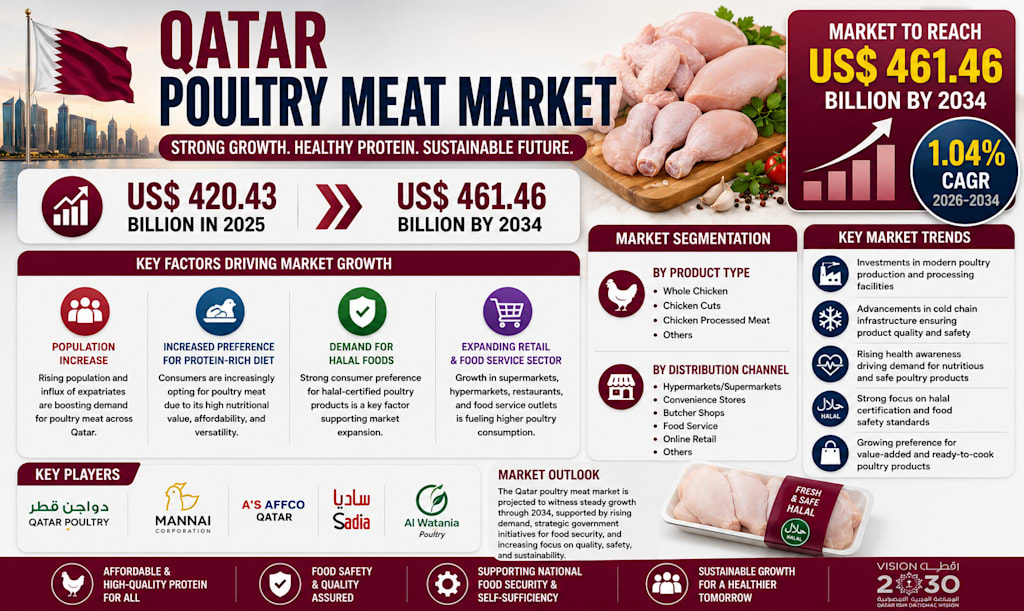
According to Renub Research, the Qatar Poultry Meat Market is projected to grow from US$ 420.43 million in 2025 to US$ 461.46 million by 2034, registering a CAGR of 1.04% between 2026 and 2034. Population growth, increasing demand for protein-rich diets, expanding hospitality infrastructure, and rising consumer preference for halal poultry products are expected to remain key growth drivers throughout the forecast period.
Understanding the Poultry Meat Industry
Poultry meat refers to meat obtained from domesticated birds such as chickens, turkeys, ducks, quails, and other poultry species. Chicken remains the dominant category due to its affordability, broad culinary applications, and consumer familiarity.
Poultry is widely recognized as an excellent source of lean protein, essential amino acids, vitamins B6 and B12, phosphorus, and other nutrients that support muscle development, immunity, and overall health. Compared with many red meat products, poultry generally contains lower levels of fat, making it attractive to health-conscious consumers.
The category encompasses fresh, chilled, frozen, canned, and processed products. Poultry can be consumed in numerous forms, including grilled chicken, roasted dishes, nuggets, meatballs, sausages, deli meats, sandwiches, shawarma, and ready-to-cook meals.
Its versatility and nutritional profile make poultry one of the most important food categories within Qatar’s evolving food ecosystem.
Population Growth Supports Rising Consumption
One of the most important drivers of Qatar’s poultry meat market is population growth.
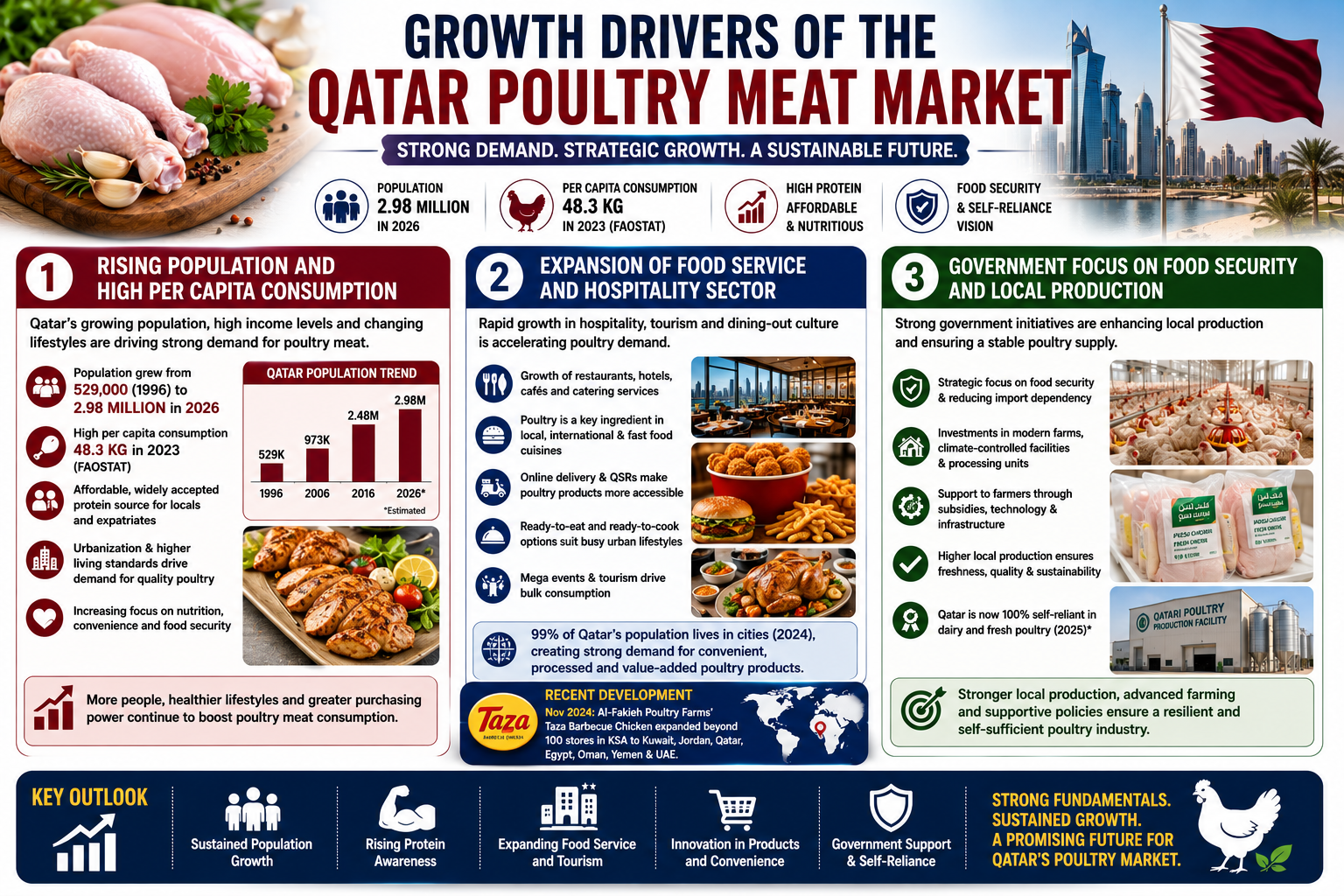
Qatar has experienced significant demographic expansion over the past several decades, driven by economic development, infrastructure projects, and international workforce migration. The country's population has grown substantially, creating sustained demand for affordable and nutritious food products.
Poultry meat benefits directly from this trend because it is widely consumed across diverse cultural and ethnic communities. Both local residents and expatriates view poultry as an essential dietary staple.
As the population continues to grow, foodservice establishments, supermarkets, institutions, and catering companies will require increasing volumes of poultry products to satisfy demand.
This demographic expansion provides a stable foundation for long-term market growth.
High Per Capita Poultry Consumption Encourages Market Development
Qatar already demonstrates relatively high levels of poultry consumption compared to many international markets.
Consumers regularly incorporate poultry into their diets because it offers a practical balance between affordability, nutrition, and convenience. Poultry is used extensively in both traditional Middle Eastern cuisine and international dishes popular throughout the country.
Chicken-based meals are frequently consumed at home, in workplaces, educational institutions, restaurants, and catering events. This widespread acceptance contributes to strong and consistent demand.
Growing awareness regarding healthy eating habits has also encouraged many consumers to replace higher-fat protein sources with poultry products that are perceived as lighter and more nutritious.
As dietary preferences continue evolving, poultry is expected to maintain its position as one of the most important protein categories in Qatar.
Foodservice and Hospitality Expansion Drives Demand
The rapid development of Qatar’s hospitality and foodservice sectors continues to create significant opportunities for poultry suppliers.
Restaurants, hotels, cafés, catering businesses, and quick-service chains rely heavily on poultry products because they are versatile, cost-effective, and widely accepted by consumers from different cultural backgrounds.
The country's ongoing investments in tourism, sports, entertainment, and international business activities have increased demand for hospitality services and food preparation operations.
Poultry plays a central role in menu offerings ranging from traditional Arabic cuisine to Asian, European, American, and fast-food concepts. Chicken sandwiches, grilled meals, shawarma, fried chicken, wraps, and specialty poultry dishes remain among the most popular menu items.
As tourism and hospitality activities continue expanding, poultry consumption is expected to rise accordingly.
Urbanization Changes Consumer Behavior
Qatar is one of the most urbanized countries in the world, with nearly the entire population living in urban areas.
Urban lifestyles often involve busy schedules, dual-income households, and greater reliance on convenient meal solutions. These factors have contributed to growing demand for ready-to-cook and ready-to-eat poultry products.
Consumers increasingly seek food options that offer convenience without compromising nutritional value. Processed poultry products such as nuggets, marinated chicken, meatballs, sausages, and deli meats have gained popularity because they reduce meal preparation time while remaining affordable.
The growth of food delivery services and online grocery platforms has further reinforced this trend, making poultry products more accessible than ever before.
Urbanization is therefore expected to remain a major driver of market development.
Government Focus on Food Security Strengthens Local Production
Food security has become a strategic priority for Qatar, particularly following previous disruptions to international supply chains.
The government has invested heavily in strengthening domestic agricultural production and reducing dependence on imported food products. Poultry production has received significant attention due to its importance within the national food supply.
Investments in modern poultry farms, advanced climate-controlled facilities, efficient processing plants, and agricultural technologies have significantly increased local production capacity.
Government support has also included infrastructure development, technical assistance, and incentives designed to encourage greater domestic production.
These efforts have yielded notable results, with Qatar achieving substantial progress toward poultry self-sufficiency. Increased availability of locally produced poultry has strengthened consumer confidence while improving food security resilience.
Local Poultry Gains Consumer Trust
Consumers increasingly favor locally produced poultry products due to perceptions of freshness, quality, and reliability.
Domestic poultry producers benefit from shorter supply chains, enabling products to reach retail shelves more quickly than imported alternatives. This advantage enhances freshness while reducing transportation-related risks.
Many consumers also appreciate supporting local industries and national food-security objectives.
Retailers frequently highlight locally produced poultry through dedicated displays and promotional campaigns, helping strengthen brand recognition and consumer loyalty.
As local production capabilities continue improving, domestic poultry is expected to capture a growing share of overall market demand.
Fresh and Chilled Poultry Dominates Consumer Preferences
Fresh and chilled poultry remains the most preferred category among many Qatari consumers.
Fresh products are often associated with superior quality, taste, and nutritional value. Government investment in modern slaughterhouses and cold-chain infrastructure has helped ensure consistent product safety and freshness.
Retailers across the country offer extensive selections of fresh poultry products through supermarkets, hypermarkets, specialty stores, and local markets.
Consumers increasingly prioritize minimally processed foods as part of broader health and wellness trends. Fresh poultry aligns well with these preferences and continues to experience strong demand.
The segment is expected to remain a cornerstone of the poultry market throughout the forecast period.
Frozen Poultry and Processed Products Gain Popularity
Frozen poultry products continue to play a critical role within Qatar’s food supply chain.
Frozen products offer extended shelf life, improved inventory management, and year-round availability. Households, restaurants, hotels, and catering businesses all rely on frozen poultry because of its convenience and cost efficiency.
At the same time, processed poultry products are becoming increasingly popular among consumers seeking quick meal solutions. Poultry meatballs, nuggets, sausages, marinated products, and ready-to-cook meals appeal to busy households looking for convenience without sacrificing quality.
As modern lifestyles continue influencing purchasing decisions, both frozen and processed poultry segments are expected to expand steadily.
Supermarkets and Hypermarkets Strengthen Distribution
Modern retail infrastructure plays a central role in poultry distribution across Qatar.
Supermarkets and hypermarkets provide consumers with access to a wide variety of fresh, chilled, frozen, and processed poultry products under one roof. These retail channels emphasize hygiene, food safety, clear labeling, and competitive pricing.
Consumers increasingly prefer organized retail environments because they offer greater product variety and quality assurance.
Private-label offerings, promotional discounts, and loyalty programs further encourage purchases.
Additionally, many retailers have successfully integrated online ordering and home-delivery services, creating a seamless shopping experience that enhances consumer convenience.
Challenges Facing the Qatar Poultry Meat Market
Despite favorable growth prospects, several challenges continue to affect the industry.
Dependence on Imports Remains Significant
Although domestic production has increased considerably, Qatar continues to rely on imported poultry products and imported agricultural inputs.
Global supply-chain disruptions, geopolitical uncertainties, shipping delays, and commodity price fluctuations can affect product availability and pricing.
Maintaining supply stability requires diversification of sourcing strategies and continued investment in local production capacity.
High Production Costs and Environmental Constraints
Qatar’s harsh climate presents operational challenges for poultry farming.
Producers must invest in sophisticated climate-control systems, water management technologies, and advanced infrastructure to maintain optimal production conditions. These requirements increase operational expenses.
Limited agricultural land and dependence on imported feed ingredients further contribute to higher production costs.
Balancing competitiveness with sustainability remains an ongoing challenge for industry participants.
Doha Poultry Meat Market
Doha represents the largest poultry meat market in Qatar.
As the nation’s capital and economic center, Doha benefits from a large population, extensive retail infrastructure, and a vibrant hospitality industry. Consumers enjoy access to a broad range of fresh, chilled, frozen, and processed poultry products through supermarkets, hypermarkets, specialty retailers, and online platforms.
The city’s diverse culinary landscape generates strong demand for poultry across multiple cuisines and dining formats.
Al Khor Poultry Meat Market
Al Khor has experienced growing poultry demand due to residential expansion and industrial development.
The presence of workers associated with energy and industrial sectors contributes to stable consumption levels. Poultry remains popular because of its affordability, accessibility, and nutritional value.
Modern retail development has improved product availability throughout the region.
Al Rayyan Poultry Meat Market
Al Rayyan is one of Qatar’s largest municipalities and a significant contributor to poultry consumption.
A growing population, expanding residential communities, and increasing foodservice activity support market growth. Consumers regularly purchase fresh, chilled, and frozen poultry through supermarkets and convenience stores.
Restaurants and cafés further contribute to demand across the municipality.
Al Dhakira Poultry Meat Market
Although smaller than major urban centers, Al Dhakira continues to experience steady market growth.
Improving infrastructure, increasing consumer awareness regarding healthy eating, and expanding retail accessibility support demand for poultry products.
Enhanced transportation and cold-chain systems have improved product availability throughout the area.
Future Outlook
The future of Qatar’s poultry meat market remains positive.
Population growth, increasing health consciousness, government support for food security, expanding hospitality infrastructure, and rising demand for convenient protein sources will continue supporting market development through 2034.
Investments in local production, advanced farming technologies, cold-chain logistics, and retail modernization are expected to strengthen supply chains and improve overall market efficiency.
As consumers increasingly prioritize nutritious, affordable, and halal-compliant protein options, poultry will remain a central component of Qatar’s food industry.
Final Thoughts
Qatar’s poultry meat market reflects the country’s broader commitment to food security, economic development, and improved consumer well-being. Poultry remains the preferred protein source for many households due to its affordability, versatility, nutritional value, and compatibility with local dietary preferences.
With the market projected to grow from US$ 420.43 million in 2025 to US$ 461.46 million by 2034, opportunities remain strong for producers, processors, retailers, and foodservice operators. Businesses that focus on product quality, supply-chain efficiency, innovation, and sustainability will be best positioned to benefit from the market’s long-term growth potential.
About the Creator
Enjoyed the story? Support the Creator.
Subscribe for free to receive all their stories in your feed.
Comments
There are no comments for this story
Be the first to respond and start the conversation.