
Programmatic Advertising Market, Digital Advertising, AdTech, Artificial Intelligence, Real-Time Bidding, Digital Marketing
Rising digital ad spending, advancements in artificial intelligence, and the growing demand for automated marketing solutions are fueling explosive growth across the global programmatic advertising industry.

The advertising industry is undergoing a profound transformation. Traditional methods of buying and selling advertising space are rapidly being replaced by intelligent, automated systems capable of delivering highly personalized experiences to consumers in real time. As businesses increasingly compete for attention in an increasingly digital world, programmatic advertising has emerged as one of the most powerful tools available to marketers.
Powered by artificial intelligence, machine learning, real-time bidding technologies, and advanced data analytics, programmatic advertising allows brands to reach the right audience at the right time with unprecedented precision. From mobile applications and social media platforms to connected television and digital billboards, programmatic technologies are reshaping how advertising campaigns are planned, executed, and optimized.
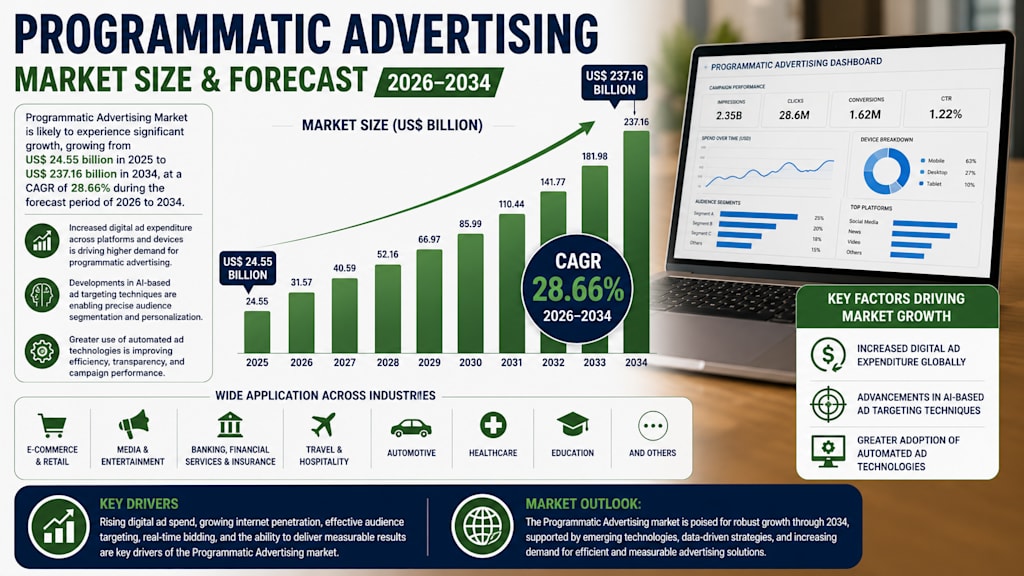
The combination of growing internet penetration, expanding digital media consumption, and advancements in advertising technology is creating enormous opportunities for market growth. According to Renub Research, the global Programmatic Advertising Market is expected to expand from US$ 24.55 billion in 2025 to US$ 237.16 billion by 2034, registering an extraordinary compound annual growth rate (CAGR) of 28.66% between 2026 and 2034. This remarkable forecast highlights the increasing importance of automation and data-driven decision-making in modern advertising.
Understanding Programmatic Advertising
Programmatic advertising refers to the automated process of buying and selling digital advertising inventory through sophisticated software platforms and algorithms. Unlike traditional advertising transactions that involve manual negotiations and direct sales processes, programmatic advertising uses artificial intelligence and real-time bidding systems to execute transactions almost instantly.
These technologies analyze vast amounts of consumer data, including browsing behavior, demographics, interests, device usage, and purchasing patterns. Based on this information, advertisers can deliver highly targeted messages to specific audiences across multiple digital channels.
The automation of advertising transactions improves efficiency, reduces costs, and increases campaign effectiveness. Advertisers gain access to real-time performance insights while publishers maximize the value of their advertising inventory.
As digital ecosystems continue expanding, programmatic advertising has become a critical component of modern marketing strategies worldwide.
Digital Media Consumption Is Fueling Market Growth
One of the strongest drivers of the programmatic advertising market is the rapid growth in digital media consumption.
Consumers increasingly spend their time online, engaging with websites, social media platforms, streaming services, mobile applications, podcasts, and digital news outlets. This shift has fundamentally changed how brands interact with audiences.
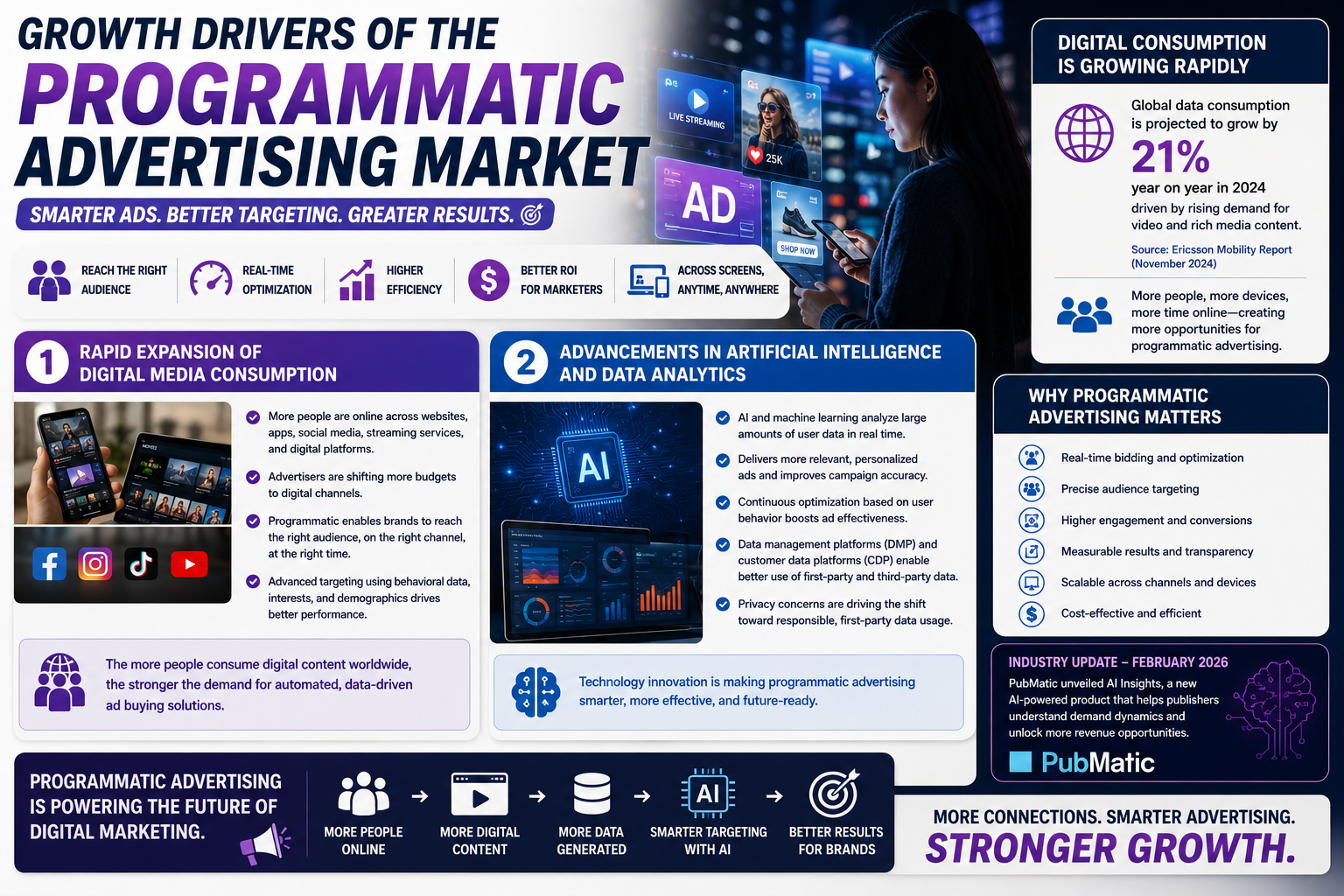
According to information cited in the market report, the November 2024 Ericsson Mobility Report projected global mobile data traffic growth of approximately 21% year-over-year, driven largely by increasing demand for video content and digital media experiences.
As consumers spend more time in digital environments, advertisers are allocating larger portions of their marketing budgets to online channels. Programmatic platforms allow them to manage these investments efficiently while maximizing return on investment.
The ongoing expansion of digital media ecosystems is expected to remain one of the most important catalysts for market growth.
Artificial Intelligence Is Revolutionizing Advertising
Artificial intelligence has become one of the most transformative technologies within the programmatic advertising industry.
Modern AI systems can process enormous amounts of consumer data in real time, enabling advertisers to make highly informed decisions about audience targeting, bidding strategies, content personalization, and campaign optimization.
Machine learning algorithms continuously analyze campaign performance and adjust advertising strategies based on user interactions and behavioral patterns. This dynamic optimization helps improve engagement rates, conversion rates, and overall advertising effectiveness.
AI also supports predictive analytics, allowing advertisers to anticipate consumer preferences and deliver more relevant messages. These capabilities have significantly improved the precision and efficiency of digital advertising campaigns.
As artificial intelligence technologies continue evolving, their influence on programmatic advertising is expected to grow even further.
Data Analytics Enhances Targeting Capabilities
Advanced data analytics is another major factor contributing to market expansion.
Programmatic advertising platforms leverage multiple sources of data to create detailed audience profiles. These profiles help advertisers understand consumer interests, purchasing behaviors, online activities, and engagement preferences.
Customer Data Platforms (CDPs) and Data Management Platforms (DMPs) play a crucial role in organizing and analyzing this information. These tools enable marketers to create highly targeted campaigns designed to reach specific consumer segments.
The growing importance of first-party data has become particularly significant as privacy regulations reshape digital advertising practices. Organizations increasingly rely on their own customer data to maintain effective targeting capabilities while complying with evolving privacy requirements.
Enhanced analytics capabilities continue improving campaign performance and strengthening the value proposition of programmatic advertising solutions.
Omnichannel Marketing Strategies Support Expansion
The increasing adoption of omnichannel marketing strategies is accelerating demand for programmatic advertising technologies.
Modern consumers interact with brands across numerous touchpoints, including smartphones, desktop computers, connected televisions, social media platforms, streaming services, and digital out-of-home displays. Maintaining consistent messaging across these channels has become essential for successful marketing campaigns.
Programmatic platforms allow advertisers to manage campaigns centrally while delivering coordinated experiences across multiple environments. This approach improves brand consistency and enables marketers to track performance more effectively.
By integrating data from various channels, advertisers gain a more comprehensive understanding of consumer behavior and can optimize campaigns accordingly.
As omnichannel engagement becomes increasingly important, programmatic advertising is expected to play a central role in supporting integrated marketing strategies.
Real-Time Bidding Continues to Dominate
Real-Time Bidding (RTB) remains one of the most influential components of the programmatic advertising ecosystem.
RTB enables advertisers to participate in automated auctions for advertising impressions that occur within milliseconds. Whenever a user visits a website or opens an application, advertisers can bid for the opportunity to display their advertisements.
These bidding decisions are based on numerous factors, including demographics, browsing history, device information, location, and behavioral data. The process ensures that advertising inventory is allocated efficiently while maximizing relevance for consumers.
RTB has transformed digital advertising by reducing manual intervention and improving campaign performance. Its ability to optimize spending and targeting continues driving widespread adoption across the industry.
Mobile Advertising Leads Market Development
The mobile advertising segment has become one of the fastest-growing areas within the programmatic advertising market.
Smartphones have become the primary gateway to digital content for billions of consumers worldwide. Mobile devices are used for social networking, video streaming, online shopping, gaming, communication, and information consumption.
Programmatic platforms enable advertisers to purchase mobile advertising inventory across applications, websites, and mobile video environments. Advanced targeting capabilities based on location data, app usage patterns, and device characteristics enhance campaign effectiveness.
The continued rollout of 5G networks is expected to further accelerate mobile media consumption, creating additional opportunities for programmatic advertising growth.
As mobile-first behaviors become increasingly prevalent, mobile advertising is likely to remain a dominant market segment.
Display Advertising Maintains Strong Market Presence
Display advertising remains a foundational component of programmatic marketing strategies.
Banner advertisements, rich media content, and visual display formats continue providing brands with effective tools for building awareness and engaging consumers. Programmatic technologies allow advertisers to deliver these formats to highly specific audience segments based on data-driven insights.
Dynamic creative optimization enables personalized advertising experiences by automatically adapting content to individual user preferences and behaviors.
Retargeting campaigns also benefit significantly from display advertising capabilities, helping brands reconnect with consumers who have previously interacted with their products or services.
Despite the growth of newer advertising formats, display advertising continues to play an important role within the broader programmatic ecosystem.
Healthcare Industry Embraces Programmatic Advertising
Healthcare organizations are increasingly utilizing programmatic advertising to reach patients, caregivers, and healthcare professionals.
Hospitals, pharmaceutical companies, wellness brands, and healthcare providers use programmatic platforms to deliver educational content, promote services, and raise awareness about health conditions and treatments.
Advanced targeting capabilities allow healthcare marketers to reach relevant audiences while maintaining compliance with privacy regulations and ethical standards.
As healthcare organizations continue expanding their digital marketing efforts, programmatic advertising is expected to become an increasingly valuable communication channel within the sector.
Movement-Based Advertising Creates New Opportunities
Movement-based advertising represents an emerging segment within the programmatic advertising landscape.
This approach utilizes location data, GPS technology, geofencing, and mobile device signals to deliver advertisements based on consumer movements and physical proximity to specific locations.
Retailers, travel companies, hospitality providers, and event organizers are among the businesses benefiting from location-aware advertising strategies. These campaigns enable brands to deliver highly relevant messages at precisely the right moments.
As mobile technology continues evolving, movement-based advertising is expected to gain increasing importance within location-driven marketing initiatives.
Regional Markets Continue Expanding
United States
The United States remains the largest and most advanced programmatic advertising market globally. High levels of digital ad spending, widespread adoption of AI technologies, and sophisticated data analytics capabilities continue driving innovation and market growth.
United Kingdom
The United Kingdom benefits from strong digital infrastructure, high internet penetration, and widespread adoption of data-driven marketing strategies. Programmatic advertising is extensively used across display, mobile, video, and connected television channels.
India
India is emerging as one of the fastest-growing programmatic advertising markets due to rising internet usage, smartphone adoption, and digital content consumption. Mobile-first consumer behavior and regional-language content platforms are creating substantial growth opportunities.
Saudi Arabia
Saudi Arabia is experiencing steady growth as digital transformation initiatives and high smartphone penetration drive demand for targeted advertising solutions. Government-led modernization efforts continue supporting the development of digital marketing ecosystems.
Challenges Facing the Industry
Despite its impressive growth trajectory, the programmatic advertising market faces several challenges.
Data privacy regulations such as the General Data Protection Regulation (GDPR) and the California Consumer Privacy Act (CCPA) have introduced new compliance requirements that affect data collection and targeting practices.
The gradual elimination of third-party cookies is also reshaping how advertisers approach audience targeting and campaign measurement. Organizations increasingly rely on first-party data strategies to adapt to these changes.
Ad fraud remains another significant concern. Fraudulent traffic, fake impressions, and invalid clicks can reduce campaign effectiveness and waste advertising budgets.
To address these issues, industry participants are investing in advanced fraud detection technologies, blockchain solutions, and improved transparency mechanisms.
Market Forecast: Exceptional Growth Through 2034
According to Renub Research, the global Programmatic Advertising Market is projected to increase from US$ 24.55 billion in 2025 to US$ 237.16 billion by 2034, reflecting a remarkable CAGR of 28.66% during the forecast period from 2026 to 2034. Growth will be fueled by increasing digital media consumption, artificial intelligence advancements, omnichannel marketing adoption, and expanding investment in automated advertising technologies.
The market's exceptional forecast underscores the growing importance of data-driven automation within the global advertising industry.
Final Thoughts
Programmatic advertising is transforming how brands connect with consumers in an increasingly digital world. By combining artificial intelligence, advanced analytics, real-time bidding, and automated decision-making, programmatic platforms enable marketers to achieve greater efficiency, precision, and effectiveness than ever before.
With Renub Research forecasting growth from US$ 24.55 billion in 2025 to US$ 237.16 billion by 2034, the industry is positioned for extraordinary expansion. Continued innovation in AI, data management, mobile technology, and omnichannel engagement will further strengthen programmatic advertising's role in modern marketing strategies.
About the Creator
Enjoyed the story? Support the Creator.
Subscribe for free to receive all their stories in your feed.
Comments
There are no comments for this story
Be the first to respond and start the conversation.