
Precision at the Speed of Life: How Molecular Diagnostics Is Reshaping Healthcare Across the United States
Advances in PCR, genomic sequencing, personalized medicine, cancer testing, and rapid disease detection are driving a new era of diagnostic innovation throughout the United States healthcare system.

Modern healthcare is increasingly defined by one critical objective: detecting diseases earlier and treating them more precisely. In a world where cancer, infectious diseases, and chronic illnesses continue to challenge healthcare systems, timely and accurate diagnosis has become more important than ever.
Traditional diagnostic approaches remain valuable, but they often rely on symptoms that appear after diseases have already progressed. Molecular diagnostics is changing that reality.
By analyzing DNA, RNA, and other molecular markers, clinicians can now identify diseases with unprecedented accuracy, often before severe symptoms emerge. These technologies are enabling healthcare providers to make faster decisions, develop personalized treatment plans, and improve patient outcomes across numerous medical specialties.
As precision medicine gains momentum and healthcare systems increasingly prioritize early intervention, molecular diagnostics has become one of the most influential sectors in American healthcare.
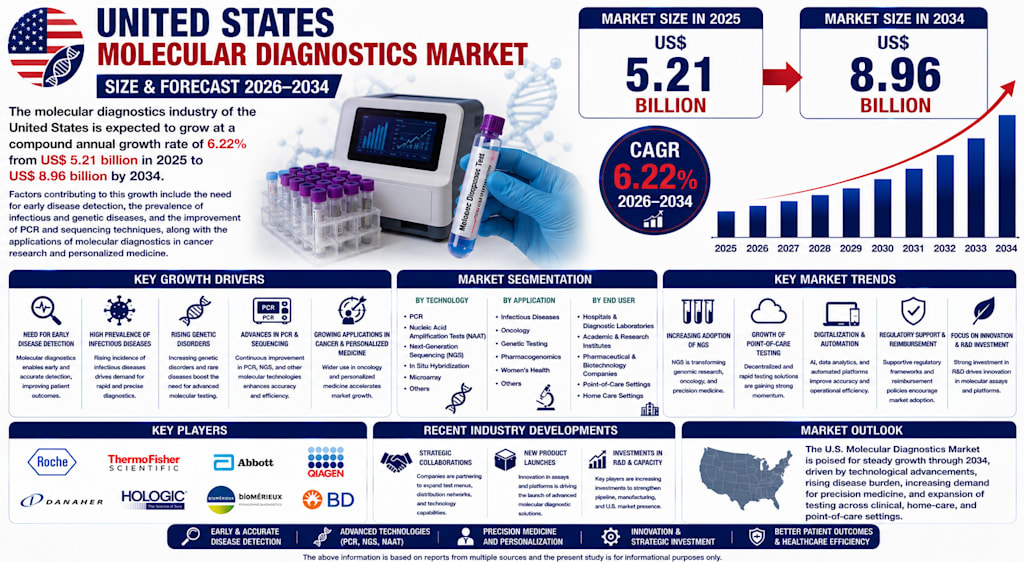
According to Renub Research, the United States Molecular Diagnostics Market is projected to grow from US$ 5.21 billion in 2025 to US$ 8.96 billion by 2034, expanding at a compound annual growth rate (CAGR) of 6.22% during the forecast period. Rising demand for early disease detection, increasing prevalence of chronic and infectious diseases, advances in PCR and sequencing technologies, and growing applications in personalized medicine are among the key factors driving market growth.
As diagnostic science continues evolving, molecular diagnostics is becoming a cornerstone of modern healthcare delivery across the United States.
Understanding Molecular Diagnostics
Molecular diagnostics is a specialized field of medical testing that analyzes biological markers found within the genome and proteome.
Rather than focusing solely on visible symptoms or conventional laboratory cultures, molecular diagnostics examines genetic material and molecular signatures directly.
Common technologies include:
Polymerase Chain Reaction (PCR), Next-Generation Sequencing (NGS), nucleic acid amplification methods, microarrays, and advanced molecular analysis platforms.
These technologies can detect infectious diseases, identify genetic mutations, support cancer diagnosis, guide treatment decisions, and predict therapeutic responses.
Because molecular testing offers exceptional accuracy and sensitivity, it has become an increasingly important tool in clinical decision-making.
Healthcare providers are using molecular diagnostics to improve patient outcomes while reducing unnecessary treatments and healthcare costs.
Rising Disease Burden Is Fueling Demand
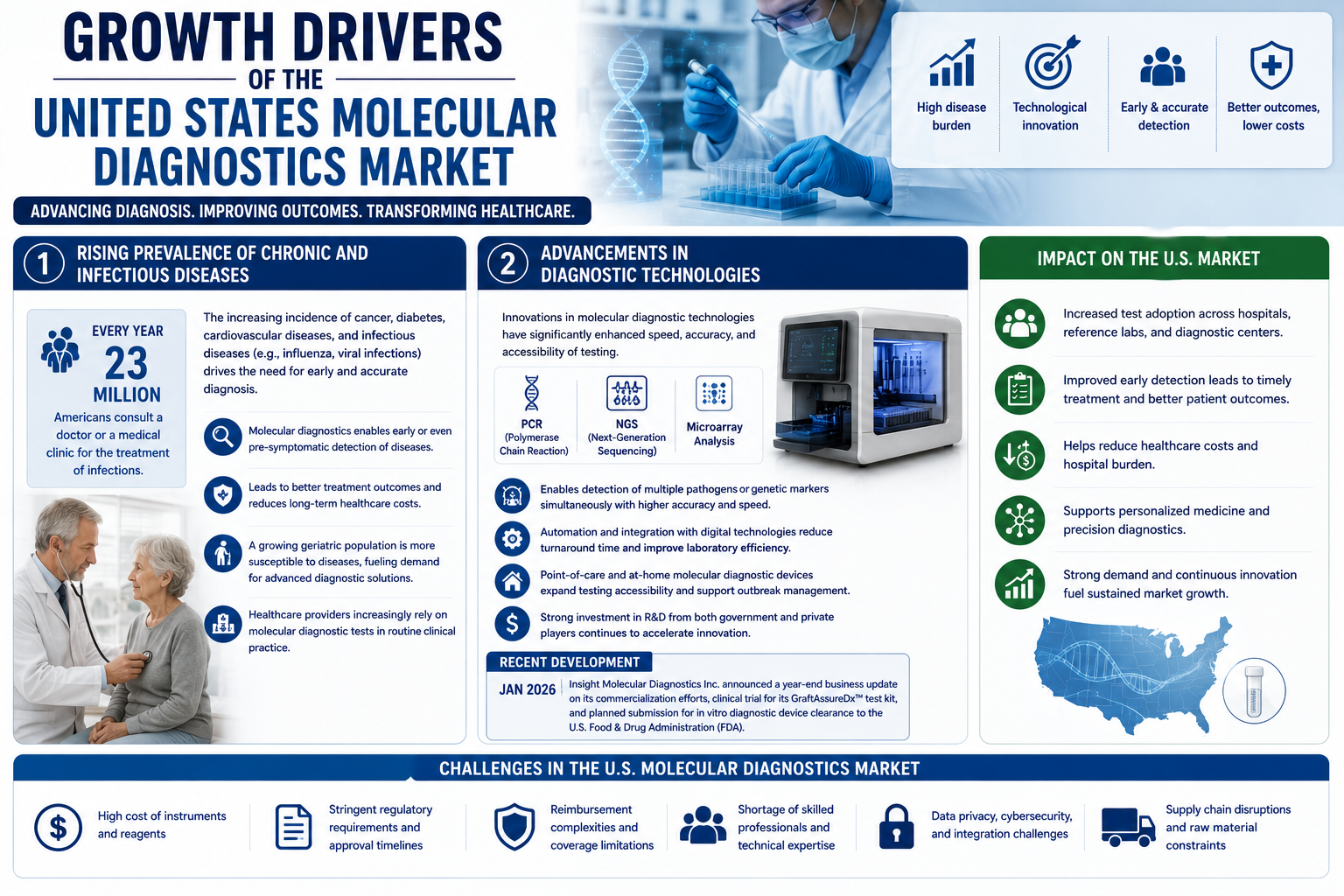
One of the strongest drivers of market growth is the increasing prevalence of chronic and infectious diseases across the United States.
Every year, millions of Americans require medical evaluation and treatment for infectious illnesses, chronic conditions, and complex diseases that benefit from early diagnosis.
Conditions such as:
Cancer, diabetes, cardiovascular disease, influenza, respiratory infections, and viral illnesses require rapid and accurate detection to optimize treatment outcomes.
Molecular diagnostics enables healthcare providers to identify diseases at earlier stages, often before severe symptoms appear.
Early detection allows clinicians to intervene sooner, improving survival rates and reducing long-term healthcare expenditures.
The aging population further contributes to demand.
Older adults face higher risks of chronic illnesses and often require more frequent diagnostic testing.
As disease prevalence continues increasing, molecular diagnostics is becoming an essential component of patient care.
Technological Innovation Continues to Transform Testing
Advancements in diagnostic technologies remain a major catalyst for market expansion.
Modern molecular testing platforms are significantly faster, more sensitive, and more versatile than earlier generations.
Technologies such as PCR, NGS, and microarray analysis now enable clinicians to detect multiple pathogens and biomarkers simultaneously.
Automation has further improved laboratory efficiency by reducing manual intervention and accelerating turnaround times.
Advanced digital integration allows laboratories to manage larger testing volumes while maintaining high levels of accuracy.
A notable example occurred in January 2026 when Insight Molecular Diagnostics announced progress related to commercialization efforts, clinical trials for its GraftAssureDx™ test kit, and future regulatory submissions to the U.S. Food and Drug Administration.
These developments highlight the industry's commitment to expanding diagnostic capabilities and improving patient outcomes.
As innovation continues accelerating, molecular diagnostics is expected to become even more integrated into routine clinical practice.
Personalized Medicine Is Creating New Opportunities
The growing adoption of personalized medicine represents another powerful driver of market growth.
Traditional treatment approaches often rely on generalized protocols that may not be equally effective for all patients.
Personalized medicine seeks to tailor therapies according to an individual's genetic makeup, disease characteristics, and biological profile.
Molecular diagnostics provides the critical information necessary to support this approach.
By identifying specific genetic mutations and biomarkers, clinicians can select treatments that offer the greatest likelihood of success while minimizing side effects.
This strategy is particularly important in oncology, where targeted therapies increasingly depend on molecular testing results.
The growing popularity of companion diagnostics—tests developed alongside specific drugs—is further strengthening demand.
In February 2026, the U.S. Food and Drug Administration issued draft guidance supporting targeted individualized therapies for small patient populations where traditional randomized studies may not be feasible.
Such initiatives demonstrate increasing regulatory support for personalized healthcare approaches.
Cancer Diagnostics Remain a High-Growth Segment
Among all applications, oncology represents one of the fastest-growing areas within the molecular diagnostics market.
Cancer treatment increasingly depends on understanding the genetic characteristics of tumors.
Molecular diagnostics allows clinicians to:
Identify mutations, evaluate biomarkers, guide targeted therapies, monitor treatment response, and detect disease recurrence.
Technologies such as PCR and next-generation sequencing are widely used for tumor profiling and precision oncology applications.
Liquid biopsy has emerged as a particularly promising innovation.
Unlike traditional tissue biopsies, liquid biopsy allows clinicians to analyze tumor-related genetic material through simple blood samples.
This non-invasive approach improves patient comfort while enabling ongoing disease monitoring.
As cancer incidence continues rising nationwide, demand for advanced oncology diagnostics is expected to remain strong.
Pharmacogenomics Is Expanding Precision Healthcare
Pharmacogenomics is becoming an increasingly important component of molecular diagnostics.
This field examines how genetic variations influence individual responses to medications.
Understanding these genetic differences helps clinicians determine which treatments are most likely to be effective and which may produce adverse effects.
Applications span multiple therapeutic areas, including:
Cancer treatment, cardiovascular medicine, psychiatry, and chronic disease management.
Pharmaceutical companies increasingly incorporate pharmacogenomic testing into drug development programs.
Companion diagnostics are becoming more common, supporting personalized prescribing decisions and improving treatment outcomes.
As awareness of precision medicine grows among both patients and healthcare providers, pharmacogenomics is expected to become a major driver of future market growth.
Hospitals Lead Adoption Across the Healthcare System
Hospitals remain the largest end-user segment within the United States molecular diagnostics market.
Modern hospitals perform high volumes of diagnostic testing and depend on rapid, accurate results to guide clinical decisions.
Molecular diagnostics plays a critical role in detecting:
Infectious diseases, cancer, genetic disorders, and numerous other medical conditions.
The implementation of automated systems has significantly improved laboratory efficiency while reducing processing times.
Hospitals are also leading adopters of precision medicine initiatives, driving demand for advanced molecular testing platforms.
Supportive reimbursement policies, healthcare infrastructure improvements, and government initiatives continue encouraging adoption.
As healthcare systems increasingly emphasize personalized care, hospital demand for molecular diagnostics is expected to remain strong.
In Situ Hybridization Continues Advancing Cancer Detection
In situ hybridization technologies represent an important segment within the market.
These methods enable the detection and localization of specific nucleic acid sequences directly within tissue samples.
Applications are particularly important in oncology.
Techniques such as Fluorescence In Situ Hybridization (FISH) and Chromogenic In Situ Hybridization (CISH) help identify gene amplifications, chromosomal abnormalities, and other critical molecular characteristics.
Advancements in digital pathology and imaging technologies have further enhanced the accuracy and efficiency of these methods.
Although more complex and costly than some alternative approaches, in situ hybridization remains an essential tool in modern cancer diagnostics.
Mass Spectrometry Is Expanding Clinical Applications
Mass spectrometry has become increasingly important across multiple diagnostic disciplines.
The technology enables highly accurate detection and quantification of biomolecules, making it valuable for:
Proteomics, metabolomics, toxicology, biomarker research, and clinical diagnostics.
Improved instrument performance has enhanced speed, sensitivity, and analytical precision.
Clinical laboratories increasingly use mass spectrometry for diagnosing metabolic disorders, infectious diseases, and other complex conditions.
Strong research funding and growing demand for advanced analytical capabilities continue supporting market expansion.
As personalized medicine evolves, mass spectrometry is expected to play an increasingly important role in healthcare delivery.
California Leads the National Market
California remains one of the largest and most influential molecular diagnostics markets in the United States.
Several factors contribute to its leadership position.
The state benefits from a strong biotechnology ecosystem, extensive research and development activity, advanced healthcare infrastructure, and significant venture capital investment.
California's role as a center for innovation supports rapid adoption of new diagnostic technologies.
Demand for precision medicine, cancer diagnostics, and genetic testing remains particularly strong.
The state's large population further increases demand for advanced healthcare services.
Despite regulatory and cost challenges, California continues shaping the future of molecular diagnostics nationwide.
Washington and New Jersey Strengthen Innovation
Washington and New Jersey also play important roles in industry growth.
Washington benefits from strong academic research institutions, biotechnology companies, and healthcare organizations concentrated around Seattle.
Investments in next-generation sequencing, digital diagnostics, and precision medicine initiatives continue supporting market expansion.
New Jersey remains a major hub for pharmaceutical and biotechnology companies.
The state's concentration of healthcare organizations, research facilities, and skilled professionals creates a favorable environment for molecular diagnostics development.
Growing demand for companion diagnostics and personalized medicine further supports industry growth.
Challenges Continue to Affect Adoption
Despite strong growth prospects, several challenges remain.
One of the most significant obstacles is cost.
Advanced molecular diagnostic tests often require expensive equipment, specialized reagents, and highly trained personnel.
Although reimbursement coverage has improved, financial barriers continue affecting access in some healthcare settings.
Laboratories also face ongoing expenses associated with equipment upgrades and quality-control requirements.
Regulatory complexity represents another challenge.
The molecular diagnostics industry operates under strict oversight from agencies such as the FDA.
While these regulations help ensure safety and reliability, they can also delay product approvals and increase development costs.
Smaller companies often face particular difficulties navigating evolving regulatory requirements.
Addressing these challenges will be important for ensuring continued innovation and broader access to advanced diagnostic technologies.
Final Thoughts
Molecular diagnostics is rapidly transforming healthcare across the United States.
By enabling earlier detection, greater diagnostic accuracy, personalized treatment planning, and improved disease monitoring, these technologies are helping clinicians make more informed decisions while improving patient outcomes.
Advances in PCR, sequencing, pharmacogenomics, oncology diagnostics, and precision medicine continue expanding the role of molecular testing throughout the healthcare system.
With the market projected to grow from US$ 5.21 billion in 2025 to US$ 8.96 billion by 2034, opportunities for innovation and investment remain substantial.
As healthcare increasingly moves toward personalized, data-driven care, molecular diagnostics will continue serving as one of the most important foundations of modern medicine—helping physicians diagnose earlier, treat smarter, and improve lives across the nation.a
About the Creator
Enjoyed the story? Support the Creator.
Subscribe for free to receive all their stories in your feed.
Comments
There are no comments for this story
Be the first to respond and start the conversation.