
Polybutylene Terephthalate (PBT) Market Set to Reach US$ 5.56 Billion by 2033 as Demand Accelerates Across Automotive and Electronics Industries
Rising Adoption of Lightweight Engineering Plastics, EV Components, and Advanced Electronics Fuels Global PBT Market Expansion Through 2033

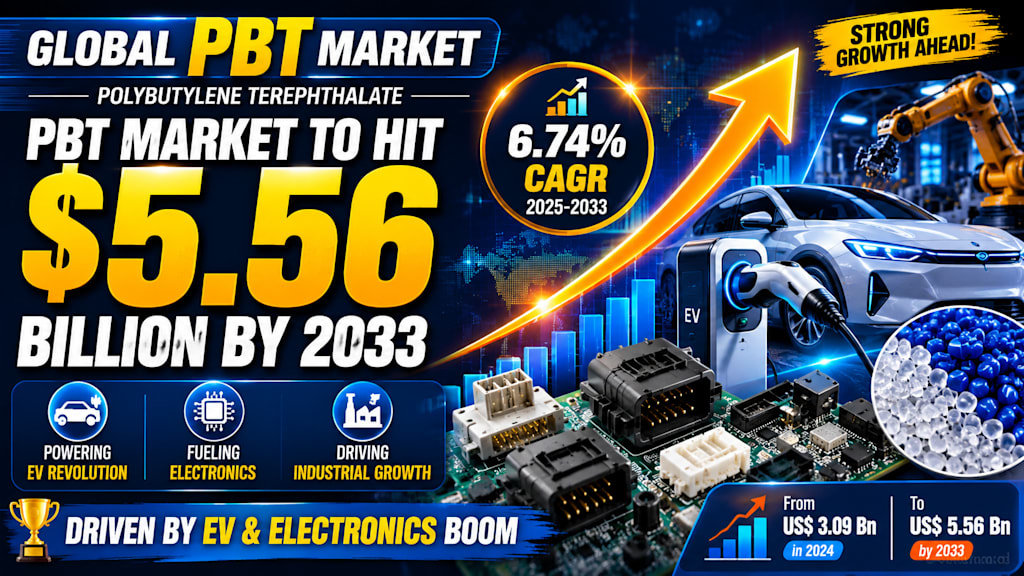
Polybutylene Terephthalate (PBT) Market Outlook 2025–2033
The global Polybutylene Terephthalate (PBT) market is entering a period of sustained growth as industries increasingly seek lightweight, durable, and high-performance materials capable of meeting modern manufacturing requirements. According to Renub Research, the Polybutylene Terephthalate (PBT) Market is projected to grow from US$ 3.09 billion in 2024 to US$ 5.56 billion by 2033, expanding at a CAGR of 6.74% during 2025–2033.
The growing utilization of PBT in automotive systems, electrical and electronic components, industrial equipment, and emerging electric vehicle applications is creating significant opportunities for manufacturers worldwide. With superior thermal stability, chemical resistance, dimensional stability, and excellent electrical insulation properties, PBT has become one of the most preferred engineering thermoplastics across multiple industries.
As global industries transition toward sustainability, electrification, and lightweight manufacturing, PBT is positioned as a critical material supporting next-generation products and technologies.
Understanding Polybutylene Terephthalate (PBT)
Polybutylene Terephthalate is a semi-crystalline engineering thermoplastic polyester widely recognized for its exceptional mechanical and electrical properties. Ranked among the top engineering plastics globally, PBT combines strength, rigidity, durability, and processability in a single material.
The material offers several advantages, including:
High mechanical strength
Excellent heat resistance
Superior dimensional stability
Low moisture absorption
Strong chemical resistance
Excellent electrical insulation
Good surface finish and moldability
These properties make PBT highly suitable for precision-engineered applications where reliability and performance are essential.
Manufacturers increasingly use PBT to replace traditional materials such as stainless steel, cast iron, ceramics, and bronze in numerous industrial and automotive applications. This substitution trend is helping reduce product weight while maintaining or improving performance characteristics.
Automotive Industry Emerges as a Major Growth Engine
The automotive sector remains one of the most influential contributors to PBT demand worldwide.
Modern vehicles require materials capable of withstanding high temperatures, chemical exposure, vibration, and mechanical stress. PBT fulfills these requirements while offering significant weight reduction compared with traditional metals.
Common automotive applications include:
Sensors
Connectors
Switches
Fuse boxes
Ignition system components
Lighting systems
Motor housings
Under-the-hood components
The rapid growth of electric vehicles (EVs) is creating even greater demand for PBT materials. EVs require extensive electrical systems, battery management components, charging connectors, and thermal management solutions, all of which benefit from PBT's superior insulation and heat-resistant properties.
As automakers worldwide continue prioritizing lightweight vehicle design to improve efficiency and reduce emissions, PBT adoption is expected to increase substantially throughout the forecast period.
Expanding Electronics Industry Strengthens Market Demand
The electrical and electronics industry represents another major revenue-generating segment for the global PBT market.
Consumer electronics manufacturers continuously seek materials that deliver:
High electrical insulation
Thermal resistance
Flame retardancy
Dimensional accuracy
Long-term reliability
PBT fulfills these requirements effectively, making it a preferred choice for numerous electronic applications.
Common electronics applications include:
Circuit breakers
Electrical connectors
Switch housings
Power distribution systems
Printed circuit board components
Insulators
Smart device components
The ongoing expansion of digital infrastructure, 5G networks, smart homes, industrial automation, and Internet of Things (IoT) technologies is further boosting demand for high-performance engineering plastics.
As electronic devices become smaller, smarter, and more powerful, the need for reliable polymer solutions such as PBT is expected to grow significantly.
Sustainability Trends Creating New Opportunities
Sustainability has become a central focus across industries worldwide.
Governments, manufacturers, and consumers increasingly demand environmentally responsible materials that reduce resource consumption and carbon emissions.
PBT contributes to these objectives through:
Lightweight design capabilities
Reduced energy consumption during transportation
Recyclability potential
Long product life cycles
Material efficiency
Manufacturers are also investing heavily in bio-based and recycled-content PBT solutions. These innovations aim to reduce dependence on petrochemical feedstocks while supporting circular economy initiatives.
As sustainability regulations become more stringent globally, environmentally friendly PBT alternatives are likely to emerge as a major competitive differentiator in the market.
Growing Industrial Applications Supporting Long-Term Expansion
Beyond automotive and electronics, PBT continues gaining traction across numerous industrial applications.
Its resistance to chemicals, heat, moisture, and wear makes it suitable for demanding operational environments.
Industrial sectors utilizing PBT include:
Manufacturing equipment
Industrial automation systems
Fluid handling systems
Pumps and valves
Construction equipment
Telecommunications infrastructure
Consumer appliances
As industrial modernization accelerates worldwide, manufacturers increasingly prefer engineered thermoplastics capable of enhancing operational performance while reducing maintenance requirements.
This trend is expected to strengthen PBT demand across multiple industrial sectors over the next decade.
Challenges Facing the PBT Market
Raw Material Price Volatility
One of the primary challenges affecting the PBT market is fluctuating raw material costs.
Key feedstocks used in PBT production are derived from petrochemicals, making pricing vulnerable to:
Crude oil market fluctuations
Supply chain disruptions
Geopolitical uncertainties
Refinery capacity constraints
Global economic conditions
Sudden increases in raw material costs can impact manufacturer profitability and create pricing challenges for end users.
Environmental Regulations and Compliance Pressures
Despite being recyclable, conventional PBT remains largely dependent on fossil fuel-derived raw materials.
Governments worldwide continue introducing stricter environmental regulations targeting:
Plastic waste reduction
Carbon emissions
Sustainable manufacturing practices
Circular economy initiatives
Compliance with evolving environmental standards may require significant investments in research, production upgrades, and sustainable product development.
Manufacturers must balance environmental responsibility with performance requirements to maintain competitiveness.
Regional Analysis
Asia-Pacific Leads Global Consumption and Production
Asia-Pacific dominates the global PBT market due to rapid industrialization, strong manufacturing capabilities, and robust automotive and electronics production.
Key growth drivers include:
Expanding automotive manufacturing
Large-scale electronics production
Infrastructure development
Rising consumer spending
Increasing industrial automation
China, Japan, South Korea, and India continue serving as major demand centers for engineering plastics, including PBT.
The region is expected to maintain its leadership position throughout the forecast period.
United States PBT Market
The United States remains a significant contributor to global PBT demand.
Growing adoption of electric vehicles, industrial automation, and advanced electronics manufacturing is creating substantial opportunities for PBT producers.
The country's focus on innovation, lightweight materials, and sustainable manufacturing practices continues to support market growth.
Additionally, advancements in flame-retardant and bio-based PBT formulations are expanding application possibilities across high-value industries.
United Kingdom PBT Market
The UK market benefits from increasing adoption of advanced engineering materials across automotive and industrial sectors.
The transition toward electric mobility and smart infrastructure is driving demand for thermally stable and electrically efficient polymers.
Government initiatives supporting sustainability and advanced manufacturing technologies further strengthen growth prospects for the UK PBT industry.
India PBT Market
India is emerging as one of the fastest-growing markets for PBT globally.
Rapid industrialization, expanding automotive production, and growing electronics manufacturing are creating favorable market conditions.
Government initiatives such as Make in India are encouraging domestic manufacturing and investment in advanced materials.
As India's electric vehicle ecosystem continues developing, demand for PBT components is expected to accelerate significantly.
United Arab Emirates PBT Market
The UAE market is benefiting from economic diversification and industrial expansion initiatives.
Growing investments in:
Smart cities
Renewable energy
Transportation infrastructure
Electronics manufacturing
are increasing demand for high-performance engineering plastics.
Although local production remains limited, rising industrial activity and strong import capabilities are supporting market growth across the region.
Market Segmentation
By Type
Industrial Grade
Commercial Grade
By Processing Method
Injection Molding
Extrusion
Blow Molding
Others
By End Use
Automotive
Extrusion Products
Electrical and Electronics
Others
Competitive Landscape
The global PBT market remains highly competitive, with leading manufacturers focusing on product innovation, sustainability initiatives, capacity expansion, and strategic partnerships.
Major industry participants include:
BASF SE
Celanese Corporation
Chang Chun Group
Evonik Industries AG
Lanxess
LG Chem
Mitsubishi Chemical Group Corporation
NAN YA Plastics Industrial Co., Ltd.
RTP Company
SABIC
These companies continue investing in advanced material technologies to address evolving customer requirements across automotive, electronics, and industrial applications.
10 Recent Developments Among Leading PBT Market Companies
1. BASF SE
BASF expanded its engineering plastics portfolio with advanced PBT grades designed for electric vehicle connectors and high-voltage electrical systems, supporting growing EV demand.
2. Celanese Corporation
Celanese strengthened its engineered materials business through expanded sustainable polymer offerings and enhanced product development capabilities for automotive applications.
3. SABIC
SABIC introduced innovative thermoplastic solutions aimed at improving lightweighting and electrical performance in automotive and electronics sectors.
4. LANXESS
LANXESS continued investments in sustainable engineering plastics while expanding specialty compounds tailored for e-mobility applications.
5. LG Chem
LG Chem accelerated development of eco-friendly engineering plastics, including materials incorporating recycled content and improved thermal properties.
6. Mitsubishi Chemical Group Corporation
The company expanded research efforts focused on advanced polymer technologies supporting next-generation electronics and automotive manufacturing.
7. Evonik Industries AG
Evonik increased emphasis on sustainable materials innovation and specialty polymer solutions designed for demanding industrial environments.
8. NAN YA Plastics Industrial Co., Ltd.
NAN YA strengthened production capabilities to meet increasing regional demand for engineering plastics used in electronics and automotive sectors.
9. RTP Company
RTP Company expanded customized thermoplastic compounds for electrical insulation, flame retardancy, and structural performance requirements.
10. Chang Chun Group
Chang Chun continued strategic investments in specialty chemical manufacturing and engineering material development to support expanding industrial demand.
Future Outlook
The future of the Polybutylene Terephthalate market appears highly promising as industries increasingly embrace lightweight, durable, and high-performance materials.
Several long-term trends are expected to shape market growth:
Expansion of electric vehicles
Growth of smart electronics
Industrial automation adoption
Sustainable manufacturing initiatives
Development of bio-based polymers
Increasing demand for recyclable materials
As technological advancements continue reshaping manufacturing landscapes, PBT is expected to remain a crucial engineering polymer supporting innovation across automotive, electronics, industrial, and consumer sectors.
About the Creator
Enjoyed the story? Support the Creator.
Subscribe for free to receive all their stories in your feed.
Comments
There are no comments for this story
Be the first to respond and start the conversation.