
Point of Care Diagnostics Market Outlook 2026–2034: How Rapid Testing Is Transforming the Future of Healthcare
Rising demand for instant diagnostic results, growing adoption of home healthcare, and advances in portable medical technologies are driving remarkable growth across the global Point of Care Diagnostics market.

The healthcare industry is undergoing a major transformation as patients, healthcare providers, and policymakers increasingly prioritize faster, more accessible, and patient-centered medical services. One of the most important innovations supporting this shift is Point of Care Diagnostics (POC Diagnostics), a rapidly growing segment that enables medical testing to be performed directly at or near the patient's location.
Traditional diagnostic testing often requires samples to be transported to centralized laboratories, leading to delays in diagnosis and treatment. Point of Care Diagnostics eliminates many of these barriers by providing rapid and accurate results within minutes, allowing healthcare professionals to make immediate clinical decisions.
From infectious disease testing and chronic disease monitoring to pregnancy screening and cardiovascular assessment, POC diagnostics have become an essential component of modern healthcare delivery. Their ability to improve accessibility, reduce waiting times, and support decentralized care is driving strong adoption worldwide.
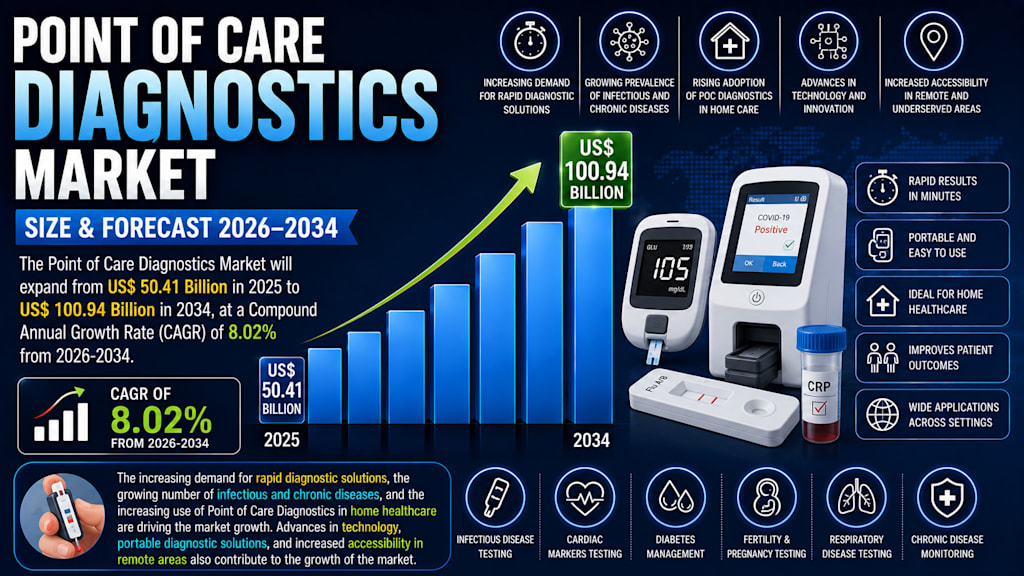
According to Renub Research, the global Point of Care Diagnostics Market is expected to grow from US$ 50.41 billion in 2025 to US$ 100.94 billion by 2034, registering a compound annual growth rate (CAGR) of 8.02% from 2026 to 2034. Increasing prevalence of chronic and infectious diseases, technological innovation, and growing demand for home-based healthcare solutions are among the key factors fueling market expansion.
As healthcare systems continue embracing rapid diagnostics and personalized care models, Point of Care Diagnostics is emerging as one of the most influential segments within the global healthcare industry.
Understanding Point of Care Diagnostics
Point of Care Diagnostics refers to medical testing performed directly at or near the location of patient care rather than in centralized laboratory settings.
These tests can be conducted in hospitals, physician offices, clinics, ambulances, pharmacies, community healthcare centers, and even patients' homes. The primary goal is to provide immediate diagnostic information that enables timely treatment decisions.
POC diagnostic devices are designed to be portable, easy to operate, and capable of delivering accurate results within a short period of time. Common examples include blood glucose monitors, pregnancy tests, infectious disease screening kits, cholesterol tests, and cardiac marker testing devices.
The technology has become increasingly valuable because rapid diagnosis often plays a crucial role in improving patient outcomes. Faster access to results allows healthcare providers to begin treatment sooner, reduce unnecessary hospital admissions, and improve overall care efficiency.
As healthcare increasingly shifts toward decentralized and patient-focused models, POC diagnostics are becoming a vital tool in delivering accessible and responsive medical services.
Rising Chronic Disease Burden Is Driving Demand
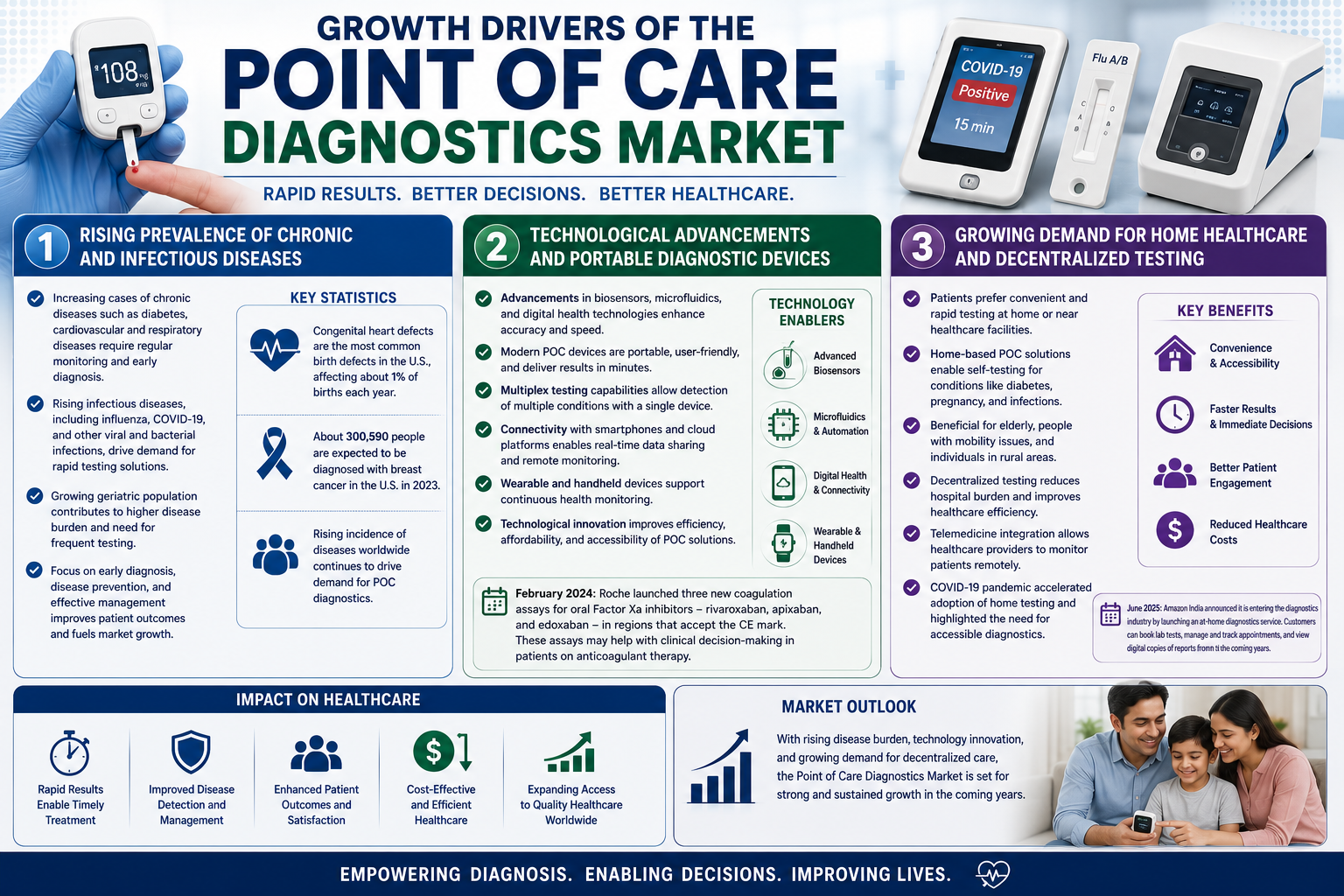
One of the most significant factors supporting market growth is the increasing prevalence of chronic diseases worldwide.
Conditions such as diabetes, cardiovascular disorders, respiratory diseases, and metabolic disorders require ongoing monitoring and regular diagnostic testing. Traditional laboratory-based testing can create delays and inconvenience for patients who need frequent assessments.
Point of Care Diagnostics addresses this challenge by providing immediate results that support real-time disease management.
For patients living with diabetes, portable glucose-monitoring systems enable regular monitoring without requiring visits to healthcare facilities. Similarly, cardiac marker testing allows healthcare professionals to rapidly assess heart-related conditions and make urgent treatment decisions when necessary.
The growing global burden of chronic diseases, combined with aging populations and changing lifestyles, continues to increase demand for accessible and efficient diagnostic solutions.
As healthcare providers focus more on preventive care and early intervention, Point of Care Diagnostics is expected to play an increasingly important role in chronic disease management.
Infectious Disease Testing Continues to Expand
The rising incidence of infectious diseases has significantly strengthened the importance of rapid diagnostic technologies.
Outbreaks of influenza, COVID-19, dengue fever, malaria, HIV, and various bacterial infections have highlighted the need for quick and reliable testing solutions capable of supporting immediate clinical decisions.
Point of Care testing allows healthcare professionals to identify infections rapidly, helping prevent disease transmission while enabling faster treatment initiation.
The COVID-19 pandemic demonstrated the enormous value of decentralized testing capabilities. Rapid antigen tests became widely adopted around the world, illustrating how POC diagnostics can support public health responses during healthcare emergencies.
Governments, healthcare organizations, and public health agencies increasingly recognize the strategic importance of rapid testing infrastructure.
As global attention remains focused on infectious disease preparedness and surveillance, demand for Point of Care infectious disease testing kits is expected to remain strong throughout the forecast period.
Technological Innovation Is Transforming Diagnostic Capabilities
Advances in medical technology continue to enhance the effectiveness and versatility of Point of Care Diagnostics.
Modern devices are becoming smaller, faster, and more accurate while offering broader diagnostic capabilities. Innovations in biosensors, microfluidics, digital health systems, and data analytics are enabling more sophisticated testing within compact portable devices.
Many contemporary POC systems can perform multiple diagnostic functions simultaneously, improving efficiency while reducing the need for separate testing platforms.
Connectivity has also become a major advantage. Modern devices often integrate with smartphones, cloud-based platforms, and electronic health record systems, allowing healthcare providers to access and analyze diagnostic data in real time.
Wearable diagnostic technologies are gaining popularity as well, enabling continuous health monitoring and personalized disease management.
In February 2024, Roche introduced three new coagulation assays designed to support clinical decision-making for patients receiving oral Factor Xa inhibitors, demonstrating ongoing innovation within the diagnostic sector.
As technological capabilities continue expanding, Point of Care Diagnostics will become increasingly valuable across diverse healthcare settings.
Home Healthcare Is Creating New Growth Opportunities
The growing demand for home healthcare services represents one of the strongest opportunities within the Point of Care Diagnostics market.
Patients increasingly prefer healthcare solutions that offer convenience, accessibility, and greater control over their personal health management. Home-based diagnostic devices allow individuals to monitor conditions without frequent visits to hospitals or clinics.
This trend is particularly important for elderly populations, individuals with mobility limitations, and patients managing chronic illnesses.
Home diagnostic solutions now support testing for diabetes, cardiovascular health, pregnancy, infectious diseases, and numerous other conditions.
The integration of telemedicine platforms further strengthens the value of home diagnostics. Healthcare providers can remotely review test results, monitor patient progress, and provide treatment recommendations without requiring in-person appointments.
In June 2025, Amazon India expanded into the diagnostics sector by launching an at-home testing service that enables users to schedule laboratory tests, manage appointments, and access digital reports directly through its platform. This development reflects growing global interest in home-based healthcare services.
As patient expectations continue evolving, home healthcare is expected to remain a major driver of market growth.
Lateral Flow Technologies Remain Highly Popular
Among the various technologies used in Point of Care Diagnostics, lateral flow testing continues to dominate many applications.
These tests are widely recognized for their simplicity, affordability, and rapid results. Using small samples of blood, saliva, or urine, lateral flow devices can provide visual results within minutes.
Pregnancy tests, COVID-19 rapid tests, and many infectious disease screening kits utilize lateral flow technology.
One of the primary advantages of these tests is their ease of use. They require minimal training, no sophisticated laboratory equipment, and can often be performed in home settings.
Ongoing improvements in sensitivity and accuracy are expanding their usefulness across a broader range of clinical applications.
As consumers increasingly embrace self-testing and preventive healthcare practices, lateral flow diagnostics are expected to remain a cornerstone of the Point of Care testing market.
Prescription-Based Diagnostic Devices Are Gaining Importance
Prescription-based Point of Care diagnostic devices represent another significant market segment.
These systems are typically used for diagnosing and monitoring more complex medical conditions that require professional oversight.
Healthcare providers rely on prescription-based devices to support diagnosis and management of cardiovascular disease, diabetes, infectious diseases, and various chronic conditions.
These systems often offer higher analytical precision and advanced functionality compared with over-the-counter diagnostic products.
Integration with digital healthcare platforms allows clinicians to monitor patient data more effectively and make informed treatment decisions.
As healthcare increasingly embraces personalized medicine and data-driven care models, demand for advanced prescription-based diagnostic solutions is expected to continue growing.
Challenges Facing the Point of Care Diagnostics Market
Despite its strong growth potential, the industry faces several important challenges.
One of the primary concerns involves maintaining diagnostic accuracy comparable to traditional laboratory testing.
While Point of Care devices provide rapid results, variations in sensitivity and specificity can sometimes lead to false-positive or false-negative outcomes. Such inaccuracies may affect treatment decisions and require additional confirmatory testing.
Environmental conditions, user handling, and device quality can also influence testing performance.
Manufacturers continue investing heavily in research and development to improve reliability and ensure consistent performance across different healthcare environments.
Meeting regulatory quality standards remains essential for maintaining confidence among healthcare providers and patients.
Regulatory Complexity and Workforce Limitations
Regulatory compliance represents another challenge for market participants.
Point of Care diagnostic devices must meet strict safety, efficacy, and performance requirements before receiving approval for commercial use. Regulatory review processes can be lengthy and expensive, particularly for innovative technologies entering highly regulated markets.
Additionally, some healthcare settings face shortages of trained professionals capable of effectively operating advanced diagnostic systems and interpreting results accurately.
Although many modern devices are designed to be user-friendly, proper training remains important for ensuring optimal performance and patient safety.
Addressing these challenges will be critical for supporting long-term industry growth and expanding global adoption.
Regional Market Insights
The United States remains one of the most advanced Point of Care Diagnostics markets due to its sophisticated healthcare infrastructure, widespread adoption of digital health technologies, and strong demand for rapid testing solutions. The prevalence of chronic diseases and growing interest in home healthcare continue driving market expansion. In May 2025, Siemens Healthineers announced a US$150 million investment to strengthen manufacturing capabilities, supply-chain resilience, and customer support operations throughout the country.
The United Kingdom continues integrating Point of Care testing into its public healthcare system to improve efficiency and reduce pressure on centralized laboratories. Growing demand for rapid diagnostics, combined with increasing adoption of community-based healthcare services, supports ongoing market growth.
India is emerging as a significant growth market due to increasing healthcare accessibility and strong demand for affordable diagnostic solutions. Rapid testing is particularly valuable in rural and underserved regions where laboratory infrastructure may be limited. In January 2023, Cipla introduced Cippoint, a portable immunofluorescence-based analyzer capable of delivering results within minutes and supporting rural healthcare delivery.
Saudi Arabia continues expanding its healthcare capabilities through investments in advanced diagnostic technologies. Growing awareness of preventive healthcare and increasing demand for chronic disease management solutions are supporting adoption of Point of Care testing. In October 2025, Co-Diagnostics announced a partnership with Arabian Eagle Manufacturing to establish a joint venture focused on developing and commercializing advanced diagnostic technologies within the Kingdom.
Competitive Landscape
Competition within the Point of Care Diagnostics industry remains intense as leading companies invest heavily in innovation, digital integration, and product development.
Major industry participants include Sysmex, Abbott Laboratories, Becton Dickinson and Company, Danaher Corporation, Quidel Diagnostics, F. Hoffmann-La Roche Ltd, Thermo Fisher Scientific, and Bio-Rad Laboratories.
These organizations continue focusing on improving accuracy, expanding testing capabilities, enhancing portability, and integrating diagnostic platforms with digital healthcare ecosystems.
Their investments in research, development, and strategic partnerships are expected to drive continued innovation across the industry.
Final Thoughts
The global Point of Care Diagnostics market is transforming the way healthcare services are delivered by bringing testing closer to patients and enabling faster clinical decision-making. From infectious disease detection and chronic disease monitoring to home healthcare and emergency medicine, POC diagnostics are improving accessibility, efficiency, and patient outcomes across the healthcare continuum.
As technological innovation accelerates and healthcare systems increasingly prioritize decentralized care, the role of rapid diagnostics will continue expanding. With the market projected to grow from US$ 50.41 billion in 2025 to US$ 100.94 billion by 2034, Point of Care Diagnostics is poised to become one of the most influential segments within modern healthcare and a key driver of future medical innovation.
About the Creator
Enjoyed the story? Support the Creator.
Subscribe for free to receive all their stories in your feed.
Comments
There are no comments for this story
Be the first to respond and start the conversation.