
Photodynamic Therapy Is Revolutionizing Modern Medicine Through Precision and Minimally Invasive Care
Rising Skin Cancer Cases, Regulatory Progress, and Advanced Light-Based Technologies Are Driving Growth in the Global Photodynamic Therapy Market

Modern healthcare is increasingly shifting toward treatments that are effective, targeted, and minimally invasive. Patients today seek therapies that deliver strong clinical outcomes while minimizing recovery time, reducing side effects, and preserving quality of life. Among the most promising innovations meeting these expectations is photodynamic therapy (PDT), a specialized treatment that combines light-sensitive drugs with controlled light exposure to destroy diseased cells with remarkable precision.
Over the past decade, photodynamic therapy has gained significant recognition in dermatology, oncology, and various chronic disease applications. Advancements in photosensitizing drugs, illumination technologies, and clinical protocols have improved treatment outcomes while expanding the range of conditions that can be addressed using PDT.
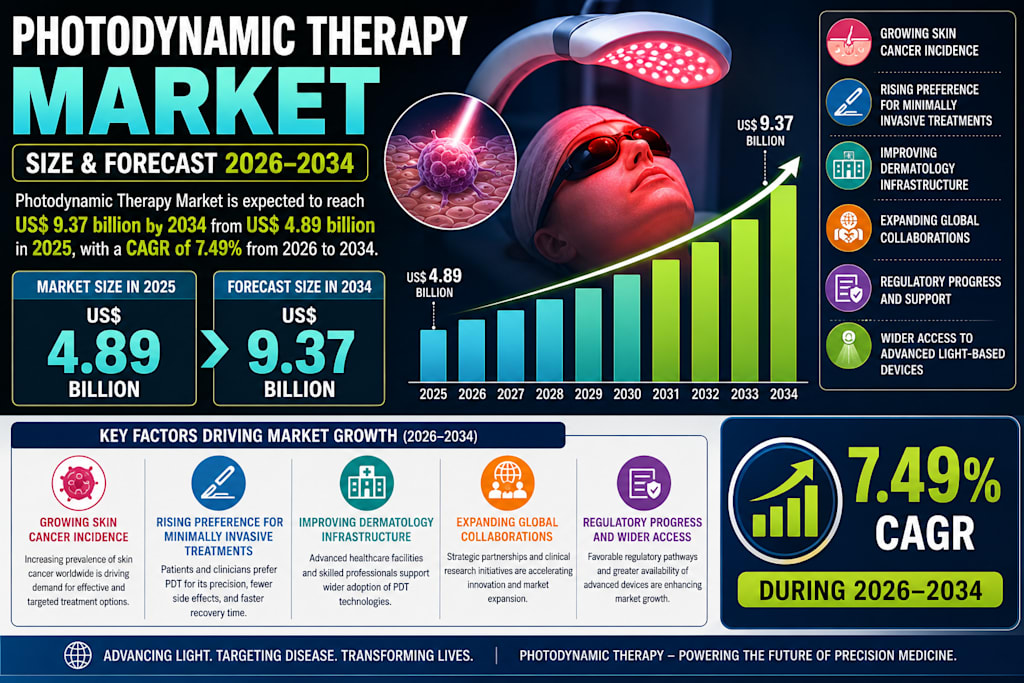
According to Renub Research, the Photodynamic Therapy Market is projected to grow from US$ 4.89 billion in 2025 to US$ 9.37 billion by 2034, registering a compound annual growth rate (CAGR) of 7.49% between 2026 and 2034. Rising skin cancer incidence, growing preference for minimally invasive procedures, expanding dermatology infrastructure, and increasing global collaborations are among the major factors accelerating market growth.
As healthcare providers increasingly prioritize precision medicine and patient-centered treatment approaches, photodynamic therapy is emerging as a critical component of modern clinical care.
Understanding How Photodynamic Therapy Works
Photodynamic therapy is a minimally invasive treatment that uses a combination of three essential components: a photosensitizing drug, a specific wavelength of light, and oxygen present within tissues.
The process begins when a photosensitizing compound is administered to a patient and selectively accumulates within abnormal or diseased cells.
Once the compound has concentrated in targeted tissues, physicians expose the treatment area to a carefully controlled light source.
This light activates the photosensitizer, triggering a chemical reaction that produces reactive oxygen species capable of destroying diseased cells while largely sparing surrounding healthy tissue.
This selective targeting represents one of PDT's greatest advantages.
Unlike traditional treatments that may affect large areas of tissue, photodynamic therapy focuses treatment precisely where it is needed.
As a result, patients often experience fewer side effects, shorter recovery times, and improved cosmetic outcomes.
Rising Skin Cancer Cases Are Driving Demand
One of the strongest growth drivers for the photodynamic therapy market is the increasing incidence of skin cancer and precancerous conditions.
Actinic keratosis, a common precancerous skin lesion caused by prolonged sun exposure, affects millions of individuals worldwide.
If left untreated, these lesions can progress into squamous cell carcinoma, making early intervention particularly important.
Photodynamic therapy has become a preferred treatment option for many dermatologists because it effectively treats multiple lesions while minimizing scarring and preserving healthy tissue.
The therapy is also widely used for superficial non-melanoma skin cancers and various dermatological disorders.
As skin cancer awareness continues increasing and screening programs expand globally, demand for PDT solutions is expected to grow steadily.
Patients Are Choosing Minimally Invasive Treatments
Consumer preferences within healthcare are changing rapidly.
Patients increasingly seek treatment options that avoid surgery, minimize discomfort, and reduce recovery periods.
Photodynamic therapy aligns perfectly with these expectations.
Unlike invasive surgical procedures, PDT typically requires only outpatient treatment sessions and involves minimal downtime.
Patients can often return to normal activities relatively quickly following treatment.
The therapy also offers excellent cosmetic results, making it particularly attractive for visible treatment areas such as the face, scalp, and neck.
As awareness of minimally invasive alternatives grows, healthcare providers are increasingly recommending PDT as an effective treatment option across multiple indications.
This shift in patient preference continues supporting market expansion worldwide.
Strategic Collaborations Are Accelerating Market Growth
Industry partnerships are playing an increasingly important role in expanding access to photodynamic therapy technologies.
Collaborations between pharmaceutical companies and device manufacturers help improve product availability, streamline distribution networks, and enhance physician training programs.
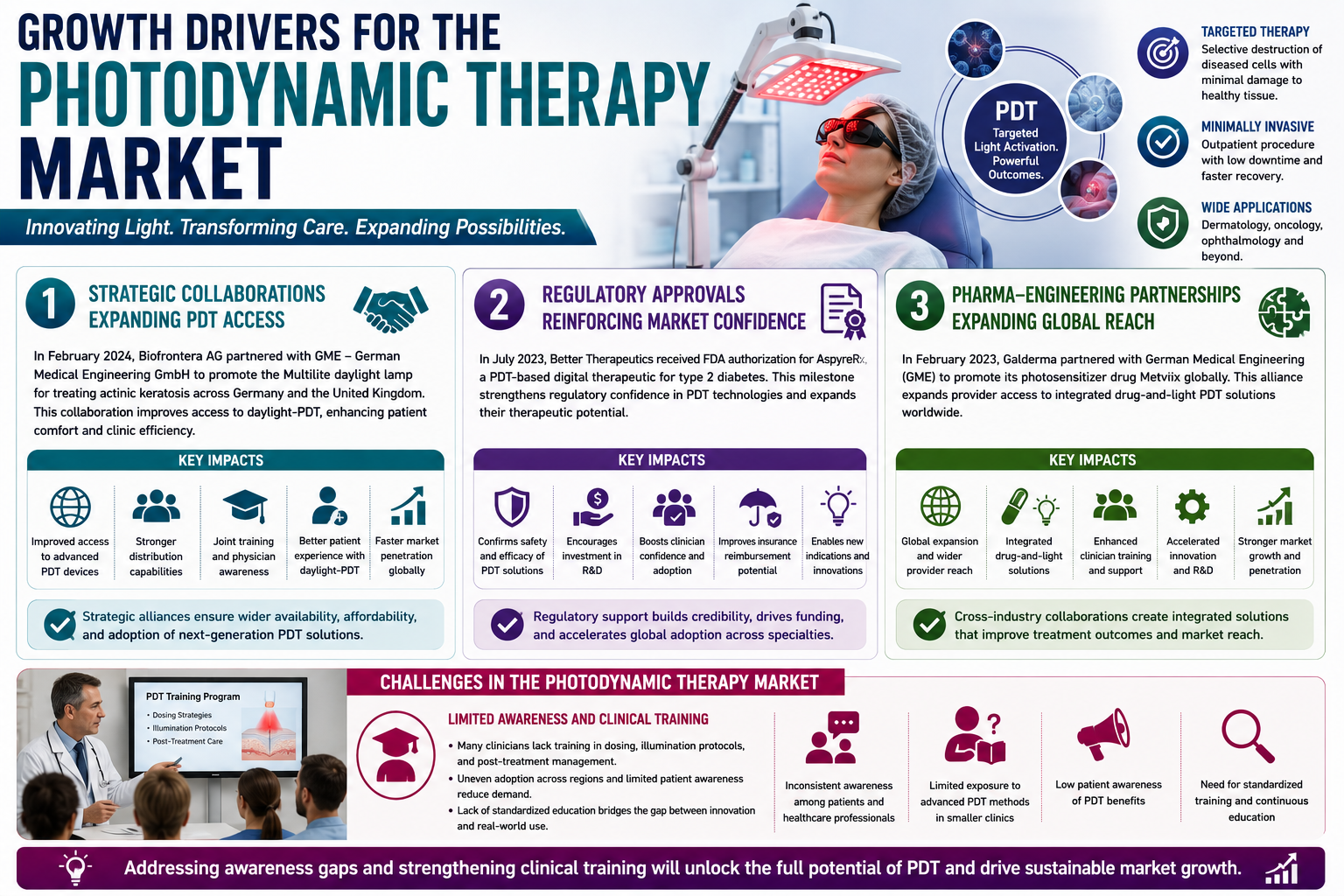
A notable example occurred in February 2024 when Biofrontera AG partnered with German Medical Engineering GmbH to promote the Multilite daylight lamp for actinic keratosis treatment across Germany and the United Kingdom. This partnership supports wider adoption of daylight-PDT, a patient-friendly treatment option that improves comfort while reducing clinic visit times.
Such collaborations help accelerate technology adoption while ensuring healthcare providers gain access to integrated treatment solutions.
As demand for PDT continues growing, strategic alliances are expected to remain a major catalyst for market development.
Regulatory Approvals Are Strengthening Confidence
Regulatory approvals represent another significant driver supporting the photodynamic therapy market.
When healthcare regulators approve new PDT technologies, clinicians gain greater confidence in adopting innovative treatment solutions.
Regulatory clearances also encourage investment in research and development while improving reimbursement opportunities.
In October 2024, the U.S. Food and Drug Administration approved an increase in the allowable dosage of Ameluz for actinic keratosis treatment sessions, enabling clinicians to treat larger or multiple lesion areas more efficiently.
Similarly, continued regulatory progress across various medical applications demonstrates growing confidence in PDT technologies.
As approval pathways become more established, the market is expected to benefit from broader clinical adoption and expanded therapeutic indications.
Pharmaceutical and Engineering Partnerships Are Driving Innovation
The future of photodynamic therapy increasingly depends on collaboration between pharmaceutical companies and medical engineering specialists.
These partnerships combine expertise in drug development with advances in illumination technology.
A strong example emerged in February 2023 when Galderma partnered with German Medical Engineering (GME) to support global promotion of its photosensitizer drug Metvix.
Integrated treatment solutions improve compatibility between drugs and light-delivery systems while enhancing clinical outcomes.
These collaborations also accelerate research efforts aimed at developing next-generation PDT platforms.
As healthcare systems continue emphasizing precision medicine, cross-industry innovation is expected to play a critical role in expanding PDT capabilities.
Dermatology Remains the Largest Application Area
Dermatology continues to represent the largest application segment within the photodynamic therapy market.
The therapy is widely used for conditions such as actinic keratosis, superficial basal cell carcinoma, acne, psoriasis, and various cosmetic dermatology procedures.
Dermatologists increasingly favor PDT because it provides excellent treatment outcomes while preserving surrounding tissue.
Patients appreciate the minimal scarring, shorter recovery periods, and reduced need for invasive procedures.
The growing popularity of aesthetic dermatology has further increased interest in light-based treatment technologies.
As awareness of skin health continues expanding, dermatological applications are expected to remain a major source of market growth.
Oncology Applications Offer Significant Potential
Beyond dermatology, photodynamic therapy is gaining attention within oncology.
Researchers continue exploring PDT's potential in treating various cancers, including lung cancer, esophageal cancer, bladder cancer, and other localized tumors.
The therapy's ability to selectively target diseased tissue while minimizing systemic side effects makes it particularly attractive for cancer care.
Advancements in photosensitizers, light delivery systems, and imaging technologies are expanding the possibilities for oncology applications.
As research progresses and clinical evidence grows, cancer treatment is expected to become an increasingly important area of opportunity for the PDT market.
Hospitals Continue to Lead End-User Demand
Hospitals represent the largest end-user segment within the photodynamic therapy market.
Advanced healthcare institutions possess the infrastructure, trained personnel, and specialized equipment necessary to perform PDT procedures safely and effectively.
Hospitals also serve as major centers for clinical research and technology adoption.
Cancer treatment centers and dermatology clinics are increasingly investing in advanced illumination systems and photosensitizer therapies to expand treatment offerings.
As healthcare providers continue modernizing facilities and embracing minimally invasive treatments, demand from institutional healthcare settings is expected to remain strong.
Regional Markets Continue to Expand
United States
The United States remains one of the largest and most mature photodynamic therapy markets globally.
Strong healthcare infrastructure, high skin cancer prevalence, active research programs, and regulatory support continue driving adoption across dermatology and oncology applications.
Germany
Germany benefits from advanced dermatology networks, favorable reimbursement structures, and strong clinical acceptance of PDT technologies.
Daylight-PDT adoption and ongoing industry collaborations continue supporting market growth.
China
China's market is expanding rapidly due to healthcare infrastructure investments, rising disposable incomes, and increasing demand for minimally invasive dermatological procedures.
Saudi Arabia
Saudi Arabia's healthcare modernization initiatives under Vision 2030 are supporting increased access to advanced dermatology technologies, including photodynamic therapy systems.
Challenges Facing the Market
Despite strong growth prospects, the photodynamic therapy market faces several challenges.
Limited Awareness and Clinical Training
Many healthcare professionals remain unfamiliar with advanced PDT protocols, dosing strategies, and treatment techniques.
Inconsistent training and limited awareness can restrict adoption, particularly in smaller clinics and emerging markets.
Cost and Reimbursement Issues
Advanced illumination systems and photosensitizer drugs often require significant investment.
In some regions, reimbursement policies remain inconsistent, creating financial barriers for providers and patients.
Improving reimbursement clarity and demonstrating long-term cost-effectiveness will be essential for broader adoption.
Final Thoughts
Photodynamic therapy represents one of the most promising developments in modern medicine, offering targeted treatment with minimal invasiveness and excellent patient outcomes.
According to Renub Research, the Photodynamic Therapy Market is expected to grow from US$ 4.89 billion in 2025 to US$ 9.37 billion by 2034, reflecting strong demand driven by rising skin cancer incidence, technological innovation, and expanding clinical applications.
As regulatory approvals increase, strategic partnerships expand access, and healthcare providers embrace precision medicine, photodynamic therapy is positioned to become an even more important component of future healthcare delivery.
The future of PDT is not simply about treating disease—it is about delivering safer, smarter, and more patient-centered care that improves outcomes while preserving quality of life.
About the Creator
Enjoyed the story? Support the Creator.
Subscribe for free to receive all their stories in your feed.
Comments
There are no comments for this story
Be the first to respond and start the conversation.