
Philippines Textile Market 2026: Sustainable Fabrics, Digital Innovation & Cultural Revival
How eco-friendly materials, local craftsmanship and modernization are shaping the Philippines textile industry

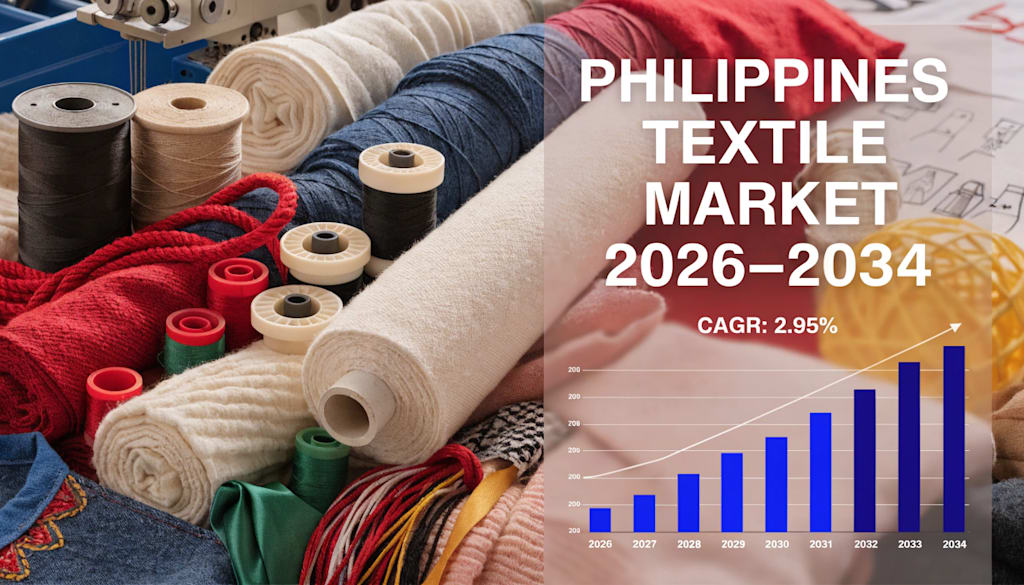
Philippines Textile Market Overview
The Philippines textile market is a developing segment of the country’s manufacturing and apparel industry, encompassing a wide range of materials including natural fibers, synthetic textiles and blended fabrics. The market supports applications across fashion, household and technical textiles.
According to IMARC Group, the Philippines textile market size reached USD 58.5 Million in 2025 and is projected to reach USD 75.9 Million by 2034, exhibiting a compound annual growth rate (CAGR) of 2.95% during 2026–2034.
The market is driven by increasing demand for sustainable fabrics, government initiatives to revive the textile sector and growing adoption of digital and automated production technologies.
Key Market Drivers
Growing Demand for Sustainable and Eco-Friendly Fabrics
The adoption of organic cotton, recycled fibers and bamboo-based textiles is increasing as consumers and manufacturers prioritize sustainability.
Expansion of Domestic Fashion and Apparel Industry
Rising urbanization and a growing middle class are boosting demand for ready-to-wear garments and fashion products, supporting textile consumption.
Government Support and Industry Revival Programs
Initiatives promoting indigenous textiles, technical training and financial support for small producers are strengthening the local textile ecosystem.
Adoption of Digital and Automated Technologies
Technologies such as computerized looms, digital printing and smart manufacturing systems are improving efficiency and product quality.
Increasing Export Opportunities and Regional Trade Integration
Participation in regional trade agreements is enabling local manufacturers to expand into international markets and enhance competitiveness.
Request a Sample Report with the Latest 2026 Data & Forecasts
What the Opportunities Are
The Philippines textile market presents steady growth opportunities driven by sustainability trends, cultural heritage and digital transformation.
Revival of Indigenous Textiles and Cultural Branding
Traditional fabrics such as abaca, piña and inabel are gaining attention in global markets through cultural storytelling and ethical sourcing.
Expansion of Local Manufacturing Capabilities
Investments in domestic textile production for apparel and home furnishings are reducing reliance on imports and strengthening the value chain.
Growth of E-Commerce and Digital Market Access
Online platforms are enabling small producers and artisans to reach wider audiences and promote textile products globally.
Increasing Demand for Sustainable Export Products
Global demand for eco-friendly textiles is creating opportunities for Philippine manufacturers to expand exports.
Development of Home Textile and Interior Segments
Rising demand for home décor products such as curtains, upholstery and linens is supporting market diversification.
Recent News and Developments
April 2026: The textile recycling segment in the Philippines is gaining momentum as part of the broader push toward sustainability and circular fashion. The market, though still niche, is expanding steadily with increasing investment in waste management technologies and eco-friendly production methods. This reflects a wider industry shift toward reducing textile waste and promoting recycled fibers in response to both regulatory pressure and consumer demand for sustainable products.
February 2026: The Philippine manufacturing sector, which includes textiles and garments, showed a notable upturn with a nine-month high in activity levels. Increased new orders and production recovery signal improving demand conditions; however, business confidence remains cautious due to global uncertainties, indicating that while the sector is recovering, long-term growth expectations are still mixed.
December 2025: The Philippines’ garments and textile export sector is expected to grow by around 2%–5%, supported by efforts to diversify export markets and reduce tariff barriers. Export growth is being driven by government initiatives and industry strategies to strengthen international competitiveness, although gains remain moderate due to structural challenges.
December 2025: Industry assessments indicate that the local textile sector continues to struggle with competitiveness in the global market, largely due to its concentration in low-value production and limited technological advancement. This has constrained the ability of domestic manufacturers to scale and compete with larger textile-producing nations in Asia.
November 2025: According to IMARC Group, the Philippines textile market reached approximately USD 58.5 million in 2025 and is projected to grow steadily to around USD 75.9 million by 2034. Growth is being driven by sustainability initiatives, adoption of eco-friendly fabrics, increasing automation (including AI-driven textile production), and renewed interest in indigenous textiles.
December 2025: Broader economic conditions have impacted the textile industry, with slower national growth in 2025 due to weak investment and external demand. However, recovery is expected from 2026 onward, supported by stronger consumption, infrastructure spending, and policy reforms, which are likely to indirectly boost textile demand and production.
Why You Should Know About the Philippines Textile Market?
The Philippines textile market plays an important role in supporting the country’s manufacturing sector, cultural heritage and export potential.
With projected growth from USD 58.5 Million in 2025 to USD 75.9 Million by 2034, the market demonstrates steady expansion potential driven by sustainability, innovation and government support.
As demand for eco-friendly and culturally distinctive textiles continues to rise, the Philippines textile market is expected to remain a key contributor to economic development and industry diversification.
About the Creator
Enjoyed the story? Support the Creator.
Subscribe for free to receive all their stories in your feed.
Comments
There are no comments for this story
Be the first to respond and start the conversation.