
Philippines Shrimp Market 2026: Sustainable Aquaculture, Export Growth & Advanced Farming Technologies Driving Growth
How rising seafood consumption, government support, and responsible shrimp farming practices are transforming the Philippines shrimp industry

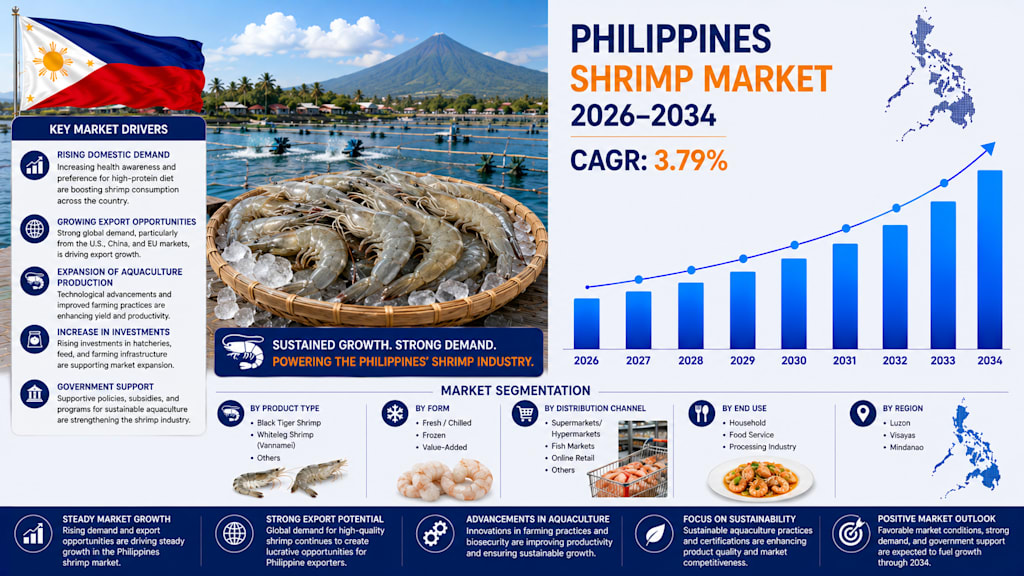
Philippines Shrimp Market Overview
The Philippines shrimp market is an important segment of the country's aquaculture and seafood industry, encompassing farmed shrimp, wild shrimp, fresh shrimp, frozen shrimp, and value-added shrimp products serving both domestic and export markets.
According to IMARC Group, the Philippines shrimp market size reached USD 335.9 Million in 2025 and is projected to reach USD 474.4 Million by 2034, exhibiting a compound annual growth rate (CAGR) of 3.79% during 2026–2034. The market is expanding due to higher domestic seafood consumption, stronger export activity, improved hatchery practices, sustainable farming initiatives, and technological advancements that enhance shrimp production and quality.
Key Market Drivers
Growing Domestic Consumption of Shrimp
Shrimp continues to gain popularity among households, restaurants, and foodservice operators due to its nutritional value, versatility, and increasing presence in modern diets. Rising seafood consumption is supporting consistent demand across the country.
Government Support for Aquaculture Development
Government initiatives, research programs, infrastructure investments, and farmer training programs are helping improve shrimp farming productivity and supporting long-term industry growth.
Expansion of Export Opportunities
Philippine shrimp producers are increasingly targeting international markets such as Japan, the United States, and South Korea. Improved food safety compliance and stronger processing capabilities are supporting export growth.
Adoption of Advanced Farming Technologies
Modern hatcheries, automated feeding systems, water quality monitoring tools, and disease management technologies are helping farmers improve yields, reduce losses, and enhance operational efficiency.
Favorable Natural Resources for Shrimp Farming
The country's extensive coastline, tropical climate, and abundant aquatic resources provide favorable conditions for shrimp cultivation and support year-round production.
Request a Sample Report with the Latest 2026 Data & Forecasts
What the Opportunities Are
Expansion of Sustainable and Certified Shrimp Products
Growing global demand for responsibly sourced seafood is creating opportunities for producers to adopt certified and sustainable farming practices that command premium prices.
Development of Organic and Antibiotic-Free Shrimp
Consumers are increasingly seeking clean-label and traceable seafood products, creating opportunities for niche shrimp offerings in both domestic and export markets.
Integration with Aquaculture Clusters
Combining shrimp farming with fish and seaweed cultivation can improve resource efficiency, reduce environmental impact, and diversify farmer income streams.
Growth in Value-Added Shrimp Products
Rising demand for processed, ready-to-cook, and convenience seafood products presents opportunities for manufacturers to expand product portfolios and increase market value.
Increasing Demand for Healthy Protein Sources
The global shift toward healthier and sustainable protein alternatives is creating new opportunities for Philippine shrimp producers to strengthen their presence in international markets.
Recent News and Developments
June 2026: Philippine shrimp producers continued investing in sustainable aquaculture practices, improved hatchery operations, and disease management programs to strengthen production efficiency and export competitiveness.
May 2026: Industry stakeholders expanded initiatives focused on modern shrimp farming technologies, including automated feeding systems and advanced water quality monitoring solutions to improve yields and reduce operational risks.
April 2026: Shrimp exporters increased efforts to meet international sustainability and food safety requirements as demand for traceable and responsibly sourced seafood products continued rising across key export markets.
February 2026: Aquaculture operators continued strengthening cold-chain logistics and processing infrastructure to improve shrimp quality, reduce post-harvest losses, and support growing domestic and export demand.
January 2026: Government agencies and industry organizations promoted farmer training programs, sustainable aquaculture development, and productivity improvement initiatives to support long-term sector growth.
December 2025: Investments in shrimp hatcheries, disease-resistant shrimp stocks, and sustainable farming practices continued gaining momentum as producers focused on improving resilience and production performance.
Why You Should Know About the Philippines Shrimp Market?
The Philippines shrimp market is becoming an increasingly important pillar of the country's aquaculture, seafood processing, and export economy.
With projected growth from USD 335.9 Million in 2025 to USD 474.4 Million by 2034, the market demonstrates steady long-term potential supported by rising domestic seafood consumption, expanding export opportunities, government support, and technological innovation in shrimp farming.
As producers continue investing in sustainable aquaculture, advanced farming technologies, value-added shrimp products, and international quality standards, the sector is expected to play a critical role in supporting food security, rural livelihoods, and seafood export growth across the Philippines.
About the Creator
Enjoyed the story? Support the Creator.
Subscribe for free to receive all their stories in your feed.
Comments
There are no comments for this story
Be the first to respond and start the conversation.