
Philippines Real Estate Market Is Emerging as One of Southeast Asia’s Fastest-Growing Investment Destinations
Urbanization, infrastructure expansion, and rising demand for residential and commercial properties are transforming the Philippines real estate industry.

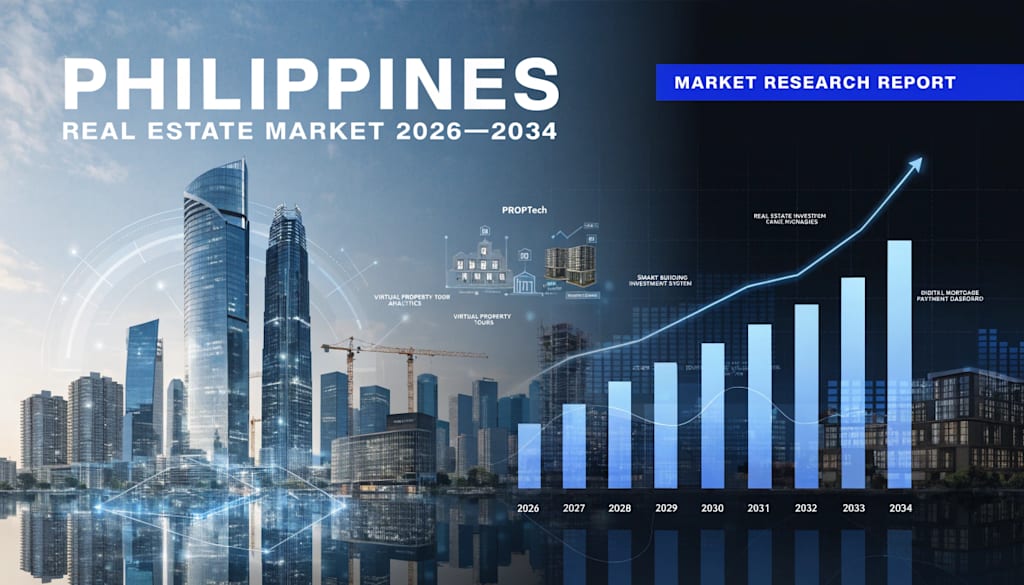
The Philippines real estate industry is entering a dynamic period of expansion driven by rapid urbanization, infrastructure modernization, foreign investment growth, and rising demand for residential and commercial developments. As the country’s middle class continues expanding and economic activity accelerates across metropolitan and regional cities, the real estate sector is becoming one of the strongest pillars of the Philippine economy.
According to IMARC Group, the Philippines real estate market reached a value of USD 94.4 Billion in 2024 and is projected to grow to USD 12.8 Billion by 2033, expanding at a CAGR of 5.94% during 2025–2033. The market is benefiting from increasing residential demand, major infrastructure investments, growth in office and retail developments, and rising interest in mixed-use and sustainable property projects across the country.
Metro Manila remains the country’s largest real estate hub, but rapid development is also taking place across emerging urban centers such as Cebu, Davao, Iloilo, Clark, and Bacolod. Government-backed infrastructure programs, including road networks, rail systems, airports, and smart city initiatives, are improving connectivity and unlocking new property investment opportunities nationwide. These developments are encouraging both domestic and international investors to increase their exposure to the Philippine property market.
The market is segmented by property type, business type, and mode. Property categories include residential, commercial, industrial, hospitality, and retail real estate. Business segments include sales, rental, and lease operations, while development modes include new construction and renovation projects. Rising demand for condominiums, integrated townships, logistics facilities, and flexible office spaces is reshaping the country’s urban landscape and creating new opportunities across the property sector.
The increasing adoption of digital technologies is also transforming the Philippine real estate ecosystem. Developers and brokers are using virtual property tours, AI-powered analytics, online property marketplaces, and digital transaction systems to improve customer engagement and streamline operations. Technology-driven property management solutions and smart building systems are becoming increasingly common in premium residential and commercial projects.
Request a Business Sample Report for Procurement & Investment Evaluation:
Why the Market Is Growing So Rapidly
One of the strongest drivers behind market growth is the Philippines’ rapid urbanization and population expansion. Millions of Filipinos continue moving toward urban centers in search of employment opportunities, education, and improved lifestyles. This migration is creating substantial demand for housing, transportation infrastructure, commercial centers, and mixed-use developments. Residential condominium projects, particularly in major cities, are experiencing strong demand from middle-income professionals, overseas Filipino workers (OFWs), and young urban families.
Government infrastructure investment is another major catalyst supporting the real estate sector. Large-scale projects under national infrastructure modernization programs are significantly improving transportation connectivity, logistics efficiency, and regional accessibility. New expressways, railway systems, airports, and port expansions are increasing land values and attracting private sector property development across previously underserved regions. Improved infrastructure is also encouraging the decentralization of business activity beyond Metro Manila into secondary growth cities.
The expansion of the business process outsourcing (BPO) industry is further driving commercial real estate demand. The Philippines remains one of the world’s leading outsourcing destinations, creating strong demand for office spaces, integrated business parks, and mixed-use commercial developments. Flexible workspaces and hybrid office models are also reshaping commercial property strategies as companies prioritize modern, technology-enabled office environments capable of supporting evolving workforce needs.
Tourism recovery and hospitality development are also contributing significantly to market expansion. As international tourism rebounds, developers are investing heavily in hotels, resorts, vacation properties, and tourism-oriented mixed-use projects across major destinations such as Palawan, Boracay, Cebu, and Siargao. Hospitality real estate is benefiting from rising domestic travel demand and increasing international tourist arrivals, supporting long-term investment across leisure-focused property developments.
Sustainability and smart city initiatives are becoming increasingly important within the Philippines real estate market. Developers are focusing on energy-efficient buildings, green certifications, renewable energy integration, and digitally connected urban communities. Smart infrastructure, automated building management systems, and sustainable construction materials are gaining traction as investors and buyers increasingly prioritize environmentally responsible developments.
What the Opportunities Are
1. Expansion of Affordable Housing Projects
The country’s growing middle-income population continues creating strong demand for affordable residential housing developments nationwide.
2. Growth of Mixed-Use Smart Cities
Integrated townships combining residential, commercial, retail, and recreational spaces represent major long-term investment opportunities.
3. Rising Demand for Logistics and Industrial Facilities
E-commerce growth and supply chain modernization are increasing demand for warehouses, distribution hubs, and industrial parks.
4. Sustainable and Green Real Estate Development
Eco-friendly buildings and energy-efficient infrastructure are becoming increasingly attractive to investors and environmentally conscious consumers.
5. Expansion of Regional Real Estate Markets
Emerging cities outside Metro Manila are attracting major investments due to improved infrastructure and lower development costs.
6. Digital Property Platforms and PropTech Innovation
Technology-driven property management systems, AI-powered analytics, and virtual property transactions are reshaping the industry.
7. Tourism and Hospitality Property Development
Resort destinations and tourism-focused regions continue creating strong opportunities for hospitality real estate investments.
Recent News & Developments in Philippines Real Estate Market
• February 2025: Philippine government agencies accelerated infrastructure modernization projects focused on transportation connectivity, urban mobility, and smart city development. Several regional infrastructure initiatives were launched to improve accessibility across emerging investment corridors and secondary cities. Industry analysts believe these projects will significantly boost long-term real estate development throughout the country.
• June 2025: Major real estate developers announced new investments in residential condominiums, integrated townships, logistics parks, and mixed-use commercial developments across Metro Manila, Cebu, and Clark. Industry investment commitments reportedly exceeded USD 2 Billion as developers expanded project pipelines to meet rising demand for urban housing and commercial spaces. The expansion highlights growing investor confidence in the Philippine property sector.
• September 2025: The Philippines recorded continued growth in residential and commercial property demand driven by urbanization, BPO sector expansion, and infrastructure improvements. Market reports highlighted rising interest in sustainable developments, smart buildings, and regional real estate investment opportunities outside Metro Manila. Analysts expect demographic growth and economic modernization to sustain long-term expansion across the Philippine real estate market.
Why Should You Know About Philippines Real Estate Market?
The Philippines real estate market represents one of Southeast Asia’s most promising long-term growth opportunities. As urbanization accelerates and infrastructure modernization reshapes the country’s economic landscape, real estate is becoming increasingly central to national development and investment activity.
For investors, the market offers strong potential across residential, commercial, industrial, and hospitality property segments supported by demographic growth and rising consumer demand. Developers and businesses can leverage smart technologies, sustainable construction practices, and integrated urban planning strategies to strengthen competitiveness and improve long-term profitability. Policymakers also recognize the importance of real estate development in supporting employment, infrastructure expansion, and inclusive economic growth.
With strong economic fundamentals, rising urban demand, and expanding infrastructure investment, the Philippines real estate market is positioned to remain one of the region’s most dynamic and strategically important industries over the coming decade.
About the Creator
Rashi Sharma
I am a market researcher.
Enjoyed the story? Support the Creator.
Subscribe for free to receive all their stories in your feed.
Comments
There are no comments for this story
Be the first to respond and start the conversation.