
Philippines Plant-Based Food Market 2026: Health Awareness, Sustainability & Retail Expansion Driving Growth
How rising health consciousness, environmental concerns, and increasing product availability are transforming the Philippines plant-based food industry

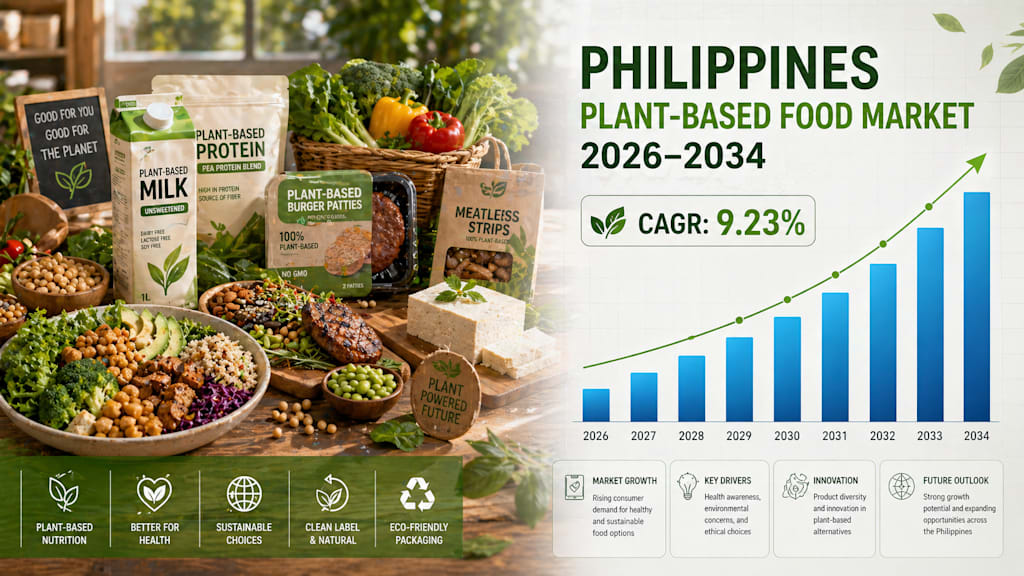
Philippines Plant-Based Food Market Overview
The Philippines plant-based food market is an emerging segment of the country’s food and beverage industry, encompassing dairy alternatives, meat substitutes, egg replacements, and other vegan food products. The market is gaining traction as consumers shift toward healthier, sustainable, and ethical dietary choices.
According to IMARC Group, the Philippines plant-based food market size reached USD 58.0 Million in 2025 and is projected to reach USD 131.3 Million by 2034, exhibiting a compound annual growth rate (CAGR) of 9.23% during 2026–2034.
The market is primarily driven by increasing health awareness, growing environmental consciousness, and the expanding availability of plant-based products through retail and online channels.
Key Market Drivers
Increasing Health and Wellness Awareness
Consumers are becoming more conscious of diet-related health issues such as obesity, diabetes, and heart disease, driving demand for plant-based foods that are lower in cholesterol and saturated fats.
Rising Environmental and Ethical Concerns
Growing awareness of climate change and resource depletion is encouraging consumers to adopt plant-based diets, which are perceived as more sustainable and eco-friendly.
Expanding Retail and Foodservice Availability
Plant-based products are increasingly available in supermarkets, restaurants, and online platforms, improving accessibility and accelerating market adoption.
Influence of Social Media and Lifestyle Trends
Health campaigns, influencers, and digital content are promoting plant-based lifestyles, especially among younger consumers, boosting market growth.
Growth in E-commerce Channels
Online platforms are enabling nationwide access to plant-based products, offering convenience, promotions, and subscription-based purchasing options.
Request a Sample Report with the Latest 2026 Data & Forecasts
What the Opportunities Are
Innovation in Plant-Based Products
Local and international companies are developing new plant-based food options tailored to Filipino tastes, including meat alternatives and dairy substitutes.
Expansion of Food Service Partnerships
Restaurants, cafés, and quick-service chains are introducing plant-based menu items, increasing visibility and mainstream acceptance.
Rising Demand for Dairy Alternatives
Products such as plant-based milk, cheese, and yogurt are gaining popularity due to lactose intolerance and health preferences.
Growth in Urban and Young Consumer Segments
Millennials and Gen Z consumers are driving adoption through their preference for sustainable and health-focused food choices.
Local Ingredient Utilization
Manufacturers are leveraging locally available ingredients like soy, coconut, and other plant sources to create affordable and culturally relevant products.
Recent News and Developments
April 2026: The Philippines plant-based food sector is benefiting from rising sustainability commitments within the hospitality and foodservice industry. For instance, major establishments like integrated resorts have pledged to make up to 30% of their menus plant-based by 2026–2028, signalling a structural shift in food offerings and increasing large-scale demand for plant-based ingredients. This reflects growing institutional support for alternative proteins and sustainable diets in the country.
March 2026: Consumer behaviour is shifting significantly toward plant-based diets, particularly in urban areas such as Metro Manila. A 2026 study found that 54.10% of Filipino consumers intend to increase plant-based food intake, while 39.34% plan to reduce meat consumption, highlighting a strong transition toward flexitarian eating habits. However, adoption barriers such as cost, accessibility, and preparation complexity remain key challenges for market expansion.
2025–2026 (market trend): The Philippines plant-based food market is undergoing a structural transformation driven by health consciousness, environmental awareness, and changing dietary preferences. Increasing middle-class income and social media influence are accelerating adoption, while modern retail expansion is improving product accessibility. At the same time, global trends show the plant-based category evolving toward natural, less-processed foods, with over 64% of consumers preferring minimally processed products, shaping innovation and product development strategies in the Philippines.
Why You Should Know About the Philippines Plant-Based Food Market?
The Philippines plant-based food market is a fast-growing niche within the broader food industry, driven by shifting consumer preferences and sustainability trends.
With projected growth from USD 58.0 Million in 2025 to USD 131.3 Million by 2034, the market demonstrates strong potential supported by health awareness, environmental concerns, and expanding distribution channels.
As more consumers adopt plant-based lifestyles and companies continue to innovate, the market is expected to play an increasingly important role in the country’s food ecosystem.
About the Creator
Enjoyed the story? Support the Creator.
Subscribe for free to receive all their stories in your feed.
Comments
There are no comments for this story
Be the first to respond and start the conversation.