
Philippines Pectin Market 2026: Clean-Label Demand, Food Processing Growth & Natural Ingredient Adoption
How rising health awareness, expanding food industries, and abundant fruit supply are driving the Philippines pectin market

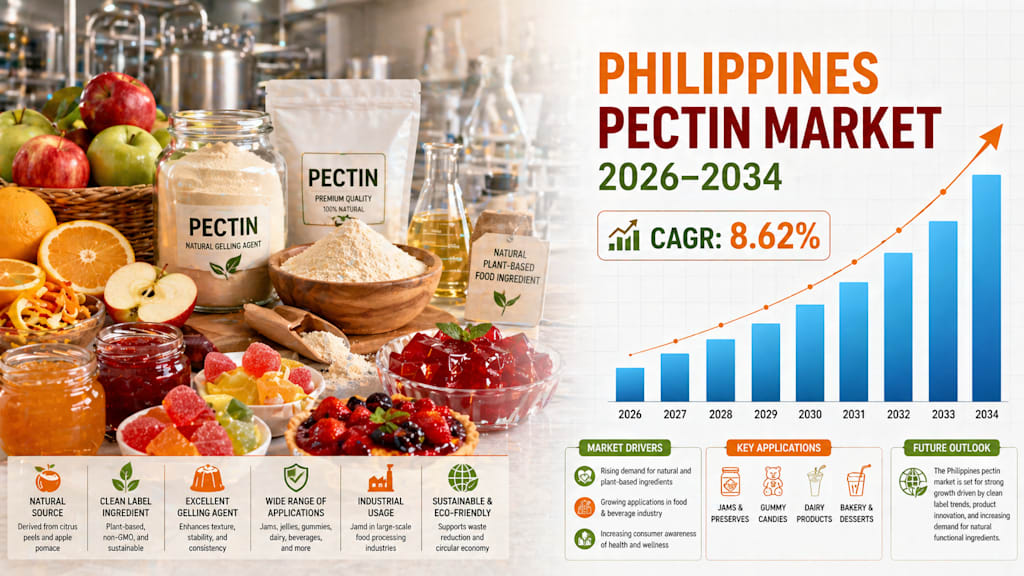
Philippines Pectin Market Overview
The Philippines pectin market is an emerging segment of the country’s food ingredients industry, primarily used as a gelling, stabilizing, and thickening agent in various food and beverage applications such as jams, jellies, dairy products, and fruit-based beverages.
According to IMARC Group, the Philippines pectin market size reached USD 6.2 Million in 2025 and is projected to reach USD 13.2 Million by 2034, exhibiting a compound annual growth rate (CAGR) of 8.62% during 2026–2034.
The market is driven by increasing demand for natural and plant-based ingredients, growing health consciousness, and the expansion of the processed food and beverage sector.
Key Market Drivers
Rising Demand for Clean-Label and Natural Ingredients
Consumers are increasingly preferring natural, non-GMO, and chemical-free food additives. Pectin, derived from fruits such as citrus and apples, aligns with clean-label trends and is widely used in healthier food formulations.
Growth of the Processed Food and Beverage Industry
Rapid urbanization, changing lifestyles, and increasing demand for convenience foods are boosting the consumption of packaged foods, where pectin is used to enhance texture and shelf life.
Increasing Health Awareness
Rising awareness of diet-related health issues is encouraging consumers to choose low-fat and natural products, further driving demand for pectin as a functional ingredient.
Abundant Fruit Production
The Philippines has a strong agricultural base with high production of fruits such as mangoes and citrus, which are key raw materials for pectin production, supporting local supply and reducing import dependency.
Expanding Middle-Class Population
A growing middle class with higher disposable income is increasing demand for premium and processed food products that utilize pectin.
Request a Sample Report with the Latest 2026 Data & Forecasts
What the Opportunities Are
Development of Local Pectin Manufacturing
Strong domestic fruit production creates opportunities for local extraction and production, enhancing value addition and reducing reliance on imports.
Expansion in Dairy and Beverage Applications
Pectin is increasingly used in dairy drinks, yogurt, and fruit beverages, offering growth opportunities in the functional food segment.
Growth in Clean-Label Food Products
As demand for natural and transparent ingredients rises, manufacturers are incorporating pectin into clean-label formulations.
Increasing Demand for Ready-to-Eat Foods
Busy lifestyles are driving demand for packaged and ready-to-eat products, where pectin plays a key role in maintaining product quality and consistency.
Government Support for Food Processing
Initiatives supporting agricultural innovation and food processing are expected to strengthen the supply chain and boost market growth.
Recent Trends and Developments
March 2026 (global context impacting Philippines): The global pectin market is experiencing supply-side pressure, with prices ranging between USD 9,300–12,900 per metric ton in 2026, driven by limited citrus peel availability and supply chain disruptions. This has direct implications for import-dependent markets like the Philippines, potentially increasing input costs for food manufacturers.
2026 (market trend): Globally, the pectin market is valued at approximately USD 1.12–1.75 billion in 2026 and growing at 6.7%–7.9% CAGR, driven by demand for natural food additives, sugar reduction, and plant-based diets. These global trends are strongly influencing the Philippines market, accelerating adoption of pectin in clean-label, low-sugar, and functional food products.
2025–2026 (market trend): Overall, the Philippines pectin market is expanding due to rapid urbanisation, growth in processed food consumption, and increasing middle-class income. At the same time, the country benefits from local fruit availability (such as mango and citrus), which provides long-term potential for domestic production and reduced import dependency, supporting sustainable market growth.
Why You Should Know About the Philippines Pectin Market?
The Philippines pectin market is a niche but fast-growing segment driven by clean-label trends, health awareness, and food industry expansion.
With projected growth from USD 6.2 Million in 2025 to USD 13.2 Million by 2034, the market demonstrates strong potential supported by natural ingredient demand and increasing processed food consumption.
As consumers continue to shift toward healthier and more sustainable food choices, the demand for pectin is expected to rise, making it an essential component of the country’s evolving food ecosystem.
About the Creator
Enjoyed the story? Support the Creator.
Subscribe for free to receive all their stories in your feed.
Comments
There are no comments for this story
Be the first to respond and start the conversation.