
Philippines Palm Oil Market 2026: Food Processing Demand, Import Dependence & Industrial Applications Supporting Growth
How rising edible oil consumption, expanding food manufacturing activities, and increasing industrial utilization are driving the Philippines palm oil industry

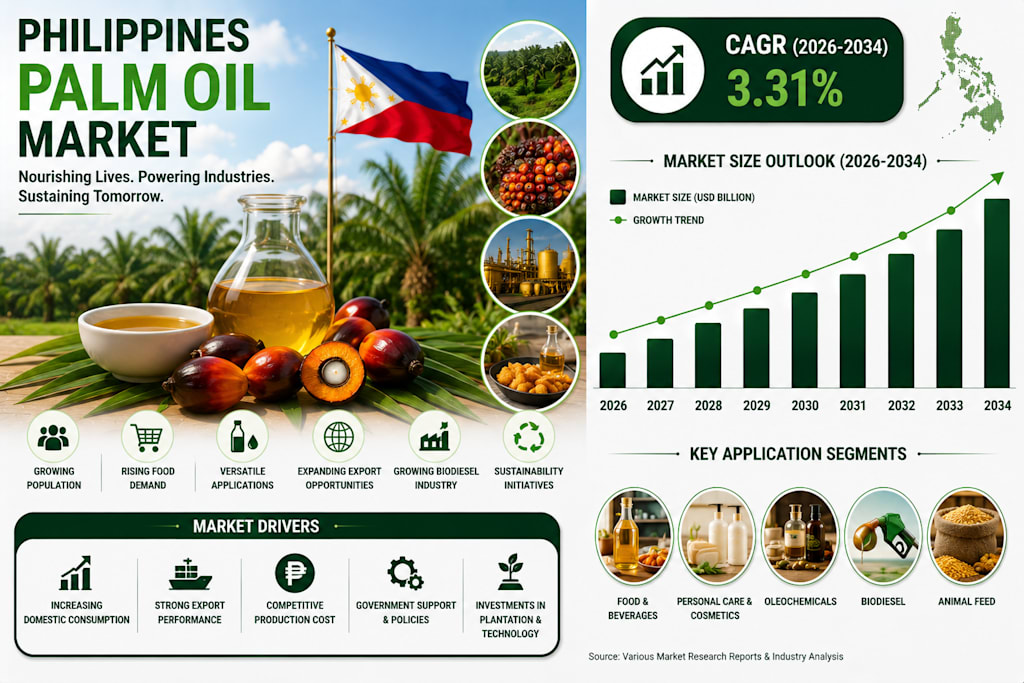
Philippines Palm Oil Market Overview
The Philippines palm oil market is a significant segment of the country's edible oils and food ingredients industry, serving a wide range of applications across food processing, household consumption, foodservice operations, cosmetics, personal care products, and industrial manufacturing. Palm oil remains one of the most widely used vegetable oils due to its affordability, versatility, long shelf life, and broad functionality across multiple sectors.
According to IMARC Group, the Philippines palm oil market size reached USD 1,183.3 Million in 2025 and is projected to reach USD 1,600.9 Million by 2034, exhibiting a compound annual growth rate (CAGR) of 3.31% during 2026–2034.
The market is witnessing steady growth driven by increasing demand from the food processing industry, rising consumption of packaged and processed foods, expanding foodservice activities, and growing industrial applications. As palm oil continues to serve as a cost-effective alternative to other edible oils, demand remains strong across both consumer and commercial sectors.
Key Market Drivers
Growing Demand from Food Processing Industries
Palm oil is extensively used in the production of bakery products, confectionery items, instant noodles, snacks, margarine, and processed foods. The continued expansion of the food manufacturing sector is supporting long-term demand growth across the market.
Rising Consumption of Packaged and Convenience Foods
Urbanization, changing lifestyles, and increasing demand for ready-to-eat products are contributing to higher consumption of processed and packaged food products that utilize palm oil as a key ingredient.
Cost-Effectiveness Compared to Other Edible Oils
Palm oil remains a competitively priced vegetable oil option, making it attractive for food manufacturers, restaurants, and consumers seeking affordable cooking and food processing solutions.
Expanding Foodservice Sector
The growth of restaurants, quick-service chains, bakeries, catering services, and institutional food providers is generating sustained demand for palm oil due to its stability, frying performance, and versatility.
Increasing Industrial Applications
Beyond food production, palm oil is increasingly used in cosmetics, personal care products, soaps, detergents, bio-based products, and other industrial applications, contributing to broader market expansion.
Request a Sample Report with the Latest 2026 Data & Forecasts
What the Opportunities Are
Growth in Value-Added Palm Oil Products
Manufacturers are increasingly focusing on refined, specialty, and customized palm oil products designed to meet specific food processing and industrial requirements.
Expansion of Food Manufacturing Capacity
Investments in food processing facilities and manufacturing infrastructure are expected to create additional demand for palm oil across various product categories.
Rising Demand from Personal Care and Cosmetics Industries
Palm oil derivatives are widely used in skincare, haircare, and personal hygiene products, creating opportunities for suppliers serving the beauty and personal care sectors.
Development of Sustainable Palm Oil Supply Chains
Growing emphasis on sustainability and responsible sourcing is encouraging industry participants to invest in certified and environmentally responsible palm oil procurement practices.
Increasing Demand for Industrial Raw Materials
The versatility of palm oil as an industrial feedstock continues creating opportunities across chemical manufacturing, consumer goods production, and bio-based product development.
Recent News and Developments
May 2026 : Food manufacturers continued increasing production capacities to address rising consumer demand for packaged foods and processed food products, supporting palm oil consumption across the supply chain.
April 2026 : Importers and distributors focused on strengthening supply chain efficiency to ensure stable availability of palm oil products for food and industrial users throughout the country.
March 2026 : Foodservice operators maintained strong purchasing activity as restaurant expansion and growing consumer dining demand supported edible oil consumption.
February 2026 : Manufacturers increasingly explored sustainable sourcing strategies and certification programs aimed at enhancing supply chain transparency and environmental responsibility.
January 2026 : Industrial users expanded utilization of palm oil derivatives across personal care, household products, and manufacturing applications, contributing to diversified market demand.
December 2025 : The packaged food sector continued benefiting from changing consumer lifestyles and increasing demand for convenient food products, supporting palm oil usage across multiple categories.
November 2025 : Market participants focused on supply security and inventory management strategies to navigate global commodity price fluctuations and changing trade conditions.
2025–2026 (Market Trend) : The Philippines palm oil market is being shaped by growing food processing activities, increasing demand for packaged foods, expanding foodservice operations, and rising industrial applications. Industry participants are focusing on supply chain optimization, value-added product development, sustainable sourcing initiatives, and operational efficiency improvements to strengthen competitiveness. At the same time, import dependence, commodity price volatility, and sustainability considerations continue influencing market dynamics across the sector.
Why You Should Know About the Philippines Palm Oil Market?
The Philippines palm oil market is becoming an increasingly important component of the country's food manufacturing, edible oils, consumer goods, and industrial production ecosystem.
With projected growth from USD 1,183.3 Million in 2025 to USD 1,600.9 Million by 2034, the market demonstrates stable long-term potential supported by growing food consumption, expanding industrial applications, increasing demand for processed foods, and continued reliance on palm oil as a versatile and cost-effective raw material.
As food manufacturers, foodservice operators, and industrial users continue expanding production activities, the palm oil sector is expected to play a crucial role in supporting the Philippines' broader food and manufacturing industries over the coming decade.
About the Creator
Enjoyed the story? Support the Creator.
Subscribe for free to receive all their stories in your feed.
Comments
There are no comments for this story
Be the first to respond and start the conversation.