
Philippines Logistics Market 2026: E-Commerce Expansion, Infrastructure Growth & Supply Chain Innovation
How digital transformation, trade development and last-mile delivery demand are shaping the Philippines’ logistics industry

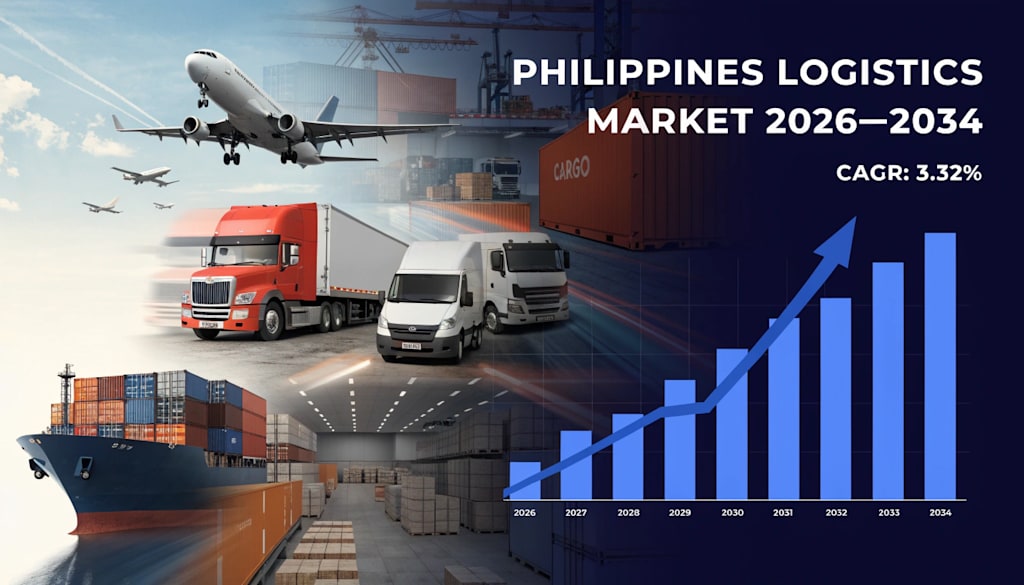
Philippines Logistics Market Overview
The Philippines logistics market is a vital component of the country’s trade and supply chain ecosystem, encompassing transportation, warehousing, distribution and value-added logistics services. The sector supports multiple industries, including manufacturing, retail, e-commerce and agriculture, ensuring efficient movement of goods across domestic and international markets.
According to IMARC Group, the Philippines logistics market size reached USD 31.1 Billion in 2025 and is projected to reach USD 42.1 Billion by 2034, exhibiting a compound annual growth rate (CAGR) of 3.32% during 2026–2034.
The market is experiencing steady growth, driven by increasing e-commerce activities, infrastructure development and government initiatives aimed at improving trade efficiency. The integration of digital technologies and automation is further enhancing supply chain performance and operational efficiency.
Key Market Drivers
Rapid Growth of E-Commerce and Online Retail
The surge in online shopping is significantly increasing demand for logistics services, particularly in last-mile delivery, warehousing and inventory management.
Infrastructure Development and Government Initiatives
Ongoing investments in roads, ports and airports are improving connectivity and reducing transportation time, strengthening the logistics network across the country.
Rising Demand for Efficient Supply Chain Solutions
Businesses are increasingly adopting integrated logistics services to optimize operations, reduce costs and improve delivery timelines.
Growth in International Trade and Exports
Increasing cross-border trade activities are driving demand for freight forwarding, customs handling and global logistics services.
Adoption of Digital and Automated Logistics Technologies
Technologies such as real-time tracking, warehouse automation and AI-based route optimization are improving efficiency and transparency in logistics operations.
Request a Sample Report with the Latest 2026 Data & Forecasts
What the Opportunities Are
The Philippines logistics market presents strong opportunities as digitalization and trade expansion continue to evolve.
Expansion of Last-Mile Delivery Services
Growing e-commerce demand is creating opportunities for faster and more efficient last-mile delivery solutions.
Growth of Smart Warehousing and Automation
Investments in automated warehouses and inventory management systems are improving storage efficiency and order fulfillment speed.
Rising Adoption of Green and Sustainable Logistics
Companies are increasingly implementing eco-friendly practices such as electric vehicles and sustainable packaging to reduce environmental impact.
Development of Integrated Logistics Solutions
End-to-end logistics services combining transportation, warehousing and distribution are gaining traction among businesses seeking efficiency.
Increasing Investment in Logistics Infrastructure
Public and private sector investments are supporting the expansion of logistics hubs, warehouses and transportation networks.
Recent News and Developments
April 2026: Logistics operations in the Philippines are under pressure due to rising fuel costs, with diesel prices increasing by 59.5% year-on-year and transport costs rising by 9.9%, significantly impacting freight rates and delivery margins across the supply chain.
April 2026: The Philippine government is addressing supply chain disruptions, ensuring food distribution amid logistical challenges caused by rising fuel prices and infrastructure constraints, highlighting the critical role of logistics in maintaining national supply stability.
March 2026: The Philippines improved its global logistics standing, ranking 21st out of 50 emerging markets in the 2026 Agility Emerging Markets Logistics Index, with an overall score of 4.96 (up from 4.91 in 2025), reflecting progress in digital readiness and domestic logistics capabilities.
March 2026: Logistics costs in the Philippines remain significantly higher than regional peers, with freight rates 50% to 250% higher than neighboring countries, and the average cost of importing a container reaching around $5,300, equivalent to 10% of goods value, indicating structural inefficiencies.
February 2026: The logistics sector is undergoing digital transformation, with AI-driven supply chain solutions being introduced to enhance operational efficiency, predictive analytics, and real-time decision-making across logistics networks.
February 2026: Industry players are shifting toward advanced distribution models, with “demand-driven logistics” strategies improving supply chain efficiency by optimizing inventory replenishment based on real-time demand signals.
January 2026: Investment momentum is strengthening, with the Philippines sovereign wealth fund prioritizing logistics among key sectors for 2026 investments, aiming to address infrastructure gaps and improve supply chain efficiency.
December 2025: The Philippines logistics market reached approximately USD 55.65 billion in 2024, driven by strong domestic consumption, infrastructure development, and rapid growth in e-commerce logistics services.
Why You Should Know About the Philippines Logistics Market?
The Philippines logistics market plays a crucial role in enabling efficient trade, supporting economic growth and strengthening supply chain resilience.
With projected growth from USD 31.1 Billion in 2025 to USD 42.1 Billion by 2034, the market demonstrates steady expansion potential driven by e-commerce growth, infrastructure investments and technological advancements.
As businesses continue to prioritize efficiency, speed and reliability in supply chains, the Philippines logistics market is expected to remain a key enabler of commerce and economic development in the years ahead.
About the Creator
Enjoyed the story? Support the Creator.
Subscribe for free to receive all their stories in your feed.
Comments
There are no comments for this story
Be the first to respond and start the conversation.