
Philippines Livestock and Poultry Market 2026: Rising Protein Consumption, Modern Farming Technologies & Government Support Driving Growth
How increasing meat demand, commercial farming expansion, and advancements in animal production systems are transforming the Philippines livestock and poultry industry

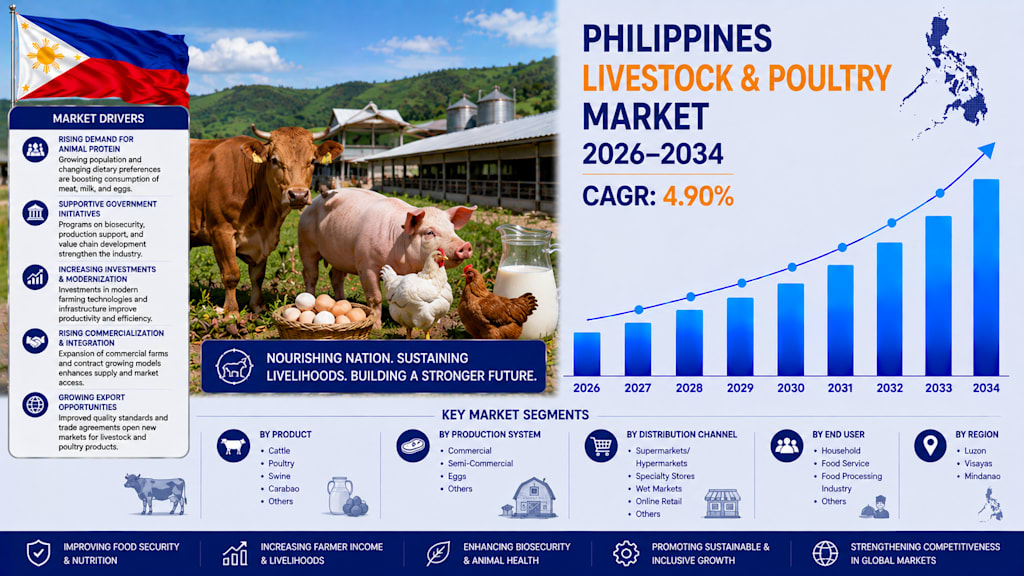
Philippines Livestock and Poultry Market Overview
The Philippines livestock and poultry market is a critical pillar of the country's agricultural and food production sector, supplying meat, eggs, and other animal-based products to a rapidly growing population. The industry encompasses livestock production, including cattle, swine, and goats, as well as poultry farming involving broilers, layers, and ducks.
According to IMARC Group, the Philippines livestock and poultry market size reached USD 10.4 Billion in 2025 and is projected to reach USD 16.1 Billion by 2034, exhibiting a compound annual growth rate (CAGR) of 4.90% during 2026–2034. The market is expanding due to rising domestic demand for protein-rich foods, increasing investments in modern farming technologies, government initiatives supporting food security, and ongoing improvements in animal health and feed production systems.
Key Market Drivers
Rising Domestic Demand for Animal Protein
Growing population levels, increasing disposable incomes, and changing dietary preferences are driving higher consumption of meat, poultry products, and eggs across the Philippines. Consumers are increasingly incorporating protein-rich foods into their daily diets, supporting long-term industry growth.
Adoption of Advanced Farming Technologies
Producers are increasingly implementing precision farming, automated feeding systems, digital monitoring technologies, and data-driven livestock management practices to improve productivity, animal welfare, and operational efficiency. These technological advancements are strengthening overall industry performance.
Government Support and Food Security Programs
Government initiatives aimed at improving food security, strengthening domestic livestock production, enhancing disease management, and supporting agricultural modernization are contributing significantly to market expansion. Measures addressing challenges such as African Swine Fever (ASF) and avian influenza continue supporting sector recovery and growth.
Expansion of Animal Feed Manufacturing
Investments in feed production facilities and improvements in feed quality are helping livestock and poultry operators enhance productivity and animal health. The availability of high-quality feed remains a key factor supporting sustainable industry development.
Growth of Commercial Farming Operations
The transition from traditional backyard farming toward larger-scale commercial and integrated farming models is improving production efficiency, supply chain reliability, and product quality across the livestock and poultry sector.
Request a Sample Report with the Latest 2026 Data & Forecasts
What the Opportunities Are
Export Market Expansion
The Philippines has significant opportunities to increase exports of livestock and poultry products to regional markets, particularly within Southeast Asia. Growing demand for high-quality meat products and improved compliance with international food safety standards are creating favorable export prospects.
Development of Value-Added Meat Products
Rising demand for ready-to-cook, processed, marinated, and convenience meat products is encouraging producers to invest in advanced processing technologies and product innovation.
Growth of Sustainable and Organic Farming
Consumer interest in organic, antibiotic-free, and ethically raised livestock products is creating new opportunities for premium market segments and sustainable production systems.
Expansion of Cold Chain Infrastructure
Investments in refrigerated transportation, cold storage facilities, and temperature-controlled logistics networks are improving supply chain efficiency and expanding market access across the country.
Increasing Adoption of Animal Health Solutions
The growing use of vaccines, veterinary diagnostics, disease prevention technologies, and nutritional supplements is creating opportunities for improving livestock productivity and supporting long-term industry sustainability.
Recent News and Developments
May 2026 : Commercial livestock and poultry operators continued investing in modern production technologies and automated farming systems aimed at improving efficiency and animal welfare.
April 2026 : Industry participants increased focus on disease prevention measures, biosecurity protocols, and livestock health management to strengthen production stability and reduce operational risks.
March 2026 : Cold chain infrastructure development projects continued supporting improved distribution of meat and poultry products across urban and regional markets.
February 2026 : Food producers expanded investments in value-added meat processing capabilities to address changing consumer preferences and growing demand for convenience food products.
January 2026 : Government agencies maintained efforts to strengthen food security initiatives and support livestock sector modernization through agricultural development programs.
2025–2026 (Market Trend) : The Philippines livestock and poultry market is being shaped by increasing domestic protein consumption, technological innovation, commercial farming expansion, improved animal health management, and stronger food security initiatives. Industry participants are focusing on productivity improvements, supply chain modernization, disease prevention, and sustainable production practices to strengthen competitiveness. At the same time, feed cost volatility, climate-related risks, and disease outbreaks remain important challenges influencing market dynamics.
Why You Should Know About the Philippines Livestock and Poultry Market?
The Philippines livestock and poultry market remains a cornerstone of the country's agricultural economy and food supply chain.
With projected growth from USD 10.4 Billion in 2025 to USD 16.1 Billion by 2034, the market demonstrates strong long-term potential supported by rising protein consumption, agricultural modernization, commercial farming investments, and government-backed food security initiatives.
As producers continue investing in advanced farming technologies, animal health solutions, feed optimization, and sustainable production systems, the sector is expected to play an increasingly important role in supporting national food security, rural development, and economic growth over the coming decade.
About the Creator
Enjoyed the story? Support the Creator.
Subscribe for free to receive all their stories in your feed.
Comments
There are no comments for this story
Be the first to respond and start the conversation.