
Philippines Livestock and Poultry Market 2026: Protein Demand, Commercial Farming & Food Security Growth
How rising meat consumption, farming modernization and government support are shaping the Philippines’ livestock and poultry industry

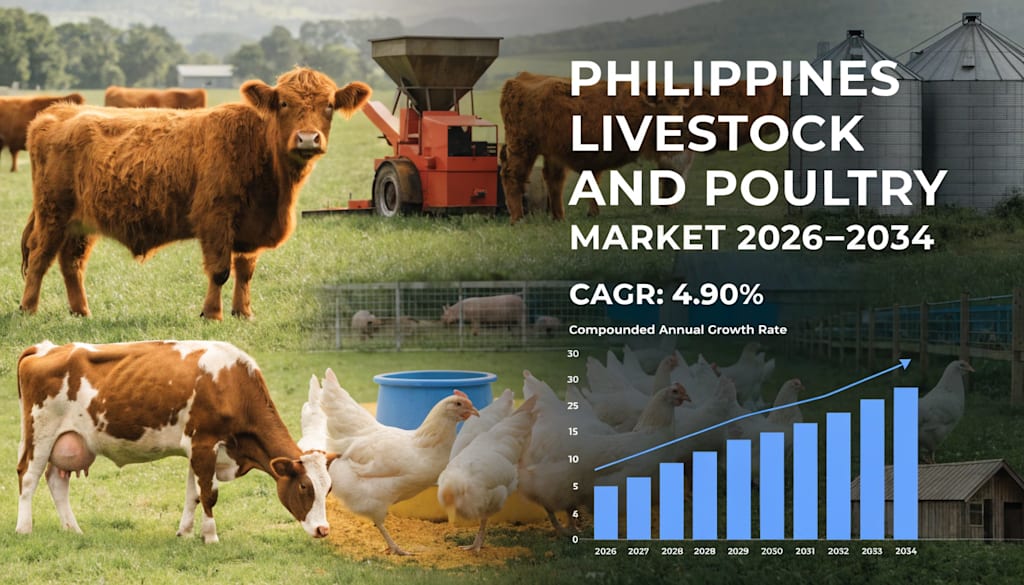
Philippines Livestock and Poultry Market Overview
The Philippines livestock and poultry market is a vital component of the country’s agriculture and food production sector, encompassing the breeding, raising and processing of animals such as cattle, swine, goats and poultry. The market plays a crucial role in ensuring food security, supporting rural livelihoods and meeting the growing demand for protein-rich food products.
According to IMARC Group, the Philippines livestock and poultry market size reached USD 10.4 Billion in 2025 and is projected to reach USD 16.1 Billion by 2034, exhibiting a compound annual growth rate (CAGR) of 4.90% during 2026–2034.
The market is experiencing steady growth, driven by rising domestic demand for meat products, supportive government policies and advancements in farming technologies. Increasing investments in feed production, biosecurity and animal health are further strengthening the sector and ensuring long-term sustainability.
Key Market Drivers
Rising Demand for Protein-Rich Food
Growing population, increasing disposable incomes and changing dietary habits are driving higher consumption of meat, poultry and eggs across the Philippines.
Expansion of Commercial and Integrated Farming
The shift toward large-scale, vertically integrated farming systems is improving efficiency, ensuring consistent supply and enhancing product quality.
Government Support and Food Security Initiatives
Government programs focused on disease control, agricultural development and food security are supporting the growth and resilience of the livestock and poultry sector.
Technological Advancements in Farming Practices
Adoption of precision farming, automated feeding systems and data-driven monitoring is improving productivity, animal health and operational efficiency.
Development of Cold Chain and Logistics Infrastructure
Investments in refrigerated transport and storage facilities are enhancing distribution efficiency, reducing spoilage and maintaining product quality.
Request a Sample Report with the Latest 2026 Data & Forecasts
What the Opportunities Are
The Philippines livestock and poultry market presents strong growth opportunities as demand and production capabilities continue to expand.
Expansion of Export Opportunities
Rising demand for high-quality meat products in regional markets is creating opportunities for Philippine producers to expand exports and diversify revenue streams.
Growth of Value-Added Meat Products
Processed and ready-to-cook meat products are gaining popularity among urban consumers seeking convenience and quality.
Increasing Demand for Organic and Sustainable Farming
Consumer preference for organic, antibiotic-free and ethically produced meat is opening new premium market segments.
Adoption of Advanced Animal Health and Nutrition Solutions
Improved veterinary care, vaccines and feed innovations are enhancing productivity and supporting overall farm efficiency.
Expansion in Rural and Underserved Areas
Infrastructure development and government support programs are enabling small-scale farmers to participate more effectively in the market.
Recent News and Developments
April 2026 – Poultry sector dynamics show rising production but pricing pressure, with chicken output reaching 2.28 million metric tons in 2025 (+10% YoY), while farmgate prices dropped to as low as ₱65/kg, indicating oversupply and margin compression for producers.
March 2026 – Import dependency is increasing, with poultry imports rising ~9% YoY in early 2026, including ~49.7 million tons of chicken imports in January, highlighting supply-demand gaps and growing reliance on international trade.
March 2026 – The sector faces macroeconomic pressure from the national energy crisis, as the Philippines imports ~98% of its oil, leading to fuel price spikes and increased logistics and feed transportation costs across livestock supply chains.
February 2026 – The Philippines livestock and poultry market reached approximately USD 10.4 billion in 2025, supported by strong domestic demand for meat and protein consumption.
January 2026 – Production structure is becoming more industrialized, with commercial farms accounting for ~54% of the national chicken inventory, indicating a shift toward large-scale, integrated farming systems.
December 2025 – Regional livestock inventory trends show rapid expansion in some areas, with herd and poultry inventory growth reaching ~29.6% in certain provinces, reflecting localized supply recovery and investment in production.
November–December 2025 – Structural demand remains strong, driven by population growth and dietary shifts toward meat consumption, reinforcing long-term expansion of the livestock and poultry sector.
Why You Should Know About the Philippines Livestock and Poultry Market?
The Philippines livestock and poultry market plays a crucial role in ensuring food security, supporting rural economies and meeting the country’s growing demand for protein-rich foods.
With projected growth from USD 10.4 Billion in 2025 to USD 16.1 Billion by 2034, the market demonstrates steady expansion potential driven by consumption trends, technological advancements and strong policy support.
As the country continues to modernize its agricultural sector and strengthen supply chains, the Philippines livestock and poultry market is expected to remain a key contributor to economic growth and sustainable food production in the years ahead.
About the Creator
Enjoyed the story? Support the Creator.
Subscribe for free to receive all their stories in your feed.
Comments
There are no comments for this story
Be the first to respond and start the conversation.