
Philippines FMCG Market 2026: Urbanization, Digital Retail & Changing Consumer Preferences Driving Growth
How e-commerce expansion, rising disposable incomes, and demand for convenience products are transforming the Philippines FMCG industry

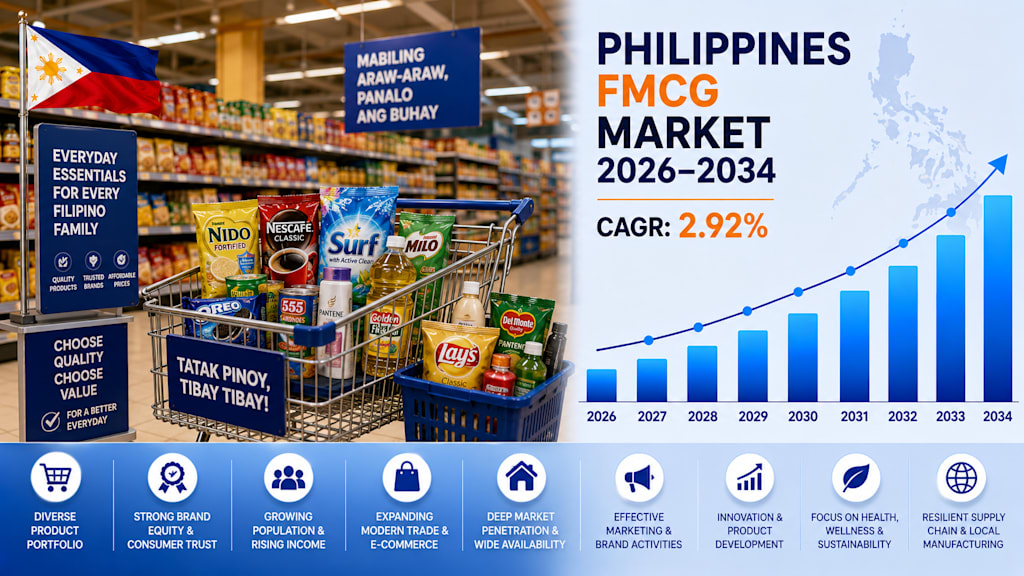
Philippines FMCG Market Overview
The Philippines FMCG market is a major segment of the country’s consumer goods and retail industry, encompassing fast-moving consumer products such as food and beverages, personal care items, household products, packaged goods, and over-the-counter consumer essentials.
According to IMARC Group, the Philippines FMCG market size reached USD 8.3 Billion in 2025 and is projected to reach USD 9.9 Billion by 2034, exhibiting a compound annual growth rate (CAGR) of 1.92% during 2026–2034.
The market is witnessing stable growth driven by increasing urbanization, changing consumer lifestyles, rising demand for convenience products, expanding digital retail infrastructure, and growing adoption of premium and health-focused consumer goods.
Key Market Drivers
Rising Urbanization and Population Growth
Rapid urban expansion and increasing population levels are contributing to higher consumption of packaged foods, beverages, personal care, and household products.
Expansion of E-Commerce and Digital Retail Channels
Online grocery platforms, quick-commerce services, and digital marketplaces are improving accessibility and convenience for FMCG consumers.
Increasing Demand for Convenience Products
Busy lifestyles and changing consumption habits are boosting demand for ready-to-eat meals, packaged snacks, instant beverages, and easy-to-use household products.
Growing Health and Wellness Awareness
Consumers are increasingly preferring healthier food options, organic ingredients, low-sugar products, and wellness-oriented personal care items.
Rising Disposable Incomes and Middle-Class Expansion
Higher consumer spending power is supporting demand for premium, branded, and value-added FMCG products.
Request a Sample Report with the Latest 2026 Data & Forecasts
What the Opportunities Are
Expansion of Sustainable and Eco-Friendly Products
Manufacturers are increasingly investing in recyclable packaging, biodegradable materials, and environmentally sustainable product formulations.
Growth of Premium and Functional Consumer Goods
Consumers are showing rising interest in premium beverages, functional foods, organic products, and specialized personal care items.
Increasing Adoption of AI and Data Analytics in Retail
Retailers and FMCG brands are utilizing AI-powered analytics and consumer insights to optimize inventory management and personalized marketing strategies.
Development of Direct-to-Consumer (DTC) Sales Channels
Brands are increasingly leveraging digital platforms and social commerce to strengthen customer engagement and online sales.
Rising Demand for Local and Regional Brands
Consumers are increasingly supporting locally manufactured products and region-specific food and beverage offerings.
Recent News and Developments
May 2026: The Philippines FMCG market continues expanding as rising urbanization, digital commerce growth, and changing consumer lifestyles increase demand for packaged food, beverages, personal care, and household products. Companies are increasingly focusing on convenience-oriented products, health-focused offerings, and omnichannel retail strategies to strengthen consumer engagement.
May 2026: Food imports and supply chain diversification remained important across the Philippine FMCG sector. The Philippines eased restrictions on pork imports from African swine fever-free regions of Spain to stabilize food supply and support demand across processed food and retail channels.
April 2026: E-commerce and digital retail platforms continued reshaping FMCG distribution channels nationwide. Online grocery shopping, quick-commerce delivery, and social commerce platforms are increasingly influencing consumer purchasing behavior, particularly among younger urban households and middle-income consumers.
February 2026: Worldpanel by Numerator projected that the Philippines FMCG sector would grow by approximately 3%–4% during 2026, compared to 5.2% growth recorded in 2025. Industry analysts attributed the moderation to slower economic growth expectations, cautious household spending, and modest price increases across consumer goods categories.
February 2026: Industry research identified high-value consumer segments driving FMCG demand growth, including older consumers, overseas Filipino worker (OFW) households, pet-owning families, and beauty-conscious shoppers. Approximately 67% of Filipino households reportedly owned at least one pet, while consumers aged 55 and above accounted for around 16% of the population, creating opportunities for wellness, nutrition, and specialized consumer products.
January 2026: Major FMCG and foodservice companies continued expanding product portfolios and retail presence across the Philippines. Jollibee Foods Corporation announced plans to launch South Korean coffee chain Compose Coffee in the Philippines during 2026, strengthening competition within the country’s growing beverage and convenience retail segment.
December 2025: Health and wellness trends continued reshaping consumer preferences across the FMCG industry. Demand for organic foods, fortified beverages, plant-based products, low-sugar snacks, and functional nutrition items increased steadily as Filipino consumers became more health conscious following the pandemic period.
November 2025: Infrastructure modernization and logistics improvements continued supporting FMCG distribution efficiency nationwide. Government investments in roads, ports, transportation networks, and digital infrastructure are improving product accessibility across provincial and rural markets while supporting faster e-commerce fulfillment operations.
2025–2026 (market trend): The Philippines FMCG market is being shaped by rapid urbanization, e-commerce expansion, rising health consciousness, digital payment adoption, and evolving consumer spending patterns. Companies are increasingly investing in localized product innovation, sustainable packaging, omnichannel retailing, and AI-driven consumer analytics to strengthen competitiveness. At the same time, inflationary pressure, supply chain volatility, raw material costs, and changing household purchasing behavior continue influencing pricing strategies and operational performance across the industry.
Why You Should Know About the Philippines FMCG Market?
The Philippines FMCG market is becoming an increasingly important pillar of the country’s retail, manufacturing, and consumer economy.
With projected growth from USD 8.3 Billion in 2025 to USD 9.9 Billion by 2034, the market demonstrates stable long-term potential supported by urbanization, digital commerce growth, and evolving consumer preferences.
As FMCG companies continue investing in sustainability, product innovation, health-oriented offerings, and digital retail expansion, the sector is expected to play a critical role in shaping the future of consumer spending and retail development across the Philippines.
About the Creator
Enjoyed the story? Support the Creator.
Subscribe for free to receive all their stories in your feed.
Comments
There are no comments for this story
Be the first to respond and start the conversation.