
Philippines Diaper Market 2026: Birth Rates, Urbanization & Rising Hygiene Awareness Drive Steady Growth
How demographic momentum, premiumization trends, and e-commerce expansion are shaping the Philippines diaper industry

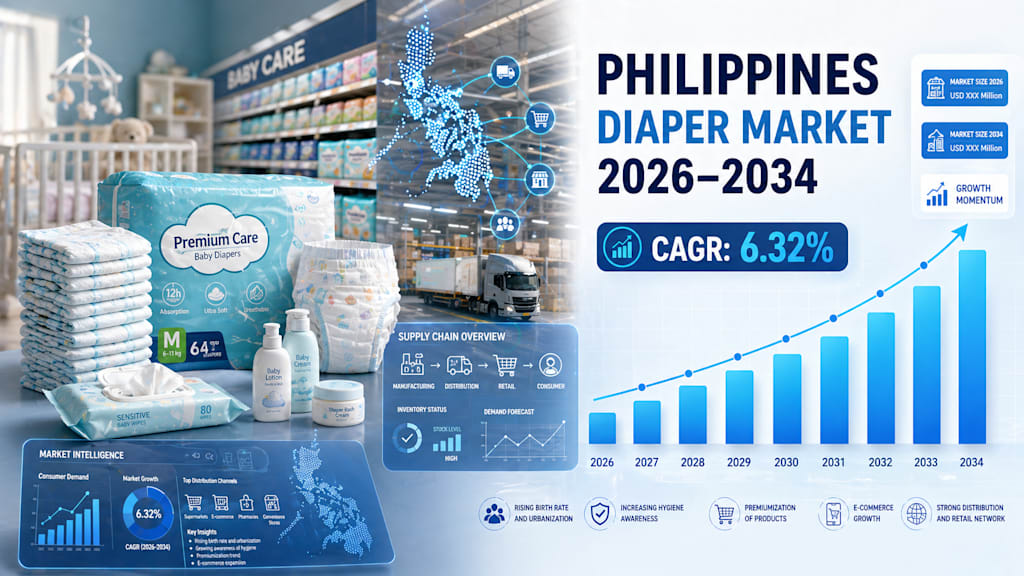
Philippines Diaper Market Overview
The Philippines diaper market is a steadily expanding segment of the country's consumer goods and personal care industry, encompassing baby diapers, adult diapers, and a growing range of eco-friendly and specialized diaper products. The market plays an essential role in meeting the daily hygiene needs of infants and adults across one of Southeast Asia's most populous nations.
According to IMARC Group, the Philippines diaper market size was valued at USD 1,942.74 Million in 2025 and is projected to reach USD 3,371.57 Million by 2034, growing at a compound annual growth rate (CAGR) of 6.32% from 2026–2034.
The market is driven by rising birth rates, increasing urbanization, and growing baby hygiene knowledge among parents. The expansion of the middle-class population and growing purchasing power are leading to increased spending on premium baby care products. Modern retail and online growth are also amplifying product accessibility in both rural and urban areas.
Key Market Drivers
Rising Birth Rates and Young Population Demographics
The Philippines maintains one of the highest birth rates in Southeast Asia, creating substantial and sustained demand for baby care products including diapers. The country's young population demographic profile ensures continuous market replenishment as new parents enter the consumer base annually.
Expanding Middle-Class Population and Rising Disposable Incomes
Economic development in the Philippines is expanding the middle-class population, enabling greater household spending on quality consumer goods including premium diaper products. Rising disposable incomes allow Filipino families to transition from basic or economy diaper options toward branded products offering enhanced features and superior performance.
Increasing Urbanization and Modern Retail Expansion
Rapid urbanization across the Philippines is transforming consumer purchasing patterns and expanding market accessibility for diaper products. Urban migration concentrates populations in areas served by modern retail infrastructure, improving product availability and shopping convenience.
E-Commerce Growth and Digital Distribution
E-commerce platforms are revolutionizing diaper distribution in the Philippines, offering consumers unprecedented convenience and product variety. Online shopping adoption is accelerating as digital-savvy parents embrace home delivery services, subscription models, and exclusive online promotions.
Growing Awareness of Infant Health and Hygiene
Growing parental awareness regarding infant health and hygiene is driving preference for quality diaper products that offer superior absorption and skin protection.
Request a Sample Report with the Latest 2026 Data & Forecasts
What the Opportunities Are
The Philippines diaper market presents strong growth potential as consumer preferences shift and new distribution channels emerge.
Eco-Friendly and Sustainable Product Development
Filipino consumers are increasingly demonstrating environmental consciousness, driving demand for biodegradable and eco-friendly diaper alternatives. Parents are seeking products manufactured using sustainable materials that minimize environmental impact while maintaining performance standards.
Premiumization and Specialized Diaper Segments
The market is witnessing growing demand for premium and specialized diaper products catering to specific infant needs and parental preferences. Consumers are increasingly willing to invest in diapers offering enhanced features including superior absorption technology, hypoallergenic materials, wetness indicators, and dermatologically tested compositions.
Expanding Rural and Remote Area Distribution
Geographic reach remains underpenetrated in many island communities. Brands that invest in last-mile logistics and affordable product lines stand to capture a largely untapped consumer base across Visayas and Mindanao.
Adult Diaper Segment Growth
An aging population and increasing awareness of adult incontinence care represent an emerging opportunity, complementing the dominant baby diaper segment with new demand drivers.
Direct-to-Consumer and Social Commerce Channels
Social media marketing and influencer partnerships are significantly shaping purchasing decisions among younger parents, opening new direct-to-consumer avenues for brands to build loyalty and drive repeat purchases.
Recent News and Developments
April 2026: The Philippines diaper market is witnessing a shift toward premium and eco-friendly products, with consumers increasingly preferring skin-friendly, high-absorbency, and sustainable diaper options. This trend is being driven by rising disposable incomes and greater awareness of infant hygiene, pushing manufacturers to innovate with biodegradable materials and improved product features.
March 2026: According to industry updates, the overall Philippines diaper market continues to expand steadily, supported by strong demand across both baby and adult segments. The market was valued at around USD 1.94 billion in 2025 and is projected to reach over USD 3.37 billion by 2034, growing at a CAGR of about 6.3%, reflecting sustained long-term demand.
February 2026: The adult diaper segment is emerging as a key growth area within the broader market. With the country’s ageing population and improving healthcare access, demand for adult incontinence products is rising steadily. This segment generated around USD 97.5 million in 2025 and is expected to grow consistently through 2034, highlighting diversification beyond baby care products.
January 2026: Market recovery and growth are being supported by expanding e-commerce and modern retail channels, which are improving accessibility of diaper products across urban and rural areas. Online platforms and supermarkets are playing a critical role in increasing product penetration and offering a wider variety of brands to consumers.
December 2025: The Philippines continues to experience strong underlying demand for diapers due to high birth rates and population growth, with around 2 million births annually. Combined with rising middle-class income and increasing hygiene awareness, this has significantly boosted the adoption of disposable diapers across different income segments.
December 2025: The market is also undergoing competitive shifts, with reports suggesting changes in brand presence and supply dynamics. Some global players are reassessing their market strategies, creating opportunities for regional and private-label brands to expand their footprint and capture market share.
Why You Should Know About the Philippines Diaper Market?
The Philippines diaper market occupies a critical position within the country's broader consumer goods landscape, underpinned by reliable demographic demand and accelerating socioeconomic development.
The market generated revenue of USD 1,942.74 Million in 2025 and is projected to reach USD 3,371.57 Million by 2034, growing at a CAGR of 6.32% from 2026–2034. Continued urbanization, rising disposable incomes, and expanding middle-class population are expected to support this market expansion. imarcgroup
Revenue growth will be further supported by product innovation, premiumization trends, and distribution channel diversification. E-commerce penetration and modern retail expansion will enhance product accessibility across diverse geographic regions, positioning the market for robust performance. imarcgroup
With baby diapers commanding 91% of market share, supermarkets and hypermarkets leading distribution at 38%, and Luzon accounting for 62% of regional demand, the Philippines diaper market offers clear, data-backed entry points for investors, manufacturers, and retail partners looking to capitalize on one of Southeast Asia's most dynamic consumer markets.
About the Creator
Enjoyed the story? Support the Creator.
Subscribe for free to receive all their stories in your feed.
Comments
There are no comments for this story
Be the first to respond and start the conversation.