
Philippines Contact Lenses Market: Vision Correction Surge, Digital Eye Strain & Aesthetic Appeal
How rising myopia rates, BPO-driven screen time and fashion-conscious youth are reshaping the Philippine optical landscape

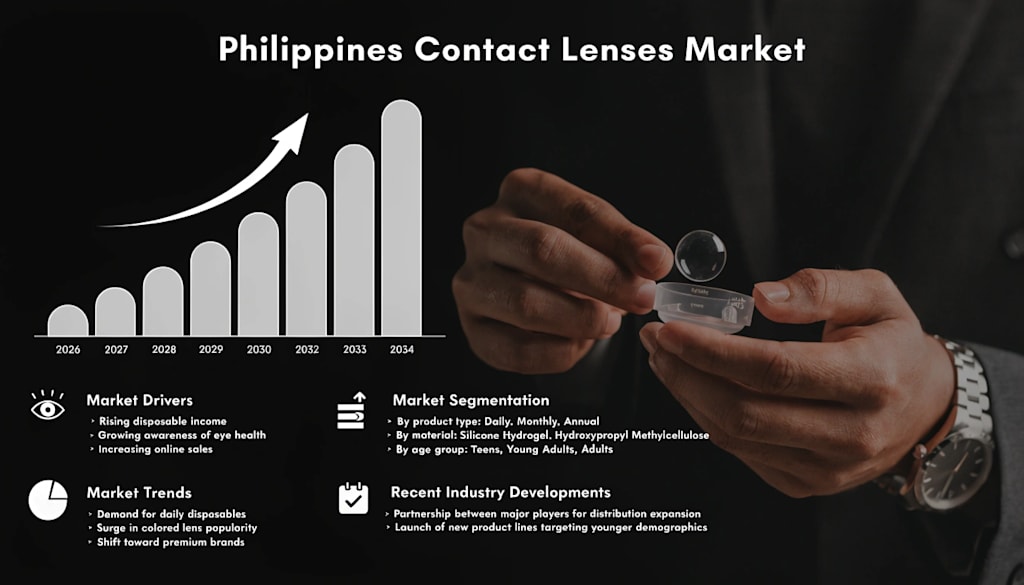
The Philippines contact lenses market is experiencing steady expansion as the convergence of rising refractive errors, digital device dependency, and a growing appetite for cosmetic lenses transforms the way Filipinos see — and are seen. Contact lenses — spanning corrective, cosmetic, therapeutic and lifestyle-oriented variants — are increasingly preferred for their convenience, aesthetic flexibility and superior comfort compared to traditional eyeglasses. According to IMARC Group, the market size reached USD 188.50 Million in 2025 and is projected to reach USD 285.56 Million by 2034, exhibiting a compound annual growth rate (CAGR) of 4.72% during 2026–2034. As digital device penetration deepens across professional and student populations, and as optical retail chains expand beyond Metro Manila into provincial centres, contact lenses are becoming more accessible to a broader cross section of Filipino consumers.
What's Driving Market Growth?
Escalating Prevalence of Refractive Errors and Digital Eye Strain. The Philippines is experiencing a marked increase in myopia, particularly among younger demographics exposed to prolonged screen time and reduced outdoor activities. Over 2.17 million Filipinos were affected by myopia in 2023, with some clinic based studies reporting a 59% prevalence of myopia among certain populations. Among high school students, 16% already exhibit signs of visual impairment, with 90% of those cases being myopia. The country’s rapidly expanding business process outsourcing (BPO) sector, which employs millions of workers engaged in extended computer based tasks, is contributing substantially to rising rates of digital eye strain and associated vision correction needs. This demographic shift — young, urban, digitally immersed — is precisely the segment most receptive to contact lens adoption.
Fashion Conscious Adoption of Cosmetic and Coloured Lenses. Cosmetic and coloured contact lenses are gaining strong traction among Filipino millennials and Generation Z consumers influenced by social media trends, beauty culture and celebrity endorsements. The market has recorded notable growth as fashion conscious consumers increasingly adopt lenses over traditional eyeglasses, with coloured and cosmetic options becoming particularly popular among younger demographics seeking to enhance their appearance and express personal style through diverse colour and pattern options. The rise of Korean pop culture, online beauty influencers and the growing popularity of Halloween and cosplay events have further fuelled demand for decorative lenses that complement specific looks and costumes.
Expansion of Optical Retail Infrastructure Beyond Metropolitan Centres. The Philippines is witnessing significant expansion of organised optical retail chains beyond Metro Manila into secondary and tertiary cities, improving consumer access to quality eye care products and professional fitting services. Vision Express Philippines operates over 80 stores nationwide, while OWNDAYS has expanded to 71 locations across the country, establishing comprehensive retail networks that bring premium contact lens products and professional eye care consultations to previously underserved provincial markets. EO Executive Optical remains the largest and most trusted optical shop in the country, anchoring the professional distribution network nationwide. This geographic diversification ensures that contact lenses are no longer a Metro Manila luxury but an accessible option for consumers across Luzon, Visayas and Mindanao.
Technological Advancements in Lens Materials and Wearing Modalities. Continuous innovation in contact lens materials and manufacturing technologies is significantly enhancing product performance characteristics, driving higher adoption rates among Filipino consumers who demand superior comfort, visual clarity and wearing convenience. Silicone hydrogel materials allow up to six times more oxygen transmission to the cornea compared to traditional hydrogel lenses, decreasing the risk of hypoxia related complications and supporting comfortable use during high demand work periods. Daily disposable lenses, which eliminate the need for cleaning solutions and reduce infection risk, are gaining significant market share as consumers prioritise hygiene and convenience. The introduction of blue light blocking contact lenses, designed to filter potentially harmful high energy visible light from digital screens, addresses the specific concerns of the country's large BPO workforce and student population.
Rising Disposable Income and Healthcare Awareness. As the Philippine economy continues to grow and disposable incomes rise, more Filipinos can afford vision correction solutions beyond basic eyeglasses. The middle class is expanding, and with it comes greater awareness of eye health and willingness to invest in products that offer both functional and aesthetic benefits. Healthcare expenditure in the Philippines has been increasing, and vision care is increasingly recognised as an essential component of overall health, particularly as the long term consequences of uncorrected refractive errors become better understood.
Market Segmentation & Key Insights
By Material, silicone hydrogel dominates the market, owing to its superior oxygen permeability that allows extended wear with reduced corneal hypoxia risk, combined with enhanced moisture retention properties that address comfort demands of digital device users.
By Design, spherical leads the market, driven by the widespread prevalence of myopia and hyperopia requiring simple refractive correction, broad product availability across prescription ranges, and cost effective pricing that ensures accessibility for diverse consumer segments.
By Usage, daily disposable comprises the largest segment, reflecting growing consumer preference for single use convenience, superior hygiene standards eliminating lens care requirements, and increasing recommendation rates from eye care practitioners for first time contact lens wearers.
By Application, corrective prevails the market, owing to the substantial population affected by refractive errors requiring vision correction, rising awareness of eye health importance, and improved access to eye examination services in both metropolitan and provincial areas.
By Distribution Channel, eye care practitioners exhibit clear dominance, reflecting strong consumer reliance on professional guidance for lens fitting, prescription accuracy, and aftercare services that reduce the risk of complications associated with improper lens usage.
By Region, Luzon comprises the largest region, driven by the concentration of the Philippines' population, economic activity, and healthcare infrastructure in Metro Manila and surrounding provinces, alongside higher disposable incomes enabling premium optical product adoption.
What the Opportunities Are?
E Commerce and Direct to Consumer Channels. Online sales of contact lenses have been increasing steadily, driven by the convenience of home delivery, competitive pricing, and the ability to compare products across multiple brands. There is strong opportunity for providers to establish direct to consumer platforms offering subscription based delivery, competitive pricing and convenient home delivery that appeal to time constrained urban professionals. The growing comfort with digital commerce among Filipino consumers, accelerated by the pandemic, has made online optical retail a viable and expanding channel.
Myopia Management and Specialty Lenses. With myopia prevalence rising across all age groups, there is growing demand for myopia management solutions including orthokeratology (Ortho K) lenses and specialised soft lenses for myopia control. These products, which slow the progression of myopia in children and young adults, represent a premium, clinically driven segment with significant growth potential. Manufacturers and eye care practitioners have significant opportunity to introduce and promote these advanced corrective options, particularly among middle income families concerned about their children's long term eye health.
Integrated Digital Health Services. Optical retailers can differentiate by offering AI powered diagnostic screening tools that detect broader health conditions beyond vision correction. Vision Express Philippines has pioneered Vision Plus, an AI powered tool that scans for signs of hypertension, high cholesterol and even potential brain tumour risks in under three minutes, helping reframe optical care as an accessible entry point to holistic wellness. Similar innovations can expand the value proposition of contact lens consultations beyond simple refraction.
Affordable Premium Segments. While contact lenses remain more expensive than prescription eyeglasses on a total cost of ownership basis, there is opportunity for manufacturers to introduce competitively priced daily disposable options using advanced materials that broaden accessibility beyond premium consumer segments. The introduction of value priced silicone hydrogel daily disposables could unlock significant volume growth among price sensitive but quality conscious first time users.
Training and Aftercare Services. As advanced lens technologies become more sophisticated, there is demand for professional fitting services, user training, maintenance guidance and compliance support that help consumers maximise product value and ensure safe usage. Eye care practitioners who invest in comprehensive aftercare programmes can build long term patient loyalty and recurring revenue streams.
Recent News and Developments in Philippines Contact Lenses Market
October 2025: Vision Express Philippines launched its Fall/Winter 2025 "Unwrap the Holidays" campaign, promoting designer eyewear and premium lenses including light adaptive options, featuring AI powered screenings, virtual styling tools, and celebrity brand ambassador Jericho Rosales, reinforcing the brand's presence in the premium segment.
July 2025: Vision Express opened a flagship store at SM City Cebu featuring VisionPlus AI powered health screening and vision7 comprehensive eye examination services, bringing advanced eyecare technology to the Visayas region and expanding the brand's footprint beyond Luzon.
January 2026: JINS Philippines launched Beauty Lens, a beauty inspired eyewear product designed to enhance facial warmth and everyday confidence. Available in three shades, the lenses combine subtle aesthetic effects with over 99% UV protection, targeting style conscious consumers seeking functional, lifestyle oriented eyewear.
Late 2025: The Philippines planned to launch WHO's SPECS 2030 initiative, piloting it during 2026–2027 to address rising myopia affecting 2.17 million people in 2023. The program targets children, strengthens screening, and integrates refractive care into national health strategies, creating potential for expanded public private partnerships in vision care.
Why Should You Know About Philippines Contact Lenses Market?
You should know about this market because it illustrates how vision health priorities, technological innovation and changing consumer lifestyles intersect to create steady growth opportunities in an increasingly accessible segment of the healthcare and consumer goods landscape. Contact lenses are no longer just medical devices for vision correction — they are lifestyle products that offer convenience, aesthetic enhancement and even broader health monitoring capabilities.
For investors, the contact lenses market offers exposure to a stable growth consumer healthcare category anchored in increasing myopia prevalence, rising disposable incomes and expanding retail infrastructure across the Philippines. The projected CAGR of 4.72% reflects consistent confidence in adoption trends, product differentiation and recurring revenue opportunities tied to replacement lenses and professional services.
For optical retailers, technology partners, eye care practitioners and supply chain planners, understanding contact lens segmentation, material innovations, distribution channel dynamics and e commerce trends helps shape intelligent investment decisions, procurement strategies and service offerings that deliver measurable value to Filipino consumers.
In essence, the Philippines contact lenses market captures how vision care, fashion consciousness and digital accessibility converge — making it a compelling area for innovators, investors and organisations seeking smarter approaches to eye health, consumer engagement and operational visibility.
About the Creator
Thomas
Market Research Analyst | Industry Trends & Forecasting | Turning market data into clear, actionable business insights across global sectors.
Enjoyed the story? Support the Creator.
Subscribe for free to receive all their stories in your feed.
Comments
There are no comments for this story
Be the first to respond and start the conversation.