
Philippines Consumer Electronics Market 2026: Digital Adoption, Smart Devices & E-Commerce Expansion
How rising disposable income, rapid digitalization, and evolving consumer lifestyles are driving the Philippines consumer electronics industry

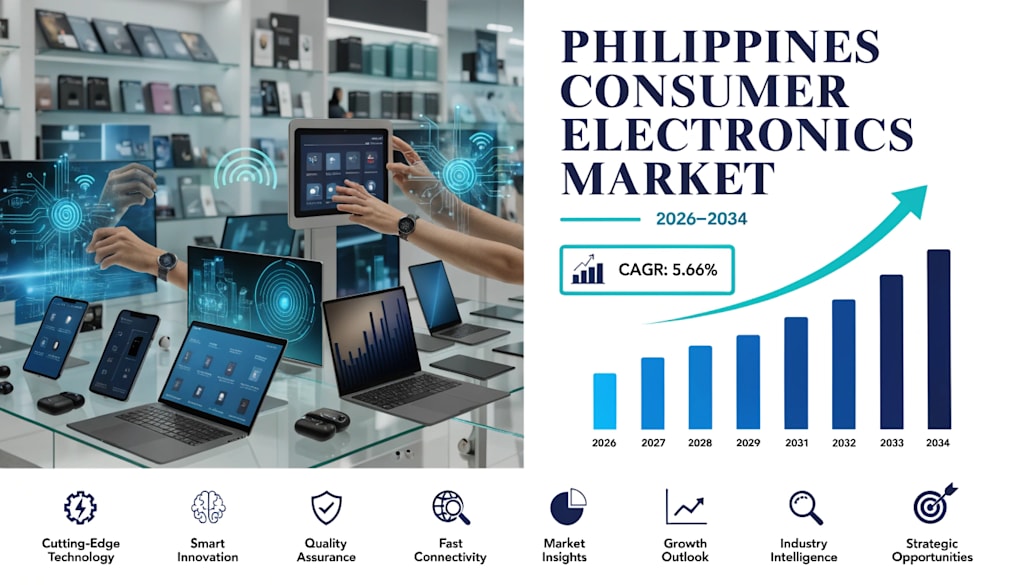
Philippines Consumer Electronics Market Overview
The Philippines consumer electronics market is a dynamic segment of the country’s retail and technology industry, encompassing products such as smartphones, televisions, laptops, home appliances, and wearable devices. The market is witnessing strong growth as consumers increasingly adopt digital lifestyles and smart technologies.
According to IMARC Group, The Philippines consumer electronics market size reached USD 10.9 Billion in 2025. Looking forward, the market is projected to reach USD 18.1 Billion by 2034, exhibiting a growth rate (CAGR) of 5.66% during 2026-2034.
The market growth is driven by increasing disposable incomes, expanding internet penetration, rising demand for smart and connected devices, and the rapid growth of e-commerce platforms.
Key Market Drivers
Rising Digital Adoption and Internet Penetration
The growing use of smartphones and internet services is encouraging consumers to invest in advanced electronic devices, including smart TVs, laptops, and connected home appliances.
Increasing Disposable Income and Urbanization
A growing middle-class population with higher purchasing power is driving demand for premium and technologically advanced consumer electronics.
Expansion of E-Commerce Platforms
Online retail channels are making consumer electronics more accessible, offering competitive pricing, convenience, and a wide range of product choices.
Growing Demand for Smart and Connected Devices
Consumers are increasingly adopting smart home devices, wearables, and IoT-enabled products, enhancing convenience and connectivity.
Rapid Technological Advancements
Continuous innovation in product features, such as improved battery life, AI integration, and enhanced display technologies, is fueling market growth.
Request a Sample Report with the Latest 2026 Data & Forecasts
What the Opportunities Are
Growth of Smart Home Ecosystems
The increasing adoption of smart home devices, including smart speakers, security systems, and connected appliances, is creating new opportunities.
Expansion of Wearable Technology
Rising health awareness is driving demand for smartwatches and fitness trackers with advanced monitoring features.
Increasing Demand for Energy-Efficient Appliances
Consumers are shifting toward energy-efficient and eco-friendly appliances, creating opportunities for sustainable product innovations.
Rising Popularity of Gaming and Entertainment Devices
Growing interest in gaming consoles and high-performance entertainment systems is contributing to market expansion.
Localization and Affordable Product Offerings
Manufacturers are focusing on affordable products tailored to local consumer preferences, increasing market penetration.
Recent Trends and Developments
April 2026: The Philippines consumer electronics sector is being impacted by global supply chain disruptions, particularly in memory chips. Industry reports indicate that prices for some memory components increased dramatically, with 8GB eMMC modules rising from about $1.50 to $20 (over 13× increase), while supply fulfillment rates dropped to below 30%. This shortage is expected to constrain production of smartphones, PCs, and TVs, with global smartphone output projected to decline by 100–250 million units, affecting availability and pricing in markets like the Philippines.
March 2026: The broader electronics industry in the Philippines continues to expand strongly, reinforcing the consumer electronics ecosystem. Electronics exports are expected to approach USD 48–50 billion in 2026, with the sector contributing over 50% of total national exports. This highlights the country’s critical role in global electronics manufacturing and its indirect support for domestic availability of consumer electronic products.
March 2026: The Philippines declared a national energy emergency due to global oil supply disruptions, which is affecting production and consumer purchasing power. The country imports around 98% of its oil, and fuel prices surged significantly, with diesel and gasoline prices rising sharply while national reserves dropped to about 45 days of supply. These rising energy costs are increasing manufacturing expenses and retail prices of electronic devices, impacting demand across the consumer electronics market.
February 2026: Rapid expansion of e-commerce and digital payments is significantly boosting consumer electronics sales. Smartphones, laptops, and home appliances remain among the top-selling online categories, supported by increasing internet penetration and mobile usage. This shift is transforming purchasing behaviour, enabling wider access to electronics across both urban and rural regions.
2025 (latest available data): According to IMARC, the Philippines consumer electronics market reached approximately USD 10.9 billion in 2025, with smartphones accounting for over 55% of total consumer electronics spending. Growth is driven by rising digital adoption, a young tech-savvy population, and increasing demand for smart home devices and connected technologies.
2025–2026 (market trend): The market is being shaped by strong structural drivers such as rising disposable incomes, urbanisation, and increasing digital connectivity. At the same time, external pressures like inflation, supply shortages, and energy costs are creating short-term challenges, leading to higher prices for devices such as smartphones, laptops, and wearables and moderating consumer demand growth.
Why You Should Know About the Philippines Consumer Electronics Market
The Philippines consumer electronics market is a fast-growing sector supported by digital transformation and evolving consumer preferences.
With projected growth from USD 10.9 Billion in 2025 to USD 18.1 Billion by 2034, the market demonstrates strong potential driven by increasing connectivity, smart device adoption, and expanding e-commerce.
As consumers continue to embrace digital lifestyles, the demand for innovative, connected, and energy-efficient electronic products is expected to rise, making this market a key contributor to the country’s economic and technological development.
About the Creator
Enjoyed the story? Support the Creator.
Subscribe for free to receive all their stories in your feed.
Comments
There are no comments for this story
Be the first to respond and start the conversation.