
Philippines Animal Health Market 2026: Livestock Expansion, Veterinary Innovation & Disease Prevention Driving Growth
How rising demand for animal-based products, veterinary healthcare advancements, and biosecurity initiatives are transforming the Philippines animal health industry

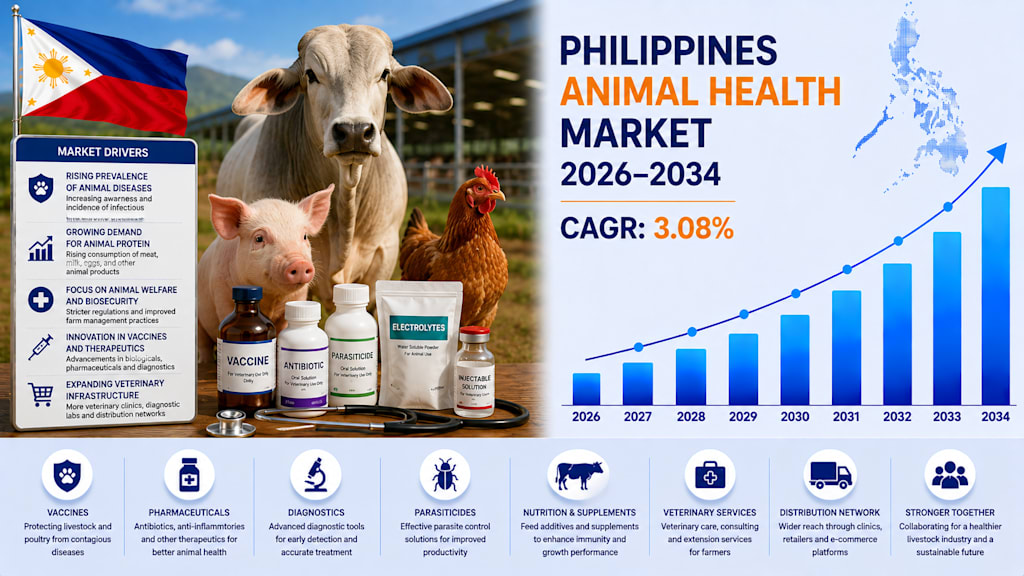
Philippines Animal Health Market Overview
The Philippines animal health market is an essential segment of the country’s agriculture, livestock, veterinary, and companion animal care industries, encompassing pharmaceuticals, biologicals, medicinal feed additives, diagnostics, vaccines, and preventive healthcare solutions for both commercial and companion animals.
According to IMARC Group, the Philippines animal health market size reached USD 181.0 Million in 2025 and is projected to reach USD 239.7 Million by 2034, exhibiting a compound annual growth rate (CAGR) of 3.08% during 2026–2034. The market is witnessing steady growth driven by increasing livestock production, growing pet ownership, rising awareness of zoonotic diseases, advancements in veterinary healthcare technologies, and government initiatives aimed at strengthening animal health and food security.
Key Market Drivers
Growing Demand for Animal-Based Products
The increasing consumption of meat, milk, eggs, and other livestock products is encouraging farmers to invest in better animal healthcare solutions. As commercial farming operations expand, the demand for vaccines, pharmaceuticals, feed additives, and veterinary services continues to rise across the country.
Advancements in Veterinary Healthcare Technologies
The adoption of modern veterinary diagnostics, biotechnology solutions, advanced vaccines, and therapeutic products is improving animal disease management and productivity. Innovations in precision medicine and animal healthcare technologies are supporting better treatment outcomes and herd management practices.
Rising Awareness of Zoonotic Diseases
Growing public awareness regarding diseases that can be transmitted from animals to humans is increasing the focus on disease prevention, vaccination programs, and biosecurity measures. Government agencies and industry stakeholders are investing in initiatives designed to strengthen disease surveillance and animal health management.
Expansion of Livestock Farming Activities
The continued growth of poultry, swine, and dairy farming operations is creating sustained demand for animal healthcare products and veterinary services. Livestock producers are increasingly prioritizing preventive healthcare measures to improve productivity and reduce disease-related losses.
Increasing Pet Ownership and Companion Animal Care
The growing number of pet-owning households is supporting demand for companion animal healthcare services, vaccinations, nutritional supplements, preventive treatments, and veterinary consultations. Pet owners are increasingly viewing animals as family members and investing in long-term health management.
Request a Sample Report with the Latest 2026 Data & Forecasts
What the Opportunities Are
Growth of Preventive Animal Healthcare
Increasing awareness of the benefits of early disease prevention is creating opportunities for vaccination programs, wellness checkups, deworming treatments, and routine veterinary care services across both livestock and companion animal segments.
Expansion of Animal Vaccination Programs
Government-supported vaccination campaigns and private-sector investments in disease control initiatives are strengthening opportunities for vaccine manufacturers and veterinary healthcare providers.
Rising Adoption of Veterinary Diagnostics
Advancements in diagnostic technologies are enabling faster disease detection and more effective treatment planning, creating opportunities for innovation within the veterinary diagnostics segment.
Increasing Demand for Companion Animal Healthcare
Growing pet adoption and rising expenditure on pet wellness are creating opportunities for pharmaceutical companies, veterinary clinics, and animal healthcare providers focused on companion animal care.
Development of Sustainable Livestock Health Solutions
Farmers are increasingly adopting healthcare products and management practices that improve animal welfare, enhance productivity, and support sustainable agricultural development.
Recent News and Developments
June 2025 : Cargill entered a feed production collaboration with Biotech Farms in Mindanao to improve the quality and availability of animal feed products, supporting livestock productivity and overall animal health across the region.
April 2025 : The Department of Agriculture officially inaugurated the Animal Vaccine Development Program at the Center for Transboundary Animal Diseases within Central Luzon State University. The initiative aims to strengthen veterinary research capabilities and advance animal health management nationwide.
May 2026: Animal health providers continued expanding investments in veterinary diagnostics, disease prevention solutions, and livestock healthcare products as demand for food security and animal productivity increased across the country.
April 2026 : Government agencies and industry participants strengthened biosecurity programs aimed at controlling transboundary animal diseases and improving disease surveillance systems across commercial farming operations.
March 2026 : The companion animal healthcare segment continued gaining momentum as rising pet ownership increased demand for preventive veterinary care, vaccinations, nutritional products, and wellness services.
February 2026 : Livestock producers increasingly adopted preventive healthcare strategies, including routine vaccination and disease monitoring programs, to improve productivity and reduce economic losses associated with disease outbreaks.
January 2026 : Veterinary healthcare technology adoption expanded as farmers and animal healthcare professionals integrated advanced diagnostics, precision medicine tools, and innovative treatment protocols into animal health management practices.
2025–2026 (Market Trend) : The Philippines animal health market is being shaped by rising livestock production, increasing pet ownership, veterinary healthcare innovation, growing awareness of zoonotic diseases, and stronger government support for animal welfare and food security. Industry participants are increasingly investing in vaccines, diagnostics, pharmaceuticals, preventive healthcare programs, and advanced disease management solutions to improve animal productivity and health outcomes. At the same time, disease outbreak risks, regulatory requirements, treatment costs, and supply chain challenges continue influencing market development across the country.
Why You Should Know About the Philippines Animal Health Market?
The Philippines animal health market is becoming an increasingly important pillar of the country’s agriculture, food production, veterinary services, and companion animal care ecosystem.
With projected growth from USD 181.0 Million in 2025 to USD 239.7 Million by 2034, the market demonstrates stable long-term potential supported by livestock sector expansion, growing pet care expenditure, veterinary healthcare innovation, and increasing emphasis on disease prevention and biosecurity.
As animal health companies, veterinary professionals, and government agencies continue investing in vaccines, diagnostics, preventive healthcare solutions, and advanced veterinary technologies, the sector is expected to play a critical role in supporting food security, animal welfare, and sustainable agricultural development across the Philippines.
About the Creator
Enjoyed the story? Support the Creator.
Subscribe for free to receive all their stories in your feed.
Comments
There are no comments for this story
Be the first to respond and start the conversation.