
Philippines Almond Milk Market 2026: Plant Based Surge, Café Culture Influence & Nutritious Innovation
How rising lactose intolerance, the Philippine coffee boom and clean label trends are fueling a dairy free revolution

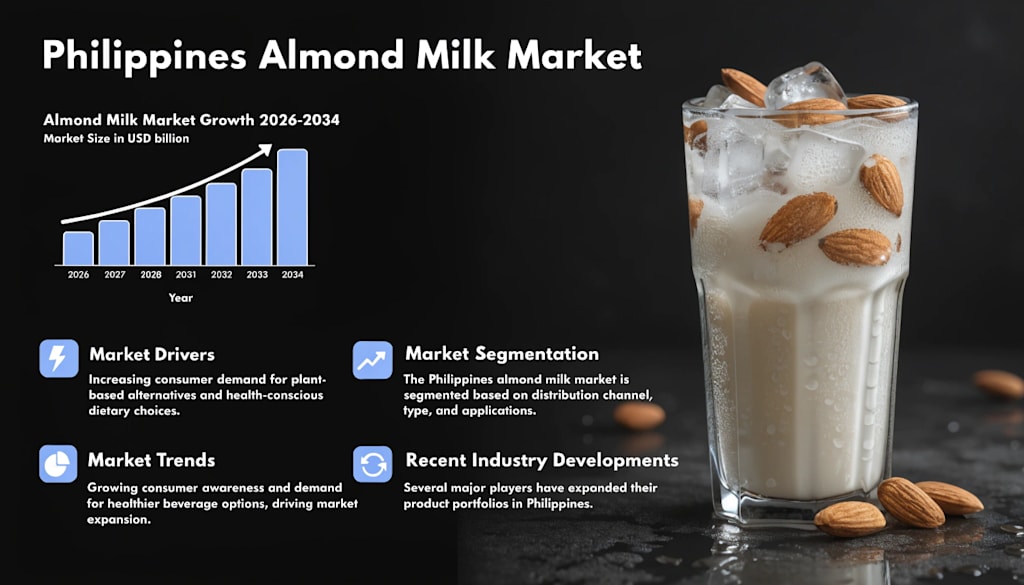
The Philippines almond milk market is experiencing a dramatic transformation as health driven consumers, urban coffee lovers and ingredient conscious manufacturers accelerate the shift away from traditional dairy. Almond milk — available in plain and flavoured varieties, sold through cartons and glass bottles, and used in everything from morning lattes to frozen desserts and personal care — is rapidly shedding its “niche” label. According to IMARC Group, the market size reached USD 256.96 Million in 2025 and is projected to reach USD 696.79 Million by 2034, exhibiting a robust compound annual growth rate (CAGR) of 11.72% during 2026–2034. This double digit trajectory positions almond milk as one of the fastest growing segments in the Philippine consumer staples space.
What's Driving Market Growth?
Rising Health Consciousness & Lactose Intolerance Awareness. Two interconnected forces are fundamentally reshaping Filipino drinking habits. Growing health consciousness and widespread lactose intolerance are major drivers pushing consumers towards almond milk and other plant based dairy alternatives. Younger urban Filipinos, in particular, are increasingly motivated by ethical and environmental values, embracing vegetarian and vegan lifestyles that align with plant based consumption. The result is a consumer base that actively seeks out lactose free, low calorie and cholesterol free options — qualities that almond milk delivers naturally.
Rapid Coffee Shop Expansion Transforming Trial into Adoption. The explosion of café culture across the Philippines has emerged as a stealth catalyst for almond milk adoption. Specialty cafés and international chains increasingly feature almond milk as a standard menu option, offering consumers the opportunity to experience plant based alternatives through their favourite beverages. This foodservice channel serves a dual purpose: it drives immediate consumption and acts as an informal education platform where customers can taste and compare plant based options in a familiar context. The ongoing expansion of coffee brands across secondary cities continues to widen access, embedding almond milk within everyday consumer habits from Metro Manila to regional hubs.
E Commerce & Digital Retail Lowering Access Barriers. The Philippines' rapid embrace of online platforms has fundamentally changed how consumers access almond milk. Online platforms now allow shoppers to browse a wide range of plant based milk options with greater convenience and delivery reliability. This digital shift has been especially beneficial for consumers in regional and provincial areas, where specialty items like almond milk are not always stocked in local stores. Improved cold chain logistics and digital payment integration have further reduced friction points, helping to democratise access to premium plant based beverages.
Nutritional Fortification & Product Innovation. Manufacturers are increasingly fortifying almond milk with calcium, vitamins and other essential nutrients, addressing concerns about protein content and making the product a more viable substitute for traditional dairy, particularly for families. The segment is also seeing flavour innovation and the launch of barista specific variants designed to complement coffee without curdling — a critical feature for foodservice adoption.
Market Segmentation & Key Insights
By Type, the market is divided into plain and flavoured almond milk, with flavoured varieties gaining share as manufacturers introduce chocolate, vanilla and other profiles. By Category, the market spans organic and conventional products. By Packaging Type, offerings include carton, glass and others, with carton dominating due to convenience and extended shelf life. By Application, almond milk is used across beverages, frozen desserts, personal care and others. By Distribution Channel, key routes include hypermarkets and supermarkets, convenience stores, online stores, and others. By Region, the market is segmented into Luzon, Visayas and Mindanao. Luzon, particularly Metro Manila, accounts for the largest share due to higher disposable incomes and concentrated café culture. The market is moderately competitive, with international brands such as Blue Diamond’s Almond Breeze and Califia Farms leading, while local players like Dehusk (coconut based) carve out differentiated positioning.
What the Opportunities Are?
Price Accessibility & Small Pack Formats. Almond milk remains positioned as a premium product, limiting mass market adoption. Price reductions and smaller packaging formats — exemplified by oat milk brand Oatside’s move to lower SRPs in the Philippines — can significantly expand reach. Brands that introduce affordable, portion controlled packs for price sensitive households will capture substantial upside.
Barista Grade & Foodservice Focused Products. The foodservice channel represents a critical competitive battleground, with suppliers competing for partnerships with rapidly expanding coffee chains. Almond milk formulations designed specifically for steaming and frothing — offering superior texture and heat stability — will command premium positioning and embedded customer loyalty.
Domestic Production & Local Sourcing. The Philippines remains heavily reliant on imported almond milk and raw almond ingredients, exposing the market to currency and freight fluctuations. Local manufacturers that develop cost efficient production capabilities using imported almond paste or kernels could reduce dependency on fully finished imports and achieve more competitive pricing.
Educational Campaigns & Consumer Trust Initiatives. Many Filipino consumers remain unfamiliar with almond milk’s nutritional characteristics, leading to misconceptions about protein content and suitability for children. Coordinated education campaigns by producers and health advocates can address these gaps, building trust and expanding the addressable consumer base.
Recent News and Developments in Philippines Almond Milk Market
August 2025: Plant based milk brand Oatside lowered its suggested retail prices in the Philippines, making its Barista Blend 1 liter available at P120 — a strategic move to boost accessibility. Euromonitor noted that price reductions and small packaging are boosting the performance of plant based milk brands.
October 2025: Pickup Coffee announced a collaboration with Dehusk, a homegrown fortified plant based coconut milk brand co founded by actress Nadine Lustre. The partnership introduced four new beverages combining Dehusk’s plant based milk with local flavours, including Ube Coconut Milk and Strawberry Coconut Milk.
November 2025: Century Pacific Food Inc. earned the Consumer Good of the Year (Plant based Milk) – Philippines title at the FMCG Asia Awards 2025 for its Coco Mama Fresh Gata product, which reinvented traditional coconut cream preparation.
January 2026: A study published in a Philippine university journal evaluated the nutritional profile of selected plant based milk alternatives sold in Metro Manila, providing consumers with data to make informed purchasing decisions and highlighting the need for consistent nutritional standards.
Why Should You Know About Philippines Almond Milk Market?
You should know about this market because it captures how health priorities, lifestyle evolution and retail innovation intersect to create one of the country’s most dynamic food and beverage growth stories. Almond milk is no longer just a substitute for the lactose intolerant — it is increasingly a lifestyle choice driven by wellness, ethical values and the premium experience of modern coffee culture.
For investors, the almond milk market offers exposure to a high growth consumer category anchored in an expanding middle class, rising health awareness and the accelerating digitisation of grocery retail. The projected CAGR of 11.72% reflects strong structural confidence in adoption trends, product diversification and recurring consumption tied to daily beverage habits.
For beverage manufacturers, foodservice operators, retailers and ingredient suppliers, understanding almond milk segmentation, pricing dynamics, e commerce distribution and consumer education gaps helps shape intelligent product development, channel strategies and marketing campaigns.
In essence, the Philippines almond milk market captures how nutrition science, café sophistication and digital accessibility converge — making it a compelling area for innovators, investors and organisations seeking smarter approaches to sustainable nutrition, brand building and the future of the Filipino breakfast table.
About the Creator
Thomas
Market Research Analyst | Industry Trends & Forecasting | Turning market data into clear, actionable business insights across global sectors.
Enjoyed the story? Support the Creator.
Subscribe for free to receive all their stories in your feed.
Comments
There are no comments for this story
Be the first to respond and start the conversation.