
Personalized Medicine Market Set to Surpass US$1 Trillion as Precision Healthcare Revolutionizes Global Treatment Strategies
Advances in genomics, genetic testing, biotechnology, and artificial intelligence are transforming healthcare by enabling treatments tailored to individual patients.

Introduction: A New Era of Healthcare Tailored to the Individual
For decades, healthcare has largely relied on a standardized approach to diagnosis and treatment. While traditional medical practices have delivered remarkable progress, they often operate under a "one-size-fits-all" model that may not fully account for the biological differences between patients.
Today, a major transformation is underway. Advances in genomics, molecular biology, biotechnology, artificial intelligence, and precision diagnostics are paving the way for a more individualized approach to healthcare. Instead of treating diseases based solely on symptoms, healthcare providers can increasingly tailor therapies according to a person's genetic makeup, lifestyle, and environmental influences.
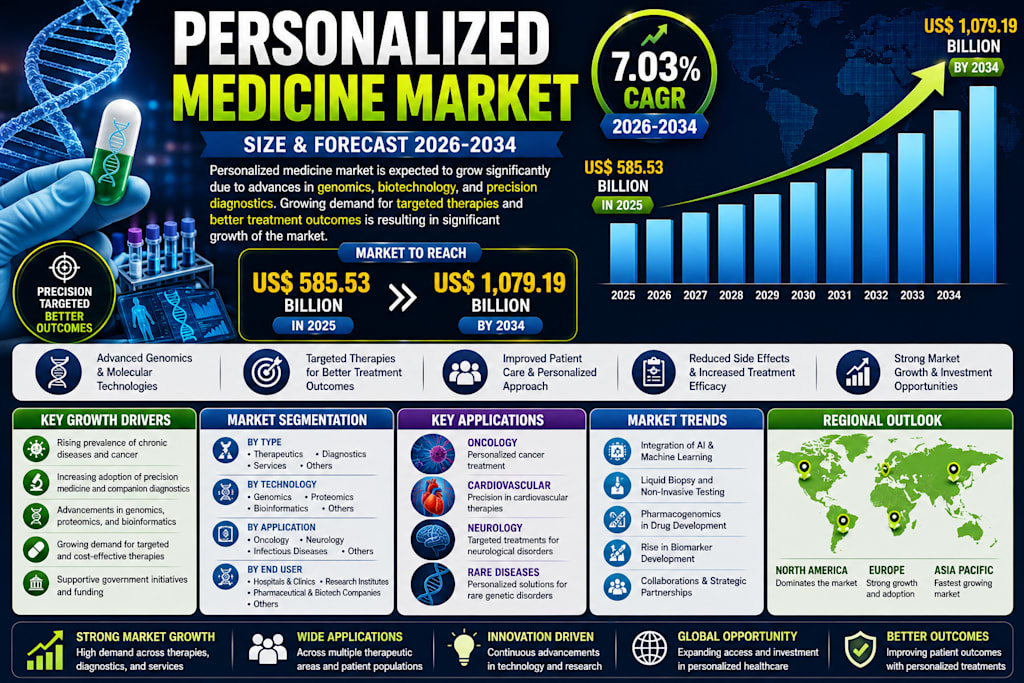
According to Renub Research, the Global Personalized Medicine Market is projected to grow from US$ 585.53 billion in 2025 to US$ 1,079.19 billion by 2034, expanding at a compound annual growth rate (CAGR) of 7.03% between 2026 and 2034. Growing demand for targeted therapies, improved treatment outcomes, and advances in genomic technologies are fueling significant expansion across the industry.
As healthcare systems worldwide shift toward precision-based care, personalized medicine is emerging as one of the most transformative developments in modern medicine.
Understanding Personalized Medicine
Personalized medicine, often referred to as precision medicine, is an approach to healthcare that considers an individual's unique genetic profile, lifestyle, biological characteristics, and environmental factors when making treatment decisions.
Unlike conventional medical approaches that apply the same treatment protocols to large groups of patients, personalized medicine seeks to identify the most effective treatment for each individual. This is achieved through genetic testing, biomarker analysis, molecular diagnostics, and advanced data analytics.
The goal is to improve treatment effectiveness while reducing adverse drug reactions, unnecessary interventions, and healthcare costs.
Personalized medicine has become particularly important in areas such as oncology, cardiovascular disease, rare genetic disorders, neurology, and chronic disease management.
Its growing adoption reflects a broader shift toward more accurate, predictive, and preventive healthcare models.
Genomics Is Driving the Precision Medicine Revolution
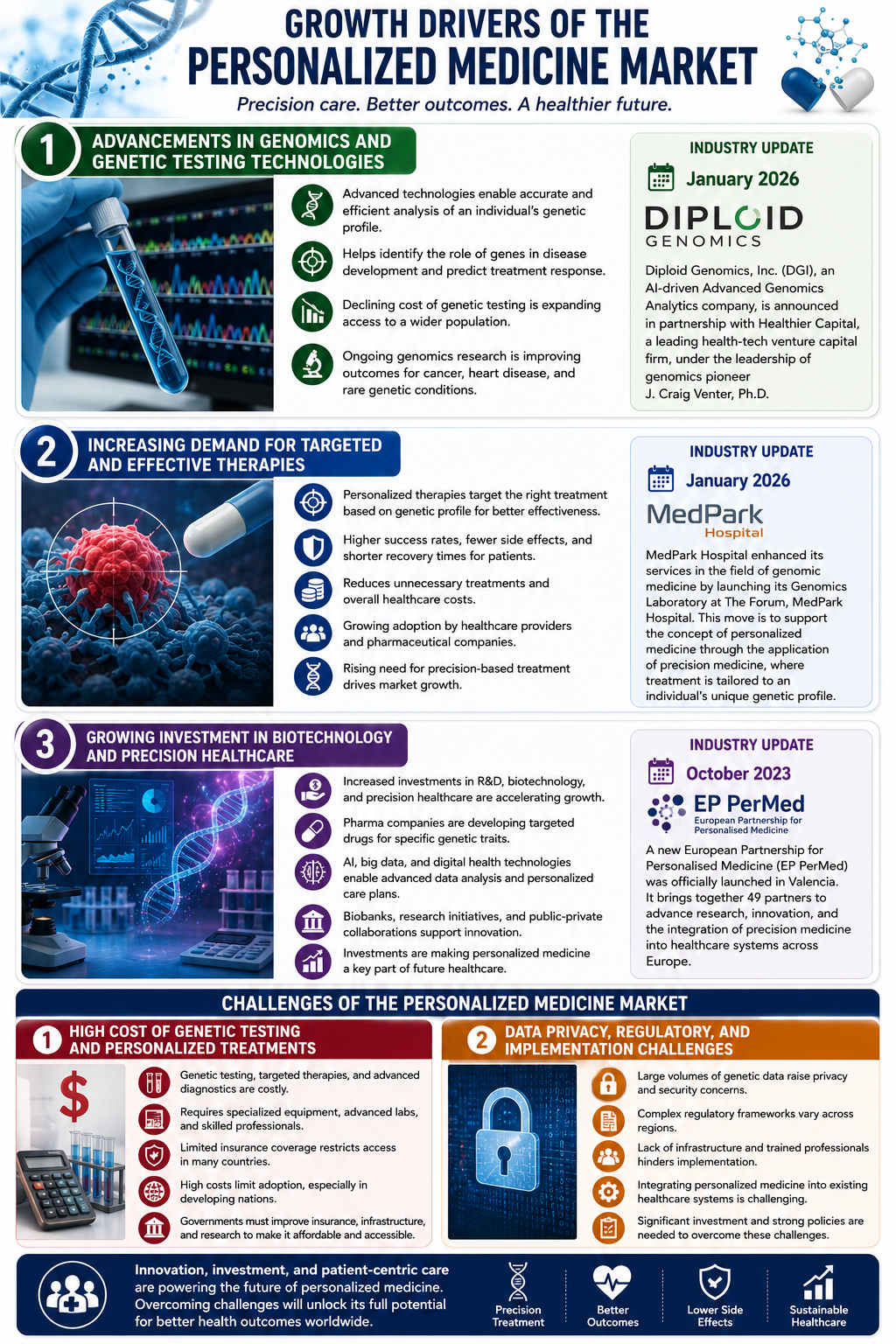
One of the most important drivers of personalized medicine is the rapid advancement of genomics and genetic testing technologies.
Modern genomic technologies enable healthcare professionals to analyze a patient's genetic profile with unprecedented accuracy and speed. These insights help physicians understand disease risk, identify genetic mutations, and predict how patients may respond to specific treatments.
As sequencing technologies become more sophisticated and affordable, genetic testing is becoming accessible to a wider population.
The report highlights that declining costs and ongoing innovation in genomics are accelerating the adoption of personalized medicine across multiple therapeutic areas, including cancer, cardiovascular disease, and rare genetic disorders.
In January 2026, Diploid Genomics announced a partnership with Healthier Capital under the leadership of genomics pioneer J. Craig Venter to advance AI-driven genomics analytics, reflecting the increasing importance of genomic technologies within healthcare.
As genomic science continues evolving, its influence on personalized healthcare is expected to grow substantially.
Demand for More Effective Therapies Is Fueling Growth
Healthcare providers and patients alike are increasingly seeking treatment options that deliver better outcomes with fewer complications.
Traditional therapies often produce varying results among patients because biological differences can significantly influence treatment effectiveness. Personalized medicine addresses this challenge by enabling healthcare professionals to select therapies based on an individual's unique characteristics.
This approach is particularly valuable in complex diseases such as cancer, where genetic mutations can determine how a patient responds to specific treatments.
Targeted therapies allow physicians to avoid ineffective medications while improving recovery rates and reducing adverse side effects.
The report notes that healthcare providers and pharmaceutical companies are increasingly adopting precision-based treatment strategies because they improve clinical outcomes while helping reduce unnecessary healthcare expenditures.
As expectations for treatment effectiveness continue rising, personalized medicine is becoming an increasingly important component of modern healthcare.
Biotechnology Investments Are Accelerating Innovation
Growing investment in biotechnology and precision healthcare is creating powerful momentum for market expansion.
Governments, research institutions, pharmaceutical companies, and healthcare organizations are investing heavily in technologies that support personalized medicine development. These investments are helping advance diagnostic capabilities, therapeutic innovation, and data-driven healthcare solutions.
Pharmaceutical companies are increasingly focused on developing therapies that target specific genetic mutations and molecular pathways associated with disease.
At the same time, advances in artificial intelligence, big data analytics, and digital health platforms are improving the ability to analyze vast amounts of biological and clinical information.
The launch of the European Partnership for Personalised Medicine in 2023, involving 49 partners across Europe, highlights the growing commitment to advancing precision medicine research and healthcare integration.
These investments are expected to continue driving innovation throughout the coming decade.
Personalized Therapeutics Are Transforming Disease Management
Personalized medicine therapeutics represent one of the most significant segments within the market.
These therapies are specifically designed to target biological mechanisms associated with an individual's disease profile and genetic characteristics. Rather than applying broad treatment strategies, personalized therapeutics aim to maximize effectiveness while minimizing unwanted side effects.
This approach is particularly beneficial for conditions such as cancer, autoimmune diseases, and rare genetic disorders.
Pharmaceutical companies continue investing heavily in the development of targeted drugs and biologics that support precision-based treatment strategies.
As research in molecular biology and genomics advances, personalized therapeutics are expected to play an increasingly important role in healthcare delivery worldwide.
Personalized Diagnostics Are Expanding Clinical Capabilities
Diagnostics form the foundation of personalized medicine.
Advanced diagnostic tools enable healthcare providers to identify genetic variations, biomarkers, disease risks, and treatment response patterns before initiating therapy. These insights help physicians make more informed decisions regarding patient care.
Personalized diagnostics include genetic testing, molecular diagnostics, companion diagnostics, and next-generation sequencing technologies.
The growing emphasis on early disease detection and preventive healthcare is further supporting adoption of these tools.
Healthcare organizations increasingly rely on personalized diagnostics to improve clinical accuracy, optimize treatment selection, and reduce unnecessary interventions.
As diagnostic technologies continue evolving, they are expected to become even more central to precision medicine strategies.
Oncology Remains the Largest Personalized Medicine Application
Cancer treatment represents one of the most successful applications of personalized medicine.
Personalized oncology focuses on identifying specific genetic mutations and molecular characteristics within tumors. This information allows healthcare providers to select therapies that directly target cancer cells while minimizing damage to healthy tissue.
Targeted therapies, immunotherapies, and precision oncology drugs have significantly improved treatment outcomes for many cancer patients.
As global cancer incidence continues rising, demand for personalized oncology solutions is expected to increase accordingly.
Pharmaceutical companies and research organizations continue investing heavily in developing next-generation cancer therapies tailored to individual patient profiles.
The future of oncology is increasingly linked to precision medicine approaches that offer more effective and personalized treatment pathways.
Cardiovascular Medicine Is Embracing Precision Healthcare
Personalized medicine is also making significant contributions to cardiovascular disease management.
Genetic testing and biomarker analysis help healthcare providers identify individuals at elevated risk for conditions such as hypertension, heart failure, arrhythmias, and coronary artery disease. Early identification enables preventive interventions and more targeted treatment strategies.
Personalized approaches can also improve medication selection by predicting how patients may respond to specific cardiovascular therapies.
As cardiovascular disease remains one of the leading causes of death globally, the demand for more effective treatment solutions continues to grow.
Precision medicine offers significant potential for improving patient outcomes while reducing long-term healthcare costs associated with cardiovascular conditions.
Hospitals Are Becoming Major Adoption Centers
Hospitals represent one of the most important end-user segments within the personalized medicine market.
Healthcare institutions are increasingly investing in genetic testing capabilities, molecular diagnostics, precision treatment programs, and advanced data analytics platforms. These investments enable hospitals to deliver more individualized care while improving treatment effectiveness.
Many hospitals are establishing dedicated precision medicine departments focused on oncology, cardiology, rare diseases, and genetic disorders.
Collaborations between hospitals, pharmaceutical companies, biotechnology firms, and research institutions are further accelerating adoption.
As healthcare systems continue transitioning toward value-based care models, hospitals are expected to play a critical role in expanding personalized medicine services.
Artificial Intelligence Is Enhancing Precision Medicine
Artificial intelligence is becoming a powerful tool within personalized healthcare.
AI systems can analyze vast datasets containing genetic information, clinical records, biomarker profiles, and treatment outcomes. These capabilities help identify patterns that may be difficult for human researchers to detect.
AI-driven analytics support faster diagnosis, improved risk prediction, treatment optimization, and drug discovery efforts.
The report highlights the growing integration of AI and genomics across healthcare systems as organizations seek to improve precision medicine capabilities.
As computational technologies continue advancing, artificial intelligence is expected to become increasingly important in enabling personalized healthcare delivery.
Regional Markets Continue to Expand
United States
The United States remains the largest personalized medicine market globally. Advanced healthcare infrastructure, strong biotechnology capabilities, and extensive investment in genomic research continue supporting growth.
The report highlights the U.S. Department of Health and Human Services' THRIVE program, which focuses on accelerating the development of precision genetic medicines for hereditary rare diseases.
United Kingdom
The United Kingdom continues expanding its personalized medicine capabilities through genomic research, healthcare innovation, and AI-driven healthcare initiatives.
The launch of the NextGen project, supported by Horizon Europe funding, reflects the country's commitment to developing personalized cardiovascular therapies.
India
India's personalized medicine market is growing rapidly due to expanding healthcare infrastructure, increasing awareness, and rising adoption of genomic technologies.
Government initiatives focused on genomics, precision diagnostics, and targeted therapies are helping strengthen the country's precision medicine ecosystem.
Saudi Arabia
Saudi Arabia is investing heavily in healthcare modernization and biotechnology innovation. The partnership between PGxAI and Najashi Holding demonstrates growing interest in integrating artificial intelligence and genomics into healthcare delivery under the Kingdom's Vision 2030 strategy.
Challenges Continue to Impact Market Adoption
Despite significant growth opportunities, personalized medicine faces several important challenges.
One of the biggest barriers remains the high cost of genetic testing, advanced diagnostics, and targeted therapies. Specialized equipment, laboratory infrastructure, and highly trained professionals contribute to elevated healthcare expenses.
Insurance coverage for personalized medicine services remains limited in many regions, restricting patient access.
Data privacy concerns also present challenges because personalized medicine relies heavily on sensitive genetic information. Protecting patient data and ensuring regulatory compliance are critical priorities for healthcare organizations.
Infrastructure limitations and workforce shortages further complicate implementation, particularly in developing healthcare systems.
Addressing these issues will be essential for achieving broader adoption of precision healthcare.
Leading Companies Driving Innovation
The personalized medicine market includes some of the world's most influential healthcare, biotechnology, and diagnostic companies.
Key organizations highlighted in the report include Abbott Laboratories, GE Healthcare, Aadi Bioscience, Illumina, QIAGEN, Eli Lilly and Company, Takeda Pharmaceutical Company, AbbVie, and F. Hoffmann-La Roche Ltd. These companies continue investing in genomic technologies, molecular diagnostics, targeted therapeutics, and precision healthcare platforms.
Their innovations are helping shape the future of individualized medicine across multiple therapeutic areas.
Final Thoughts
The global personalized medicine market is entering a transformative period as healthcare systems increasingly embrace precision-based approaches to diagnosis, treatment, and disease prevention.
With the market projected to grow from US$ 585.53 billion in 2025 to US$ 1,079.19 billion by 2034, personalized medicine is becoming one of the most influential trends in modern healthcare. Advances in genomics, biotechnology, artificial intelligence, and precision diagnostics are creating new opportunities to deliver safer, more effective, and highly individualized care.
Although challenges related to cost, data privacy, and infrastructure remain, the long-term outlook remains exceptionally positive. As scientific understanding of human biology continues to deepen, personalized medicine is expected to redefine healthcare by ensuring that treatments are designed not for the average patient, but for the individual.
About the Creator
Enjoyed the story? Support the Creator.
Subscribe for free to receive all their stories in your feed.
Comments
There are no comments for this story
Be the first to respond and start the conversation.