
Pepperoni Food Market Outlook 2026–2034: How Convenience Foods and Fast-Food Culture Are Driving Global Demand
Growing consumption of ready-to-eat meals, expanding pizza and quick-service restaurant industries, and increasing innovation in alternative protein products are shaping the future of the pepperoni food market.

The global food industry continues to evolve as consumers increasingly prioritize convenience, flavor, and accessibility. Busy lifestyles, rapid urbanization, and growing demand for ready-to-eat meals have transformed eating habits worldwide, creating significant opportunities for processed and convenience food categories. Among these, pepperoni remains one of the most recognizable and widely consumed meat products globally.
Traditionally known as the signature topping on pizzas, pepperoni has expanded far beyond its original role. Today, it appears in sandwiches, burgers, wraps, pasta dishes, snacks, frozen meals, and specialty food products. Its distinctive spicy flavor, long shelf life, and versatility have helped maintain strong consumer demand across multiple regions.
The continued growth of fast-food chains, quick-service restaurants, food delivery services, and frozen food markets is further supporting industry expansion. At the same time, manufacturers are introducing healthier, premium, and plant-based alternatives to appeal to changing consumer preferences.
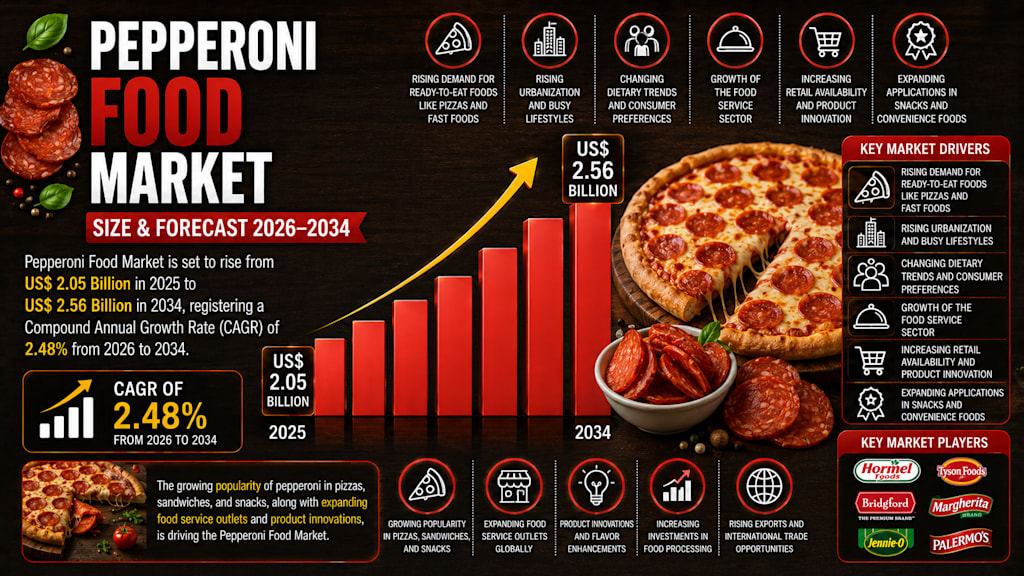
According to Renub Research, the global Pepperoni Food Market is projected to grow from US$ 2.05 billion in 2025 to US$ 2.56 billion by 2034, registering a compound annual growth rate (CAGR) of 2.48% between 2026 and 2034. Rising demand for convenience foods, growth in the food-service sector, increasing urbanization, and evolving dietary trends are among the major factors driving market growth.
As global consumers continue embracing convenient meal solutions and flavorful food experiences, pepperoni products are expected to remain a staple ingredient across numerous food categories.
Understanding Pepperoni and Its Global Popularity
Pepperoni is a type of cured and dried sausage typically made from a combination of pork and beef and seasoned with ingredients such as paprika, garlic, chili peppers, and various spices.
Known for its smoky flavor, spicy profile, and firm texture, pepperoni has become one of the most popular processed meat products in the world. It is commonly sliced into thin rounds and can be consumed either cooked or uncooked depending on the application.
Although pepperoni is most commonly associated with pizza, its usage has expanded considerably over time. Consumers now enjoy pepperoni in sandwiches, wraps, burgers, salads, snack products, and prepared meals.
Its versatility, strong flavor profile, and compatibility with a wide range of foods have contributed significantly to its enduring popularity.
The widespread acceptance of Western-style cuisine and increasing globalization of food culture have further expanded pepperoni consumption across international markets.
Today, pepperoni is recognized not only as a pizza topping but also as an important ingredient within the broader convenience food industry.
Growing Demand for Convenience Foods Is Driving Market Expansion
One of the most important growth drivers for the pepperoni food market is the rising global demand for convenience and ready-to-eat foods.
Modern consumers increasingly seek meal solutions that require minimal preparation while delivering flavor, convenience, and consistency. Busy work schedules, urban lifestyles, and changing family structures have accelerated demand for processed and packaged food products.
Pepperoni plays a central role in many convenience foods, including frozen pizzas, ready-made sandwiches, wraps, snack kits, and prepared meals.
Its extended shelf life and ease of storage make it particularly attractive to food manufacturers seeking ingredients that support efficient production and distribution.
Supermarkets, convenience stores, and food delivery services have further increased accessibility, enabling consumers to purchase pepperoni-based products quickly and conveniently.
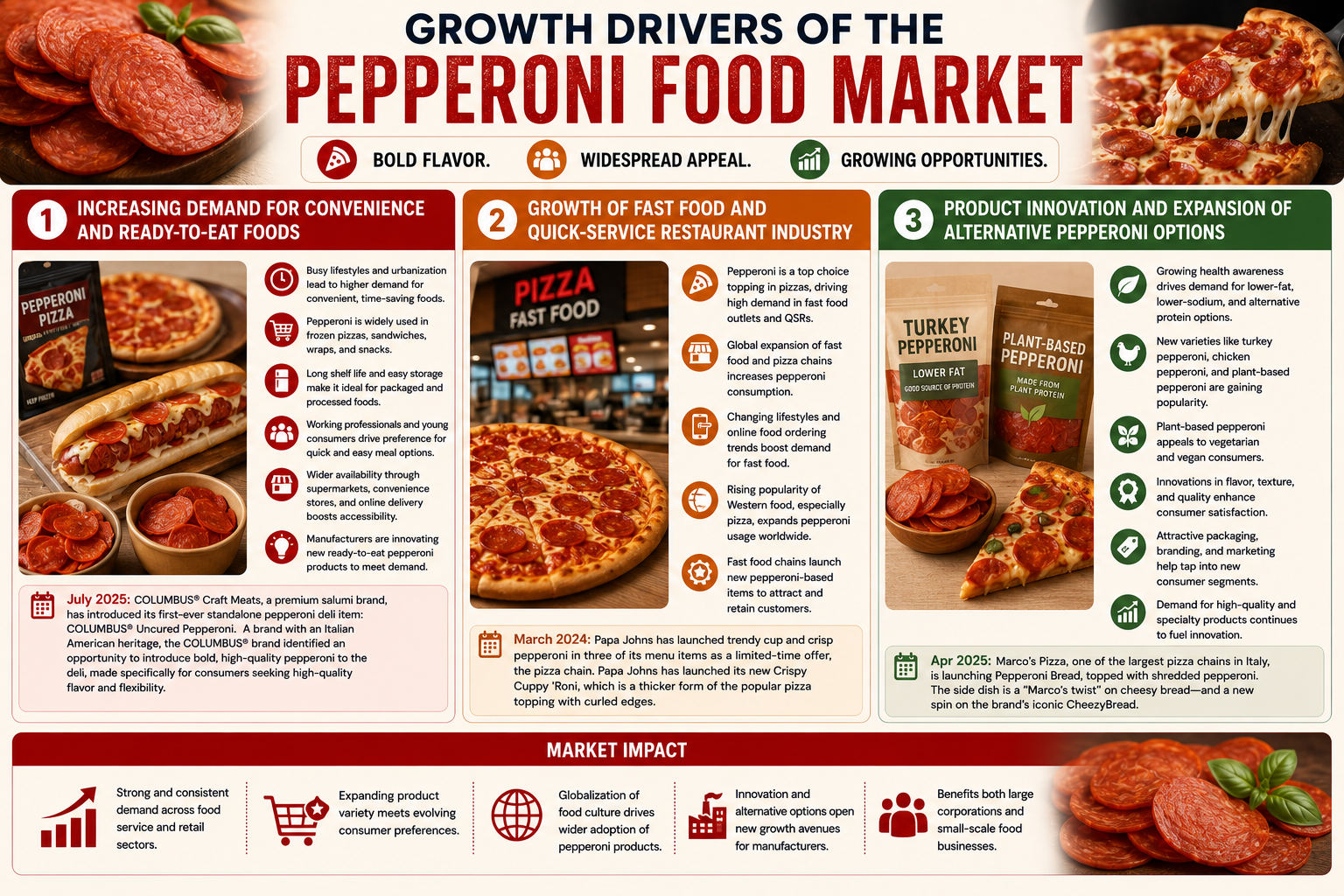
In July 2025, COLUMBUS® Craft Meats introduced its first standalone deli pepperoni product, COLUMBUS® Uncured Pepperoni, targeting consumers seeking premium flavor and greater versatility within deli offerings.
As convenience remains a dominant consumer priority, pepperoni-based food products are expected to maintain strong demand across multiple market segments.
Fast-Food Expansion Continues Supporting Growth
The rapid expansion of the fast-food and quick-service restaurant industry has become another major factor supporting the pepperoni market.
Pizza remains one of the most widely consumed fast-food products globally, and pepperoni consistently ranks among the most popular toppings.
Major pizza chains, restaurants, and food-service operators rely heavily on pepperoni because of its widespread consumer appeal and ability to enhance flavor profiles.
The growing popularity of online food ordering and delivery services has further accelerated demand for pepperoni-based menu items.
Consumers increasingly expect fast, affordable, and flavorful meal options, making pepperoni an important ingredient for many food-service businesses.
In March 2024, Papa Johns introduced its Crispy Cuppy 'Roni offering featuring thicker pepperoni slices with curled edges, demonstrating how restaurant chains continue innovating around one of their most popular ingredients.
As the global quick-service restaurant industry continues expanding, pepperoni consumption is expected to grow alongside it.
Product Innovation Is Creating New Opportunities
Innovation remains one of the most important factors shaping the future of the pepperoni food industry.
Manufacturers are increasingly developing alternative pepperoni products designed to meet changing dietary preferences and health concerns.
Turkey pepperoni, chicken pepperoni, and plant-based pepperoni alternatives are becoming increasingly popular among consumers seeking healthier or more sustainable food options.
Many companies are also focusing on improving flavor, texture, ingredient quality, and nutritional profiles while maintaining the distinctive characteristics consumers expect from traditional pepperoni.
Packaging innovation and premium branding strategies are helping manufacturers attract new customer segments and strengthen market differentiation.
In April 2025, Marco's Pizza introduced Pepperoni Bread, a new menu item featuring shredded pepperoni incorporated into a cheese bread format, highlighting ongoing innovation within pepperoni-based food offerings.
As dietary preferences continue evolving, innovation will remain critical for sustaining long-term market growth.
The Rise of Alternative Protein Pepperoni
Consumer interest in alternative proteins has created significant opportunities within the pepperoni market.
Health-conscious consumers increasingly seek products that contain lower levels of fat, sodium, and processed ingredients while still delivering familiar flavors.
Plant-based pepperoni products have emerged as one of the fastest-growing categories within the alternative protein segment. These products target vegetarians, vegans, flexitarians, and environmentally conscious consumers.
Advancements in food technology have improved the taste and texture of alternative pepperoni products, making them more appealing to mainstream consumers.
Food manufacturers are investing heavily in research and development to create products that closely replicate traditional pepperoni experiences while meeting modern nutritional expectations.
As consumer awareness regarding sustainability and health continues increasing, alternative pepperoni products are expected to gain additional market share.
Beef Pepperoni Is Becoming Increasingly Popular
The beef pepperoni segment continues experiencing steady growth due to changing consumer preferences and cultural considerations.
Many consumers prefer beef-based products because of flavor preferences, dietary restrictions, or religious requirements.
Beef pepperoni offers a rich taste and firm texture that make it highly suitable for pizzas, sandwiches, burgers, and snack products.
Food manufacturers increasingly position beef pepperoni as a premium product by emphasizing quality ingredients, natural seasonings, and enhanced flavor profiles.
The growing popularity of high-protein diets has also contributed to demand for beef pepperoni products.
As consumers seek flavorful protein-rich food options, beef pepperoni is expected to remain an important segment within the broader market.
Pizza Continues Dominating Market Applications
Pizza remains by far the largest application segment within the pepperoni food market.
Pepperoni's spicy flavor, appealing appearance, and compatibility with cheese and tomato sauce have made it one of the most iconic pizza toppings worldwide.
The expansion of frozen pizza products, restaurant chains, and food delivery services continues driving demand.
Urbanization, changing lifestyles, and growing consumer preference for convenient meal options have further strengthened the popularity of pizza.
Manufacturers continue developing new pepperoni varieties designed specifically for pizza applications, including premium cuts, specialty seasonings, and alternative protein formulations.
As the global pizza market continues expanding, demand for pepperoni is expected to increase correspondingly.
Specialty Stores Are Supporting Premium Product Growth
Specialty food retailers have become increasingly important within the pepperoni market.
Consumers interested in artisanal, organic, gourmet, and premium products frequently turn to specialty stores for unique offerings unavailable through conventional retail channels.
These stores often emphasize product quality, ingredient transparency, craftsmanship, and authenticity.
Artisanal pepperoni products featuring natural ingredients, traditional curing methods, and unique flavor profiles are attracting growing consumer interest.
The premiumization trend within food markets is encouraging more consumers to explore specialty meat products and gourmet food experiences.
As demand for premium products continues growing, specialty retailers are expected to play an increasingly important role in market development.
E-Commerce Is Expanding Consumer Access
Digital commerce is becoming an increasingly important distribution channel for pepperoni food products.
Consumers appreciate the convenience of online shopping, which provides access to a broader selection of local, imported, specialty, and premium products.
E-commerce platforms allow consumers to compare products, read reviews, access detailed nutritional information, and benefit from promotional offers.
Improvements in cold-chain logistics have significantly enhanced the ability to transport and deliver perishable products safely.
Online grocery services and food delivery applications have further strengthened accessibility, particularly among younger consumers.
As internet penetration and digital purchasing behavior continue expanding globally, e-commerce is expected to contribute significantly to future market growth.
Health Concerns Remain a Key Challenge
Despite positive growth prospects, health concerns continue presenting challenges for the pepperoni industry.
Pepperoni is classified as a processed meat product and often contains relatively high levels of sodium, fat, and preservatives.
Health-conscious consumers are becoming increasingly aware of dietary recommendations related to processed meat consumption and associated health risks.
This shift in consumer behavior has encouraged some individuals to reduce consumption or seek healthier alternatives.
Food manufacturers are responding by developing low-sodium, reduced-fat, and cleaner-label products designed to address these concerns.
Successfully balancing flavor, convenience, and nutritional expectations will remain a critical challenge for industry participants moving forward.
Raw Material Costs and Supply Chain Pressures
Another challenge affecting the market involves fluctuations in raw material prices and supply chain disruptions.
Pepperoni production depends heavily on meat supplies, including pork and beef, both of which can be affected by disease outbreaks, feed costs, trade conditions, and livestock production cycles.
Transportation costs, labor shortages, and geopolitical uncertainties can further influence production expenses.
Rising costs may ultimately impact retail pricing and consumer demand.
Manufacturers continue investing in supply chain optimization, sourcing diversification, and operational efficiency improvements to manage these challenges.
Maintaining profitability while controlling costs will remain a major focus for industry stakeholders.
Regional Market Insights
The United States remains the largest and most developed pepperoni market globally. Strong demand for pizza, ready-to-eat foods, and processed meat products continues driving growth. In September 2025, HORMEL® introduced Pepperoni Insurance as part of a marketing campaign celebrating National Pepperoni Pizza Day, highlighting the product's cultural significance within American food consumption.
The United Kingdom continues experiencing growth due to increasing demand for convenience foods, pizzas, and takeaway meals. The popularity of online food delivery services and innovative food products supports ongoing market expansion. In November 2023, Pizza Hut partnered with Beyond Meat to launch a Beyond Pepperoni range in the UK market.
India represents an emerging growth market driven by urbanization, rising incomes, and increasing exposure to Western food culture. Manufacturers are introducing chicken-based and vegetarian alternatives tailored to local preferences. In July 2024, Plantaway expanded its portfolio by launching plant-based pepperoni products made from pea protein.
Saudi Arabia is witnessing increasing demand due to the expansion of fast-food chains, modern retail infrastructure, and growing popularity of Western cuisine. Halal-certified beef and chicken pepperoni products are becoming increasingly important within the regional market.
Competitive Landscape
The global pepperoni food market remains highly competitive, with companies focusing on product innovation, premium offerings, health-oriented alternatives, and distribution expansion.
Major industry participants include WH Group Ltd., Bridgford Foods Corporation, Tyson Foods Inc., Maple Leaf Foods Inc., Hormel Foods Corporation, Golden Harvest Agro Industries Limited, Simply Good Foods Co., and Performance Food Group Company.
These organizations continue investing in new product development, alternative protein technologies, branding initiatives, and global market expansion to strengthen their competitive positions.
As consumer preferences continue evolving, innovation and adaptability are expected to remain essential drivers of success within the pepperoni food industry.
Final Thoughts
The global pepperoni food market continues benefiting from strong demand for convenience foods, fast-food products, and ready-to-eat meal solutions. Pepperoni's distinctive flavor, versatility, and compatibility with popular food categories such as pizza and sandwiches ensure its continued relevance across global markets.
At the same time, changing consumer preferences are encouraging manufacturers to innovate through healthier formulations, alternative protein products, and premium offerings designed to meet modern dietary expectations.
With the market projected to grow from US$ 2.05 billion in 2025 to US$ 2.56 billion by 2034, the pepperoni food industry is expected to maintain steady expansion. As convenience, innovation, and consumer demand continue shaping the food sector, pepperoni will remain one of the most recognizable and widely used ingredients in global foodservice and processed food markets.
About the Creator
Enjoyed the story? Support the Creator.
Subscribe for free to receive all their stories in your feed.
Comments
There are no comments for this story
Be the first to respond and start the conversation.