
Outdoor LED Lighting Market Surges as Smart Cities and Energy Efficiency Drive Global Demand
Governments, businesses, and urban planners are rapidly adopting outdoor LED lighting systems to reduce energy costs, improve public safety, and modernize infrastructure worldwide.

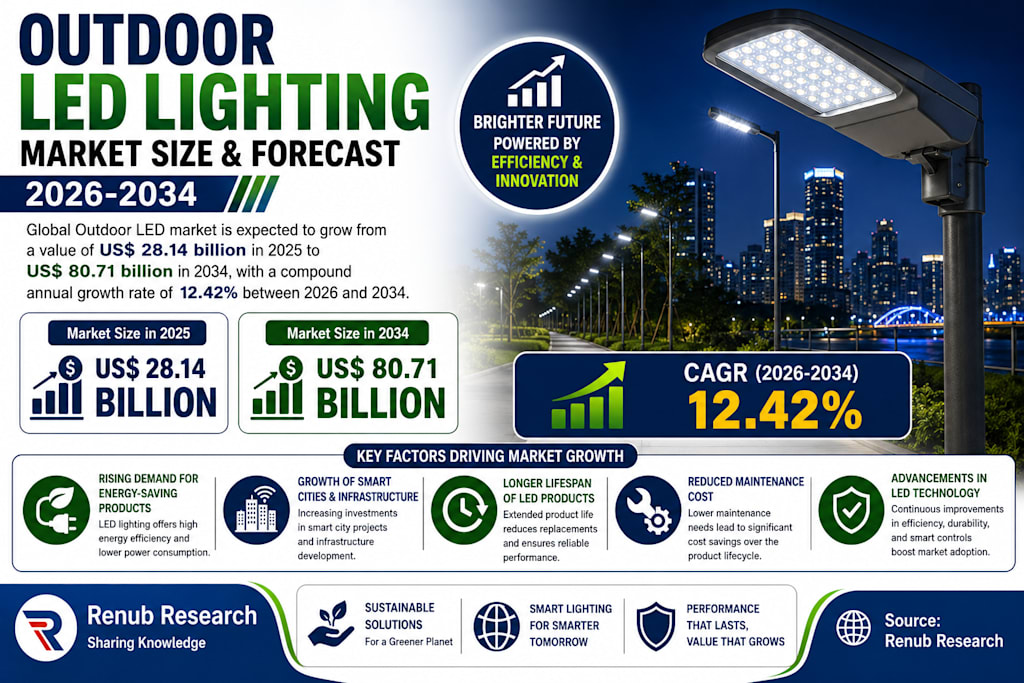
Outdoor LED Lighting Is Reshaping Modern Cities
Cities around the world are changing rapidly. Urban populations are growing, infrastructure is expanding, and governments are under increasing pressure to create safer, more sustainable, and energy-efficient environments. In this transformation, outdoor LED lighting has become one of the most important technologies powering modern urban development.
According to Renub Research, the global Outdoor LED Lighting Market is expected to grow from US$ 28.14 billion in 2025 to US$ 80.71 billion by 2034, registering an impressive compound annual growth rate (CAGR) of 12.42% between 2026 and 2034. The market’s strong momentum is being driven by rising demand for energy-saving technologies, smart city development, and the growing need for durable and low-maintenance lighting systems.
From highways and public parks to commercial complexes and stadiums, LED lighting is steadily replacing traditional lighting systems across the globe. The shift is not only about illumination anymore. It is also about sustainability, operational efficiency, digital connectivity, and long-term infrastructure modernization.
Why LED Lighting Is Becoming the Preferred Choice
Outdoor LED lighting systems use light-emitting diode technology to deliver high brightness while consuming significantly less electricity than conventional incandescent or fluorescent lighting systems.
This energy efficiency is one of the biggest reasons for their rapid global adoption. Traditional lighting systems require more power, generate higher heat, and often demand frequent maintenance or replacement. LEDs, on the other hand, provide longer operational lifespans, reduced maintenance costs, and lower electricity consumption.
For governments and municipalities responsible for lighting thousands of streets and public spaces, these advantages translate into substantial long-term savings. In many cities, outdoor lighting represents a significant portion of municipal energy consumption. By switching to LEDs, local authorities can dramatically reduce operational costs while also supporting environmental goals.
Durability is another major advantage. Outdoor LED systems are designed to withstand challenging environmental conditions including rain, humidity, dust, and extreme temperatures. This makes them ideal for highways, transportation hubs, industrial areas, and urban infrastructure projects.
Energy Efficiency Is Driving Market Expansion
One of the most powerful growth drivers behind the outdoor LED lighting market is the global push toward energy conservation and sustainability.
Governments, corporations, and environmental organizations are increasingly encouraging the adoption of technologies that reduce electricity consumption and carbon emissions. Outdoor LED lighting fits directly into those objectives because it offers far greater efficiency than older lighting technologies.
LEDs consume significantly less power while still delivering high-quality illumination. They also have a much longer lifespan, reducing waste and minimizing the need for frequent replacements.
As electricity prices continue rising in many regions, organizations are becoming more focused on long-term energy savings. LED systems offer a strong return on investment despite their higher initial installation costs because operational expenses decline significantly over time.
Many countries are also introducing regulations, subsidies, and efficiency standards that encourage the transition toward LED infrastructure. These government initiatives are helping accelerate adoption across both developed and emerging markets.
Smart Cities Are Accelerating Demand
The growth of smart city projects worldwide is another major factor contributing to market expansion.
Modern urban development increasingly depends on intelligent infrastructure capable of improving efficiency, reducing costs, and enhancing public services. Smart outdoor lighting systems have become an important part of that vision.
Unlike traditional streetlights, smart LED systems can integrate with sensors, wireless communication networks, and IoT platforms. This allows lighting levels to adjust automatically based on weather conditions, traffic movement, pedestrian activity, or time of day.
For example, smart roadway lighting can reduce brightness during periods of low traffic to save energy while automatically increasing illumination when movement is detected. These capabilities improve both efficiency and public safety.
Cities are also using smart LED systems for remote monitoring and predictive maintenance. Instead of manually inspecting lighting infrastructure, operators can identify outages, faults, or maintenance requirements in real time through centralized software systems.
As urban populations continue to grow, governments are investing heavily in technologies that support more efficient city management. Outdoor LED lighting has become one of the foundational technologies within this broader smart city ecosystem.
Technological Innovation Is Expanding Possibilities
Continuous technological advancements are helping outdoor LED lighting evolve beyond basic functionality.
Manufacturers are introducing products with advanced capabilities such as motion detection, smart controls, wireless connectivity, color tuning, and automated brightness adjustment. These innovations improve performance while also expanding the range of applications for outdoor lighting systems.
Solar-powered LED lighting is becoming especially important in remote or underdeveloped areas where traditional electrical infrastructure may be limited. These systems provide sustainable and cost-effective lighting solutions while reducing dependency on grid electricity.
Architectural and decorative lighting is another rapidly growing area. Modern LED systems allow buildings, monuments, stadiums, bridges, and public spaces to incorporate dynamic lighting effects and customizable color displays.
This combination of functionality and aesthetics has increased the importance of outdoor LED lighting in tourism, entertainment, hospitality, and urban branding projects.
The integration of LEDs with digital technologies is also transforming lighting into a connected infrastructure platform capable of supporting broader urban management systems.
Public Safety Benefits Are Strengthening Adoption
Safety and visibility remain major reasons for deploying outdoor LED lighting systems.
Well-lit roads, highways, parks, airports, railway stations, and public spaces help improve visibility, reduce accidents, and strengthen public security. LED lighting provides brighter and more consistent illumination compared to conventional systems, which enhances safety for drivers, pedestrians, and security personnel.
Roadway lighting is particularly important because poor nighttime visibility contributes significantly to traffic accidents worldwide. Governments are increasingly investing in LED street lighting projects as part of broader transportation safety initiatives.
Public spaces also benefit from improved lighting quality. Better illumination can discourage criminal activity, improve surveillance effectiveness, and create more comfortable environments for residents and visitors.
As urban populations expand, demand for reliable and efficient public lighting systems is expected to continue increasing globally.
High Initial Costs Remain a Key Challenge
Despite its many advantages, outdoor LED lighting still faces some challenges. One of the most significant barriers is the high initial installation cost.
LED fixtures, smart control systems, sensors, and integrated software platforms can require substantial upfront investment compared to traditional lighting technologies. For municipalities and organizations operating under tight budgets, these costs may slow adoption.
Retrofitting existing infrastructure with LED systems can also be expensive. Replacing conventional lighting networks often involves electrical upgrades, software integration, and structural modifications.
While the long-term savings are generally strong, some organizations may hesitate because the return on investment takes time to materialize.
This challenge is particularly relevant in developing regions where financial constraints can limit infrastructure modernization efforts.
Smart Systems Create Technical Complexity
The increasing sophistication of smart LED lighting systems also introduces technical complexity.
Modern systems often require expertise in installation, software management, networking, and maintenance. Compatibility issues, connectivity problems, and software malfunctions can create operational difficulties if systems are not properly managed.
Outdoor conditions such as extreme weather, humidity, dust, and pollution can also affect hardware durability and system performance over time.
As lighting systems become more intelligent and interconnected, maintenance requirements may become more specialized, increasing operational complexity for municipalities and businesses.
Rapid technological advancement also raises concerns regarding obsolescence. Organizations may worry that current systems could become outdated quickly as newer technologies emerge.
Public Places and Roadways Lead Market Demand
Public places represent one of the fastest-growing application segments within the outdoor LED lighting market.
Governments and local authorities are investing heavily in parks, plazas, airports, railway stations, and urban gathering spaces where lighting plays a critical role in safety, visibility, and aesthetics.
Smart lighting technologies equipped with motion sensors and automation features are becoming increasingly common in these environments because they improve energy efficiency while maintaining effective illumination.
Roadways also represent a major market segment. LED streetlights are widely recognized for improving nighttime visibility and reducing road accidents. Their energy efficiency and durability make them particularly attractive for large-scale highway and transportation infrastructure projects.
As transportation networks continue expanding globally, roadway LED lighting demand is expected to remain strong.
Software and Services Are Becoming Important
The outdoor LED lighting market is no longer focused solely on hardware. Software and service segments are becoming increasingly important as lighting systems become smarter and more connected.
Lighting management software allows operators to monitor performance, control brightness, detect faults, and automate energy-saving functions in real time.
These platforms help organizations optimize electricity usage, improve maintenance efficiency, and gather operational insights through data analytics.
At the same time, demand for installation, consulting, retrofitting, and maintenance services is rising rapidly. As lighting systems become more technically advanced, organizations increasingly rely on specialized service providers to manage implementation and long-term operations.
This shift toward integrated lighting ecosystems is expanding business opportunities across the broader LED industry.
Regional Markets Show Strong Momentum
Different regions are contributing to market growth in unique ways.
The United States market is driven by strong investment in energy-efficient infrastructure, smart lighting technologies, and public modernization projects. Established lighting manufacturers and rapid IoT adoption are also supporting growth.
The United Kingdom is seeing increased LED adoption due to strict environmental policies and national efforts to reduce carbon emissions. Smart city initiatives are further accelerating deployment.
India represents one of the fastest-growing markets globally due to rapid urbanization, government-backed LED programs, and rising awareness regarding energy conservation. Infrastructure expansion and smart city projects continue to create substantial opportunities.
Saudi Arabia is investing heavily in infrastructure modernization, tourism development, and smart city initiatives as part of broader economic transformation programs. Harsh environmental conditions also make durable LED systems highly valuable in the region.
Across all regions, the common theme remains energy efficiency, sustainability, and urban modernization.
The Future of Outdoor Lighting Is Intelligent
The future of outdoor LED lighting will likely be shaped by connectivity, automation, and sustainability.
Smart lighting systems are expected to become more integrated with urban management platforms, traffic systems, environmental monitoring networks, and public safety infrastructure.
Artificial intelligence and IoT integration will likely allow lighting systems to respond dynamically to changing environmental conditions and user behavior.
At the same time, advancements in solar technology, battery storage, and wireless communication may further reduce operational costs and improve deployment flexibility.
Outdoor lighting is evolving from a basic utility into an intelligent infrastructure asset capable of supporting broader digital transformation goals.
Final Thoughts
The Outdoor LED Lighting Market is expanding rapidly because cities, governments, and businesses increasingly recognize the value of efficient, intelligent, and sustainable lighting systems.
With the market projected to grow from US$ 28.14 billion in 2025 to US$ 80.71 billion by 2034, outdoor LED technology is becoming one of the most important components of modern infrastructure development.
About the Creator
Enjoyed the story? Support the Creator.
Subscribe for free to receive all their stories in your feed.
Comments
There are no comments for this story
Be the first to respond and start the conversation.