
Ophthalmic Devices Market Expands as Aging Population, Minimally Invasive Eye Surgeries, and AI-Driven Diagnostics Transform Vision Care
Rising cases of cataracts, glaucoma, and retinal disorders, combined with rapid innovation in ophthalmic technology, are accelerating growth across the global ophthalmic devices industry.

Market Overview
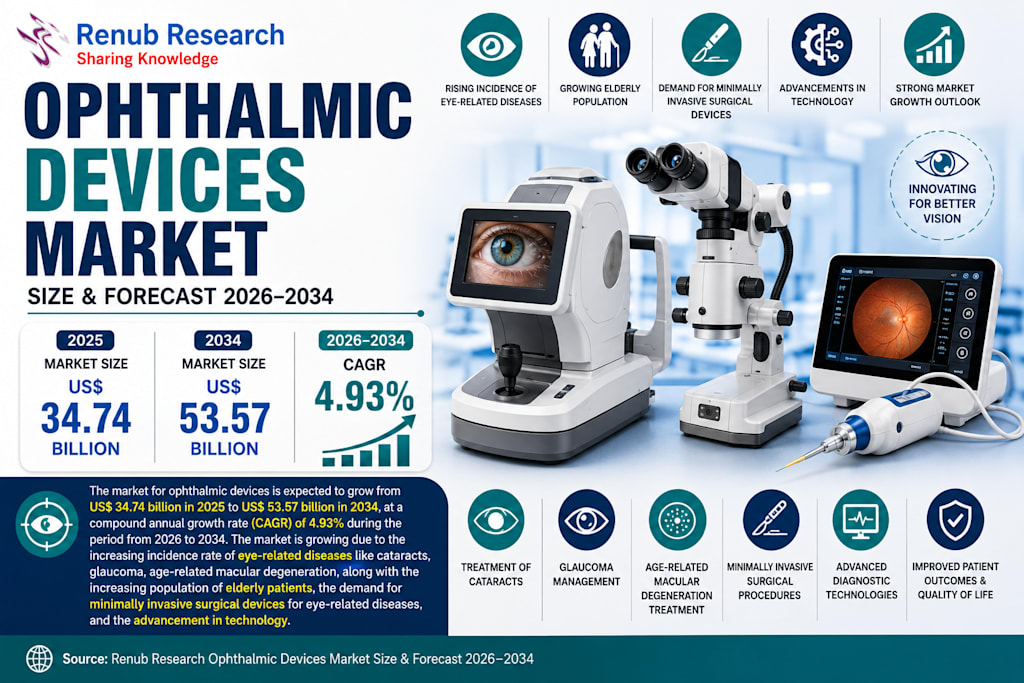
The global ophthalmic devices market is experiencing substantial growth as eye-related diseases become increasingly common worldwide and healthcare systems continue adopting advanced diagnostic and surgical technologies. Ophthalmic devices have become essential tools for diagnosing, monitoring, and treating a wide range of vision disorders, including cataracts, glaucoma, diabetic retinopathy, refractive errors, and age-related macular degeneration. According to Renub Research, the ophthalmic devices market is projected to grow from US$ 34.74 billion in 2025 to US$ 53.57 billion by 2034, expanding at a CAGR of 4.93% during 2026–2034.
Ophthalmic devices include advanced diagnostic technologies such as optical coherence tomography (OCT) scanners, fundus cameras, tonometers, and autorefractors, as well as surgical devices including phacoemulsification systems, lasers, intraocular lenses, retinal surgery instruments, and glaucoma treatment devices. These technologies are increasingly important because vision-related disorders are becoming more widespread due to aging populations, rising diabetes prevalence, lifestyle changes, and prolonged exposure to digital screens.
The growing prevalence of eye disorders is one of the strongest forces shaping the market. Cataracts remain one of the leading causes of vision impairment globally, while glaucoma continues to be a major cause of irreversible blindness. At the same time, increasing rates of diabetes are contributing to a rise in diabetic retinopathy cases, further boosting demand for advanced diagnostic and treatment technologies. Eye care is therefore becoming a major healthcare priority worldwide.
Technological advancement is also transforming ophthalmology. Modern laser systems, minimally invasive surgical tools, AI-powered diagnostics, and digital imaging platforms are significantly improving treatment precision and patient outcomes. These innovations are encouraging hospitals, eye clinics, and research institutions to upgrade their ophthalmic infrastructure, creating strong long-term demand across the industry.
Growth Drivers
One of the biggest growth drivers in the ophthalmic devices market is the rising prevalence of eye disorders and the rapidly aging global population. Conditions such as cataracts, glaucoma, diabetic retinopathy, dry eye syndrome, and age-related macular degeneration are increasing significantly, particularly among older adults. According to the National Institute of Aging, the geriatric population is expected to reach 72 million by 2030, increasing the risk of vision impairment and age-related eye diseases.
Diabetes is another major factor contributing to market growth. According to the World Health Organization, approximately 422 million people worldwide are living with diabetes, most of them in developing countries. Diabetes-related complications such as diabetic retinopathy are creating greater demand for retinal imaging systems, fundus cameras, and advanced diagnostic devices capable of early disease detection.
Increasing use of computers, smartphones, and digital screens is also contributing to rising cases of dry eye syndrome and refractive disorders. Prolonged screen exposure is placing additional stress on visual health, encouraging consumers to seek preventive eye examinations and corrective solutions. As awareness of vision care increases globally, demand for ophthalmic diagnostics and treatment devices continues rising steadily.
Technological innovation is another major growth catalyst. Advanced technologies such as optical coherence tomography, femtosecond lasers, AI-assisted diagnostics, and minimally invasive surgical devices have significantly improved the precision and safety of ophthalmic procedures. These technologies enable earlier disease detection, improved imaging quality, and better surgical outcomes.
The integration of artificial intelligence into ophthalmology is becoming particularly important. AI-assisted retinal imaging and diagnostic systems are helping eye care professionals identify diseases more accurately while improving workflow efficiency. Hospitals and clinics are increasingly adopting digital ophthalmic systems to improve patient outcomes and reduce diagnostic errors.
In July 2024, Alcon Research, LLC. received FDA approval for its UNIPURE C3F8 Ophthalmic Gas, used in the treatment of uncomplicated retinal detachment through injection into the eye. The product works with the company’s UNIFEYE and UNIPEXY Gas Delivery Systems and highlights ongoing innovation within retinal treatment technologies.
The increasing preference for minimally invasive procedures is another key factor driving market growth. Patients and healthcare professionals increasingly prefer minimally invasive ophthalmic surgeries because they offer shorter recovery times, greater safety, reduced discomfort, and improved outcomes. Procedures such as laser-assisted cataract surgery, minimally invasive glaucoma surgery (MIGS), and micro-incision techniques are becoming widely accepted globally.
In July 2025, BVI, a global ophthalmic device manufacturer, announced the first clinical case using its FDA-cleared Leos Laser Endoscopy Ophthalmic System for glaucoma treatment. The procedure was performed in New York and demonstrated the growing clinical adoption of minimally invasive surgical technologies in ophthalmology.
Market Challenges
Despite strong growth potential, the ophthalmic devices industry faces several major challenges. One of the biggest barriers is the high cost associated with advanced ophthalmic technologies. Laser surgical systems, OCT scanners, premium intraocular lenses, and AI-powered imaging devices require substantial investment, making them difficult for smaller healthcare facilities and developing regions to afford.
In addition to high acquisition costs, maintenance expenses and staff training requirements further increase operational costs for hospitals and clinics. Patients may also face financial challenges when advanced procedures are not fully covered by insurance. As a result, affordability remains a key issue affecting broader adoption of premium ophthalmic technologies.
The shortage of skilled professionals is another important challenge for the market. Advanced ophthalmic devices require trained ophthalmologists, surgeons, and technicians capable of operating sophisticated imaging and surgical systems. Many regions continue to face shortages of qualified eye-care professionals, limiting efficient use of advanced equipment.
Even in developed countries, rapidly evolving technologies require continuous training and skill development. Improper handling of advanced systems can affect diagnostic accuracy and treatment quality. Expanding medical education, technical training programs, and professional certification initiatives will therefore remain essential for sustainable market growth.
Ophthalmic Fundus Camera Devices Market
The ophthalmic fundus camera devices market is growing steadily due to rising demand for early detection of retinal diseases and chronic eye conditions. Fundus cameras provide detailed retinal imaging that helps detect diseases such as diabetic retinopathy, glaucoma, and macular degeneration.
Advances in digital imaging, portable devices, and AI-assisted retinal analysis are improving diagnostic accuracy and accessibility. Increasing awareness regarding preventive eye care is additionally supporting adoption of fundus camera technologies across hospitals, clinics, and diagnostic centers.
Ophthalmic Glaucoma Surgery Devices Market
The glaucoma surgery devices segment is expanding because glaucoma remains one of the leading causes of irreversible blindness worldwide. Devices such as drainage implants and minimally invasive glaucoma surgery systems are increasingly used to reduce intraocular pressure safely and effectively.
The growing elderly population, increasing disease awareness, and preference for minimally invasive procedures are driving strong demand within this segment. Technological advances are improving surgical precision while reducing complications and recovery times.
Ophthalmic Contact Lenses Market
The ophthalmic contact lenses market is growing rapidly due to rising cases of myopia, hyperopia, and astigmatism worldwide. Consumers increasingly prefer contact lenses because of convenience, aesthetics, and wider peripheral vision compared to eyeglasses.
Technological innovations such as silicone hydrogel lenses, specialty lenses for keratoconus, and daily disposable products are further supporting growth. Cosmetic contact lenses are also becoming increasingly popular, particularly among younger consumers and fashion-conscious users.
Ophthalmic Cataract Devices Market
Cataract devices represent one of the largest segments within the ophthalmic devices market because cataracts remain among the most common causes of blindness globally. Cataract surgeries generate substantial demand for phacoemulsification systems, intraocular lenses, surgical instruments, and laser technologies.
Technological advancements such as femtosecond laser-assisted cataract surgery and premium intraocular lenses are improving surgical outcomes and patient satisfaction. Increasing awareness regarding cataract treatment and government blindness-prevention programs are additionally supporting market expansion.
Ophthalmic Devices Hospitals and Eye Clinics Market
Hospitals and eye clinics remain the primary end users within the ophthalmic devices market because they perform large volumes of eye examinations, surgeries, and diagnostic procedures. Rising awareness regarding eye health and increasing demand for minimally invasive surgeries are encouraging healthcare providers to adopt advanced ophthalmic technologies.
Private eye clinics are also expanding rapidly, especially in emerging economies where healthcare infrastructure continues improving. However, equipment costs and workforce shortages remain operational challenges for healthcare providers globally.
United States Ophthalmic Devices Market
The United States represents one of the largest ophthalmic devices markets globally because of advanced healthcare infrastructure, high healthcare spending, and rapid adoption of innovative technologies. Rising prevalence of cataracts, glaucoma, and age-related macular degeneration continues to drive demand for advanced diagnostic and surgical devices.
In February 2025, Alcon launched Voyager™ DSLT, the first FDA-approved Direct Selective Laser Trabeculoplasty device in the United States, providing a more automated and accessible treatment solution for glaucoma and ocular hypertension.
United Kingdom Ophthalmic Devices Market
The United Kingdom market is growing steadily due to strong healthcare infrastructure, increasing awareness regarding eye care, and government support for early diagnosis programs. The National Health Service continues playing an important role in expanding access to cataract surgeries and diagnostic procedures.
In May 2025, EssilorLuxottica announced plans to acquire Optegra, which operates more than 70 eye hospitals and diagnostic clinics across Europe, including facilities in the United Kingdom.
India Ophthalmic Devices Market
India’s ophthalmic devices market is expanding rapidly due to increasing awareness regarding eye health, growing prevalence of cataracts and refractive disorders, and improvements in healthcare infrastructure. Government blindness-prevention programs and growth of private eye-care hospitals are major factors supporting market growth.
Medical tourism is also contributing significantly because India offers advanced eye treatments at comparatively lower costs. In March 2026, Alcon launched the Hydrus® Microstent in India, supporting minimally invasive glaucoma treatment during cataract surgery procedures.
Saudi Arabia Ophthalmic Devices Market
Saudi Arabia’s ophthalmic devices market is growing steadily due to rising diabetes prevalence, increasing healthcare investment, and Vision 2030 healthcare modernization initiatives. Hospitals and eye-care centers are increasingly adopting advanced ophthalmic technologies to improve quality of care.
In March 2025, Alcon launched its first Alcon Experience Center in Jeddah and partnered with four major hospitals to support ophthalmic training and technology adoption across the region.
Recent Developments Companies in Vocal Format
Alcon Research, LLC. received FDA approval for the UNIPURE C3F8 Ophthalmic Gas for retinal detachment treatment.
BVI completed the first clinical case using its Leos Laser Endoscopy Ophthalmic System for glaucoma surgery.
Alcon launched the FDA-approved Voyager™ DSLT glaucoma treatment system in the United States.
EssilorLuxottica announced plans to acquire Optegra’s network of eye hospitals and clinics across Europe.
Alcon introduced the Hydrus® Microstent in India for minimally invasive glaucoma management.
Alcon launched its first Experience Center in Saudi Arabia to support ophthalmic training and innovation.
Johnson & Johnson continues strengthening its ophthalmic device portfolio across surgical and vision-care solutions.
Carl Zeiss Meditec AG remains focused on advanced ophthalmic imaging and surgical technologies.
Glaukos Corporation continues expanding minimally invasive glaucoma surgery technologies globally.
STAAR Surgical Co. remains active in advanced implantable lens technologies for refractive correction.
Segment Outlook
The ophthalmic devices market is segmented into diagnostic and monitoring devices, surgical devices, and vision correction devices. Diagnostic equipment includes fundus cameras, OCT scanners, tonometers, and other retinal imaging technologies. Surgical devices include refractive error surgery systems, glaucoma surgery devices, cataract surgery instruments, and retinal surgery technologies. Vision correction devices include contact lenses and related products.
By application, the market serves cataracts, vitreo-retinal disorders, glaucoma, and refractive disorders. Hospitals and eye clinics remain the dominant end users because of increasing surgical volumes and growing investment in advanced ophthalmic infrastructure.
Final Thoughts
The global ophthalmic devices market is evolving rapidly as aging populations, rising diabetes prevalence, and growing awareness regarding eye health continue to increase demand for advanced ophthalmic care worldwide. Innovations in AI-assisted diagnostics, minimally invasive surgery, retinal imaging, and precision laser systems are transforming how eye diseases are diagnosed and treated. Renub Research’s projection of US$ 53.57 billion by 2034 highlights the strong long-term opportunity within the ophthalmic devices industry. Companies that focus on technological innovation, accessibility, minimally invasive procedures, and precision diagnostics are expected to shape the future of global vision care.
About the Creator
Enjoyed the story? Support the Creator.
Subscribe for free to receive all their stories in your feed.
Comments
There are no comments for this story
Be the first to respond and start the conversation.