
Online Grocery Shopping Is Transforming How Americans Buy Food and Household Essentials
Convenience, Digital Innovation, and Faster Delivery Services Are Driving the Rapid Growth of the U.S. Online Grocery Market

The way Americans shop for groceries has changed dramatically over the past decade. What was once considered a niche service has evolved into a mainstream shopping habit embraced by millions of households across the country. From fresh fruits and vegetables to dairy products, meat, seafood, and pantry staples, consumers increasingly prefer the convenience of purchasing groceries online and having them delivered directly to their homes.
Advancements in e-commerce technology, mobile applications, digital payment systems, and sophisticated delivery networks have transformed the grocery shopping experience. Consumers can now browse thousands of products, compare prices, access personalized recommendations, and schedule deliveries with just a few taps on a smartphone.
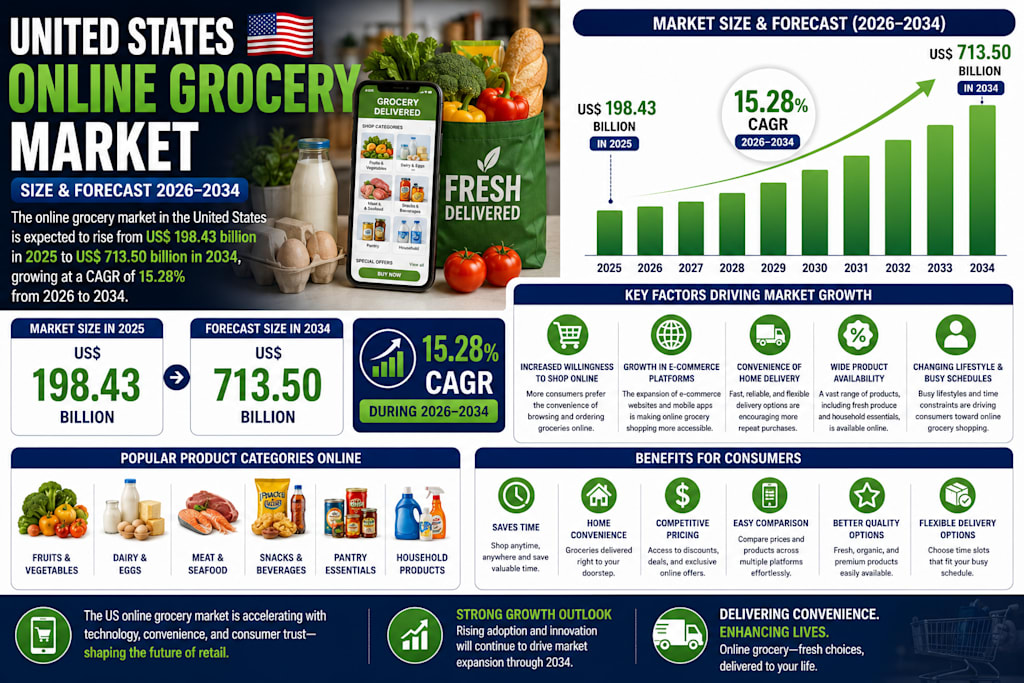
According to Renub Research, the United States Online Grocery Market is projected to grow from US$ 198.43 billion in 2025 to US$ 713.50 billion by 2034, expanding at an impressive CAGR of 15.28% between 2026 and 2034. Rising internet penetration, increasing smartphone usage, changing consumer preferences, and continuous improvements in delivery infrastructure are fueling this remarkable growth.
As digital commerce becomes increasingly integrated into everyday life, online grocery shopping is rapidly becoming an essential component of the American retail landscape.

Online Grocery Shopping Has Become a Lifestyle Choice
Online grocery shopping refers to purchasing food products, beverages, household essentials, and other daily necessities through websites or mobile applications. Customers can choose between home delivery and curbside pickup options depending on their preferences.
The concept combines the convenience of digital commerce with the essential nature of grocery shopping.
Consumers no longer need to drive to stores, search through crowded aisles, or spend time waiting in checkout lines. Instead, they can complete purchases from home, work, or virtually anywhere with internet access.
This convenience has transformed online grocery shopping from an occasional service into a regular habit for millions of American households.
The COVID-19 pandemic accelerated adoption significantly, introducing many consumers to online grocery platforms for the first time. Even after the pandemic, many shoppers have continued using these services due to the convenience and efficiency they offer.
Convenience Is the Biggest Growth Driver
One of the most powerful factors driving the online grocery market is the increasing consumer demand for convenience.
Modern lifestyles have become increasingly busy. Long work hours, family responsibilities, commuting challenges, and packed schedules leave many consumers with limited time for traditional grocery shopping.
Online grocery platforms solve this problem by allowing customers to shop whenever it is convenient for them.
According to the Meets Click and Mercatus Grocery Shopping Survey released in November 2024, approximately 77.8 million households purchased groceries online, highlighting the widespread acceptance of digital grocery shopping.
Consumers appreciate the ability to browse products, compare prices, and place orders without leaving their homes.
For dual-income households, working professionals, parents, and elderly consumers, online grocery shopping has become an invaluable time-saving solution.
As digital literacy continues improving across all age groups, the number of consumers using online grocery platforms is expected to grow even further.
E-Commerce Infrastructure Is Expanding Rapidly
The development of advanced e-commerce infrastructure has played a major role in supporting market growth.
Retailers and technology companies have invested heavily in fulfillment centers, warehouses, automated inventory systems, and sophisticated logistics networks designed to process large volumes of orders efficiently.
Delivery capabilities have improved dramatically over recent years.
Services such as same-day delivery, next-day delivery, real-time order tracking, and contactless delivery options have enhanced customer satisfaction while building trust in online grocery services.
Artificial intelligence and data analytics are also helping retailers optimize inventory management, forecast demand, and improve operational efficiency.
A significant example occurred in January 2026 when Uber Technologies and The Kroger Co. expanded their partnership to bring nearly 2,700 Kroger-owned grocery stores to the Uber Eats, Uber, and Postmates platforms. This initiative increased accessibility and convenience for millions of households across the United States.
As infrastructure continues improving, online grocery retailers will be able to serve larger customer bases more effectively.
Consumer Behavior Is Changing Permanently
The rapid adoption of digital technologies has fundamentally altered consumer behavior.
Many consumers who initially turned to online grocery shopping during the pandemic have continued using these services because of their convenience and reliability.
Younger generations, particularly Millennials and Generation Z, have played a major role in driving adoption due to their familiarity with digital platforms and mobile technology.
At the same time, older consumers have become increasingly comfortable with online shopping as platforms have become more user-friendly.
Consumers now expect seamless digital experiences that combine convenience, personalization, and speed.
The growing popularity of loyalty programs also reflects changing shopping habits. According to the Bond Loyalty Report, the average American held approximately 19 loyalty program memberships in 2024, the highest level recorded over the previous decade.
Retailers are leveraging these programs to provide personalized offers, discounts, and recommendations that encourage repeat purchases.
Home Delivery Is Becoming the Preferred Option
Home delivery has emerged as one of the most important segments within the online grocery market.
Consumers increasingly prefer having groceries delivered directly to their homes rather than visiting physical stores.
This trend has encouraged retailers to invest heavily in last-mile delivery infrastructure, route optimization technologies, and advanced logistics solutions.
The growing popularity of subscription-based delivery programs has also contributed to market expansion.
These services provide customers with benefits such as free delivery, priority scheduling, exclusive discounts, and enhanced convenience.
As delivery networks become faster and more efficient, home delivery is expected to remain a key growth driver throughout the forecast period.
Fresh Produce Is Experiencing Strong Online Demand
The online vegetables and fruits segment has emerged as one of the fastest-growing categories within the market.
Consumers increasingly appreciate the convenience of ordering fresh produce online while avoiding trips to physical stores.
Advancements in cold-chain logistics, packaging technology, and supply chain management have significantly improved product freshness and quality during transportation.
Retailers are also forming partnerships with local farmers and suppliers to ensure consistent access to fresh products.
Growing health awareness among consumers has further contributed to rising demand for fruits and vegetables purchased through online platforms.
As healthy eating trends continue gaining momentum, this category is expected to experience sustained growth.
Dairy Products Continue to Thrive Online
The online dairy market is also experiencing significant expansion.
Consumers increasingly purchase products such as milk, cheese, yogurt, butter, and specialty dairy items through digital channels.
Improvements in refrigerated transportation and packaging have helped maintain product freshness while enhancing customer confidence.
The growing popularity of organic, lactose-free, and plant-based dairy alternatives has expanded product selection and attracted a broader range of consumers.
As online retailers continue diversifying their offerings, the dairy segment is expected to remain an important contributor to market growth.
Online Meat and Seafood Sales Are Growing
The online meat and seafood category has gained considerable momentum in recent years.
Consumers increasingly value the ability to purchase premium-quality meat and seafood products from the comfort of their homes.
Advancements in cold-chain logistics have made it possible to deliver fresh and frozen products safely while maintaining quality standards.
Demand for organic, grass-fed, sustainably sourced, and specialty meat products continues increasing as consumers become more selective about food quality and sourcing practices.
The growing trust in online grocery platforms has further supported expansion within this category.
One-Time Purchases Remain Popular
While subscription services continue gaining popularity, one-time purchases remain a vital segment of the online grocery market.
Many consumers prefer the flexibility of purchasing groceries only when needed rather than committing to recurring delivery schedules.
This purchasing model appeals particularly to occasional users, first-time customers, and consumers seeking maximum control over their shopping habits.
Promotional discounts, flexible payment options, and broad product availability continue supporting demand for one-time grocery purchases.
The segment is expected to remain an important component of overall market growth.
California Leads the Market
California remains one of the largest and most advanced online grocery markets in the United States.
The state's large urban population, strong digital infrastructure, and technology-driven culture have created ideal conditions for online grocery adoption.
Cities such as Los Angeles and San Francisco continue driving demand for grocery delivery services due to traffic congestion, busy lifestyles, and high smartphone usage rates.
Health-conscious consumers in California also contribute to strong demand for organic, specialty, and premium grocery products.
New York and New Jersey Continue Expanding
New York's dense population and fast-paced lifestyle have made online grocery shopping an integral part of daily life for many residents.
Retailers increasingly compete through faster delivery services, advanced technology, and personalized shopping experiences.
Similarly, New Jersey benefits from high population density, advanced logistics infrastructure, and proximity to major metropolitan areas such as New York City and Philadelphia.
Growing adoption of mobile applications and digital payment solutions continues driving market growth throughout the state.
Challenges Facing the Industry
Despite its strong growth prospects, the online grocery market faces several challenges.
One of the most significant concerns involves high operational and delivery costs.
Managing perishable inventory, maintaining cold-chain logistics, and providing same-day delivery services require substantial investment. These costs can impact profitability and create barriers for new market entrants.
Another challenge involves maintaining product quality and customer trust.
Consumers cannot physically inspect products before purchase, making quality assurance particularly important for fresh produce, dairy products, meat, and seafood.
Issues such as damaged products, incorrect orders, or delayed deliveries can negatively affect customer satisfaction and loyalty. Retailers must therefore invest heavily in training, packaging, and quality control processes to maintain consumer confidence.
Final Thoughts
Online grocery shopping has evolved from a convenience-driven service into a fundamental component of modern retail.
According to Renub Research, the United States Online Grocery Market is expected to grow from US$ 198.43 billion in 2025 to US$ 713.50 billion by 2034, reflecting strong consumer demand, technological innovation, and continued expansion of digital commerce infrastructure.
As retailers continue enhancing delivery capabilities, improving customer experiences, and leveraging advanced technologies, online grocery shopping will become even more deeply integrated into everyday life.
The future of grocery retail is increasingly digital, and the United States is leading the transformation toward a faster, smarter, and more convenient shopping experience.
About the Creator
Enjoyed the story? Support the Creator.
Subscribe for free to receive all their stories in your feed.
Comments
There are no comments for this story
Be the first to respond and start the conversation.