
Oleochemicals Market Accelerates as Industries Shift Toward Sustainable and Bio-Based Solutions
Rising demand for biodegradable ingredients, expanding personal care applications, and stronger environmental regulations are driving the next phase of growth in the global oleochemicals industry.

The global chemicals industry is undergoing a significant transformation as businesses, governments, and consumers increasingly prioritize sustainability. Amid growing concerns about environmental impact, carbon emissions, and dependence on fossil fuels, naturally derived alternatives are gaining widespread attention. Among these alternatives, oleochemicals have emerged as one of the most promising segments within the bio-based chemicals industry.
Produced from renewable resources such as vegetable oils, animal fats, and algae, oleochemicals are increasingly replacing petroleum-based ingredients across a wide range of industries. Their biodegradability, low toxicity, and versatility make them attractive options for manufacturers seeking environmentally responsible solutions without compromising performance.
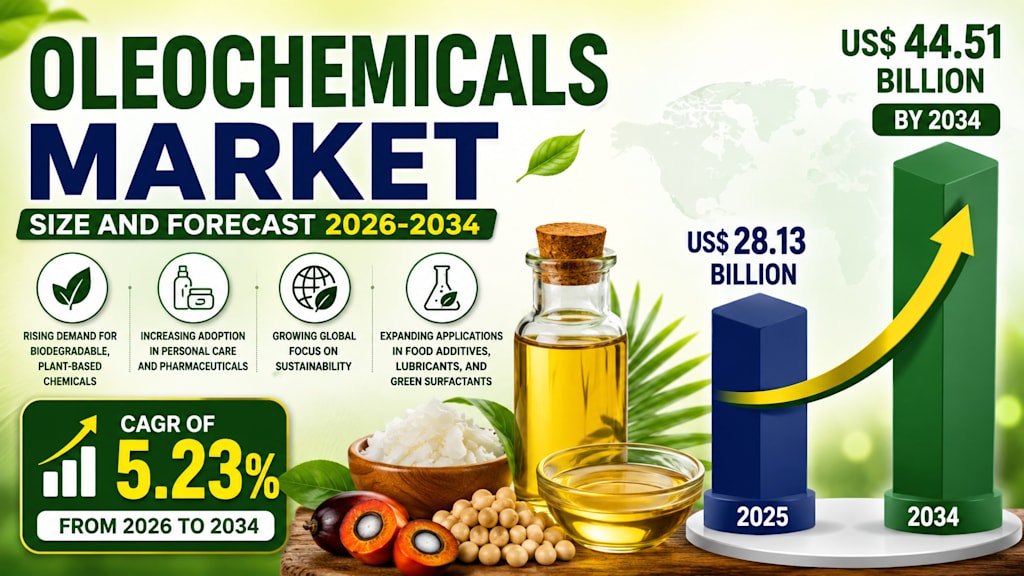
This growing demand is reflected in market forecasts. The global oleochemicals market is expected to grow from US$ 28.13 billion in 2025 to US$ 44.51 billion by 2034, expanding at a compound annual growth rate (CAGR) of 5.23% during the forecast period. The market's growth is being supported by increasing applications in personal care products, pharmaceuticals, food processing, industrial lubricants, and sustainable surfactants, while favorable government policies and technological advancements continue to create new opportunities for manufacturers.
As industries continue searching for cleaner and more sustainable raw materials, oleochemicals are becoming a crucial component of the global transition toward greener manufacturing practices.
Understanding the Growing Importance of Oleochemicals
Oleochemicals are chemical compounds derived from natural fats and oils. Unlike conventional petrochemicals, which rely on fossil fuel resources, oleochemicals are produced from renewable feedstocks, making them more environmentally friendly and sustainable.
These compounds include fatty acids, fatty alcohols, glycerol, esters, soap noodles, and various specialty derivatives that serve numerous industrial and consumer applications.
Their appeal lies in several important characteristics. Oleochemicals are biodegradable, exhibit low toxicity, offer excellent performance across multiple applications, and support sustainability goals that are increasingly important to businesses and consumers alike.
As environmental regulations become stricter and consumers demand cleaner products, manufacturers are incorporating oleochemicals into formulations ranging from cosmetics and personal care products to food additives, industrial lubricants, and specialty chemicals.
The versatility of these materials has positioned them as one of the most important building blocks in the rapidly expanding bioeconomy.
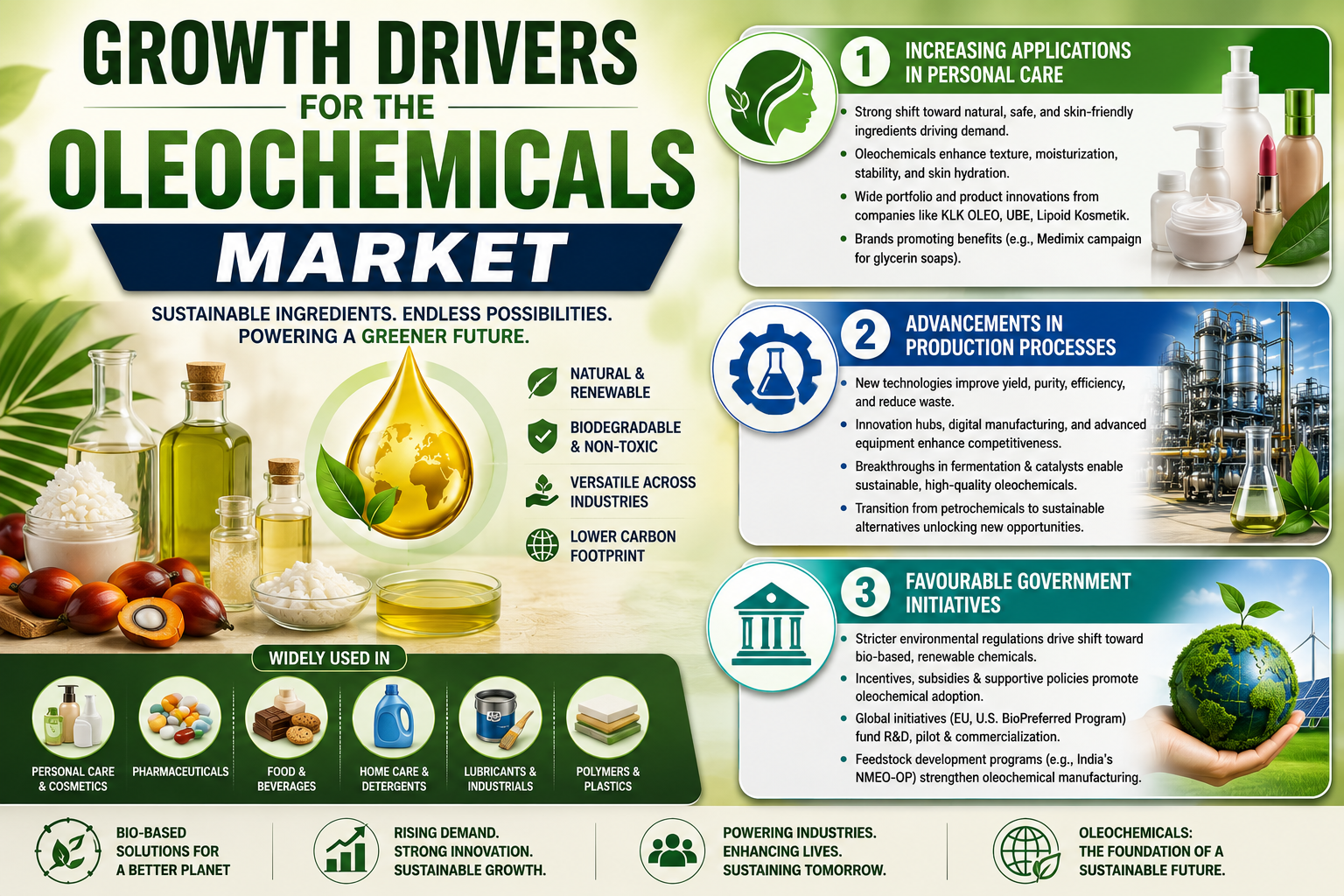
Personal Care Industry Emerges as a Key Growth Driver
One of the most significant contributors to oleochemical market growth is the global personal care and cosmetics industry.
Consumers today are paying closer attention to ingredient labels than ever before. Natural, plant-based, and skin-friendly formulations are increasingly preferred over products containing synthetic chemicals or petroleum-derived ingredients.
Oleochemicals play a vital role in modern personal care products because they help improve texture, moisturization, spreadability, stability, and overall product performance. Ingredients such as glycerin, fatty acids, and specialty esters are commonly used in creams, lotions, shampoos, soaps, lipsticks, and skincare products.
The growing popularity of clean beauty trends has encouraged cosmetic manufacturers to incorporate naturally sourced ingredients into their formulations. Brands are actively promoting products that emphasize sustainability, transparency, and environmental responsibility, all of which support greater oleochemical adoption.
Additionally, innovation within the beauty industry continues to expand the range of oleochemical applications. New ingredients with antioxidant, anti-aging, moisturizing, and protective properties are helping manufacturers develop products that align with evolving consumer expectations.
As the global beauty and personal care sector continues to grow, demand for oleochemical-based ingredients is expected to increase alongside it.
Technological Innovation Is Strengthening Market Potential
Technological advancements are playing an increasingly important role in improving the efficiency and competitiveness of oleochemical production.
Historically, cost considerations often limited the adoption of bio-based alternatives. However, modern production technologies are helping manufacturers improve yields, reduce waste, optimize energy consumption, and achieve higher product purity levels.
Innovation centers, research facilities, and industrial partnerships are accelerating progress across the sector. Advanced biomass processing techniques, improved feedstock utilization, and more efficient refining technologies are helping lower production costs while improving product quality.
Research institutions are also exploring new methods for producing oleochemicals through biotechnology and microbial fermentation. These developments could further expand feedstock options and reduce reliance on traditional agricultural resources.
Digital manufacturing technologies are contributing additional benefits by improving operational efficiency, process control, and quality assurance. As production methods continue to evolve, oleochemicals are becoming increasingly competitive with conventional petrochemical alternatives.
This technological progress is expected to play a crucial role in supporting long-term market growth and expanding industrial adoption.
Government Policies Continue to Support Expansion
Government initiatives around the world are creating favorable conditions for the oleochemicals industry.
As nations pursue carbon reduction goals and sustainability targets, policymakers are encouraging the adoption of renewable and bio-based materials through incentives, subsidies, and regulatory frameworks.
Many governments recognize the potential of oleochemicals to reduce environmental impact while supporting economic development and industrial innovation. As a result, funding programs aimed at promoting green chemistry, renewable feedstocks, and sustainable manufacturing continue to grow.
In several countries, public investment is supporting research and development projects, pilot facilities, and commercialization efforts designed to accelerate the transition away from petroleum-based chemicals.
Policies that encourage domestic oilseed production and renewable feedstock development are also strengthening supply chains and supporting long-term industry growth.
These initiatives are helping create an environment where oleochemicals can compete more effectively against traditional chemical alternatives.
Expanding Applications Across Multiple Industries
While personal care remains a major growth segment, oleochemicals are increasingly being adopted across numerous industries.
The food processing industry utilizes oleochemical derivatives in emulsifiers, additives, and specialty ingredients that improve product quality and stability. Growing consumer demand for clean-label food products further supports their use.
In the industrial sector, biodegradable lubricants derived from oleochemicals are becoming more popular as companies seek environmentally responsible alternatives. These products help reduce environmental risks while meeting performance requirements in manufacturing, transportation, and heavy equipment applications.
Healthcare and pharmaceutical industries also rely on oleochemicals for various formulations due to their safety profile and compatibility with sensitive applications.
The plastics industry is another emerging area of opportunity. Oleochemical derivatives are increasingly incorporated into bioplastics and polymer additives, supporting efforts to reduce dependence on conventional petrochemical materials.
As innovation continues, additional applications are expected to emerge, further expanding market potential.
Sustainability Is Reshaping Consumer and Corporate Behavior
Sustainability has become one of the most powerful forces influencing purchasing decisions and corporate strategies.
Consumers are increasingly favoring products that align with their environmental values, prompting manufacturers to seek renewable raw materials and reduce their environmental footprint.
Major global brands have introduced ambitious sustainability commitments that include reducing greenhouse gas emissions, minimizing waste, and increasing the use of renewable ingredients. Oleochemicals help support these goals by offering a practical and scalable alternative to petroleum-derived chemicals.
The growing focus on environmental responsibility extends beyond consumer products. Industrial manufacturers, food companies, pharmaceutical firms, and chemical producers are all evaluating ways to incorporate more sustainable materials into their operations.
As sustainability continues to move from a competitive advantage to a business necessity, demand for oleochemicals is expected to strengthen significantly.
Challenges Remain Despite Strong Growth Prospects
Although the market outlook remains positive, several challenges continue to affect the oleochemicals industry.
One of the most significant concerns is the volatility of raw material prices. Feedstocks such as palm oil, coconut oil, and animal fats are influenced by weather conditions, agricultural productivity, trade policies, and geopolitical developments.
Price fluctuations can impact manufacturing costs and create uncertainty for producers seeking long-term stability.
Sustainability concerns related to certain feedstocks also present challenges. Palm oil production, for example, has faced scrutiny regarding deforestation and environmental impacts, prompting increased demand for certified sustainable sourcing practices.
Another challenge comes from competition with petrochemical products. In many applications, petroleum-derived chemicals remain less expensive due to established infrastructure and large-scale production capabilities.
For some manufacturers, transitioning to bio-based ingredients requires reformulation, testing, certification, and additional investment, which can slow adoption despite growing interest in sustainable alternatives.
Successfully addressing these challenges will be critical for maintaining industry momentum.
Regional Markets Supporting Global Growth
The United States remains one of the largest and most mature oleochemical markets globally. Strong consumer demand for natural products, stringent environmental regulations, and growing adoption of bio-based materials continue to support expansion across personal care, food processing, and industrial applications.
Germany plays a leading role within Europe due to its advanced manufacturing sector and strong commitment to sustainability. Demand for biodegradable ingredients and environmentally responsible chemical solutions remains particularly strong among German consumers and industrial users.
China is emerging as one of the fastest-growing markets. Rapid industrialization, expanding consumer markets, and increasing government support for green chemistry initiatives are driving substantial demand for oleochemical derivatives across numerous sectors.
Saudi Arabia is also becoming an important market as the country diversifies its economy and invests in sustainable industrial development under Vision 2030. Growing demand for personal care products, specialty chemicals, and industrial applications continues to create opportunities for oleochemical producers.
Together, these regions highlight the increasingly global nature of demand for renewable chemical solutions.
Looking Toward the Future
The future of the oleochemicals market appears highly promising. Growing environmental awareness, evolving regulations, and increasing consumer preference for sustainable products are creating strong long-term demand across multiple industries.
Advancements in biotechnology, feedstock development, and production efficiency are expected to improve competitiveness further while expanding the range of available applications.
Companies that successfully combine sustainability, innovation, and operational efficiency will be best positioned to capitalize on future growth opportunities.
As industries continue transitioning toward greener supply chains and circular economy principles, oleochemicals are expected to play an increasingly important role in supporting sustainable development goals worldwide.
Final Thoughts
The global shift toward sustainability is transforming the chemical industry, and oleochemicals are emerging as one of the most important beneficiaries of this transition. Their renewable origins, environmental advantages, and broad applicability make them attractive alternatives to traditional petrochemical ingredients.
With the oleochemicals market projected to grow from US$ 28.13 billion in 2025 to US$ 44.51 billion by 2034, the industry is poised for steady expansion. Rising demand from personal care, food processing, pharmaceuticals, industrial lubricants, and specialty chemicals will continue driving adoption across global markets.
As innovation accelerates and sustainability becomes a central business priority, oleochemicals are likely to remain at the forefront of the global movement toward cleaner, greener, and more responsible manufacturing practices.
About the Creator
Enjoyed the story? Support the Creator.
Subscribe for free to receive all their stories in your feed.
Comments
There are no comments for this story
Be the first to respond and start the conversation.