
North America Snack Bar Market: Why Are Healthy On-the-Go Snacks Becoming a Daily Essential?
Growing demand for convenient nutrition, high-protein products, clean-label ingredients, and innovative snack formats is transforming the North American snack bar industry through 2034.

The way consumers snack has changed dramatically over the past decade. Traditional snack choices are increasingly being replaced by products that offer convenience, nutrition, and functional benefits. Among the most successful categories benefiting from this shift is the snack bar market. Whether used as a quick breakfast replacement, post-workout fuel, afternoon energy boost, or healthy snack between meals, snack bars have become an integral part of modern lifestyles.
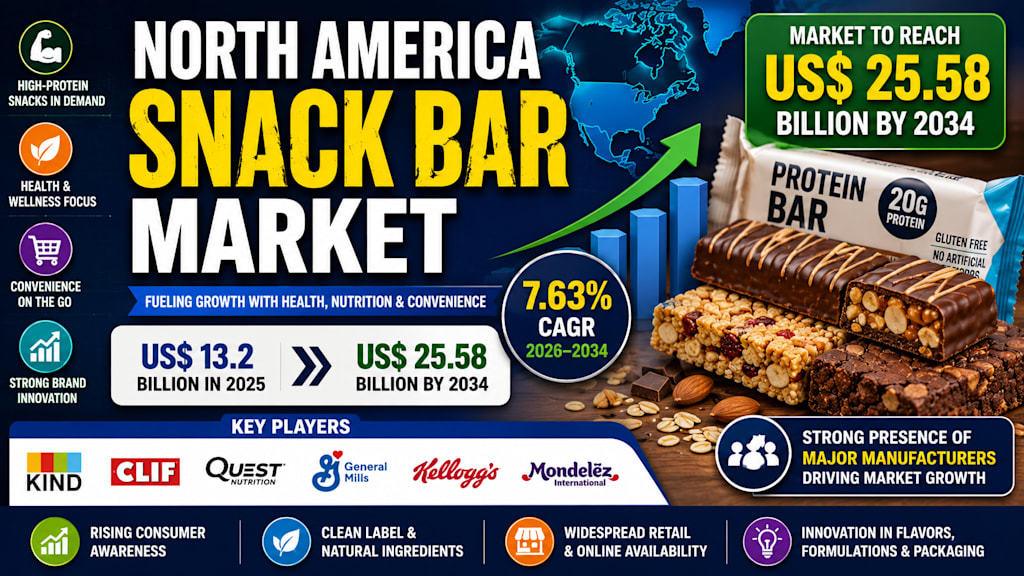
According to Renub Research, the North America Snack Bar Market is expected to grow from US$ 13.2 billion in 2025 to US$ 25.58 billion by 2034, registering a CAGR of 7.63% between 2026 and 2034. Rising consumer demand for healthy and convenient foods, expanding fitness culture, growing interest in protein-rich diets, and continuous product innovation are among the key factors driving this impressive growth trajectory.
Understanding the Snack Bar Industry
Snack bars are compact, ready-to-eat food products designed to provide convenient nutrition in a portable format. They are typically made using ingredients such as oats, grains, nuts, seeds, fruits, chocolate, protein isolates, and natural sweeteners.
Modern snack bars serve a variety of consumer needs. Some focus on delivering high protein content for fitness enthusiasts, while others emphasize low sugar formulations, plant-based ingredients, digestive health support, or meal replacement functionality.
The category now includes granola bars, energy bars, nutrition bars, cereal bars, fruit and nut bars, and numerous specialty formulations designed for specific dietary preferences.
As busy lifestyles continue to shape food purchasing behavior, snack bars have evolved from simple convenience products into functional nutritional solutions that appeal to a broad consumer base.
Convenience Remains the Foundation of Market Growth
One of the strongest factors supporting the snack bar market is consumer demand for convenience.
Modern lifestyles often leave little time for preparing traditional meals. Professionals, students, travelers, and active individuals increasingly seek foods that can be consumed quickly without sacrificing nutritional value.
Snack bars fit perfectly into this lifestyle. Their portability, long shelf life, and ease of consumption make them ideal for busy schedules. Unlike many traditional snack products, bars can deliver meaningful nutritional benefits while requiring no preparation.
The growing popularity of remote work, hybrid work environments, and flexible schedules has further encouraged demand for convenient food options that support productivity throughout the day.
As convenience continues to influence purchasing decisions, snack bars are expected to maintain strong appeal across multiple demographic groups.
The Rise of Health-Conscious Consumers
Consumer attitudes toward food have undergone significant transformation in recent years.
People are paying closer attention to ingredient labels, nutritional content, and overall wellness benefits. As a result, demand for healthier snack options has increased substantially.
Consumers increasingly seek products featuring natural ingredients, reduced sugar content, whole grains, plant-based proteins, and recognizable ingredient lists. Clean-label formulations have become particularly important among younger demographics.
Manufacturers are responding by reformulating products and introducing innovative options that align with changing consumer expectations. Products marketed as organic, non-GMO, gluten-free, vegan, or high in protein continue to gain traction throughout North America.
This shift toward healthier eating habits is creating substantial opportunities for snack bar manufacturers capable of delivering both nutrition and taste.
Sports Nutrition Expands Beyond Athletes
One of the most significant developments in the snack bar market is the mainstream adoption of sports nutrition products.
Historically, protein bars and performance-focused nutrition products were targeted primarily at athletes and bodybuilders. Today, these products are consumed by a much broader audience that includes office workers, parents, students, and older adults seeking healthier snacking alternatives.
High-protein diets have gained widespread popularity due to their perceived benefits for muscle maintenance, weight management, and satiety. As a result, protein bars have become one of the fastest-growing segments within the snack bar market.
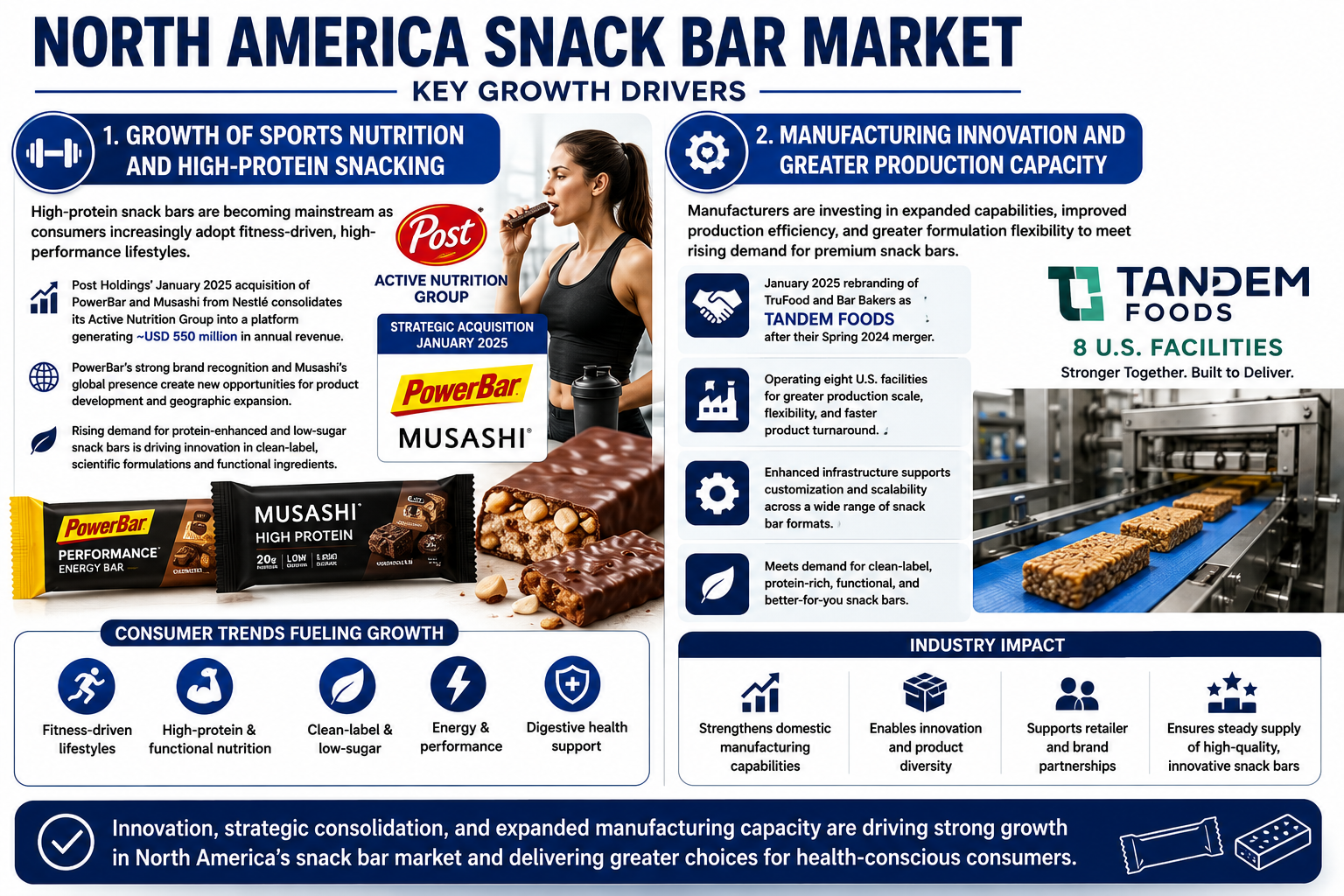
The category received additional momentum through strategic industry activity. In January 2025, Post Holdings acquired PowerBar and Musashi from Nestlé, significantly strengthening its position within the sports nutrition sector. This acquisition supports expanded product development and enhances access to growing performance nutrition markets.
As consumers continue prioritizing health and fitness, demand for protein-enhanced snack bars is expected to remain strong.
Strategic Acquisitions Fuel Industry Expansion
The snack bar market is witnessing increasing consolidation as major food companies seek to strengthen their positions within the health and wellness sector.
Large manufacturers recognize that consumer preferences are shifting away from traditional confectionery products toward better-for-you alternatives. Consequently, many companies are expanding through acquisitions of established health-focused brands.
A notable example occurred in January 2025 when Ferrero Group acquired Power Crunch from Bio-Nutritional Research Group. The acquisition expanded Ferrero's presence within the high-protein snack category and enhanced its ability to compete in the rapidly growing functional nutrition market.
Such transactions provide manufacturers with access to established customer bases, innovative product portfolios, and specialized expertise. They also accelerate product development while expanding distribution capabilities across North America.
As consumer demand continues evolving, further consolidation is likely to remain a key feature of the industry landscape.
Manufacturing Investments Support Innovation
Manufacturing innovation has become increasingly important as demand for premium snack bars grows.
Companies are investing heavily in production facilities, automation technologies, and product development capabilities to meet rising consumer expectations.
An important industry development occurred in January 2025 when TruFood and Bar Bakers completed their integration under the new Tandem Foods brand following their merger. Operating eight facilities across the United States, the company now possesses expanded manufacturing capabilities that support greater product customization, scalability, and efficiency.
Enhanced manufacturing infrastructure enables companies to respond quickly to emerging trends, develop new formulations, and produce increasingly sophisticated snack bar products.
These investments are helping ensure a stable supply of innovative products while supporting long-term market growth.
Functional Ingredients Drive Product Differentiation
Today's consumers expect more from their snacks than simple hunger satisfaction.
This expectation has fueled demand for functional ingredients that offer additional health benefits. Manufacturers are increasingly incorporating ingredients associated with energy support, digestive wellness, immunity, cognitive function, and recovery.
Popular functional ingredients include probiotics, prebiotics, fiber, adaptogens, vitamins, minerals, plant proteins, collagen, and caffeine.
The launch of Quest Overload Bars by Simply Good Foods in February 2025 highlights this trend. The product combines high protein content with caffeine, effectively merging the functionality of protein bars and energy products.
Such innovations demonstrate how manufacturers are creating hybrid snack solutions that address multiple consumer needs simultaneously.
Innovation in Flavor and Product Formats
Flavor innovation remains a critical competitive strategy within the snack bar industry.
Consumers increasingly seek variety and excitement, encouraging manufacturers to experiment with unique ingredient combinations and limited-edition offerings.
Traditional flavors such as chocolate, peanut butter, and mixed berries remain popular. However, brands are also introducing globally inspired flavors, dessert-inspired profiles, and nostalgic concepts designed to attract attention.
In March 2025, General Mills launched the Nature Valley Trix Cereal Bar, leveraging nostalgic branding to appeal to millennial parents and younger consumers. The launch illustrates how emotional connections and familiar flavors can help brands differentiate themselves in a crowded marketplace.
Continued experimentation with taste, texture, and functionality will remain essential for attracting and retaining consumers.
Challenges Facing the North America Snack Bar Market
Despite strong growth prospects, several challenges continue to affect market participants.
Rising Ingredient Costs
One of the most significant concerns facing manufacturers is the increasing cost of raw materials.
Ingredients such as nuts, oats, protein isolates, natural sweeteners, fruits, and specialty nutritional components have experienced price volatility due to agricultural challenges, climate conditions, and global supply chain disruptions.
Transportation expenses and packaging costs have also increased, placing additional pressure on profit margins.
Manufacturers must balance cost management with consumer expectations for premium ingredients and clean-label formulations, creating a complex operating environment.
Intense Competition and Market Saturation
The snack bar market has become highly competitive.
Numerous multinational corporations, regional manufacturers, private-label brands, and emerging startups compete for consumer attention and retail shelf space. Product differentiation can be difficult when many offerings share similar nutritional claims and ingredient profiles.
Brands must continually invest in innovation, marketing, and distribution strategies to maintain visibility and relevance.
As competition intensifies, only companies capable of consistently delivering value, quality, and innovation are likely to sustain long-term success.
United States Snack Bar Market
The United States represents the largest and most influential market within North America.
Consumers across the country demonstrate strong demand for convenient, protein-rich, and health-focused snack options. A well-developed retail infrastructure, including supermarkets, convenience stores, fitness centers, specialty retailers, and e-commerce platforms, ensures widespread product availability.
American consumers are particularly receptive to innovations involving plant proteins, reduced sugar formulations, and functional ingredients. The country's strong fitness culture and growing interest in wellness continue to drive category expansion.
Major acquisitions, product launches, and manufacturing investments further reinforce the United States' leadership position within the regional market.
Canada Snack Bar Market
Canada's snack bar market continues to grow steadily as consumers prioritize nutritious and portable food choices.
Demand for plant-based, gluten-free, low-sugar, and high-protein products is increasing across multiple demographic groups. Canadian consumers increasingly seek products that support active lifestyles, weight management, and overall wellness.
Manufacturers are also responding to growing environmental awareness by incorporating sustainable packaging solutions and locally sourced ingredients.
E-commerce growth and subscription-based snack services are expanding access to premium products, further supporting market development throughout Canada.
Mexico Snack Bar Market
Mexico is emerging as an important growth market within the North American snack bar industry.
Rapid urbanization, increasing workforce participation, and rising health awareness are contributing to greater demand for convenient nutritional products. Consumers increasingly seek healthier alternatives to traditional snacks, creating opportunities for cereal bars, fruit-based bars, and protein-enhanced products.
Local manufacturers are successfully incorporating culturally familiar ingredients such as cacao, amaranth, and tropical fruits into innovative formulations. Meanwhile, multinational companies continue expanding distribution networks and marketing activities to strengthen their presence.
The growing popularity of fitness and wellness trends among younger consumers is expected to further support demand in the years ahead.
Future Outlook
The future of the North America snack bar market appears exceptionally promising. Consumer preferences are increasingly aligned with the core strengths of snack bars: convenience, portability, nutrition, and functionality.
As health consciousness continues to rise, manufacturers will likely introduce more products featuring plant proteins, low sugar formulations, digestive health benefits, sustainable ingredients, and personalized nutrition solutions.
Advancements in manufacturing capabilities, ongoing strategic acquisitions, and growing demand for functional foods will continue shaping the industry's evolution.
With the market projected to nearly double in value by 2034, snack bars are expected to remain one of the most dynamic and innovative categories within the broader food and beverage industry.
Final Thoughts
The North American snack bar market is undergoing a remarkable transformation driven by changing consumer lifestyles and evolving nutritional priorities. As individuals increasingly seek foods that combine convenience with wellness benefits, snack bars have emerged as a preferred choice for everyday nutrition.
Supported by strong innovation, expanding fitness culture, strategic corporate investments, and growing demand for healthier food alternatives, the market is positioned for sustained growth through 2034. Companies that successfully balance taste, functionality, affordability, and clean-label expectations will be best equipped to capitalize on the exciting opportunities ahead.
About the Creator
Enjoyed the story? Support the Creator.
Subscribe for free to receive all their stories in your feed.
Comments
There are no comments for this story
Be the first to respond and start the conversation.