
North America’s Powder Dietary Supplements Market Is Rapidly Expanding as Preventive Wellness and Fitness Culture Drive Consumer Demand
From protein powders and meal replacements to plant-based nutrition and functional wellness blends, the North America powder dietary supplements market is transforming rapidly as consumers prioritize health, convenience, and personalized nutrition.

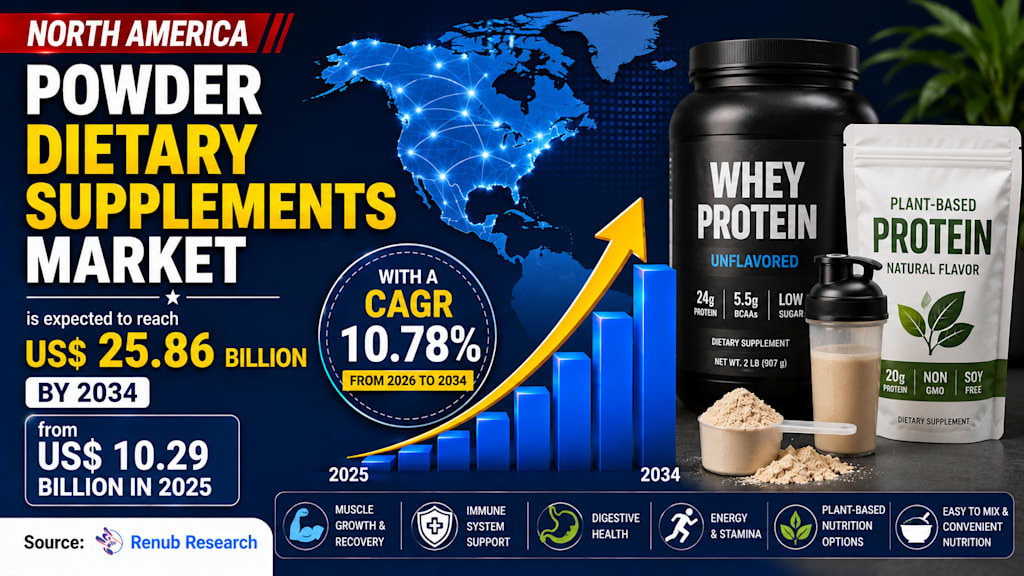
According to Renub Research, the North America Powder Dietary Supplements Market is expected to grow from US$ 10.29 billion in 2025 to US$ 25.86 billion by 2034, expanding at a CAGR of 10.78% between 2026 and 2034. The market’s rapid growth is being fueled by rising health awareness, fitness trends, preventive healthcare adoption, and increasing demand for functional nutrition products.
Consumers are no longer treating supplements as occasional wellness purchases.
Instead, powder supplements are increasingly integrated into daily routines designed to support active lifestyles, long-term health management, and personalized nutrition goals.
This transformation is reshaping the future of the North American wellness economy.
Preventive Healthcare Is Becoming a Major Consumer Priority
One of the strongest drivers behind the North America powder dietary supplements market is the growing emphasis on preventive healthcare.
Consumers across the United States, Canada, and Mexico are becoming increasingly proactive about maintaining long-term health and reducing future medical risks through better nutrition and lifestyle choices.
The rising prevalence of chronic illnesses such as:
- Obesity
- Diabetes
- Cardiovascular disease
- Digestive disorders
- Nutritional deficiencies
has encouraged consumers to seek additional nutritional support.
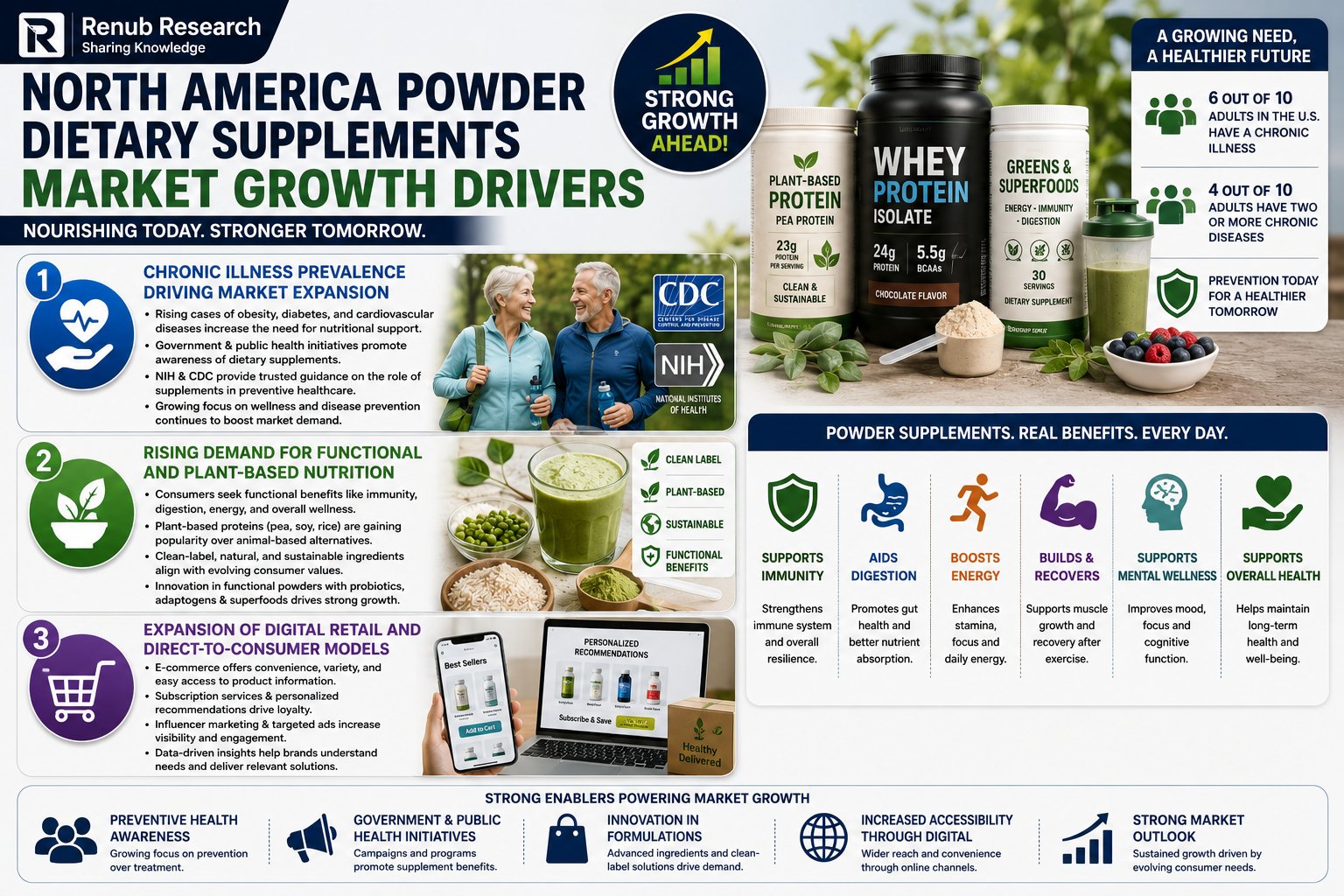
According to the Centers for Disease Control and Prevention (CDC), approximately 6 out of 10 adults in the United States live with at least one chronic illness, while 4 out of 10 have two or more chronic conditions.
This growing health burden is significantly increasing consumer interest in dietary supplements designed to support preventive wellness.
Powder supplements are especially attractive because they offer:
- Convenient consumption
- Flexible serving sizes
- Easy integration into meals and beverages
- Faster absorption potential
- Functional ingredient customization
Consumers increasingly use powder supplements to support:
- Immunity
- Weight management
- Digestive wellness
- Energy levels
- Muscle recovery
- Healthy aging
- Cognitive performance
This broader shift toward proactive health management is expected to remain one of the market’s most important long-term growth drivers.
Fitness Culture Is Accelerating Powder Supplement Demand
The rapid expansion of fitness culture across North America has become another major catalyst for market growth.
Gym memberships, sports participation, home workouts, and fitness-focused lifestyles continue increasing throughout the region.
Consumers are placing stronger emphasis on:
- Athletic performance
- Muscle development
- Recovery nutrition
- Protein intake
- Weight management
- Active living
As a result, products such as protein powders and amino acid supplements have become mainstream wellness products rather than niche bodybuilding items.
Powder supplements remain highly popular among fitness-focused consumers because they are:
- Portable
- Convenient
- Easy to consume
- Compatible with meal plans and shakes
Social media has amplified this trend significantly.
Fitness influencers, wellness creators, athletes, and nutrition experts continuously promote protein powders, recovery drinks, and functional nutrition products across platforms such as:
- TikTok
- YouTube
- Fitness apps
This digital influence has normalized supplement use among younger demographics and casual fitness consumers.
As wellness and body-performance culture continue expanding, powder supplements are likely to remain deeply integrated into modern fitness routines.
Functional and Plant-Based Nutrition Is Reshaping the Market
Consumer preferences are evolving rapidly toward functional and plant-based nutrition.
Today’s consumers increasingly seek products offering targeted health benefits beyond basic nutrition.
Functional powder supplements often include ingredients such as:
- Probiotics
- Adaptogens
- Vitamins
- Minerals
- Herbal extracts
- Functional botanicals
Consumers want products capable of supporting:
- Gut health
- Immunity
- Energy enhancement
- Stress management
- Cognitive function
At the same time, plant-based nutrition trends are significantly influencing the market.
Demand for alternatives to traditional animal-based protein powders continues rising rapidly.
Popular plant-based protein sources now include:
- Pea protein
- Soy protein
- Rice protein
- Hemp protein
This trend is closely tied to increasing consumer interest in:
- Sustainability
- Ethical sourcing
- Vegan lifestyles
- Clean-label nutrition
Manufacturers are responding by reducing artificial ingredients while emphasizing natural formulations and transparency.
Consumers increasingly prefer products that are:
- Organic
- Non-GMO
- Vegan-friendly
- Low sugar
- Free from artificial additives
This clean-label movement is expected to remain a defining feature of the powder supplements industry over the next decade.
Personalized Nutrition Is Becoming Mainstream
One of the biggest changes within the industry is the growing demand for personalized nutrition.
Consumers no longer want generic wellness products alone.
Instead, they increasingly seek supplements tailored to individual health goals and lifestyles.
Popular personalized wellness categories include:
- Immune support
- Sleep optimization
- Women’s wellness
- Men’s vitality
- Healthy aging
- Cognitive performance
- Athletic recovery
Manufacturers are investing heavily in customized formulations and targeted ingredient blends designed to meet specific consumer needs.
Subscription-based supplement models and direct-to-consumer wellness platforms are also becoming increasingly common.
These services use consumer data, health assessments, and lifestyle preferences to recommend personalized nutritional solutions.
As wellness consumers become more informed and selective, personalization is likely to become one of the industry’s strongest competitive differentiators.
E-Commerce Is Transforming Product Accessibility
Digital commerce has become one of the most important growth engines for the North America powder dietary supplements market.
Online retail platforms provide consumers with convenient access to a wide variety of wellness products while enabling easier comparison between brands and formulations.
E-commerce offers several major advantages including:
- Product accessibility
- Customer reviews
- Educational content
- Subscription services
- Personalized recommendations
- Home delivery convenience
Direct-to-consumer supplement brands are also growing rapidly.
Companies increasingly use digital marketing strategies such as:
- Influencer collaborations
- Social media campaigns
- Targeted advertising
- Educational wellness content
to build stronger customer engagement.
Online platforms additionally provide valuable consumer data insights, helping brands understand purchasing behavior and tailor product offerings accordingly.
The continued expansion of e-commerce is expected to remain a major driver of long-term market growth.
The United States Continues Leading Regional Demand
The United States represents the largest market for powder dietary supplements in North America.
American consumers show especially strong demand for:
- Protein powders
- Meal replacements
- Functional nutrition products
- Plant-based supplements
- Sports recovery formulas
The country benefits from:
- Strong health awareness
- Advanced retail infrastructure
- High fitness participation
- Expanding digital commerce
The U.S. market is highly competitive and innovation-driven.
Manufacturers continuously introduce:
- Organic formulations
- Clean-label products
- Functional wellness blends
- Personalized nutrition products
to meet evolving consumer expectations.
Direct-to-consumer channels and online wellness platforms also play a major role in expanding market accessibility.
Despite strict regulatory oversight, the U.S. powder supplements market continues growing rapidly due to increasing preventive-health awareness and active lifestyle adoption.
Canada’s Market Is Being Shaped by Clean Wellness Trends
Canada’s powder dietary supplements market is experiencing steady expansion driven by strong consumer interest in:
- Preventive nutrition
- Plant-based wellness
- Clean-label products
- Sustainable consumption
Canadian consumers increasingly prioritize natural and environmentally responsible products.
Functional supplements targeting:
- Immunity
- Digestion
- Energy support
are gaining strong popularity across the country.
Pharmacies, specialty wellness retailers, supermarkets, and online platforms all play important roles in product distribution.
Canadian companies are also emphasizing sustainability initiatives including:
- Eco-friendly packaging
- Responsible sourcing
- Reduced environmental impact
These trends continue shaping market development across the region.
Mexico’s Market Is Growing Gradually
Mexico’s powder dietary supplements market is expanding steadily due to improving health awareness and rising interest in fitness and wellness.
Consumers increasingly use protein powders and nutritional blends to support active lifestyles and dietary needs.
Retail distribution continues expanding through:
- Pharmacies
- Supermarkets
- Specialty health stores
- E-commerce platforms
Affordability remains an important purchasing factor for many consumers.
As a result, brands often focus on education campaigns and accessible product pricing to expand adoption.
Although regulatory and awareness challenges remain, the market is expected to continue growing alongside broader lifestyle and wellness trends.
Regulatory Requirements Continue Creating Challenges
Despite strong market momentum, the industry faces several important challenges.
One of the biggest concerns is regulatory complexity.
Regulatory authorities across North America impose strict requirements regarding:
- Product safety
- Labeling accuracy
- Ingredient validation
- Quality testing
- Marketing claims
While these standards help protect consumers, they also increase operational costs and compliance burdens for manufacturers.
Smaller brands may struggle with the expenses associated with:
- Testing procedures
- Documentation
- Certification requirements
- Regulatory approvals
Changes in policies and delays in approvals can further complicate product launches and innovation timelines.
Balancing compliance with cost efficiency remains a major challenge across the industry.
Consumer Trust and Market Saturation Remain Key Issues
The powder supplements market is becoming increasingly crowded.
The presence of numerous brands and competing products can create confusion among consumers, making it difficult to differentiate between high-quality and lower-quality offerings.
Misleading marketing claims and misinformation around supplement effectiveness may also reduce consumer confidence.
As competition intensifies, companies face growing pressure related to:
- Pricing
- Marketing expenses
- Product differentiation
- Customer retention
To build trust, manufacturers increasingly focus on:
- Scientific validation
- Transparent labeling
- Third-party certifications
- Ingredient traceability
- Clear health communication
Brands capable of maintaining credibility and consistent product quality are likely to perform better in the long term.
Recent Industry Developments Highlight Market Innovation
The North America powder dietary supplements industry continues seeing rapid innovation and strategic expansion.
Some notable developments include:
In January 2025, Ancient Nutrition was acquired by Wellful, Inc., strengthening Wellful’s position in the vitamin, mineral, and supplement market while expanding its digital wellness presence.
In September 2024, Bayer’s One A Day brand launched Age Factor Cell Defense, a new supplement targeting cellular health and aging-related wellness support.
In February 2024, Medella Springs Healthcare introduced AddiVance, a stimulant-free dietary supplement developed using premium ingredients sourced from cGMP facilities in the United States.
These developments demonstrate how companies are increasingly focusing on innovation, personalization, and preventive wellness positioning.
Key Market Segments
By Type
- Vitamins
- Minerals
- Proteins and Amino Acids
- Herbal Supplements
- Fatty Acids
- Probiotics
- Other Types
By Distribution Channel
- Supermarkets/Hypermarkets
- Pharmacies and Drug Stores
- Convenience/Grocery Stores
- Online Retail Stores
- Other Distribution Channels
Major Countries
- United States
- Canada
- Mexico
Major Companies Operating in the Market
Leading companies in the North America powder dietary supplements market include:
- Abbott Laboratories
- Amway Corp.
- Nestlé Health Science
- Glanbia plc
- USANA Health Sciences
- Nature’s Way Brands, LLC
- Herbalife Nutrition Ltd.
- NOW Foods
- Orgain Inc.
These companies continue investing heavily in personalized nutrition, plant-based formulations, digital commerce expansion, and functional wellness innovation.
Final Thoughts
The North America powder dietary supplements market is entering a period of rapid transformation fueled by preventive healthcare awareness, fitness culture, personalized nutrition, and digital retail expansion.
Consumers are increasingly prioritizing long-term wellness and seeking convenient nutritional solutions that fit modern lifestyles.
Powder supplements are no longer limited to athletes or fitness enthusiasts.
They are becoming mainstream wellness products integrated into daily routines across multiple demographics and age groups.
According to Renub Research, the market is projected to grow from US$ 10.29 billion in 2025 to US$ 25.86 billion by 2034, highlighting substantial long-term growth potential across the region.
As health awareness, plant-based nutrition, and personalized wellness continue shaping consumer behavior, the companies capable of combining scientific credibility, transparency, convenience, and innovation will likely define the future of North America’s evolving powder dietary supplements industry.
About the Creator
Enjoyed the story? Support the Creator.
Subscribe for free to receive all their stories in your feed.
Comments
There are no comments for this story
Be the first to respond and start the conversation.