
North America Protein Market: Why Is Protein Becoming the Cornerstone of Modern Nutrition Across North America?
Rising health awareness, growing demand for plant-based alternatives, expanding functional food categories, and continuous innovation in protein ingredients are driving strong growth in the North America protein market through 2034.

Protein has become one of the most sought-after nutrients in modern diets, transforming from a basic dietary requirement into a central component of health, wellness, fitness, and nutrition strategies. Across North America, consumers are increasingly prioritizing protein-rich foods and beverages as they seek healthier lifestyles, improved physical performance, weight management, and overall well-being.
This growing emphasis on nutrition has fueled remarkable expansion within the protein industry. From traditional animal-based proteins to innovative plant-derived and microbial alternatives, the market continues to evolve rapidly in response to changing consumer preferences. Manufacturers are introducing protein-enriched products across multiple food and beverage categories, while advances in food technology are creating new opportunities for innovation and differentiation.
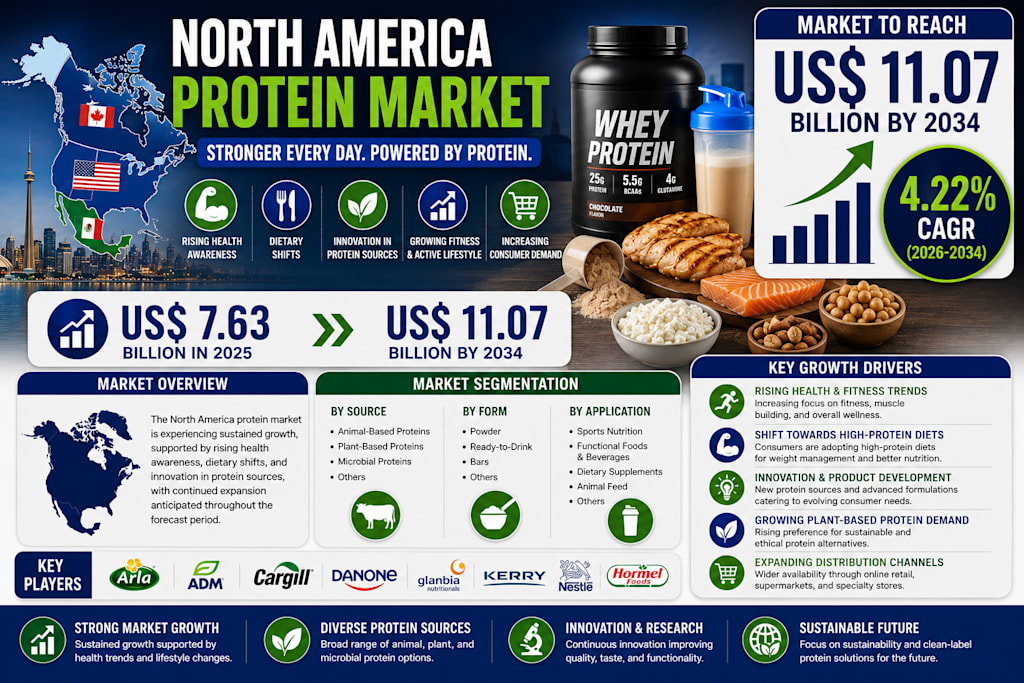
According to Renub Research, the North America Protein Market is expected to reach US$ 11.07 billion by 2034 from US$ 7.63 billion in 2025, growing at a CAGR of 4.22% from 2026 to 2034. The market's growth is supported by increasing health awareness, dietary shifts, innovation in protein sources, and rising demand for functional nutrition products.
The Evolution of the North American Protein Industry
The North America protein industry has evolved into one of the most dynamic and diversified sectors within the broader food and nutrition market. Protein products are no longer limited to traditional meat, dairy, and supplement categories. Today, consumers can find protein-enriched options in snacks, beverages, cereals, dairy products, ready-to-eat meals, and even confectionery products.
This evolution reflects changing consumer attitudes toward nutrition. Many individuals now view protein as an essential nutrient that supports muscle maintenance, satiety, metabolism, energy levels, and overall health. As a result, demand for protein-rich foods continues to expand across multiple demographic groups.
The market encompasses a broad range of protein sources, including animal proteins such as whey, milk, egg, collagen, and gelatin, as well as plant-based proteins derived from soy, pea, rice, hemp, wheat, and potatoes. Emerging protein sources, including microbial proteins from algae and mycoprotein, are also gaining attention as sustainable alternatives.
The diversity of available protein options enables manufacturers to meet a wide range of dietary preferences and nutritional needs while supporting continued market growth.
Health and Fitness Awareness Continues to Drive Demand
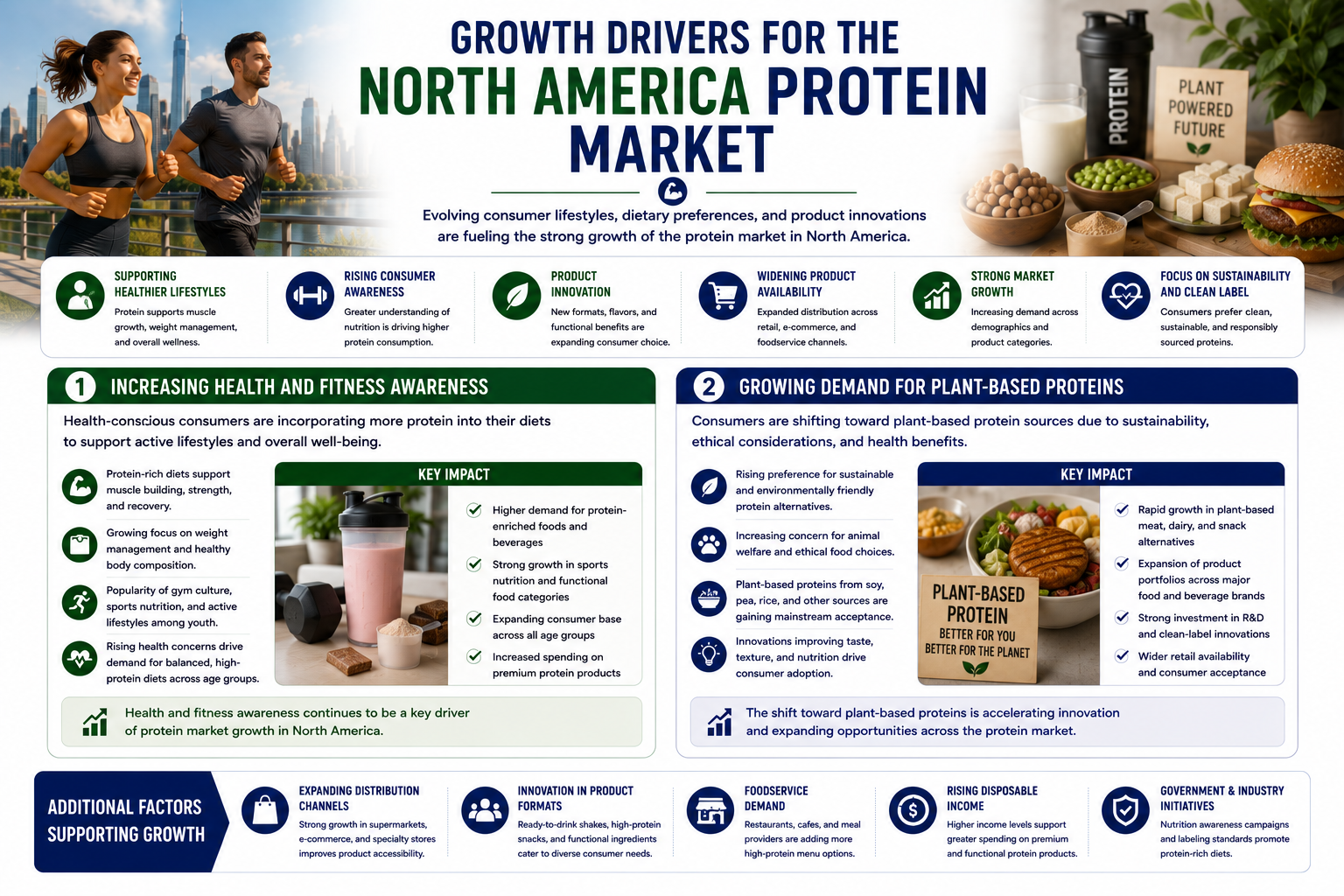
One of the most significant growth drivers in the North America protein market is the increasing awareness of health and fitness.
Consumers are becoming more proactive about managing their health through nutrition. Protein-rich diets are widely associated with muscle development, recovery, weight management, and long-term wellness. This perception has encouraged many individuals to increase their protein intake as part of daily dietary routines.
Fitness enthusiasts, athletes, and active consumers are particularly important contributors to market growth. These consumers often seek protein-enriched products to support workout performance, muscle recovery, and body composition goals.
At the same time, awareness regarding lifestyle-related health concerns such as obesity and metabolic disorders has prompted consumers to adopt more balanced eating habits. Protein is frequently viewed as a nutrient that promotes satiety and helps reduce overeating, making it attractive to consumers pursuing healthier lifestyles.
As health consciousness continues expanding across North America, demand for protein-based products is expected to remain strong.
Plant-Based Proteins Are Transforming the Market
The rapid growth of plant-based nutrition represents one of the most influential trends shaping the North America protein industry.
Consumers are increasingly considering sustainability, environmental impact, and animal welfare when making purchasing decisions. As a result, plant-based protein sources have gained widespread popularity as alternatives to traditional animal proteins.
Soy protein remains one of the most established plant-based options, while pea protein has emerged as a major growth category due to its favorable nutritional profile and allergen-friendly characteristics. Other sources such as rice, hemp, potato, and wheat proteins are also gaining market acceptance.
Food manufacturers are incorporating plant-based proteins into meat substitutes, dairy alternatives, beverages, snacks, and functional foods. Improvements in taste, texture, and nutritional quality have significantly enhanced consumer acceptance of these products.
As consumer interest in sustainable and plant-forward diets continues growing, plant-based proteins are expected to remain a major driver of industry expansion.
Functional Foods and Beverages Create New Opportunities
The growing popularity of functional foods and beverages has created significant opportunities for protein manufacturers.
Consumers increasingly seek products that provide nutritional benefits beyond basic sustenance. Protein fortification has become a popular strategy for enhancing the value of food and beverage products while appealing to health-conscious consumers.
Protein-enriched snacks, ready-to-drink beverages, breakfast cereals, dairy products, and meal replacements have become mainstream offerings across North American retail channels.
Busy lifestyles have also increased demand for convenient nutrition solutions. Consumers frequently choose portable protein products that can be consumed on the go without compromising nutritional quality.
The combination of convenience and functionality continues to make protein-enriched products highly attractive across multiple consumer segments.
Innovation Remains Central to Market Growth
Innovation plays a crucial role in shaping the future of the North America protein market.
Manufacturers are investing heavily in research and development to improve protein functionality, taste, texture, digestibility, and nutritional performance. These efforts help companies differentiate products while addressing evolving consumer expectations.
Advancements in food processing technologies have enabled the development of higher-quality protein ingredients suitable for a wide variety of applications. Improved extraction methods and formulation techniques have enhanced the sensory characteristics of protein-enriched foods, making them more appealing to mainstream consumers.
Emerging protein sources are also contributing to innovation within the industry. Novel proteins derived from algae, fungi, and fermentation technologies are attracting interest due to their sustainability and nutritional potential.
Continuous innovation ensures that the market remains dynamic and responsive to changing dietary trends.
Sustainability Influences Purchasing Decisions
Sustainability has become an increasingly important consideration within the protein market.
Consumers are paying closer attention to the environmental impact of food production and are seeking products that align with their values. This trend has encouraged manufacturers to explore sustainable protein sources and adopt environmentally responsible practices.
Plant-based proteins generally require fewer natural resources compared to traditional animal agriculture, making them attractive options for environmentally conscious consumers.
Companies are also investing in sustainable sourcing, responsible manufacturing, and improved supply chain transparency to strengthen brand credibility.
As sustainability concerns continue influencing purchasing behavior, environmentally friendly protein solutions are expected to gain further momentum.
Strong Retail Networks Support Market Expansion
The widespread availability of protein products across North America contributes significantly to market growth.
Consumers can access protein-enriched foods and supplements through supermarkets, hypermarkets, specialty nutrition retailers, pharmacies, convenience stores, and online platforms.
Retailers continue expanding their health and wellness product offerings to meet growing consumer demand. Dedicated sections for sports nutrition, plant-based products, and functional foods have become increasingly common.
E-commerce has further enhanced accessibility by enabling consumers to compare products, read reviews, and purchase specialized nutrition products from home.
The strength of North America's retail infrastructure ensures broad market reach and supports continued industry expansion.
Fluctuating Raw Material Prices Remain a Challenge
Despite strong growth prospects, the protein market faces several challenges.
One of the most significant concerns is the volatility of raw material prices. The cost of protein ingredients can fluctuate due to weather conditions, agricultural yields, global demand, geopolitical events, and supply chain disruptions.
These fluctuations affect both animal-based and plant-based protein producers, creating uncertainty regarding production costs and pricing strategies.
Manufacturers must carefully manage procurement processes and inventory planning to mitigate the impact of market volatility.
Maintaining profitability while offering competitively priced products remains an ongoing challenge for industry participants.
Regulatory Compliance Creates Complexity
Regulatory and labeling requirements represent another important challenge.
Manufacturers must comply with strict standards related to ingredient disclosure, nutritional labeling, product claims, and food safety. These requirements help protect consumers but also increase operational complexity.
The emergence of novel protein sources has introduced additional regulatory considerations, particularly regarding safety assessments and approval processes.
Companies must invest in quality assurance systems, compliance programs, and regulatory expertise to navigate evolving requirements successfully.
Maintaining transparency and accuracy in labeling remains essential for building consumer trust and supporting long-term growth.
United States Protein Market
The United States represents the largest and most influential protein market within North America.
Strong consumer demand for health-focused nutrition products, combined with an active fitness culture, supports significant market growth. The country is home to many leading food manufacturers, ingredient suppliers, and nutrition brands that drive innovation across multiple protein categories.
Consumers increasingly embrace both traditional animal proteins and plant-based alternatives, creating opportunities for diverse product offerings.
The United States also serves as a major hub for research, product development, and commercialization within the global protein industry.
Canada Protein Market
Canada's protein market continues to expand steadily due to growing awareness of nutrition and wellness.
Consumers increasingly incorporate protein-rich foods into daily diets, while manufacturers invest in innovative products that address evolving dietary preferences.
Canada's strong agricultural sector also supports the development of plant-based protein ingredients, particularly pea protein, which has gained international recognition.
Sustainability concerns and interest in healthier eating habits continue influencing market development across the country.
Mexico Protein Market
Mexico's protein market is experiencing gradual but consistent growth.
Rising health awareness, urbanization, and changing dietary habits are encouraging greater consumption of protein-rich foods and beverages. Consumers increasingly seek convenient nutrition solutions that fit busy lifestyles.
Manufacturers are responding by expanding product portfolios and introducing protein-enriched offerings across multiple categories.
Improved distribution networks and broader retail accessibility further support market expansion throughout Mexico.
Recent Developments Highlight Industry Momentum
Innovation and strategic partnerships continue shaping the protein industry.
In September 2025, Burcon NutraScience Corp. achieved the first commercial sale of Puratein C, a canola protein isolate derived from non-GMO North American canola seeds. The ingredient contains all nine essential amino acids and is suitable for applications ranging from dairy alternatives to meat substitutes.
In March 2025, Arla Foods Ingredients partnered with Valley Queen to expand production capacity for protein-enriched dairy ingredients in the United States, supporting growing demand for high-protein foods and beverages.
The same month, Dutch ingredient company Vivici introduced Vivitein™ BLG to the U.S. market, expanding opportunities for innovative protein applications.
These developments illustrate the industry's commitment to innovation and market expansion.
Future Outlook
The future of the North America protein market remains highly promising.
Increasing health awareness, growing demand for plant-based alternatives, expansion of functional foods, and continuous innovation in protein ingredients are expected to support sustained growth through 2034.
Manufacturers that successfully balance nutrition, convenience, sustainability, and product quality will be best positioned to capitalize on evolving consumer preferences.
As protein continues to play a central role in modern nutrition, the industry is expected to remain one of the most dynamic segments within the food and beverage sector.
Final Thoughts
The North America protein market is undergoing a remarkable transformation driven by changing dietary habits, wellness trends, and technological innovation. From traditional animal proteins to cutting-edge plant-based and novel alternatives, the industry continues expanding to meet the needs of increasingly health-conscious consumers.
With the market projected to grow from US$ 7.63 billion in 2025 to US$ 11.07 billion by 2034, significant opportunities exist for ingredient suppliers, food manufacturers, nutrition brands, and retailers. Companies that prioritize innovation, sustainability, and consumer-focused product development will be best positioned to thrive in North America's evolving protein landscape.
About the Creator
Enjoyed the story? Support the Creator.
Subscribe for free to receive all their stories in your feed.
Comments
There are no comments for this story
Be the first to respond and start the conversation.