
North America Protein Bar Market: Why Are Protein Bars Becoming the Go-To Choice for Modern Nutrition?
Growing fitness awareness, meal-replacement trends, product innovation, and increasing demand for convenient high-protein nutrition are driving the rapid expansion of the North American protein bar industry.

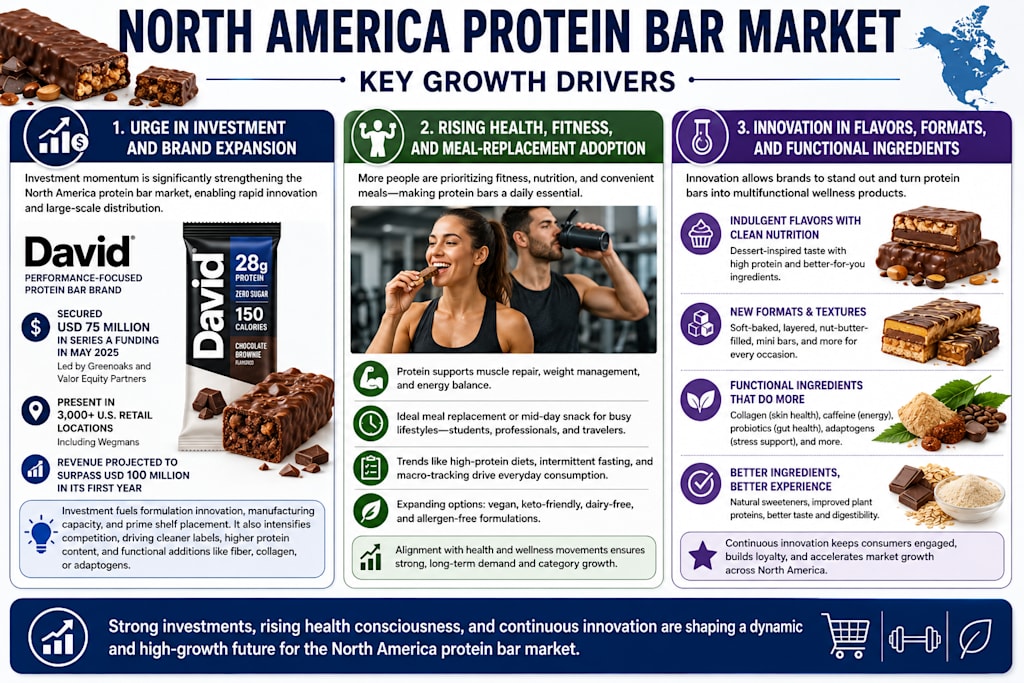
The modern consumer is increasingly seeking foods that deliver more than simple convenience. Today's shoppers want products that support active lifestyles, improve nutrition, assist with weight management, and provide functional health benefits. Among the categories experiencing exceptional growth due to these changing preferences is the protein bar market.
Once considered a niche product reserved primarily for athletes and bodybuilders, protein bars have evolved into mainstream nutritional solutions consumed by students, office workers, travelers, fitness enthusiasts, and health-conscious consumers alike. Their portability, nutritional value, and versatility have made them one of the fastest-growing segments within the broader functional food industry.
According to Renub Research, the North America Protein Bar Market is projected to grow from US$ 6.49 billion in 2025 to US$ 14 billion by 2034, registering a CAGR of 8.92% between 2026 and 2034. Increasing health awareness, expanding fitness participation, product innovation, and growing demand for convenient protein-rich foods are expected to fuel this impressive growth throughout the forecast period.

Understanding the Protein Bar Industry
Protein bars are compact, nutrient-dense food products formulated to provide significant amounts of high-quality protein along with carbohydrates, healthy fats, vitamins, minerals, and other functional ingredients.
These products serve multiple purposes, including post-workout recovery, meal replacement, appetite control, weight management, and healthy snacking. Modern protein bars are available in a wide range of formulations designed to meet specific dietary requirements, including vegan, keto-friendly, low-sugar, high-fiber, dairy-free, gluten-free, and plant-based options.
Unlike traditional snack products, protein bars offer consumers a combination of convenience and nutritional value. Their long shelf life and portability make them especially attractive for individuals with busy lifestyles who seek healthier alternatives to conventional snacks.
As consumer interest in wellness continues to expand, protein bars are increasingly viewed as everyday nutrition products rather than specialty fitness supplements.
Growing Health Awareness Fuels Demand
One of the strongest drivers of the North American protein bar market is rising health consciousness among consumers.
People are becoming more aware of the relationship between nutrition and overall well-being. As a result, many consumers actively seek foods that support weight management, muscle maintenance, energy levels, and long-term health goals.
Protein plays a crucial role in these objectives. It helps promote satiety, supports muscle recovery, and contributes to healthy body composition. Consequently, consumers are prioritizing protein-rich foods as part of their daily dietary routines.
Protein bars offer a convenient solution for meeting protein requirements without extensive meal preparation. Their ability to combine nutrition with convenience has significantly increased their appeal across various age groups and lifestyles.
As awareness regarding balanced nutrition continues to grow, protein bars are expected to maintain strong momentum throughout North America.
Fitness Culture Expands Beyond Traditional Athletes
The increasing popularity of fitness and active lifestyles has transformed the protein bar industry.
Participation in gym memberships, organized sports, recreational activities, home workouts, and wellness programs continues to rise throughout the region. Consumers increasingly view exercise not merely as a hobby but as an essential component of healthy living.
This shift has created substantial demand for products that support performance, recovery, and overall fitness goals. Protein bars have become a preferred option because they provide quick and convenient nutrition before or after physical activity.
Importantly, the market is no longer limited to professional athletes or serious fitness enthusiasts. Everyday consumers now incorporate protein bars into their routines as healthy snacks, breakfast alternatives, or meal supplements.
This broadening consumer base has significantly expanded the market's growth potential and encouraged manufacturers to develop products tailored to a wider audience.
Meal-Replacement Trends Create New Opportunities
Busy schedules and changing work habits have increased demand for convenient meal alternatives.
Many consumers struggle to find time for traditional sit-down meals during the workday. Protein bars offer an attractive solution by providing balanced nutrition in a portable format that can be consumed virtually anywhere.
Professionals, students, travelers, and remote workers frequently use protein bars as meal replacements when time constraints make conventional meals impractical.
The popularity of intermittent fasting, calorie management programs, and macro-based diets has further accelerated adoption. Consumers appreciate products that provide controlled portions, high protein content, and nutritional transparency.
As convenience continues to influence food purchasing decisions, meal-replacement applications are expected to remain a major growth driver for the protein bar market.
Investment Activity Accelerates Market Development
The North American protein bar market is attracting significant investor interest.
Private equity firms, venture capital groups, and strategic investors increasingly recognize the growth potential of health-focused food categories. This influx of capital enables companies to expand production, improve product formulations, strengthen distribution networks, and invest in marketing initiatives.
A notable example occurred in May 2025 when David, a rapidly growing performance nutrition brand, secured USD 75 million in Series A funding from investors including Greenoaks and Valor Equity Partners. The company gained attention through its high-protein, zero-sugar bars that deliver 28 grams of protein while containing only 150 calories.
The success of brands like David highlights how investment can accelerate innovation and market penetration. Increased funding is encouraging greater competition, product diversification, and technological advancement throughout the industry.
Innovation Remains a Core Growth Engine
Innovation continues to shape the future of the protein bar market.
Consumers increasingly expect products that deliver exceptional taste, improved texture, enhanced nutrition, and functional health benefits. Manufacturers are responding by introducing new ingredients, formulations, and consumption formats.
Traditional protein bars often faced criticism for chalky textures and artificial flavors. Today's products offer significantly improved eating experiences that closely resemble premium snacks and desserts.
Manufacturers are introducing indulgent flavors inspired by cookies, brownies, cakes, and other popular treats while maintaining strong nutritional profiles. This approach helps attract consumers who want healthy products without sacrificing taste.
Continuous innovation ensures that protein bars remain relevant in an increasingly competitive food marketplace.
Functional Ingredients Expand Consumer Appeal
Modern protein bars increasingly serve as multifunctional wellness products.
Manufacturers are incorporating ingredients designed to address specific health goals beyond protein intake alone. Functional additions such as collagen, probiotics, prebiotics, adaptogens, caffeine, vitamins, minerals, and fiber are becoming increasingly common.
Consumers are particularly interested in products that support digestive health, mental focus, stress management, immune function, and energy levels.
This trend reflects broader shifts within the wellness industry, where consumers seek products capable of delivering multiple benefits through a single purchase.
The integration of functional ingredients allows brands to differentiate themselves while appealing to increasingly sophisticated consumer preferences.
Plant-Based Nutrition Gains Momentum
Plant-based nutrition continues to influence product development throughout the protein bar category.
Consumers are increasingly exploring alternatives to traditional animal-based proteins due to health, environmental, and ethical considerations. This trend has encouraged manufacturers to develop protein bars using ingredients such as pea protein, rice protein, soy protein, hemp protein, and other plant-derived sources.
In January 2025, General Mills expanded its Lärabar portfolio by introducing a plant-based protein bar range featuring organic pea protein and adaptogens including ashwagandha and lion's mane mushroom.
The growing popularity of vegan and vegetarian diets is expected to support continued innovation in plant-based protein formulations, creating new opportunities for manufacturers across North America.
Expanding Retail Distribution Supports Growth
Accessibility plays a crucial role in market expansion.
Protein bars are now available through an extensive network of retail channels, including supermarkets, hypermarkets, convenience stores, pharmacies, gyms, specialty nutrition retailers, and online marketplaces.
E-commerce has become particularly important as consumers increasingly purchase health products through digital platforms. Subscription services and direct-to-consumer sales models allow brands to build stronger customer relationships while improving convenience.
Broader distribution ensures that protein bars remain visible and accessible to a growing consumer audience, supporting long-term category growth.
Challenges Facing the Protein Bar Industry
Despite strong growth prospects, several challenges continue to impact the market.
Intense Competition and Market Saturation
The protein bar category has become highly competitive.
Hundreds of brands compete for consumer attention, making differentiation increasingly difficult. Established multinational companies, emerging startups, private-label manufacturers, and niche wellness brands all seek to capture market share.
Consumers are presented with numerous choices, often resulting in lower brand loyalty and increased pressure on manufacturers to continuously innovate.
Marketing expenditures, influencer partnerships, and promotional campaigns have become essential tools for maintaining visibility in an increasingly crowded marketplace.
Ingredient Cost Volatility
Protein bar manufacturers also face challenges related to fluctuating ingredient costs.
Key ingredients such as whey protein isolate, plant proteins, nuts, natural sweeteners, and specialty functional compounds are subject to price volatility influenced by supply chain conditions, agricultural production, and global market dynamics.
Rising costs can place pressure on profitability and create pricing challenges for manufacturers.
Maintaining product quality while managing production expenses remains a critical priority for industry participants.
United States Protein Bar Market
The United States represents the largest and most mature protein bar market in North America.
Strong fitness culture, high disposable income levels, and widespread interest in health and wellness continue to drive demand. American consumers frequently use protein bars as meal replacements, post-workout recovery products, and healthy snacks.
The country also serves as a hub for innovation, with numerous companies introducing new flavors, ingredients, and functional formulations.
Robust retail infrastructure, extensive e-commerce penetration, and strong consumer awareness make the United States the primary growth engine for the regional market.
Canada Protein Bar Market
Canada's protein bar market is experiencing steady expansion driven by increasing health awareness and growing participation in fitness activities.
Consumers increasingly prefer clean-label products featuring natural ingredients, transparent labeling, and sustainable sourcing practices. Demand for plant-based and allergen-friendly formulations is particularly strong among Canadian shoppers.
The country's emphasis on healthy living and responsible nutrition continues to support long-term growth opportunities for manufacturers operating within the protein bar segment.
Mexico Protein Bar Market
Mexico is emerging as an increasingly important growth market within North America.
Urbanization, rising disposable incomes, and growing awareness of nutrition and fitness are contributing to increased demand for protein-rich foods. Younger consumers are particularly receptive to products that combine convenience with health benefits.
Manufacturers are expanding distribution through supermarkets, pharmacies, convenience stores, and online channels to capture growing consumer interest.
As awareness regarding protein consumption continues to increase, Mexico is expected to become an increasingly significant contributor to regional market growth.
Future Outlook
The future of the North America protein bar market appears highly promising. Consumer demand for convenient nutrition, functional foods, and protein-rich diets shows no signs of slowing.
Advancements in ingredient technology, manufacturing processes, plant-based nutrition, and functional wellness products will continue to drive innovation. At the same time, expanding retail distribution and increasing investment activity will support market accessibility and growth.
As consumers increasingly prioritize health, fitness, and convenience, protein bars are likely to become an even more important part of everyday nutrition habits.
Final Thoughts
The North America protein bar market has evolved from a niche sports nutrition category into a mainstream segment of the modern food industry. Driven by changing consumer lifestyles, growing health awareness, rising fitness participation, and continuous product innovation, the market is poised for substantial growth through 2034.
With projections indicating an increase from US$ 6.49 billion in 2025 to US$ 14 billion by 2034, protein bars are expected to remain one of the most dynamic and influential categories within the functional nutrition landscape. Companies that continue to innovate while meeting consumer demands for taste, transparency, convenience, and wellness benefits will be best positioned for long-term success.
About the Creator
Enjoyed the story? Support the Creator.
Subscribe for free to receive all their stories in your feed.
Comments
There are no comments for this story
Be the first to respond and start the conversation.