
North America Luxury Goods Market Set to Reach US$ 197.08 Billion by 2033 as Digital Luxury and Affluent Consumers Redefine Premium Spending
Rising disposable incomes, e-commerce innovation, sustainability trends, and evolving consumer preferences are driving robust growth across the North American luxury goods industry.

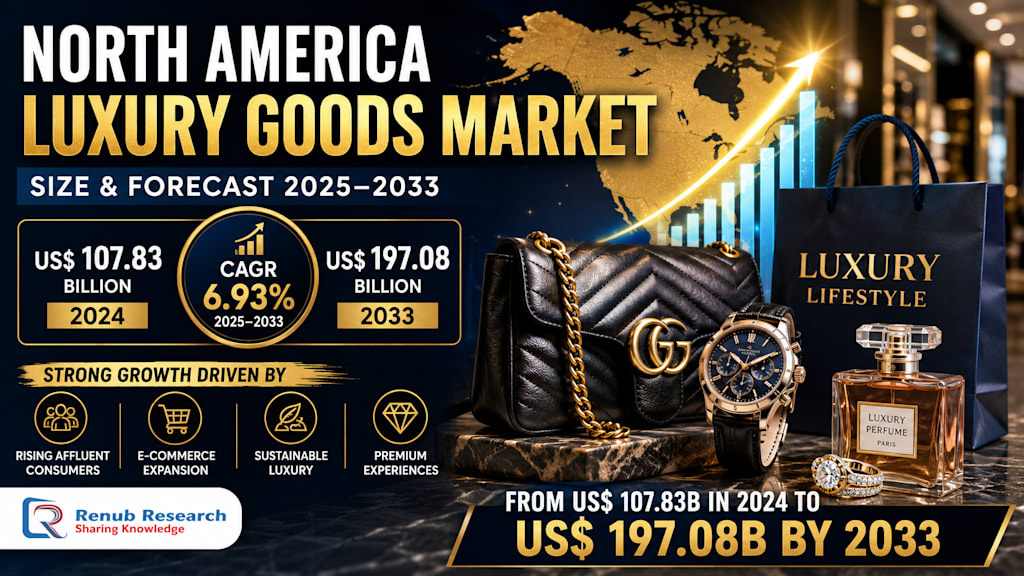
North America Luxury Goods Market Size and Forecast 2025–2033
The North America luxury goods market is entering a transformative decade, fueled by rising consumer wealth, digital innovation, changing lifestyle aspirations, and growing demand for premium experiences. According to Renub Research, the North America Luxury Goods Market is projected to grow from US$ 107.83 billion in 2024 to US$ 197.08 billion by 2033, expanding at a CAGR of 6.93% during 2025–2033.
Luxury goods have long represented exclusivity, prestige, craftsmanship, and social status. However, modern luxury extends far beyond expensive products. Today's consumers increasingly seek personalized experiences, sustainability, authenticity, and emotional connections with brands. As a result, luxury companies are reshaping their business strategies to cater to digitally connected and socially conscious consumers.
The growth of social media, online marketing, and e-commerce platforms has created unprecedented opportunities for luxury brands to engage customers, expand their reach, and strengthen brand loyalty. Simultaneously, affluent consumers across the United States, Canada, and Mexico continue to drive demand for premium apparel, jewelry, watches, fragrances, cosmetics, handbags, and luxury footwear.
As North America remains one of the world's most influential luxury markets, brands are investing heavily in innovation, customer experiences, sustainability initiatives, and omnichannel retail strategies to maintain their competitive edge.
Luxury Goods: More Than Products, A Lifestyle Statement
Luxury goods occupy a unique position within the consumer market. Unlike conventional products, luxury items are often associated with heritage, craftsmanship, exclusivity, and prestige.
Whether it is a handcrafted Swiss watch, an iconic designer handbag, haute couture apparel, or a premium fragrance, luxury products offer consumers a sense of identity and status. Many buyers are attracted not only by superior quality but also by the stories, traditions, and values associated with renowned luxury brands.
The scarcity of luxury products further enhances their appeal. Limited production runs, exclusive collections, and personalized services contribute to the perception of rarity, making ownership highly desirable among affluent consumers.
In today's marketplace, luxury is increasingly viewed as a reflection of lifestyle choices, personal values, and social standing rather than simply a display of wealth.
Growing Affluent Consumer Base Accelerates Market Expansion
One of the strongest growth drivers in North America's luxury goods market is the increasing number of affluent consumers.
The United States and Canada continue to witness growth in high-net-worth individuals (HNWIs), while rising disposable incomes among upper-middle-class consumers have expanded the pool of luxury buyers. Wealth creation through entrepreneurship, technology sectors, financial markets, and investments has significantly boosted spending power across the region.
Millennials and Generation Z are playing a particularly important role in market growth. Unlike previous generations, younger consumers often view luxury purchases as expressions of individuality and achievement.
Many consumers are transitioning from occasional luxury purchases to adopting luxury lifestyles, investing in premium fashion, beauty products, accessories, and experiences. This shift is particularly evident in metropolitan centers such as New York, Los Angeles, Toronto, Vancouver, Miami, and Mexico City.
Additionally, luxury gifting culture remains strong throughout North America, contributing to steady demand across multiple product categories.
Digital Transformation is Revolutionizing Luxury Retail
The luxury goods sector has undergone a dramatic digital transformation over the past decade.
Historically, luxury brands relied heavily on exclusive physical boutiques and department stores. Today, digital channels have become critical components of luxury retail strategies.
Luxury brands are investing heavily in:
- Personalized online shopping experiences
- Artificial intelligence-powered recommendations
- Virtual consultations
- Augmented reality try-on features
- Social commerce initiatives
- Influencer marketing campaigns
- Mobile-first retail experiences
E-commerce platforms now allow consumers to access premium products regardless of geographic location. Online channels have significantly expanded the customer base while maintaining brand exclusivity through curated digital experiences.
Social media platforms such as Instagram, TikTok, YouTube, and Pinterest have become powerful tools for storytelling, product launches, and customer engagement. Luxury brands increasingly collaborate with influencers, celebrities, and digital creators to connect with younger audiences.
As digital adoption continues to accelerate, luxury companies that successfully integrate online and offline experiences are expected to capture substantial market share.
Sustainability Becomes a Defining Competitive Advantage
Sustainability is rapidly reshaping the luxury goods industry across North America.
Consumers, particularly younger generations, are demanding greater transparency regarding sourcing practices, environmental impact, and ethical manufacturing standards. Luxury brands are responding by incorporating sustainability into their core business models.
Key sustainability initiatives include:
- Ethical sourcing of raw materials
- Use of recycled and renewable materials
- Carbon-neutral manufacturing operations
- Circular fashion programs
- Product repair and refurbishment services
- Luxury resale partnerships
- Vegan leather alternatives
- Supply chain transparency initiatives
Today's consumers increasingly view sustainability as an indicator of quality and brand integrity. Consequently, luxury brands that successfully align environmental responsibility with premium craftsmanship are building stronger customer loyalty and long-term brand value.
The rise of pre-owned luxury markets and circular economy models is also creating new growth opportunities while extending product lifecycles.
Experiential Luxury Reshapes Consumer Preferences
Modern luxury consumers are increasingly prioritizing experiences over possessions.
While traditional luxury goods remain highly desirable, consumers now seek immersive brand experiences that provide emotional value and memorable interactions.
Luxury brands are responding through:
- Exclusive VIP events
- Private shopping experiences
- Limited-edition product launches
- Personalized customization services
- Luxury travel collaborations
- Members-only communities
- Experiential retail concepts
This shift reflects broader consumer preferences toward authenticity, personalization, and emotional engagement. Brands that successfully combine products with meaningful experiences are strengthening customer relationships and enhancing brand differentiation.
Challenges Facing the North America Luxury Goods Market
Intense Competition and Market Saturation
North America's luxury goods sector is highly competitive.
Global luxury leaders compete alongside emerging designers, direct-to-consumer brands, and digitally native luxury labels. Major cities such as New York, Los Angeles, Toronto, and Miami host numerous flagship stores and luxury retail destinations, creating a crowded marketplace.
Maintaining exclusivity while reaching broader audiences presents a delicate balancing act for luxury brands. Continuous investment in innovation, marketing, customer experience, and product differentiation is essential for sustaining growth.
As competition intensifies, brands face increasing pressure to deliver unique value propositions that resonate with evolving consumer expectations.
Economic Uncertainty and Evolving Consumer Behavior
Economic fluctuations remain a significant challenge for luxury brands.
Factors such as inflation, interest rate changes, consumer confidence shifts, and geopolitical tensions can influence discretionary spending patterns. Even affluent consumers may adopt more cautious purchasing behaviors during periods of uncertainty.
Additionally, younger consumers are redefining luxury by prioritizing sustainability, authenticity, and experiences over traditional status symbols. This evolving mindset requires brands to continually adapt their messaging, product offerings, and engagement strategies.
Supply chain disruptions and fluctuating production costs also present ongoing operational challenges for luxury manufacturers and retailers.
Regional Analysis
United States: The Dominant Luxury Market
The United States represents the largest luxury goods market in North America and remains one of the most influential luxury markets globally.
Major luxury hubs such as New York, Los Angeles, Miami, Chicago, and San Francisco continue to attract affluent consumers and international tourists. Strong demand exists across categories including fashion, watches, jewelry, cosmetics, fragrances, handbags, and luxury automobiles.
The country's sophisticated retail infrastructure, high concentration of wealthy consumers, and rapidly growing digital commerce ecosystem support continued market expansion.
Millennials and Gen Z consumers are increasingly driving luxury spending, particularly in sustainable and experience-oriented luxury segments.
Canada: A Growing Premium Consumer Market
Canada's luxury goods market is experiencing steady growth supported by rising incomes, urbanization, and increasing consumer interest in premium products.
Toronto, Vancouver, and Montreal serve as major luxury retail centers, offering a wide range of international designer brands and luxury experiences.
Canadian consumers demonstrate growing interest in sustainable luxury, ethically sourced products, and premium lifestyle brands. E-commerce adoption has also expanded access to luxury products across the country.
The nation's stable economic environment and diverse consumer base continue to attract global luxury brands seeking long-term regional growth opportunities.
Mexico: Emerging Luxury Opportunities
Mexico represents an increasingly attractive market within North America's luxury landscape.
Rising disposable incomes, a growing upper-middle-class population, and expanding affluent consumer segments are fueling demand for luxury goods. Cities such as Mexico City, Monterrey, and Guadalajara serve as important luxury retail destinations.
Luxury fashion, fragrances, leather goods, jewelry, and premium automobiles are experiencing strong demand. Tourism hotspots including Cancun and Los Cabos also contribute significantly to luxury consumption.
Digital retail channels are helping luxury brands reach broader audiences while appealing to younger consumers seeking exclusive and sustainable products.
Market Segmentation
By Product Type
- Apparel
- Perfumes & Cosmetics
- Watches
- Jewelry
- Footwear
- Handbags
- Others
By Distribution Channel
- Offline
- Online
By End User
- Men
- Women
By Country
- United States
- Canada
- Mexico
- Rest of North America
Recent Developments Shaping the Luxury Goods Industry
1. LVMH Expands Experiential Luxury Initiatives
LVMH continues investing in immersive retail concepts and exclusive customer experiences across North America to strengthen brand loyalty.
2. Gucci Accelerates Circular Fashion Programs
Gucci has expanded sustainability efforts through circular fashion initiatives and environmentally responsible product collections.
3. Hermès Increases Production Capacity
Hermès has expanded manufacturing investments to address strong global demand while preserving product exclusivity.
4. Rolex Enhances Certified Pre-Owned Strategy
Rolex continues strengthening its certified pre-owned luxury watch ecosystem to meet growing consumer interest in authenticated resale products.
5. Kering Advances Sustainable Material Innovation
Kering is increasing investments in sustainable sourcing, regenerative materials, and environmental accountability programs.
6. Estée Lauder Strengthens Prestige Beauty Portfolio
The Estée Lauder Companies continue enhancing premium beauty offerings through innovation and strategic brand expansion.
7. Richemont Expands Digital Luxury Commerce
Richemont has increased focus on omnichannel retail and digital customer engagement initiatives across luxury brands.
8. Swatch Group Introduces Innovative Watch Collections
The Swatch Group continues launching new luxury timepiece collections targeting younger affluent consumers.
9. Giorgio Armani Enhances Online Personalization
Giorgio Armani has expanded personalized digital shopping experiences to improve customer engagement and retention.
10. Patek Philippe Focuses on Exclusivity and Heritage
Patek Philippe continues emphasizing limited production, craftsmanship, and heritage-driven marketing strategies to maintain premium positioning.
Competitive Landscape
The North America luxury goods market remains highly competitive, with leading players focusing on innovation, exclusivity, sustainability, digital transformation, and customer experience enhancement.
Major companies operating in the market include:
- Giorgio Armani S.p.A.
- Kering Group
- LVMH Moët Hennessy Louis Vuitton
- Rolex SA
- Hermès International S.A.
- The Estée Lauder Companies
- Patek Philippe SA
- The Swatch Group
- Gucci
- Richemont
These companies continue investing in omnichannel retail capabilities, sustainability programs, premium customer experiences, and strategic collaborations to strengthen their market positions.
Final Thoughts
The North America Luxury Goods Market is entering a period of sustained growth and transformation. With the market forecast to rise from US$ 107.83 billion in 2024 to US$ 197.08 billion by 2033, luxury brands are benefiting from expanding affluent consumer segments, digital commerce growth, and evolving consumer aspirations.
As luxury increasingly becomes a blend of exclusivity, sustainability, personalization, and experience, brands that successfully adapt to changing consumer expectations will emerge as long-term market leaders. From premium fashion and jewelry to luxury beauty products and watches, the North American luxury landscape is poised for remarkable expansion throughout the forecast period, creating substantial opportunities for established players and emerging luxury innovators alike.
About the Creator
Enjoyed the story? Support the Creator.
Subscribe for free to receive all their stories in your feed.
Comments
There are no comments for this story
Be the first to respond and start the conversation.