
North America Halal Food Market Set to Reach US$ 226 Billion by 2033 Amid Rising Demand for Ethical and Clean-Label Foods
Growing Muslim Population, Expanding Retail Access, and Clean-Label Trends Fuel Rapid Market Expansion Across the United States and Canada

The North American halal food industry is entering a transformative growth phase as consumers increasingly seek ethical, hygienic, and high-quality food products. Once considered a niche category catering primarily to Muslim consumers, halal food is now becoming a mainstream preference among health-conscious and ethically driven buyers across the United States and Canada.
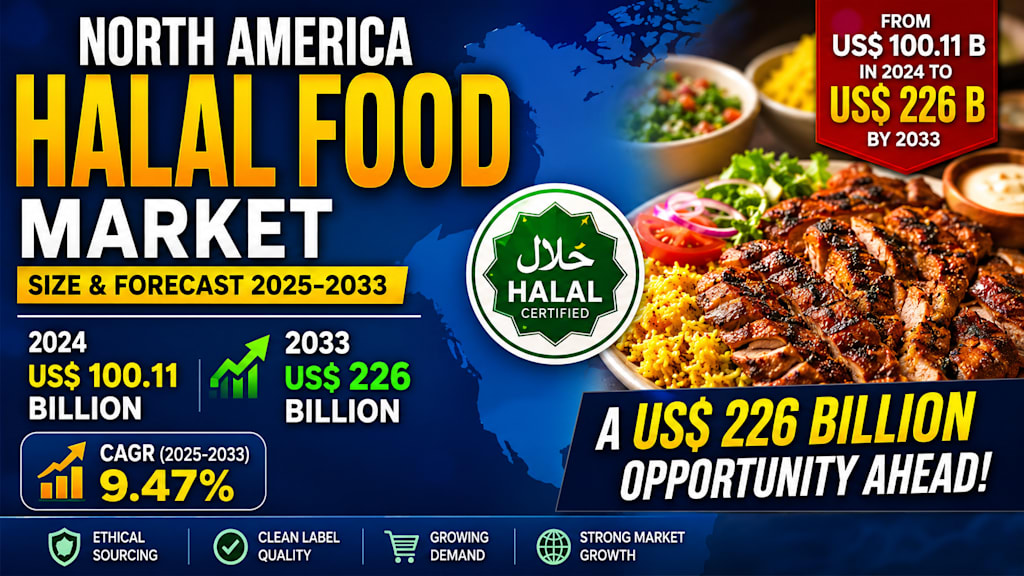
According to Renub Research, the North America Halal Food Market is projected to grow from US$ 100.11 billion in 2024 to an impressive US$ 226 billion by 2033, expanding at a CAGR of 9.47% from 2025 to 2033. This remarkable growth reflects changing consumer attitudes toward food quality, traceability, sustainability, and ethical sourcing.
The halal food sector’s evolution is being accelerated by urbanization, multiculturalism, stronger halal certification systems, and the growing influence of digital retail channels. At the same time, major food brands and retailers are recognizing halal products as a profitable and long-term business opportunity rather than merely a specialty segment.
Halal Food Becomes Mainstream in North America
Halal food refers to products prepared according to Islamic dietary laws, emphasizing cleanliness, humane animal treatment, and the exclusion of prohibited ingredients such as pork and alcohol. While religious observance remains the primary driver among Muslim consumers, halal food is increasingly attracting non-Muslim buyers who associate it with better hygiene standards, ethical production, and premium quality.
The United States alone is home to more than 3.5 million Muslims, while Canada’s Muslim population is also growing rapidly. As these communities expand, demand for halal-certified meat, poultry, dairy products, snacks, beverages, and ready-to-eat meals continues to rise steadily.
Mainstream supermarkets, hypermarkets, convenience stores, and online grocery platforms are responding by increasing halal product availability. Restaurants and fast-food chains are also adapting their menus to serve halal options, especially in urban centers such as New York, Toronto, Chicago, Houston, and Los Angeles.
This shift reflects a broader movement toward inclusivity and cultural diversity in the food industry.
Ethical and Clean-Label Consumption Drives Market Growth
One of the strongest growth drivers for the halal food market is the increasing preference for clean-label and ethically produced food. Consumers today want transparency regarding ingredients, sourcing, processing, and animal welfare.
Halal-certified foods often align naturally with these expectations because they emphasize:
Ethical animal treatment
Strict hygiene practices
Ingredient transparency
Quality assurance
Food safety standards
As awareness around sustainable consumption grows, halal products are becoming more attractive to younger demographics and wellness-focused consumers.
The clean-label movement has also encouraged companies to innovate with healthier halal offerings, including organic products, plant-based halal foods, and minimally processed snacks. This diversification is helping halal food brands appeal to broader audiences beyond traditional buyers.
Retail Expansion and E-Commerce Strengthen Accessibility
Retail availability has become one of the key catalysts for market expansion. Major grocery chains across North America are increasing shelf space for halal-certified products to meet growing customer demand.
Consumers can now find halal meat, frozen meals, dairy items, confectionery products, sauces, and beverages in mainstream supermarkets rather than relying solely on specialty stores.
E-commerce has further accelerated accessibility. Online grocery platforms and direct-to-consumer food delivery services are enabling halal food brands to reach customers living in smaller towns and underserved regions.
Digital retail has also improved product visibility and consumer education. Through social media marketing, influencer partnerships, and online campaigns, companies are raising awareness about halal food benefits among wider audiences.
This omnichannel retail approach is reshaping how halal products are marketed and consumed across North America.
Certification and Regulatory Improvements Increase Consumer Confidence
The expansion of halal certification systems across North America is another major factor supporting market growth. Clearer standards and better regulatory oversight are improving consumer trust in halal-labeled products.
Organizations such as the Islamic Food and Nutrition Council of America (IFANCA) and the American Halal Foundation are playing important roles in certification, compliance, and industry awareness.
Improved certification processes help ensure:
Consistency in halal standards
Better supply chain monitoring
Product authenticity
Consumer confidence
International trade compatibility
As certification becomes more standardized, more manufacturers and restaurants are seeking halal approval to expand their customer base.
This trend is expected to continue as halal food becomes more integrated into mainstream retail and foodservice operations.
Urbanization and Cultural Diversity Influence Food Preferences
Urbanization and multicultural population growth are significantly influencing food trends across North America. Cities with large immigrant populations are driving demand for ethnic and culturally diverse cuisine, including halal foods.
Consumers today are more open to trying international flavors and authentic culinary experiences. This has created new opportunities for halal restaurants, food trucks, packaged foods, and fusion cuisine brands.
In cities like Toronto and New York, halal cuisine has become increasingly visible in fast-food chains, gourmet dining, and street food culture.
The rising popularity of Middle Eastern, South Asian, Mediterranean, and African cuisines is also supporting halal food sales. As food culture becomes more globally connected, halal products are benefiting from broader consumer curiosity and acceptance.
Challenges Continue to Impact the Industry
Despite strong growth momentum, the North America halal food industry still faces several operational and structural challenges.
Higher Production Costs
Halal-certified products often involve higher production expenses due to specialized slaughtering methods, certification requirements, and dedicated processing systems. Maintaining separation between halal and non-halal products throughout transportation and storage also increases operational costs.
These added expenses can make halal products more expensive than conventional alternatives, limiting affordability for some consumers.
Small and medium-sized businesses may struggle particularly with certification fees, facility upgrades, and compliance audits.
Distribution Limitations
Halal food availability remains uneven across North America, especially in rural and smaller communities where Muslim populations are less concentrated.
Supply chain complexity also creates logistical difficulties because halal products require careful handling to avoid contamination.
Limited distribution infrastructure can lead to inconsistent supply and lower visibility in certain markets.
However, ongoing retail expansion and e-commerce growth are gradually addressing these challenges.
United States Emerges as a Key Growth Engine
The United States represents one of the largest halal food opportunities globally due to its sizable Muslim population and increasing multicultural consumer base.
American consumers are becoming more interested in ethical food sourcing, clean-label ingredients, and global cuisines — all of which align with halal food principles.
Companies operating in the U.S. market are investing heavily in:
Halal meat processing
Packaged halal meals
Frozen halal foods
Fast-food partnerships
Digital food delivery
Retail shelf expansion
The American Halal Foundation reports that the halal industry in the United States continues to expand significantly, while IFANCA estimates that halal consumers spent nearly US$ 20 billion on food in 2020 alone.
This demonstrates the strong purchasing power and long-term growth potential of the market.
Canada Witnesses Rapid Halal Market Expansion
Canada’s halal food sector is also experiencing substantial growth driven by immigration, demographic changes, and increasing consumer awareness.
Major Canadian retailers are expanding halal product offerings, while independent halal brands continue to introduce innovative food products tailored to diverse communities.
However, Canada still faces challenges related to certification consistency, traceability, and supply chain complexity.
Despite these issues, the country’s multicultural environment and rising demand for specialty foods position the halal sector for continued long-term growth.
The market is becoming increasingly competitive as both multinational corporations and local brands seek to capitalize on growing consumer demand.
Product Segments Driving Market Performance
The North America halal food market includes a wide range of product categories that continue to evolve with changing consumer preferences.
Key segments include:
Meat, poultry, and seafood
Fruits and vegetables
Dairy products
Cereals and grains
Oils and fats
Confectionery
Ready-to-eat meals
Frozen foods
Snacks and beverages
Among these, halal meat and poultry remain dominant due to strong demand among Muslim households. However, processed foods and packaged convenience products are witnessing particularly rapid growth because of busy urban lifestyles.
The expansion of halal-certified snacks, desserts, and functional foods is also contributing to industry diversification.
Competitive Landscape Intensifies
The halal food industry in North America is becoming increasingly competitive as global food giants, regional companies, and niche halal brands expand their operations.
Companies are focusing on:
Product innovation
Strategic retail partnerships
Sustainability initiatives
Packaging improvements
E-commerce expansion
Social media branding
Supply chain transparency
Major players operating in the market include:
Nestlé SA
JBS SA
BRF SA
Kawan Food Berhad
Cargill Inc.
Carrefour SA
Crescent Foods Inc.
VegaVites
American Halal Company Inc.
American Foods Group LLC
Al Islami Foods
As competition intensifies, businesses are emphasizing authenticity, premium quality, and consumer trust to differentiate themselves.
10 Recent Developments by Leading Halal Food Companies
1. Crescent Foods Expands Retail Presence
In January 2022, Crescent Foods introduced halal-certified beef, lamb, and poultry products across H.E.B. stores in Houston, Texas, strengthening mainstream retail penetration.
2. Nestlé Expands Halal Product Portfolio
Nestlé continues increasing halal-certified offerings globally while strengthening distribution in multicultural North American markets.
3. BRF SA Enhances Global Halal Operations
BRF SA has expanded investment in halal poultry production to support rising international and North American demand.
4. Cargill Focuses on Ethical Protein Solutions
Cargill has increased efforts toward traceable and sustainable protein supply chains aligned with halal food expectations.
5. American Halal Company Strengthens Branding
The company continues expanding product awareness through modern packaging and broader online availability.
6. Al Islami Foods Expands Export Reach
Al Islami Foods has increased international distribution efforts targeting North American halal consumers.
7. Kawan Food Berhad Diversifies Frozen Halal Offerings
Kawan Food has expanded its halal frozen food range to serve multicultural urban markets.
8. VegaVites Targets Health-Conscious Consumers
VegaVites is focusing on plant-based and wellness-oriented halal food innovation.
9. JBS SA Expands Halal Meat Processing
JBS continues strengthening halal meat production capabilities to support export and domestic demand.
10. Retailers Increase Dedicated Halal Sections
Major supermarkets across the United States and Canada are expanding halal shelf space to improve accessibility and attract diverse customer groups.
Final Thoughts
The North America halal food market is evolving from a specialized religious segment into a mainstream food category driven by ethical consumption, cultural diversity, and clean-label preferences.
With the market expected to surpass US$ 226 billion by 2033, opportunities for manufacturers, retailers, restaurants, and investors are expanding rapidly.
As awareness increases and halal products become more accessible through supermarkets and digital platforms, the industry is likely to witness sustained innovation and broader consumer acceptance.
Companies that prioritize authenticity, transparency, sustainability, and convenience will be best positioned to succeed in this highly dynamic and fast-growing market.
The future of halal food in North America is no longer limited to serving a single demographic — it is becoming an integral part of the region’s modern food ecosystem.
About the Creator
Enjoyed the story? Support the Creator.
Subscribe for free to receive all their stories in your feed.
Comments
There are no comments for this story
Be the first to respond and start the conversation.