
North America Christmas Tree Market Set to Reach US$ 1.91 Billion by 2033 as Sustainability and Holiday Traditions Drive Demand
Natural and artificial Christmas trees continue to thrive across the United States, Canada, and Mexico, supported by evolving consumer preferences, eco-conscious purchasing, and festive cultural traditions.

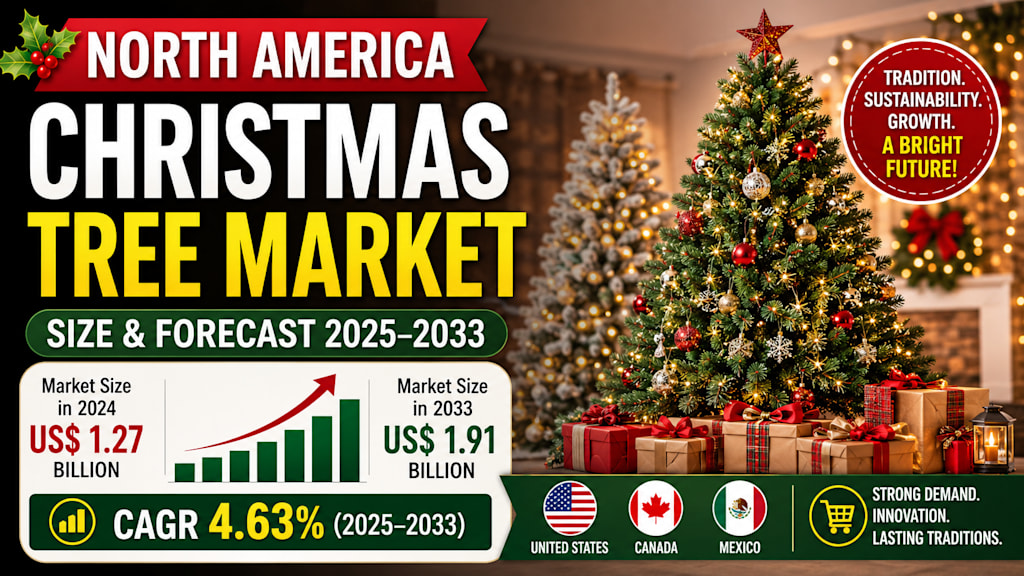
The North America Christmas Tree Market is experiencing steady and sustainable growth as consumers continue to embrace one of the most cherished holiday traditions. According to Renub Research, the North America Christmas Tree Market is projected to grow from US$ 1.27 billion in 2024 to US$ 1.91 billion by 2033, expanding at a CAGR of 4.63% between 2025 and 2033.
The market's expansion reflects more than seasonal purchasing patterns. It highlights the intersection of cultural traditions, environmental awareness, product innovation, and changing consumer lifestyles. From freshly harvested natural trees to technologically enhanced pre-lit artificial trees, the Christmas tree industry continues to evolve while remaining deeply rooted in holiday celebrations across North America.
Christmas Trees Remain at the Heart of Holiday Celebrations
For millions of households throughout North America, decorating a Christmas tree remains one of the most meaningful traditions of the holiday season. Families often view tree decorating as a symbolic beginning of Christmas festivities, creating emotional connections that drive annual purchasing decisions.
The market benefits from strong cultural significance across the United States, Canada, and Mexico. Whether displayed in homes, shopping centers, hotels, offices, or public venues, Christmas trees continue to play a central role in festive celebrations.
Retailers and tree growers capitalize on this emotional connection through seasonal marketing campaigns, early-bird promotions, and customized offerings that encourage consumer engagement. Social media has also amplified demand as families increasingly share holiday decorating experiences online, inspiring others to invest in unique and visually appealing Christmas trees.
As holiday traditions remain deeply embedded within North American culture, the Christmas tree market enjoys a stable foundation for long-term growth.
Natural Christmas Trees Continue to Attract Eco-Conscious Consumers
Natural Christmas trees remain a vital segment of the North American market. Many consumers prefer real trees because of their authentic appearance, natural fragrance, and environmental benefits.
Growing awareness about sustainability has encouraged environmentally conscious shoppers—particularly younger generations—to choose natural trees sourced from local farms. Real Christmas trees are biodegradable, recyclable, and renewable resources that contribute positively to carbon sequestration during their growth cycle.
Industry estimates indicate that millions of real Christmas trees are sold annually throughout the United States. Tree farms contribute significantly to rural economies while supporting sustainable agricultural practices and biodiversity conservation.
Consumers increasingly appreciate knowing that many Christmas tree farms replant trees after harvest, creating a renewable production cycle that aligns with broader environmental objectives.
Additionally, online ordering options and farm-to-home delivery services have simplified the purchasing process, making natural trees more accessible than ever before.
Artificial Trees Gain Popularity Through Convenience and Innovation
While natural trees remain popular, artificial Christmas trees continue to capture a growing share of the market.
Today's artificial trees bear little resemblance to earlier generations of products. Manufacturers now offer highly realistic designs featuring advanced branch structures, lifelike needles, integrated lighting systems, and customizable decorative options.
Pre-lit models have become especially attractive to busy households seeking convenience during the holiday season. These products eliminate the need for stringing lights and reduce setup time significantly.
Consumers also appreciate the long-term value proposition of artificial trees. Although initial purchase prices may be higher, many families view them as cost-effective investments due to their durability and reusability over multiple years.
Urban residents, apartment dwellers, and individuals with allergies frequently favor artificial trees because they require minimal maintenance and produce no shedding needles.
As manufacturers continue introducing innovative designs, color themes, slim-profile trees, and smart lighting technologies, artificial trees are expected to remain a major contributor to market growth.
Sustainability Is Reshaping Consumer Purchasing Decisions
Environmental considerations are increasingly influencing Christmas tree purchasing decisions across North America.
Consumers are paying greater attention to product sourcing, sustainability certifications, recycling programs, and overall environmental impact. Many buyers actively seek locally grown trees to reduce transportation emissions and support regional economies.
Municipal recycling initiatives have also strengthened the appeal of natural trees. Many cities offer post-holiday tree collection and composting programs, helping consumers dispose of trees responsibly.
Artificial tree manufacturers are responding as well. Companies are exploring recyclable materials, longer product lifespans, and environmentally responsible manufacturing processes to address sustainability concerns.
This shift toward green consumerism is creating new opportunities for both natural and artificial tree suppliers to differentiate themselves in a competitive marketplace.
Commercial Demand Expands Market Opportunities
Beyond residential consumers, commercial buyers represent an increasingly important segment of the North American Christmas tree market.
Hotels, shopping malls, restaurants, corporate offices, entertainment venues, and municipalities invest heavily in holiday decorations to attract visitors and enhance customer experiences.
Large-scale Christmas displays often feature premium natural trees or high-end artificial installations that serve as focal points for seasonal events and celebrations.
Commercial customers typically prioritize durability, visual impact, safety features, and ease of installation, driving demand for specialized products and professional decorating services.
As experiential marketing and festive destination shopping continue growing, commercial Christmas tree demand is expected to remain strong throughout the forecast period.
Labor Shortages Create Challenges for Natural Tree Growers
Despite positive growth prospects, the industry faces several operational challenges.
Natural Christmas tree farming requires substantial labor throughout the production cycle, including planting, pruning, harvesting, transportation, and distribution.
Across North America, agricultural labor shortages have become increasingly problematic. Growers in major production regions often struggle to secure sufficient seasonal workers during critical harvesting periods.
The lengthy growth cycle of Christmas trees presents an additional challenge. Depending on species and desired size, trees may require seven to ten years to reach market readiness. This extended timeline limits growers' ability to respond quickly to shifts in demand.
Rising labor costs, land prices, and agricultural inputs further increase production expenses, creating pricing pressures throughout the supply chain.
Climate Change Threatens Long-Term Production Stability
Climate change represents one of the most significant long-term risks facing the Christmas tree industry.
Extreme weather events, drought conditions, changing precipitation patterns, and rising temperatures can negatively impact tree growth and survival rates.
Producers across North America are increasingly reporting challenges related to pest infestations, disease outbreaks, and weather-related crop damage.
Wildfires, severe storms, and prolonged heatwaves have affected some major growing regions, disrupting production and increasing operational costs.
To adapt, many growers are investing in improved irrigation systems, climate-resilient tree varieties, and advanced farm management techniques designed to enhance long-term sustainability.
The industry's ability to navigate environmental uncertainty will play a critical role in future market stability.
United States Leads the Regional Market
The United States remains the largest Christmas tree market in North America.
States such as Oregon, North Carolina, Michigan, Pennsylvania, and Washington serve as major production hubs for natural Christmas trees. These regions supply millions of trees annually to domestic and international markets.
Strong consumer spending during the holiday season, widespread cultural participation in Christmas traditions, and extensive retail distribution networks support market growth.
The rise of e-commerce has further strengthened sales by enabling consumers to purchase both natural and artificial trees online with convenient home delivery options.
Although labor shortages and climate-related risks persist, the United States continues to dominate regional market revenues and production capacity.
Canada Strengthens Its Position Through Exports and Sustainability
Canada plays a critical role in the North American Christmas tree industry.
Provinces including Quebec, Nova Scotia, and British Columbia are recognized for high-quality Christmas tree production and significant export activity, particularly to the United States.
Canadian consumers demonstrate strong preferences for locally sourced products and sustainable farming practices, helping support domestic producers.
The market also benefits from growing online sales channels and increasing demand for premium tree varieties.
Environmental stewardship remains a major selling point for Canadian producers, who frequently emphasize responsible cultivation methods and renewable farming practices.
Mexico Emerges as a Growing Market
Mexico represents an emerging growth opportunity within the North American Christmas tree industry.
Rising disposable incomes, urbanization, and expanding middle-class populations are contributing to increased holiday spending.
Artificial trees currently dominate urban markets due to affordability, durability, and ease of storage. However, demand for natural trees is gradually increasing as consumers seek more authentic holiday experiences.
Local production initiatives, government forestry support programs, and imports from the United States and Canada help meet growing consumer demand.
As modern retail infrastructure and e-commerce adoption continue expanding, Mexico is expected to contribute meaningfully to regional market growth throughout the forecast period.
Competitive Landscape
The North American Christmas tree market remains highly competitive, with companies focusing on product innovation, sustainability initiatives, digital sales channels, and premium customer experiences.
Major industry participants include:
- National Tree Company
- Balsam Hill
- Vickerman Company
- Oncor Recycled Trees
- Tree Classics
- Treetime
- King of Christmas
- Puleo International
- Hallmark Licensing, LLC
These companies continue investing in design innovation, pre-lit technologies, eco-friendly materials, and omnichannel retail strategies to strengthen market positions.
Recent Developments in the Christmas Tree Industry
Balsam Hill expanded its premium pre-lit tree portfolio featuring enhanced LED technology and realistic branch construction.
King of Christmas introduced smart-enabled lighting systems that allow users to customize tree illumination via mobile applications.
National Tree Company broadened its online distribution partnerships to improve holiday season delivery capabilities.
Puleo International launched new space-saving slim tree collections targeting urban consumers and apartment residents.
Tree Classics expanded luxury artificial tree offerings with highly realistic foliage and customizable designs.
Vickerman Company enhanced its commercial-grade holiday décor portfolio for corporate and hospitality customers.
Multiple North American growers increased adoption of sustainable farming certifications to meet eco-conscious consumer demand.
Several tree farms introduced direct-to-consumer e-commerce platforms offering home delivery of freshly cut natural trees.
Canadian producers strengthened export programs to support rising demand across U.S. retail markets.
Industry participants increased investments in recyclable packaging and environmentally responsible product materials.
Final Thoughts
The North America Christmas Tree Market demonstrates how tradition and innovation can coexist successfully within a mature seasonal industry. While holiday customs continue to drive annual demand, evolving consumer preferences are reshaping the market through sustainability initiatives, technological enhancements, and changing purchasing behaviors.
With the market expected to grow from US$ 1.27 billion in 2024 to US$ 1.91 billion by 2033, businesses that embrace environmental responsibility, product innovation, and digital engagement are likely to capture the greatest opportunities.
As families across North America continue celebrating cherished holiday traditions, the Christmas tree industry remains well-positioned for steady growth, ensuring that festive decorations continue bringing warmth, joy, and seasonal spirit to millions of homes and communities every year.
About the Creator
Enjoyed the story? Support the Creator.
Subscribe for free to receive all their stories in your feed.
Comments
There are no comments for this story
Be the first to respond and start the conversation.