
North America Balloon Catheter Market to Reach US$ 2.75 Billion by 2033 Amid Rising Cardiovascular Procedures
Growing demand for minimally invasive treatments, aging population, and innovations in drug-eluting balloon technology are accelerating market expansion across the United States, Canada, and Mexico

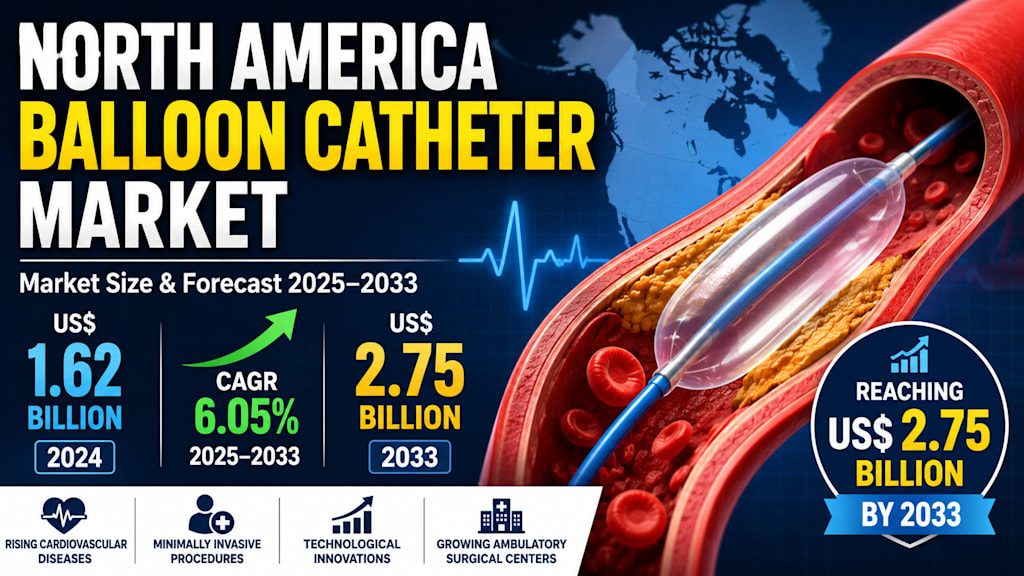
The North America Balloon Catheter Market is witnessing strong momentum as cardiovascular diseases continue to rise across the region. According to Renub Research, the market is projected to increase from US$ 1.62 billion in 2024 to US$ 2.75 billion by 2033, growing at a CAGR of 6.05% during 2025–2033. The growing preference for minimally invasive procedures, technological advancements in angioplasty devices, and the increasing burden of coronary artery disease are among the major factors fueling market growth.
Balloon catheters have become a critical component in modern cardiovascular treatments, especially during angioplasty procedures used to open blocked or narrowed arteries. Hospitals and specialty clinics across North America are increasingly relying on advanced balloon catheter systems to improve patient outcomes, reduce recovery times, and lower surgical risks.
The healthcare sector in North America continues to evolve rapidly, driven by medical innovation, rising healthcare spending, and increasing awareness regarding cardiovascular health. As a result, balloon catheter technologies are experiencing widespread adoption in hospitals, ambulatory surgical centers, and diagnostic facilities.
Rising Cardiovascular Diseases Continue to Drive Demand
One of the strongest growth drivers for the North America Balloon Catheter Market is the increasing prevalence of cardiovascular diseases (CVDs). Conditions such as coronary artery disease (CAD), peripheral artery disease (PAD), and hypertension are becoming more common due to aging populations, obesity, diabetes, and sedentary lifestyles.
Heart disease remains one of the leading causes of death in the United States. According to the data highlighted in the report, cardiovascular disease claims a life every 33 seconds in the U.S., creating an urgent need for effective treatment procedures such as angioplasty and stenting.
Balloon catheters play a crucial role during angioplasty by expanding narrowed blood vessels and restoring blood flow. As cardiovascular disease cases rise across North America, healthcare facilities are increasing investments in advanced catheter technologies to support growing patient volumes.
The increasing number of at-risk patients is also encouraging healthcare providers to adopt early intervention procedures. This trend is significantly boosting the use of minimally invasive cardiovascular devices, including balloon catheters.
Technological Advancements Are Transforming the Market
Innovation remains a major factor shaping the future of the balloon catheter industry. Medical device manufacturers are introducing highly advanced catheter systems designed to improve procedural efficiency and patient outcomes.
Drug-eluting balloon catheters are gaining strong popularity due to their ability to reduce restenosis risks following angioplasty procedures. These devices release medication directly into the artery wall, helping prevent artery re-narrowing after treatment.
Additionally, cutting balloon catheters and scoring balloon catheters are improving precision during complex cardiovascular procedures. These advanced technologies are especially beneficial for calcified lesions and difficult arterial blockages.
Manufacturers are also focusing on improving catheter flexibility, trackability, and durability. Innovations in raw materials such as polyurethane and nylon are helping companies develop lightweight yet highly effective balloon systems suitable for various medical applications.
Artificial intelligence integration and imaging-assisted catheter navigation technologies are further expected to create new opportunities in the market over the next decade.
Minimally Invasive Procedures Gain Strong Popularity
The healthcare industry’s shift toward minimally invasive treatment methods is creating substantial demand for balloon catheters across North America.
Patients increasingly prefer procedures that involve shorter hospital stays, lower infection risks, and faster recovery times. Balloon catheter-based interventions align perfectly with these expectations, making them highly preferred in cardiovascular treatment settings.
Healthcare providers are also favoring minimally invasive procedures because they reduce operational costs while improving patient satisfaction rates. This trend has accelerated the use of angioplasty balloons in hospitals and outpatient care facilities.
As healthcare systems continue to prioritize efficient treatment pathways, balloon catheter adoption is expected to rise steadily throughout the forecast period.
Expansion of Ambulatory Surgical Centers Supports Market Growth
The growing number of ambulatory surgical centers (ASCs) across North America is contributing significantly to the expansion of the balloon catheter market.
ASCs provide cost-effective alternatives to traditional hospitals while offering high-quality outpatient surgical care. These facilities are increasingly performing cardiovascular procedures that previously required lengthy hospital admissions.
Balloon catheter procedures are especially suitable for ASCs because of their minimally invasive nature and reduced recovery requirements. Patients benefit from shorter treatment durations and quicker discharge times.
The expansion of ASCs is particularly noticeable in the United States, where healthcare providers are seeking ways to reduce treatment costs without compromising quality. This transition is expected to generate substantial demand for balloon catheter technologies over the coming years.
High Device Costs Remain a Market Challenge
Despite strong growth opportunities, the balloon catheter market faces several important challenges. One of the primary obstacles is the high cost associated with advanced balloon catheter systems.
Drug-eluting balloon catheters and specialty angioplasty devices are often significantly more expensive than traditional treatment alternatives. Smaller hospitals and healthcare facilities with limited budgets may struggle to adopt premium catheter technologies.
Patients without sufficient insurance coverage may also face financial barriers when accessing advanced cardiovascular treatments. These cost concerns can limit the widespread adoption of innovative devices, particularly in economically sensitive healthcare environments.
Manufacturers are therefore focusing on improving production efficiency and expanding affordable product lines to address pricing concerns and increase accessibility.
Skilled Workforce Requirements May Limit Adoption
Another major challenge impacting market growth is the requirement for highly trained healthcare professionals capable of performing balloon catheter procedures successfully.
Complex angioplasty procedures demand significant expertise, precision, and technical knowledge. Smaller healthcare facilities, especially in rural regions, may face shortages of trained cardiologists and interventional specialists.
The lack of adequate infrastructure and skilled personnel can restrict the adoption of advanced catheter technologies in certain areas. Continuous medical education and training programs are becoming increasingly important to support long-term market expansion.
Healthcare organizations across North America are investing heavily in physician training and procedural simulation technologies to address this issue.
United States Dominates the Regional Market
The United States remains the largest contributor to the North America Balloon Catheter Market due to its advanced healthcare infrastructure, strong reimbursement systems, and high cardiovascular disease burden.
The country performs a large volume of angioplasty procedures annually, creating substantial demand for balloon catheter products. The presence of major medical device manufacturers and ongoing clinical research activities further strengthen market growth.
Additionally, favorable government healthcare initiatives and rising awareness regarding cardiovascular health continue to support industry expansion.
The adoption of technologically advanced catheter systems is particularly high in the United States, positioning the country as a major innovation hub within the global cardiovascular device industry.
Canada Witnessing Steady Market Expansion
Canada is experiencing consistent growth in the balloon catheter market, supported by improvements in healthcare infrastructure and increasing cardiovascular disease prevalence.
The country’s strong public healthcare system and growing investments in minimally invasive treatment technologies are encouraging broader adoption of balloon catheter procedures.
Canadian hospitals and specialty clinics are increasingly utilizing advanced angioplasty devices to improve patient outcomes and reduce treatment complications.
The growing popularity of outpatient care and ambulatory surgical centers is also helping expand the use of balloon catheter systems across Canada.
Mexico Emerging as a High-Potential Market
Mexico is gradually becoming an important market for balloon catheter technologies due to rising healthcare investments and increasing awareness regarding cardiovascular care.
The country is witnessing growing demand for minimally invasive procedures as healthcare accessibility improves. Hospitals and medical centers are adopting modern catheter systems to support rising patient volumes and improve treatment quality.
Although challenges such as pricing constraints and infrastructure limitations remain, ongoing healthcare modernization initiatives are expected to create favorable growth opportunities in the Mexican market.
Competitive Landscape Remains Highly Dynamic
The North America Balloon Catheter Market is highly competitive, with major global medical device companies actively investing in research, development, and product innovation.
Leading players are focusing on expanding their product portfolios, improving catheter performance, and strengthening strategic partnerships with healthcare providers.
Companies are also increasing investments in next-generation technologies such as drug-coated balloons, specialty angioplasty systems, and image-guided catheter platforms.
The report highlights key industry participants including:
- Abbott Laboratories
- Medtronic Plc.
- B. Braun Melsungen AG
- Terumo Corporation
- Cordis Corporation
- Becton Dickinson and Company
- Cardinal Health
- Stryker Corporation
10 Recent Developments by Major Companies
1. Abbott Laboratories
Abbott expanded its cardiovascular device portfolio by introducing enhanced imaging-assisted angioplasty technologies designed to improve procedural precision during balloon catheter interventions.
2. Medtronic Plc.
Medtronic continued investments in drug-coated balloon research to strengthen treatment effectiveness for peripheral artery disease patients across North America.
3. Terumo Corporation
Terumo introduced advanced low-profile balloon catheter systems focused on improving flexibility and navigation during complex coronary procedures.
4. B. Braun Melsungen AG
B. Braun strengthened its minimally invasive cardiovascular solutions portfolio by expanding production capabilities for specialty balloon catheters.
5. Cordis Corporation
Cordis accelerated innovation in peripheral intervention devices with new angioplasty balloon platforms designed for challenging vascular lesions.
6. Becton Dickinson and Company
BD increased investments in catheter manufacturing technologies to improve procedural safety and optimize clinical performance.
7. Cardinal Health
Cardinal Health expanded distribution partnerships with healthcare providers to improve access to advanced cardiovascular treatment devices.
8. Stryker Corporation
Stryker focused on strategic healthcare collaborations aimed at expanding minimally invasive treatment solutions within North American hospitals.
9. Abbott Laboratories
Abbott continued clinical studies evaluating next-generation balloon catheter technologies designed to reduce restenosis risks and improve long-term patient outcomes.
10. Medtronic Plc.
Medtronic strengthened physician training initiatives across North America to support broader adoption of advanced angioplasty procedures.
Final Thoughts
The North America Balloon Catheter Market is entering a period of sustained expansion as cardiovascular disease rates continue to rise and healthcare providers increasingly embrace minimally invasive treatment approaches.
Technological innovation, expanding ambulatory surgical centers, and growing investments in advanced cardiovascular care are expected to remain major market growth drivers through 2033. While challenges such as high device costs and workforce limitations persist, ongoing research and healthcare modernization efforts are likely to create substantial opportunities for industry participants.
As the region continues prioritizing early diagnosis, effective intervention, and patient-centered care, balloon catheter technologies are expected to play a central role in the future of cardiovascular treatment across North America.
About the Creator
Enjoyed the story? Support the Creator.
Subscribe for free to receive all their stories in your feed.
Comments
There are no comments for this story
Be the first to respond and start the conversation.