
Non-Invasive Prenatal Testing Market to Reach US$14.64 Billion by 2034 as Safer Genetic Screening Becomes the Global Standard
Growing maternal age, advances in genetic sequencing, rising awareness of prenatal health, and expanding government support are accelerating the adoption of non-invasive prenatal testing worldwide.

Non-Invasive Prenatal Testing Is Transforming Modern Prenatal Care
Advances in medical science have dramatically improved prenatal healthcare, enabling physicians to detect genetic abnormalities earlier and with greater accuracy than ever before. Among the most significant breakthroughs is Non-Invasive Prenatal Testing (NIPT), a revolutionary screening method that analyzes fetal DNA circulating in the mother's bloodstream without exposing the pregnancy to the risks associated with invasive diagnostic procedures.
Unlike traditional procedures such as amniocentesis or chorionic villus sampling, NIPT requires only a simple maternal blood sample, making it both safe and highly accurate. As awareness of prenatal health continues to grow and more women choose to delay pregnancy, healthcare providers increasingly recommend NIPT as part of comprehensive prenatal care.
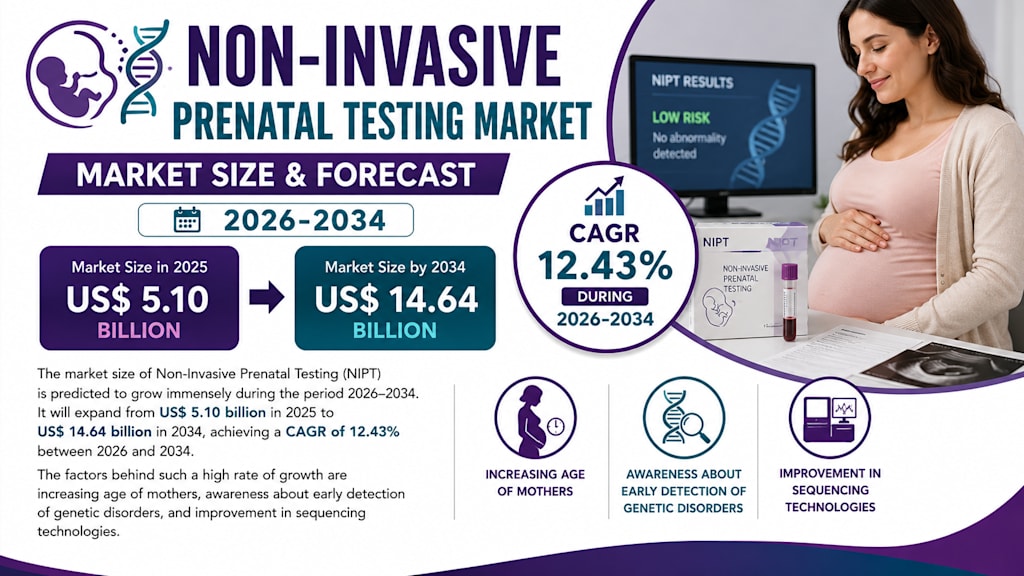
According to the latest market outlook, the Global Non-Invasive Prenatal Testing Market is expected to grow from US$5.10 billion in 2025 to US$14.64 billion by 2034, registering a compound annual growth rate (CAGR) of 12.43% during 2026–2034. Rising maternal age, rapid improvements in sequencing technology, and growing awareness of early genetic screening are expected to drive substantial market expansion over the coming decade.
Understanding Non-Invasive Prenatal Testing
Non-Invasive Prenatal Testing is an advanced prenatal screening technique that analyzes fragments of fetal DNA present in the mother's bloodstream after approximately the tenth week of pregnancy.
The test helps identify chromosomal abnormalities including Down syndrome (Trisomy 21), Edwards syndrome (Trisomy 18), Patau syndrome (Trisomy 13), and several sex chromosome disorders.
Because the procedure requires only a maternal blood sample, it eliminates many of the risks associated with invasive prenatal diagnostic procedures while providing highly reliable screening results.
Healthcare providers increasingly use NIPT as an early screening tool that helps parents and physicians make informed decisions regarding pregnancy management and follow-up care.
Rising Maternal Age Drives Market Growth
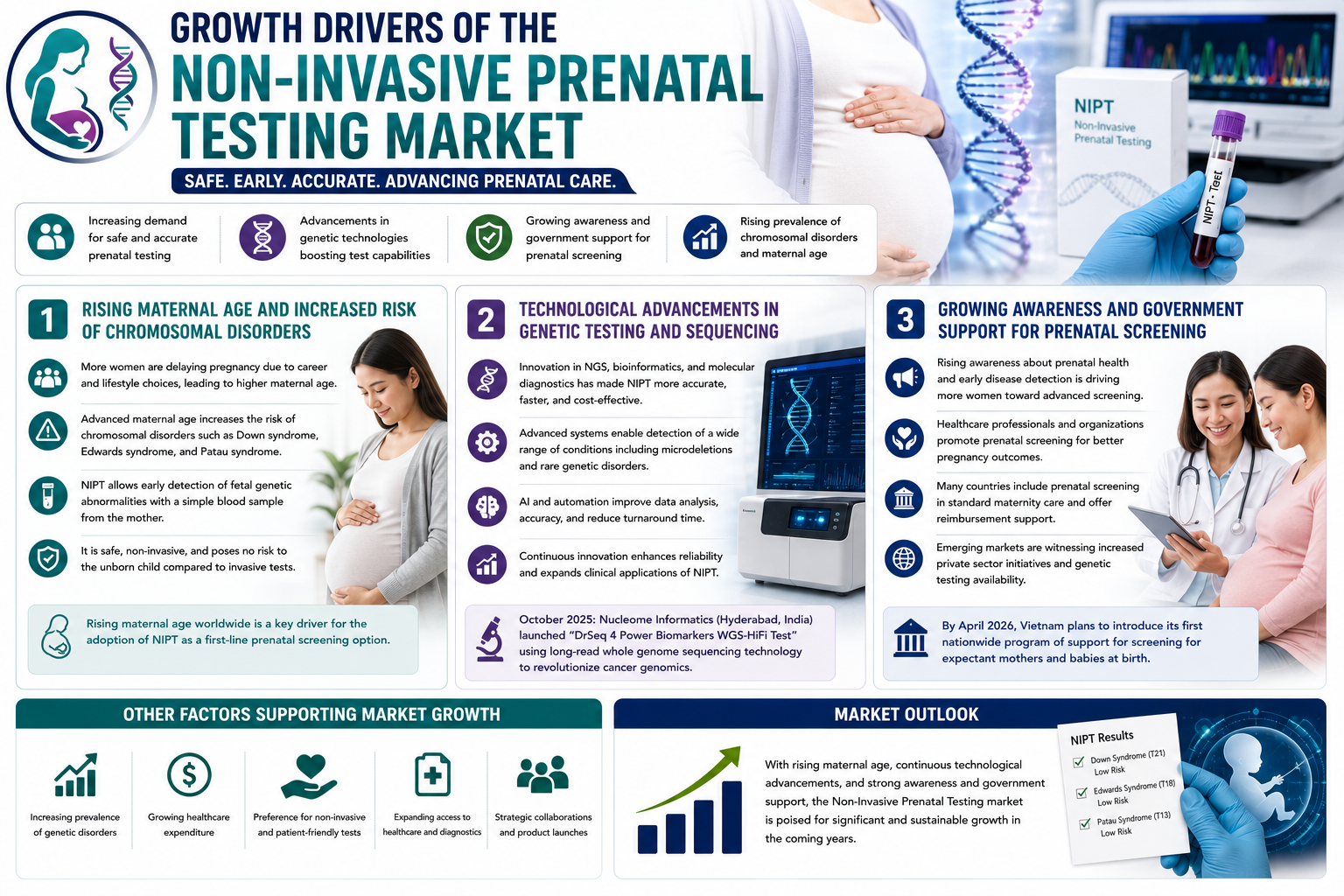
One of the strongest factors supporting the rapid expansion of the NIPT market is the increasing average age of expectant mothers.
Across many countries, women are choosing to have children later in life because of higher education, career development, financial planning, and changing lifestyles.
However, pregnancies among women aged 35 years and older carry a greater risk of chromosomal abnormalities.
As a result, physicians increasingly recommend advanced prenatal screening technologies capable of identifying genetic disorders during early pregnancy.
NIPT provides expectant parents with valuable information while avoiding unnecessary procedural risks, making it an increasingly preferred screening option worldwide.
Next-Generation Sequencing Improves Diagnostic Accuracy
Technological innovation has transformed prenatal genetic screening.
Advances in next-generation sequencing (NGS), molecular diagnostics, laboratory automation, and bioinformatics have significantly improved the accuracy, speed, and affordability of NIPT.
Modern testing platforms can detect not only common chromosomal abnormalities but also certain microdeletions, sex chromosome aneuploidies, and rare genetic conditions.
Artificial intelligence is also enhancing laboratory workflows by improving data interpretation and reducing reporting times.
These technological improvements continue expanding the clinical applications of NIPT while increasing physician confidence in screening results.
Growing Awareness Supports Early Screening
Healthcare professionals, governments, and maternal health organizations continue emphasizing the importance of early prenatal screening.
Educational campaigns encourage pregnant women to undergo genetic screening as part of routine prenatal care to improve pregnancy outcomes and facilitate early medical intervention whenever necessary.
Greater public awareness has increased acceptance of advanced prenatal testing across both developed and emerging healthcare markets.
Improved healthcare access and expanded prenatal counseling services further encourage expectant mothers to utilize modern screening technologies.
As awareness continues increasing globally, NIPT adoption is expected to accelerate further.
Government Support Encourages Adoption
Many governments continue strengthening prenatal healthcare programs through reimbursement policies and expanded screening initiatives.
Several developed countries have incorporated prenatal genetic screening into standard maternity care, making advanced testing more accessible to eligible patients.
Healthcare authorities also continue investing in laboratory infrastructure and genetic counseling services that improve the availability of prenatal diagnostics.
Meanwhile, private healthcare providers in emerging markets increasingly offer NIPT as awareness of prenatal health continues expanding.
Supportive healthcare policies remain an important contributor to market growth.
NIPT Instruments Continue Advancing
Sophisticated laboratory instruments represent one of the fastest-growing segments within the NIPT industry.
Next-generation sequencing systems, PCR platforms, automated sample processing equipment, and molecular diagnostic analyzers enable laboratories to perform highly accurate genetic screening efficiently.
Continuous improvements in automation have increased laboratory throughput while reducing turnaround times and improving operational efficiency.
Healthcare organizations continue investing in advanced diagnostic equipment capable of supporting expanding prenatal testing volumes.
NIPT Services Experience Rapid Growth
Laboratory testing services continue representing a significant share of the NIPT market.
Many hospitals and healthcare providers prefer outsourcing prenatal genetic testing to specialized laboratories rather than establishing expensive in-house sequencing facilities.
These service providers manage sample collection, DNA sequencing, data interpretation, reporting, and genetic counseling.
The increasing popularity of telemedicine and digital healthcare has further expanded patient access to specialized prenatal testing services.
Growing demand for accurate and convenient testing continues supporting this market segment.
Edwards Syndrome Screening Gains Importance
Among various clinical applications, screening for Edwards Syndrome (Trisomy 18) continues experiencing strong growth.
This severe chromosomal disorder is associated with significant developmental abnormalities and high fetal mortality rates.
Early identification enables physicians and families to receive appropriate counseling, conduct confirmatory testing when necessary, and plan pregnancy management more effectively.
As awareness regarding chromosomal disorders continues increasing, demand for highly accurate prenatal screening solutions is expected to remain strong.
Diagnostic Laboratories Expand Their Role
Specialized diagnostic laboratories play a critical role within the global NIPT ecosystem.
These laboratories utilize advanced sequencing technologies and molecular diagnostic platforms to analyze thousands of prenatal samples with exceptional accuracy.
High-volume testing allows laboratories to improve operational efficiency while reducing overall testing costs for healthcare providers.
Investments in laboratory automation, artificial intelligence, and quality assurance continue strengthening diagnostic capabilities worldwide.
High Testing Costs Remain a Challenge
Despite its significant clinical advantages, NIPT remains relatively expensive in many countries.
Advanced sequencing technologies, specialized laboratory equipment, and highly trained personnel contribute to higher testing costs compared with conventional prenatal screening methods.
Limited insurance coverage and insufficient reimbursement policies restrict access for many patients, particularly within developing economies.
Expanding affordability remains one of the industry's primary long-term objectives.
Ethical and Regulatory Considerations Continue
Ethical concerns remain an important aspect of prenatal genetic testing.
Because NIPT provides detailed genetic information regarding a developing fetus, governments continue establishing regulations designed to prevent misuse, including gender selection in regions where such practices are prohibited.
Healthcare professionals also emphasize comprehensive genetic counseling to ensure patients understand screening results and avoid unnecessary anxiety or misunderstanding.
Regulatory approval processes for new testing technologies continue requiring rigorous scientific validation before commercial adoption.
Regional Markets Continue Expanding
The United States remains one of the world's largest NIPT markets due to advanced healthcare infrastructure, increasing maternal age, strong reimbursement support, and widespread awareness of prenatal screening.
Germany continues experiencing significant market growth through high-quality healthcare services, insurance support, and increasing acceptance of preventive prenatal care.
China has emerged as one of the fastest-growing markets as government investment in maternal healthcare, improved sequencing technologies, and increasing awareness encourage broader adoption.
Saudi Arabia also continues strengthening its NIPT market through expanding healthcare infrastructure, rising demand for precision medicine, and growing emphasis on maternal and child healthcare.
Together, these regional markets continue driving worldwide adoption of advanced prenatal genetic screening.
The Future of Non-Invasive Prenatal Testing
The future of NIPT will be shaped by continuous advances in genomic medicine, artificial intelligence, laboratory automation, and personalized healthcare.
Future testing platforms are expected to identify an even broader range of genetic conditions while delivering faster results and greater affordability.
Artificial intelligence will continue improving data analysis, reducing laboratory workloads, and enhancing diagnostic precision.
As genomic technologies become increasingly integrated into routine maternity care, NIPT is expected to become a standard component of prenatal healthcare worldwide.
Final Thoughts
The global Non-Invasive Prenatal Testing market is entering a period of exceptional growth as healthcare providers increasingly prioritize early diagnosis, maternal safety, and precision medicine.
The projected expansion from US$5.10 billion in 2025 to US$14.64 billion by 2034, supported by a 12.43% CAGR, reflects rising awareness of prenatal health, technological innovation, and increasing adoption of advanced genetic screening worldwide.
Although high testing costs, regulatory complexities, and ethical considerations remain important challenges, continued investment in sequencing technologies, laboratory infrastructure, and personalized healthcare positions the NIPT industry for strong long-term growth. As prenatal medicine continues evolving, non-invasive prenatal testing is expected to become an indispensable tool for ensuring healthier pregnancies and improving outcomes for families across the globe.
About the Creator
Enjoyed the story? Support the Creator.
Subscribe for free to receive all their stories in your feed.
Comments
There are no comments for this story
Be the first to respond and start the conversation.