
Netherlands Lingerie Market 2026: Premiumisation Surge, Sustainable Intimates & Digital Disruption
How conscious luxury, seamless innovation and a rapid e commerce shift are reshaping the Netherlands' near €15 billion lingerie sector

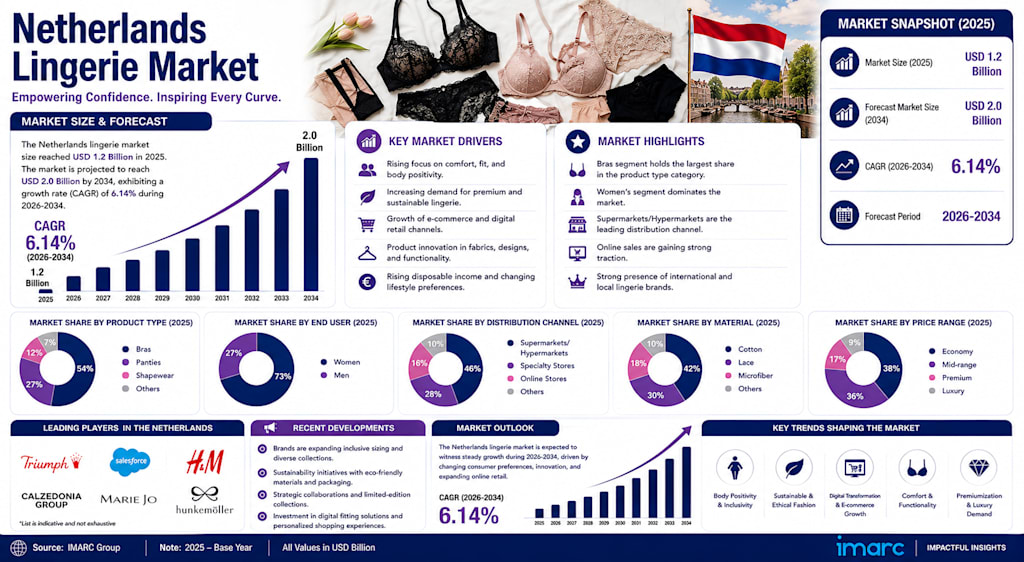
The Netherlands lingerie market is undergoing a quiet but decisive evolution, powered by changing consumer values and a rapid digital transformation. The market size reached USD 1.2 Billion in 2025 and is projected to reach USD 2.0 Billion by 2034, exhibiting a solid CAGR of 6.14% during 2026 2034. This expansion is not merely about more transactions: it reflects a shift toward buying fewer, better pieces. Dutch consumers – from style conscious professionals in Amsterdam to families in Rotterdam – are redefining what they expect from their intimate apparel, choosing comfort, quality and sustainability at the checkout.
What's Driving Market Growth?
Digital First Convenience & Omnichannel Maturity. One of the clearest signs of this change is the Dutch embrace of e commerce as the leading channel for buying lingerie. In the first half of 2024, 81% of people aged 12+ in the Netherlands made online purchases, contributing to nationwide online spending of roughly USD 38.5 Billion – a 5% year on year increase. Lingerie companies have responded with virtual fitting rooms, AI based size guidance and seamless returns policies to counter the traditional hesitation about fit and sizing. Marlies Dekkers, a pioneering Dutch brand, announced it would gradually close physical stores in Amsterdam, Rotterdam, Breda and Utrecht to shift to a fully digital model. Meanwhile, the LASCANA app puts more than 100,000 items – lingerie, swimwear and clothing – in shoppers’ hands. The adoption of omnichannel convenience, from click and collect to live chat support, is not just a retail feature; it has become a baseline expectation.
Premiumisation & the Rise of Conscious Luxury. The growth of premiumisation shows up clearly in spending patterns. Real household disposable income in the Netherlands increased by 3% in 2024, giving shoppers more room to trade up. Instead of fast fashion packs, consumers are investing in high quality pieces made from silk blends, French lace and Italian microfibers. Brands respond with limited edition runs, greater attention to craftsmanship and clear messaging about local and European sourcing. The movement is about more than aesthetics: it reflects a larger lifestyle shift towards mindful consumption, where lingerie is increasingly seen as an act of self care and personal empowerment.
Eco Innovation & the Sustainable Lingerie Ecosystem. The move towards sustainable manufacturing is now one of the defining trends of the Dutch market. From organic cotton and bamboo to lyocell and recycled lace, material innovation is reshaping product catalogues. Leading the way, Savara Lingerie creates wire free pieces from a blend of sustainable TENCEL and factory surplus Italian lace. Soft Revolt has developed a supportive, wire free 3D knitted bralette for all cup sizes using zero waste, EU based production methods. Major players are following: Hunkemöller launched its "Wies" collection with 52% recycled content. MUSA intimates pushes the envelope even further, manufacturing lingerie from waste fibre from the banana harvest, producing fabric that breathes, cools, and repels moisture. Consumers are now actively seeking out B Corp and GOTS certifications, turning eco consciousness into a competitive requirement.
Shifting Aesthetics & the Quiet Rise of Comfort. At the product level, the market is moving decisively away from rigid, underwired silhouettes and toward seamless, invisible and comfortable alternatives. Underwear trends highlight the preference for pieces that deliver a smooth finish under clothing without sacrificing style. At the same time, design has not abandoned sensuality. The autumn/winter 2025/26 season, showcased at the Salon International de la Lingerie, sees the return of “new sexy” – an elegant execution using black lace, embroidery and jacquard, but without overt flashiness.
Market Segmentation & Key Insights
IMARC Group provides a detailed segmentation of the Netherlands lingerie market. By product type, key categories include brassiere, knickers or panties, shapewear and others. By material, the market covers cotton, silk, satin, nylon, and others. By price range, the market is split between economy and premium price tiers. Distribution channels include mass merchandisers, specialised stores, online stores and others. By province, the major markets are Noord Holland, Zuid Holland, Noord Brabant, Gelderland, Utrecht and others.
What the Opportunities Are?
AI Powered Personalisation & Virtual Fitting. Despite the rapid growth of digital lingerie sales, fit anxiety remains a key barrier. Brands that invest in advanced size recommendation technology and virtual try on tools can reduce return rates and build customer loyalty. The integration of these tools into mobile apps and websites for older demographics, who are increasingly shopping online, represents a significant untapped opportunity.
Seamless, Shapewear & Sleepwear Adjacencies. The rising demand for seamless and invisible underwear is not a niche. The global seamless apparel market is projected to reach USD 123.67 Billion by 2033, growing at a 7.4% CAGR. Dutch manufacturers and international suppliers who offer high quality, durable, breathable seamless designs can capture market share from traditional cotton. Moreover, sleepwear and loungewear, accelerated by hybrid work patterns, remains an underserviced but growing adjacency.
Domestic & European Sourced Production. IMARC notes a growing interest in domestically sourced or European source lingerie, driven by traceability and ethical sourcing preferences. Brands that can shorten their supply chains, obtain relevant certifications, and transparently communicate their manufacturing footprint have a clear competitive advantage. The rise of “Made in EU” as a premium differentiator is already visible among emerging Dutch start ups.
Inclusive & Body Positive Collections. The body positive movement is gaining commercial momentum. Lovaeij, a Rotterdam based plus size brand founded by Lotte van Eijk, continues to gain recognition, while Ulla Popken has positioned itself as Europe’s leading true size fashion brand for sizes 42 and up. However, the market remains underserved in categories like inclusive sportswear, maternity lingerie and adaptive designs for people with disabilities.
Circular Business Models & Lingerie as a Service. A new generation of Dutch consumers is responding to circular models. UnderGarden produces underwear entirely without synthetic chemicals; when the garment reaches the end of its life, the customer can return it to the earth, with each pair including seeds to make the soil bloom. Subscription models for basics, take back programmes for recycling and repair services are nascent but promising avenues.
Recent News and Developments
August 2025: Dutch lingerie brand Marlies Dekkers announced it would gradually close its physical stores in Amsterdam, Rotterdam, Breda and Utrecht, shifting to a fully digital business model.
March 2025: Wahat Alsafa opened Qatar’s first Hunkemöller store, a Dutch origin company, at Doha Festival City Mall. The store offers luxury lingerie, sleepwear and activewear, reflecting the brand’s ongoing international expansion.
February 2026: The Coolest Dutch Brands Awards by FONK magazine shortlisted sustainable Dutch underwear brand Moodies, which replaces up to 150 disposable products with each pair of bamboo based panties.
March 2026: Resteröds, a Swedish brand combining strong designs with natural materials, continued to rapidly expand its presence in leading Dutch retailers.
2025 2026: Dutch innovator Soft Revolt gained recognition for its EU based, zero waste production of wire free bras, underscoring the Netherlands’ role as a centre for sustainable lingerie technology.
Why Should You Know About Netherlands Lingerie Market?
You should know about this market because it captures how digital disruption, premiumisation and environmental accountability intersect to reshape a multi billion dollar intimate apparel sector. The country now functions as a test lab for European retail innovation: shoppers here conduct their purchases online, demand sustainability certifications as a matter of course and are willing to pay for quality and longevity.
For investors, the Netherlands lingerie market offers exposure to a high growth consumer goods category anchored in rising household incomes, high digital literacy (81% online purchase penetration) and the structural shift from fast fashion to conscious consumption. The projected CAGR of 6.14% – notably higher than the global lingerie market’s 5.78% and Europe’s 5.04% – reflects the country’s attractive consumer confidence and early adopter culture.
For retailers, fashion executives and technology partners, understanding the market’s segmentation (premiumisation, sustainable materials, shapewear growth) and its distribution transformation helps shape decisions about product development, channel strategy and supply chain investment. In essence, the Netherlands lingerie market captures how digital convenience, material ethics and personal well being converge – making it a compelling area for innovators and investors seeking smarter approaches to brand building, sustainable retail and consumer centric growth in a mature but evolving European market.
About the Creator
Thomas
Market Research Analyst | Industry Trends & Forecasting | Turning market data into clear, actionable business insights across global sectors.
Enjoyed the story? Support the Creator.
Subscribe for free to receive all their stories in your feed.
Comments
There are no comments for this story
Be the first to respond and start the conversation.