
Netherlands Bicycle Market to Reach US$ 3.2 Billion by 2033 as E-Bikes and Sustainable Mobility Redefine Urban Transport
Dutch Cycling Culture, Government Support, and E-Bike Innovation Continue to Drive Market Expansion

The Netherlands has long been recognized as the cycling capital of the world. With bicycles deeply embedded in everyday life, the country continues to set global benchmarks for sustainable transportation and urban mobility. From daily commuting and school runs to leisure activities and tourism, bicycles remain one of the most preferred modes of transportation among Dutch citizens.
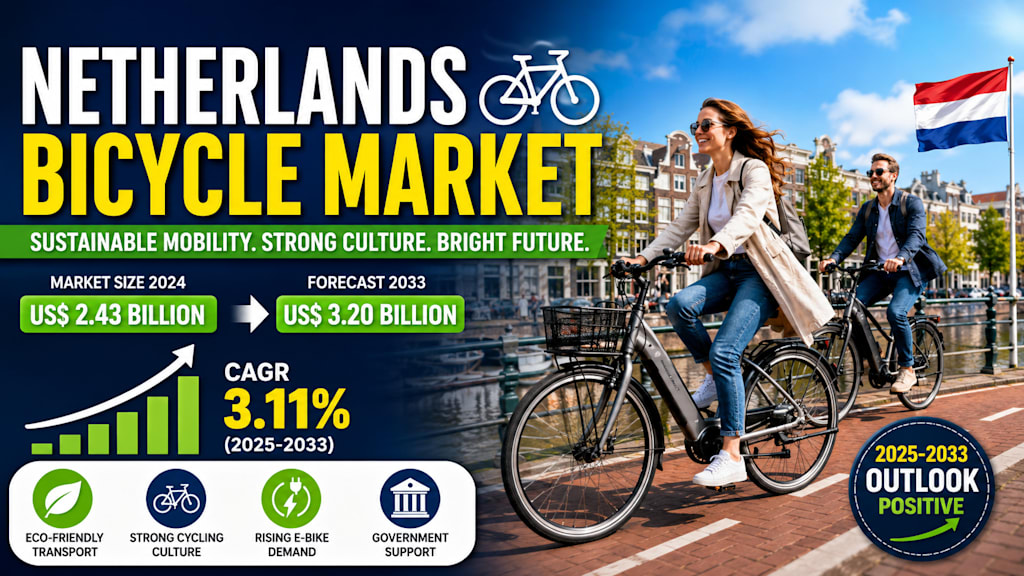
According to Renub Research, the Netherlands Bicycle Market is expected to grow from US$ 2.43 Billion in 2024 to US$ 3.20 Billion by 2033, expanding at a CAGR of 3.11% between 2025 and 2033. The growth is being supported by increasing environmental awareness, government initiatives promoting cycling infrastructure, technological advancements in bicycles, and the rapidly expanding e-bike segment.
As nations worldwide look for sustainable alternatives to traditional transportation, the Dutch bicycle ecosystem offers a successful model where cycling is not merely a transport option but a way of life.
Cycling: A Fundamental Part of Dutch Society
Unlike many countries where bicycles are primarily recreational tools, cycling in the Netherlands is integrated into daily routines. Millions of Dutch residents use bicycles every day to commute to work, attend school, shop for groceries, and access public transportation.
The country's extensive network of dedicated cycling lanes, secure parking facilities, and cyclist-friendly urban planning has created an environment where bicycles are often more practical than cars for short and medium-distance travel.
This unique transportation culture significantly reduces road congestion, lowers greenhouse gas emissions, and contributes to healthier lifestyles among residents. The widespread acceptance of bicycles across all age groups ensures a stable foundation for future market growth.
Market Forecast Highlights
The Dutch bicycle industry is entering a new phase of growth driven by innovation and sustainability.
Market Size 2024: US$ 2.43 Billion
Forecast Market Size 2033: US$ 3.20 Billion
Forecast Period: 2025–2033
Expected CAGR: 3.11%
The market's steady expansion reflects both replacement demand and increasing adoption of advanced bicycle categories, particularly electric bicycles.
Strong Cycling Culture Continues to Support Market Growth
One of the most significant drivers of the Netherlands bicycle market is the country's deeply rooted cycling culture.
With more than 22 million bicycles serving a population of approximately 17 million residents, bicycles outnumber people in the Netherlands. Government authorities continue investing heavily in cycling infrastructure, ensuring that cycling remains safe, convenient, and accessible.
New policy measures, tax incentives, and mobility programs introduced in recent years further encourage bicycle ownership and usage. Dedicated cycling highways, improved parking facilities, and better integration with public transportation systems continue to strengthen bicycle adoption.
These initiatives help maintain strong demand across multiple bicycle categories, including traditional city bikes, hybrid bicycles, cargo bikes, and electric bicycles.
E-Bikes Become the Fastest-Growing Segment
The emergence of electric bicycles has transformed the Dutch bicycle market.
E-bikes are increasingly preferred by commuters seeking efficient transportation over longer distances while reducing physical exertion. Seniors are also embracing e-bikes as they enable continued mobility and independence.
Modern e-bikes offer several advantages:
Enhanced battery performance
Longer travel ranges
Lightweight frames
Smartphone connectivity
GPS tracking
Smart security systems
As urban areas focus on reducing vehicle emissions and traffic congestion, e-bikes are becoming a practical alternative to cars.
The expansion of commercial e-bike applications is also contributing to market growth. Delivery personnel, healthcare workers, and urban service providers increasingly rely on electric bicycles for efficient transportation.
Growing consumer confidence in battery technology and improvements in charging infrastructure are expected to support sustained demand throughout the forecast period.
Sustainability Trends Fuel Bicycle Adoption
Environmental consciousness continues to influence consumer behavior across the Netherlands.
As climate change concerns intensify, many individuals are actively seeking sustainable transportation options. Bicycles offer a practical solution by producing zero direct emissions while requiring significantly fewer resources than motor vehicles.
Government climate objectives and carbon reduction targets align perfectly with increased bicycle usage. As a result, both public and private sectors continue encouraging cycling through awareness campaigns, infrastructure investments, and financial incentives.
At the same time, consumers increasingly recognize cycling as an effective method of incorporating physical activity into their daily routines. The combination of environmental and health benefits creates a powerful demand driver that is likely to remain relevant for years to come.
Hybrid Bicycles Gain Popularity Among Commuters
Hybrid bicycles occupy an important position within the Dutch bicycle market.
Combining the speed and efficiency of road bicycles with the durability and comfort of mountain bikes, hybrid bicycles offer versatility that appeals to a broad range of users.
Professionals, students, and recreational riders frequently choose hybrid bicycles because they perform well across multiple terrains and weather conditions.
The segment benefits from:
Comfortable riding positions
Low maintenance requirements
Multi-purpose usability
Cost-effective ownership
As urban and suburban commuting patterns evolve, hybrid bicycles are expected to maintain strong demand.
Online Bicycle Sales Continue Expanding
The rise of e-commerce has significantly impacted bicycle retailing across the Netherlands.
Consumers increasingly research bicycle models online before making purchasing decisions. Digital platforms provide access to detailed product specifications, customer reviews, price comparisons, and financing options.
Online channels are particularly successful in selling:
E-bikes
Bicycle accessories
Replacement parts
Mid-range bicycle models
Convenient home delivery services and flexible return policies further encourage online purchases.
Although physical bicycle stores continue playing a critical role in customer service, repairs, and test rides, online retail channels are expected to capture an increasing share of market revenues throughout the forecast period.
Market Challenges Remain
Despite favorable growth prospects, the Netherlands bicycle market faces several challenges.
Market Saturation
The Netherlands already has one of the world's highest bicycle ownership rates. Since bicycle ownership is nearly universal in many regions, opportunities for first-time purchases are limited.
Manufacturers must therefore focus on innovation, upgrades, premium features, and replacement demand to stimulate future sales.
Rising Costs of Premium Models
Advanced bicycles, particularly e-bikes, often come with higher price tags due to sophisticated batteries, smart technologies, and premium materials.
Inflationary pressures and supply chain disruptions have also increased production costs. While affluent consumers may absorb these costs, affordability remains a concern for some middle-income households.
Manufacturers and retailers must balance innovation with cost efficiency to maintain broader market accessibility.
Amsterdam: The Global Capital of Cycling
Amsterdam remains the centerpiece of the Dutch bicycle ecosystem.
The city is internationally recognized for its cycling-friendly infrastructure and high bicycle usage rates. Extensive bike lanes, secure parking facilities, and integrated transportation planning encourage residents and tourists alike to choose bicycles as their preferred mode of transport.
The growing popularity of e-bikes and shared mobility solutions continues to strengthen Amsterdam's position as a global leader in sustainable urban transportation.
While bicycle congestion and theft remain ongoing concerns, the city's commitment to cycling infrastructure ensures continued market growth.
Eindhoven Emerges as a Smart Cycling Hub
Eindhoven has developed a reputation as one of Europe's leading innovation centers.
The city's focus on technology and smart mobility has created opportunities for advanced bicycle solutions. Connected bicycles, intelligent navigation systems, and smart e-bike technologies are gaining traction among Eindhoven's technology-savvy population.
Supportive local government policies and investments in sustainable transportation further reinforce the city's role as an innovation hub for the bicycle industry.
Almere Shows Strong Growth Potential
As one of the Netherlands' newest planned cities, Almere has been designed with cycling at its core.
Wide roads, modern infrastructure, and environmentally focused urban planning encourage bicycle usage throughout the city.
Longer commuting distances within Almere make e-bikes particularly attractive. The city's growing population of young professionals and families continues to generate steady demand across various bicycle categories.
Competitive Landscape
Competition within the Netherlands bicycle market remains intense. Manufacturers are investing heavily in innovation, sustainability, digital connectivity, and premium customer experiences to differentiate themselves.
Major market participants continue expanding product portfolios while strengthening their presence across both online and offline distribution channels.
Key companies operating in the Netherlands bicycle market include:
Accell Group NV
Trek Bicycle Corporation
Pon Holdings BV
Giant Manufacturing Co. Ltd
Bulls Bikes
Pedego Inc.
Benno Bikes LLC
Hero Cycles Limited
Ribble Cycles
Riese & Müller GmbH
10 Recent Developments from Leading Bicycle Companies
1. Accell Group NV
Accell continues expanding its electric bicycle portfolio while investing in connected mobility technologies and digital retail experiences.
2. Trek Bicycle Corporation
Trek has strengthened its sustainability initiatives by increasing the use of environmentally responsible materials and improving supply-chain efficiency.
3. Pon Holdings BV
Pon has expanded investments in premium cycling brands and mobility solutions to support long-term growth across European markets.
4. Giant Manufacturing Co. Ltd
Giant continues introducing lightweight frame technologies and enhanced battery systems for next-generation e-bikes.
5. Bulls Bikes
Bulls has launched new performance-oriented electric bicycle models targeting urban commuters and recreational cyclists.
6. Pedego Inc.
Pedego has expanded dealer partnerships and introduced additional customization options across its electric bicycle lineup.
7. Benno Bikes LLC
Benno continues promoting utility-focused e-bikes designed for cargo transportation and family mobility applications.
8. Hero Cycles Limited
Hero Cycles has accelerated global expansion efforts while investing in advanced manufacturing technologies and premium product segments.
9. Ribble Cycles
Ribble has enhanced its direct-to-consumer digital sales strategy and introduced new lightweight bicycle models.
10. Riese & Müller GmbH
Riese & Müller continues expanding premium e-bike offerings with improved smart connectivity, range optimization, and cargo-bike innovations.
Market Segmentation
By Type
Road Bicycle
Hybrid Bicycle
All Terrain Bicycle
E-Bicycle
Others
By Distribution Channel
Online Stores
Offline Stores
By Major Cities
Amsterdam
Rotterdam
The Hague
Utrecht
Eindhoven
Groningen
Tilburg
Almere
Breda
Nijmegen
Final Thoughts
The Netherlands bicycle market represents one of the most mature and successful cycling ecosystems in the world. Supported by a deeply embedded cycling culture, progressive government policies, and increasing environmental awareness, the market is well-positioned for sustainable growth through 2033.
While market saturation and premium pricing present challenges, innovation in electric bicycles, smart mobility technologies, and digital retailing continues to create new opportunities for manufacturers and retailers.
As cities worldwide seek cleaner, healthier, and more efficient transportation solutions, the Netherlands remains a global model for bicycle-driven mobility. With the market expected to reach US$ 3.2 billion by 2033, the future of cycling in the Netherlands appears stronger than ever.
About the Creator
Enjoyed the story? Support the Creator.
Subscribe for free to receive all their stories in your feed.
Comments
There are no comments for this story
Be the first to respond and start the conversation.