
Middle East Halal Food Market Set for Massive Growth by 2033 as Health Awareness and E-Commerce Fuel Demand
Rising Demand for Ethical, Healthy, and Certified Food Products is Transforming the Regional Halal Industry

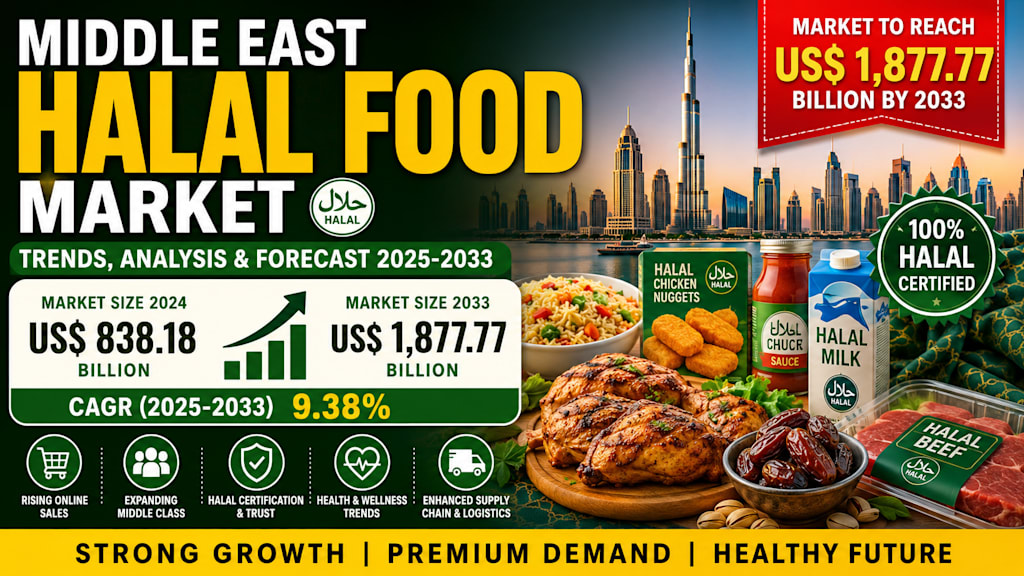
The Middle East halal food market is entering a powerful growth phase as changing consumer lifestyles, rising disposable incomes, digital food retailing, and growing health consciousness continue to reshape food consumption patterns across the region. According to the latest industry findings from Renub Research, the Middle East halal food market is projected to grow from US$ 838.18 billion in 2024 to an impressive US$ 1,877.77 billion by 2033, expanding at a CAGR of 9.38% during 2025–2033.
The halal food sector has evolved far beyond religious compliance. Today, halal-certified food products are increasingly associated with quality assurance, ethical sourcing, hygiene, and food safety standards. This shift is helping halal products gain popularity not only among Muslim consumers but also among non-Muslim populations seeking cleaner and healthier food choices.
What is Driving the Middle East Halal Food Boom?
Halal food refers to food and beverages prepared according to Islamic dietary laws. The Arabic term “halal” means “permissible,” and halal certification ensures products comply with strict preparation, sourcing, and handling standards.
The Middle East region, with its large Muslim population and strong cultural connection to halal dietary practices, naturally represents one of the largest markets for halal-certified products globally. However, the sector’s recent acceleration is being driven by broader economic and lifestyle factors.
Urbanization, higher household incomes, and busy work schedules are pushing consumers toward convenient halal packaged foods, frozen meals, ready-to-eat products, and online food delivery services. Consumers are also demanding better transparency in food sourcing, which has increased the importance of halal certification across the supply chain.
Governments in the Gulf Cooperation Council (GCC) countries are further supporting market expansion through investments in food security, logistics infrastructure, and halal certification frameworks.
E-Commerce is Revolutionizing Halal Food Accessibility
One of the strongest growth engines for the market is the rapid expansion of halal food e-commerce platforms. Online grocery applications and specialized halal marketplaces are making certified products more accessible than ever before.
Consumers can now order halal-certified meats, dairy products, packaged snacks, cereals, frozen foods, and beverages directly to their homes. This convenience factor has become especially important for urban consumers with fast-paced lifestyles.
The digitalization of food retail has also enabled smaller halal brands to expand beyond local markets and reach customers across the Middle East. Online retailing improves product visibility, increases consumer trust through certification transparency, and allows businesses to introduce innovative halal offerings quickly.
The growth of mobile commerce and digital payment systems is expected to further accelerate online halal food purchases over the coming decade.
Health and Wellness Trends Strengthen Market Demand
Health-conscious consumers are increasingly turning toward halal food because it is perceived as cleaner, safer, and more ethically produced. Halal food standards prohibit harmful ingredients such as alcohol and require strict hygiene practices during food preparation and processing.
Many consumers associate halal food with:
Better hygiene standards
Ethical animal treatment
Reduced artificial additives
Higher quality control
Greater food traceability
These factors are making halal-certified products attractive to a wider audience beyond traditional Muslim consumers. The growing popularity of wellness-focused diets and clean-label foods is expected to strengthen halal food adoption across supermarkets, specialty stores, and restaurants.
Expanding Middle-Class Population Supporting Premium Food Sales
Economic diversification and strong infrastructure development in countries such as Saudi Arabia, the United Arab Emirates, and Qatar have created a rapidly growing middle-class consumer base.
As disposable incomes rise, consumers are increasingly willing to spend on premium halal-certified food products that offer better quality, safety, and nutritional value. Premium meat products, organic halal foods, specialty beverages, and imported halal snacks are witnessing strong demand growth across urban centers.
This middle-class expansion is also changing consumer expectations. Buyers now seek:
Premium packaging
Organic and natural ingredients
Sustainable sourcing
Convenient meal solutions
International halal cuisine options
Food manufacturers are responding by expanding product portfolios and introducing innovative halal food categories tailored to evolving consumer tastes.
Saudi Arabia Continues to Lead Regional Market Expansion
Saudi Arabia remains the largest and one of the most influential halal food markets in the region. As the birthplace of Islam and home to millions of religious tourists annually, demand for halal-certified food remains deeply integrated into daily life.
Saudi Arabia’s Vision 2030 initiative is encouraging economic diversification and private-sector investment, which is benefiting the food and beverage industry significantly. Investments in hospitality, tourism, food processing, and logistics are strengthening halal food supply chains nationwide.
The country’s expanding hospitality sector, including hotels, restaurants, and catering services, is also driving demand for high-quality halal-certified products.
UAE Emerging as a Global Halal Food Innovation Hub
United Arab Emirates has positioned itself as a global center for halal food trade, innovation, and tourism. The country’s strategic geographic location and advanced logistics infrastructure make it an ideal distribution hub for halal products across international markets.
The UAE market is characterized by:
Strong import and export activity
Diverse multicultural consumer base
Rapid growth of online food retail
Government-backed halal certification standards
High demand for premium imported halal foods
Dubai and Abu Dhabi, in particular, have become major destinations for halal food exhibitions, trade events, and international partnerships.
Qatar Strengthening Halal Certification Ecosystem
Qatar is witnessing steady expansion in halal food consumption due to its strong regulatory support and growing focus on Islamic lifestyle industries.
Government initiatives such as halal accreditation systems and stricter import regulations are helping strengthen consumer confidence. Qatar’s investments in infrastructure, food security, and tourism are further enhancing the country’s role in the broader halal economy.
The country’s hospitality sector, driven by global tourism and major international events, is also contributing to rising demand for halal-certified catering and premium food services.
Challenges Still Exist Across the Halal Supply Chain
Despite the strong growth outlook, the market still faces several structural and operational challenges.
Limited Consumer Education
A major issue is the lack of awareness among some consumers regarding the broader benefits of halal food beyond religious practices.
Many non-Muslim consumers remain unfamiliar with:
Halal food preparation standards
Ethical sourcing principles
Food safety advantages
Certification requirements
Industry players are increasingly investing in educational campaigns and branding strategies to improve public understanding and expand customer reach.
Technological and Infrastructure Gaps
Several countries in the region continue to face supply chain inefficiencies and technological limitations.
Key challenges include:
Limited traceability systems
Inconsistent certification practices
Inadequate cold chain infrastructure
Food contamination concerns
Supply chain transparency issues
Industry experts believe investments in blockchain tracking, smart logistics, and modern food safety technologies will play a critical role in improving long-term market stability.
Product Segments Witnessing Strongest Growth
The Middle East halal food market covers a broad range of product categories including:
Meat, poultry, and seafood
Fruits and vegetables
Dairy products
Cereals and grains
Oils, fats, and waxes
Confectionery products
Ready-to-eat meals and beverages
Among these, meat and poultry continue to dominate overall revenue generation due to high regional consumption rates. However, processed and convenience halal foods are expected to experience the fastest future growth.
Distribution channels are also rapidly evolving. Hypermarkets and supermarkets remain dominant, but online stores are recording the fastest growth rates because of changing shopping behavior and improved delivery infrastructure.
10 Recent Developments from Major Halal Food Companies
1. Nestlé S.A.
Expanded its halal-certified product portfolio across the Middle East, focusing on dairy nutrition and convenience foods tailored to regional preferences.
2. BRF S.A.
Strengthened halal poultry exports to GCC countries while investing in advanced halal processing facilities.
3. JBS S.A.
Enhanced global halal meat operations through strategic partnerships aimed at expanding Middle Eastern distribution channels.
4. Cargill Inc.
Increased investments in sustainable halal food supply chains and food safety systems across regional markets.
5. Carrefour S.A.
Expanded halal-certified private-label food offerings in supermarkets across GCC countries.
6. Kawan Food Berhad
Introduced frozen halal ready-to-eat food products targeting urban consumers seeking convenience.
7. Al Islami Foods
Launched new premium halal frozen foods and strengthened regional retail partnerships.
8. American Halal Company Inc.
Expanded international halal packaged food distribution through digital commerce channels.
9. American Foods Group LLC
Focused on increasing halal-certified beef exports to Middle Eastern buyers.
10. Crescent Foods Inc.
Enhanced halal poultry production capacity to meet growing regional demand for certified protein products.
Future Outlook: Halal Food Industry Entering a New Era
The future of the Middle East halal food market looks exceptionally promising as halal certification increasingly becomes associated with quality, transparency, sustainability, and wellness.
Several long-term trends are expected to shape future market growth:
Rapid expansion of halal e-commerce
Rising demand for organic halal foods
Growth in halal tourism and hospitality
Expansion of halal-certified packaged snacks
Increasing investments in food traceability technology
Stronger government-backed certification systems
Greater global trade opportunities
As consumers continue prioritizing healthier and ethically produced food choices, halal food manufacturers are expected to innovate aggressively across packaging, product development, and digital retailing.
Final Thoughts
The Middle East halal food market is no longer driven solely by religious demand. It has evolved into a dynamic global industry centered on quality assurance, ethical production, health consciousness, and modern consumer convenience.
With the market projected to surpass US$ 1.87 trillion by 2033, companies operating in this space are preparing for significant opportunities across retail, foodservice, hospitality, and e-commerce sectors. Governments, retailers, and food manufacturers are all investing heavily to strengthen halal supply chains and improve certification transparency.
As technology advances and consumer awareness grows, the halal food industry is expected to become one of the most influential segments of the global food economy over the next decade.
About the Creator
Enjoyed the story? Support the Creator.
Subscribe for free to receive all their stories in your feed.
Comments
There are no comments for this story
Be the first to respond and start the conversation.