
Mexico Pharmaceuticals Market Size, Share & Growth 2034
The Mexico pharmaceuticals market size reached USD 21.1 Billion in 2025. Looking forward, IMARC Group expects the market to reach USD 38.9 Billion by 2034, exhibiting a growth rate (CAGR) of 6.69% during 2026-2034.

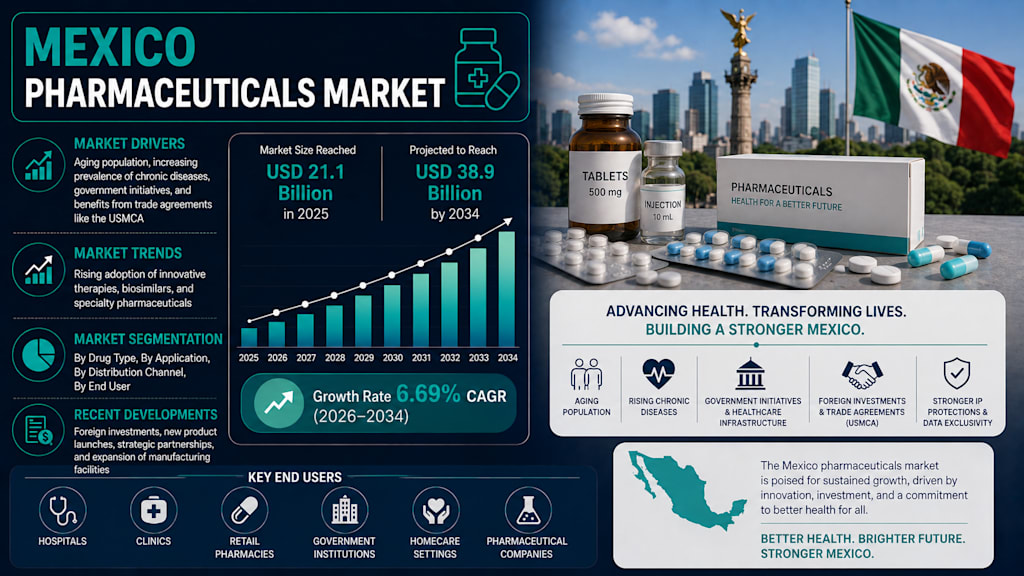
Mexico Pharmaceuticals Market Size, Growth, and Forecast (2026–2034)
Healthcare systems around the world are undergoing rapid transformation as populations age, medical technologies advance, and demand for better treatment options continues to rise. Pharmaceuticals play a central role in modern healthcare, helping prevent, manage, and treat a wide range of medical conditions. In Mexico, increasing healthcare awareness and ongoing investments in healthcare infrastructure are creating new opportunities for growth across the pharmaceutical industry.
In 2026, the pharmaceutical sector remains an essential component of Mexico's healthcare ecosystem. The country is witnessing rising demand for medicines, improved healthcare access, and greater focus on disease prevention and long-term patient care. These developments are helping shape the future of healthcare delivery while supporting innovation across the pharmaceutical value chain.
The Mexico pharmaceuticals market reached USD 21.1 Billion in 2025 and is projected to grow to USD 38.9 Billion by 2034, exhibiting a compound annual growth rate (CAGR) of 6.69% during 2026–2034. This growth reflects increasing healthcare needs, expanding treatment availability, and ongoing investment in pharmaceutical development.
Request a Sample Report with Latest 2026 Data & Forecasts:
Key Trends Shaping the Mexico Pharmaceuticals Market
Several important trends are influencing market development:
• Growing demand for treatments targeting chronic diseases
• Increasing investment in healthcare infrastructure
• Rising adoption of advanced pharmaceutical technologies
• Expansion of healthcare access and patient awareness
• Greater focus on research, innovation, and drug development
These trends are helping modernize healthcare delivery and improve patient outcomes.
Chronic Diseases Are Driving Pharmaceutical Demand
The increasing prevalence of chronic diseases has become one of the most important factors shaping healthcare systems globally.
Conditions such as diabetes, hypertension, and cardiovascular diseases often require ongoing treatment and medication management. As awareness and diagnosis rates improve, more patients gain access to therapies that help manage long-term health conditions.
This shift is encouraging healthcare providers, pharmaceutical manufacturers, and policymakers to focus on expanding access to essential medicines and treatment options.
As healthcare needs continue evolving throughout 2026–2034, chronic disease management is expected to remain a significant driver of pharmaceutical demand.
Government Healthcare Initiatives Support Growth
Government efforts to strengthen healthcare infrastructure are also contributing to market expansion.
Investments in hospitals, clinics, healthcare programs, and medical services help improve access to treatment and medicines. Enhanced healthcare infrastructure enables more individuals to receive timely diagnoses and appropriate care.
Healthcare modernization initiatives are helping create stronger healthcare systems capable of supporting growing patient populations.
As public and private investments continue, healthcare accessibility is expected to improve further over the forecast period.
Innovation Is Transforming Modern Medicine
Technological innovation remains one of the most important forces shaping the pharmaceutical industry.
Advances in biotechnology, data analytics, artificial intelligence, and precision medicine are helping researchers develop more targeted and effective treatment options. These innovations are improving how diseases are diagnosed, monitored, and treated.
Digital technologies are also enhancing pharmaceutical manufacturing, supply chain management, and patient engagement.
As research capabilities continue advancing, pharmaceutical companies are expected to introduce new therapies and healthcare solutions that address evolving patient needs.
International Trade and Investment Are Creating Opportunities
Mexico's position within the global pharmaceutical ecosystem continues to strengthen.
International trade agreements and foreign investment initiatives have helped create favorable conditions for pharmaceutical development and manufacturing. These frameworks support collaboration between global and local industry participants while encouraging innovation and technology transfer.
Foreign investment contributes to the expansion of research capabilities, manufacturing infrastructure, and healthcare partnerships.
These developments are helping position Mexico as an increasingly important participant in the global healthcare industry.
Investment Opportunities in the Market
The expanding pharmaceutical sector presents numerous opportunities for investors and healthcare organizations.
Key areas attracting investment include:
• Pharmaceutical research and development
• Biotechnology innovations
• Specialty and chronic disease therapies
• Healthcare technology platforms
• Pharmaceutical manufacturing and distribution
Companies that focus on innovation, accessibility, and patient-centered solutions are likely to benefit from long-term market growth.
Strategic partnerships and healthcare modernization initiatives are also creating new opportunities throughout the industry.
Challenges Facing the Industry
Despite positive growth prospects, several challenges remain.
Rising healthcare costs, regulatory requirements, and supply chain complexities can affect industry operations. Pharmaceutical companies must also balance innovation with affordability to ensure broader patient access.
Maintaining product quality, safety, and compliance remains essential within an increasingly competitive marketplace.
In addition, evolving healthcare needs require continuous investment in research and development.
Addressing these challenges will be critical for sustainable growth.
Future Outlook (2026–2034)
Looking ahead, the Mexico pharmaceuticals market is expected to continue expanding as healthcare systems evolve and patient needs increase.
Between 2026 and 2034, demand for innovative medicines, chronic disease treatments, biotechnology solutions, and digital healthcare services is likely to rise significantly. Healthcare providers, policymakers, and industry participants will continue investing in solutions that improve patient outcomes and healthcare accessibility.
Future developments may include personalized medicine, AI-assisted drug discovery, advanced biologics, and broader integration of digital health technologies.
These innovations are expected to play a significant role in shaping the future of healthcare delivery.
Conclusion
The Mexico pharmaceuticals market is entering a period of sustained growth driven by changing healthcare needs, increasing healthcare access, technological innovation, and ongoing investment. The growing focus on chronic disease management, healthcare modernization, and pharmaceutical research is creating opportunities across the healthcare ecosystem.
Although challenges such as regulatory complexity and healthcare affordability remain, continued innovation and investment are expected to support long-term market expansion. As healthcare systems continue evolving throughout 2026–2034, the pharmaceutical industry will remain a critical pillar of Mexico's healthcare future.
About the Creator
Jackson Watson
I'm a market research analyst at Imarc group company delivering data-driven insights, industry analysis, and customized research solutions. We support businesses with market sizing, competitive analysis, and strategic decision-making.
Enjoyed the story? Support the Creator.
Subscribe for free to receive all their stories in your feed.
Comments
There are no comments for this story
Be the first to respond and start the conversation.