
Mexico LED Lights Market Size, Share | Forecast 2034
The Mexico LED lights market size was valued at USD 1,466.9 Million in 2025. The market is projected to reach USD 2,904.4 Million by 2034, exhibiting a CAGR of 7.89% from 2026-2034.

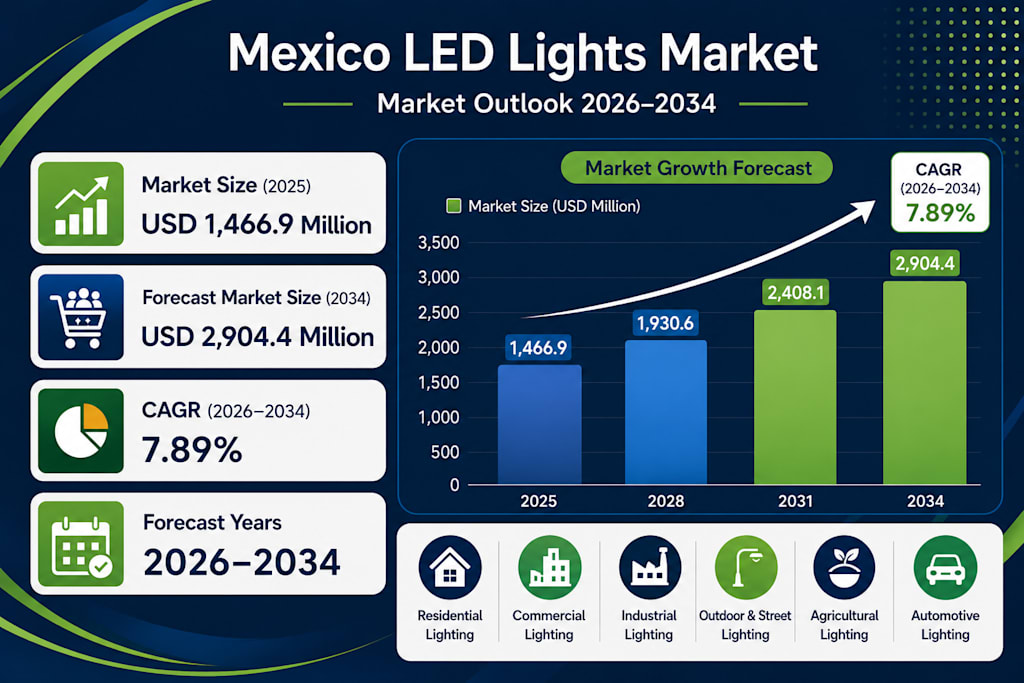
Mexico LED Lights Market Size, Growth, and Forecast (2026–2034)
Lighting has undergone a remarkable transformation over the past two decades. What was once a simple utility has evolved into a critical component of energy efficiency, sustainability, and smart building technology. Among the innovations driving this change, light-emitting diode (LED) technology has emerged as one of the most significant advancements in modern lighting.
In 2026, LED lighting continues to gain widespread adoption across Mexico as consumers, businesses, and government organizations seek solutions that reduce energy consumption, lower operating costs, and support environmental goals. From homes and offices to factories and public infrastructure, LED technology is becoming the preferred lighting choice across multiple applications.
The Mexico LED lights market was valued at USD 1,466.9 Million in 2025 and is projected to reach USD 2,904.4 Million by 2034, exhibiting a compound annual growth rate (CAGR) of 7.89% during 2026–2034. This strong growth reflects increasing awareness of energy efficiency benefits and the expanding use of advanced lighting technologies.
Request a Sample Report with Latest 2026 Data & Forecasts:
Key Trends Shaping the Mexico LED Lights Market
Several important trends are influencing market growth:
• Increasing demand for energy-efficient lighting
• Growing adoption of smart lighting systems
• Expansion of sustainable building projects
• Rising investment in public infrastructure modernization
• Greater awareness of environmental sustainability
These trends are accelerating the transition toward advanced lighting technologies throughout the country.
Energy Efficiency Remains a Major Growth Driver
One of the primary reasons for the growing popularity of LED lighting is its superior energy efficiency.
LED systems consume significantly less electricity than many conventional lighting technologies while delivering comparable or improved brightness levels. This efficiency helps reduce energy costs and supports broader efforts to conserve resources.
As electricity consumption becomes an increasingly important concern for both households and businesses, energy-efficient lighting solutions are expected to remain highly attractive throughout 2026–2034.
Smart Lighting Is Transforming User Experiences
Technology is changing how lighting systems are designed and managed.
Smart lighting solutions allow users to control brightness, schedules, and energy usage through mobile applications, sensors, and connected devices. These systems improve convenience while helping optimize energy consumption.
Commercial buildings increasingly utilize smart lighting to improve operational efficiency, while homeowners appreciate the flexibility and customization these systems provide.
As smart home and smart building technologies continue expanding, demand for intelligent lighting solutions is expected to grow significantly.
Sustainability Goals Are Influencing Adoption
Environmental responsibility has become a major consideration for consumers, businesses, and governments.
LED lighting supports sustainability objectives by reducing energy consumption and lowering greenhouse gas emissions associated with electricity generation. Additionally, LEDs generally have longer operational lifespans, which can help reduce waste generated by frequent bulb replacements.
As sustainability initiatives become more widespread, LED lighting is increasingly viewed as an important component of environmentally responsible infrastructure and building design.
Infrastructure Modernization Creates New Opportunities
Mexico continues to invest in infrastructure improvements designed to enhance economic development and quality of life.
Public lighting projects, transportation facilities, commercial developments, and urban renewal initiatives often incorporate modern LED technologies due to their efficiency and durability.
Street lighting upgrades are particularly important because LED systems can significantly reduce municipal energy costs while improving visibility and public safety.
These projects are creating new opportunities for lighting manufacturers, installers, and technology providers.
Commercial and Industrial Applications Are Expanding
Businesses and industrial operators are increasingly adopting LED systems to improve operational efficiency.
Warehouses, manufacturing facilities, office buildings, and retail locations often require extensive lighting systems that operate for long periods. By switching to LED technology, organizations can reduce energy expenses and maintenance requirements.
Enhanced lighting quality can also improve workplace productivity and customer experiences.
As companies continue seeking cost-effective solutions, LED adoption is expected to remain strong across commercial and industrial environments.
Investment Opportunities in the Industry
The growing LED lighting sector presents attractive opportunities for investors and businesses.
Key areas attracting investment include:
• Smart lighting technologies
• Energy-efficient building solutions
• Commercial and industrial lighting systems
• Public infrastructure modernization projects
• Connected lighting and automation platforms
Companies that focus on innovation, sustainability, and digital integration are well positioned to benefit from continued market expansion.
Partnerships between technology firms, construction companies, and energy service providers are also creating new growth opportunities.
Challenges Facing the Market
Despite positive growth prospects, several challenges remain.
Initial installation costs can be higher than traditional lighting alternatives, which may discourage some buyers despite long-term savings potential.
Market participants also face competition from a growing number of manufacturers and product suppliers. Additionally, educating consumers about lifecycle cost savings and energy efficiency benefits remains important.
Supply chain disruptions and fluctuating material costs can also affect pricing and product availability.
Addressing these challenges will be essential for maintaining steady growth.
Future Outlook (2026–2034)
Looking ahead, the Mexico LED lights market is expected to continue expanding as energy efficiency, sustainability, and technological innovation remain key priorities.
Between 2026 and 2034, demand for smart lighting systems, connected building technologies, and environmentally responsible solutions is likely to increase. Consumers and businesses will continue seeking products that deliver long-term value, efficiency, and convenience.
Future developments may include AI-powered lighting management systems, advanced sensors, greater integration with smart cities, and enhanced energy monitoring capabilities.
These innovations are expected to further strengthen the role of LED technology in modern infrastructure and everyday life.
Conclusion
The Mexico LED lights market is experiencing strong growth as energy efficiency, sustainability, and digital innovation reshape the lighting industry. Supported by rising demand from residential, commercial, industrial, and public sector applications, LED technology is becoming a cornerstone of modern infrastructure development.
Although challenges such as installation costs and market competition remain, ongoing technological advancements and growing environmental awareness are expected to support long-term expansion. As Mexico continues its transition toward smarter and more sustainable solutions throughout 2026–2034, LED lighting will remain a key driver of energy-efficient development.
About the Creator
Jackson Watson
I'm a market research analyst at Imarc group company delivering data-driven insights, industry analysis, and customized research solutions. We support businesses with market sizing, competitive analysis, and strategic decision-making.
Enjoyed the story? Support the Creator.
Subscribe for free to receive all their stories in your feed.
Comments
There are no comments for this story
Be the first to respond and start the conversation.