
Mexico Health Insurance Market Size Growth Share Industry Demand & Forecast 2034
Mexico Health Insurance Market Size Growth & Industry Trends Forecast to 2034

Mexico Health Insurance Market Size, Share, and Forecast (2026–2034)
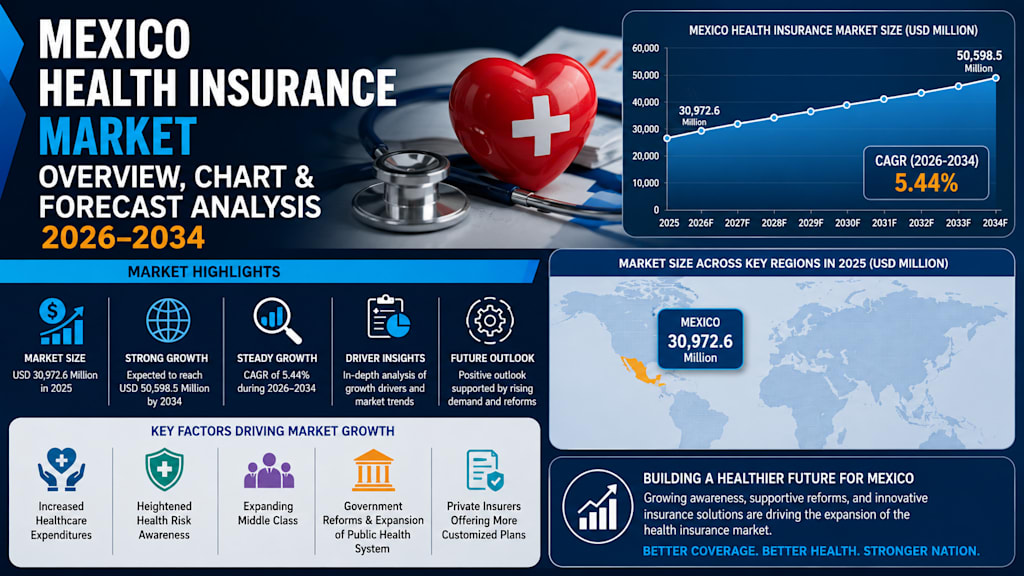
The Mexico health insurance market is witnessing steady development as healthcare needs continue to evolve across the country. According to the market reached a value of USD 30,972.6 million in 2025 and is projected to reach USD 50,598.5 million by 2034, expanding at a CAGR of 5.44% during 2026–2034.
The growth of the market is supported by rising healthcare expenditures, increasing awareness of health-related risks, and the expansion of Mexico's middle-income population. At the same time, healthcare providers and insurance companies are introducing more flexible coverage options to meet changing consumer requirements. As healthcare costs continue to increase, individuals and organizations are paying greater attention to financial protection through health insurance products.
Factors Driving Growth in the Mexico Health Insurance Market
Several factors are contributing to the expansion of health insurance adoption across Mexico. One of the most important drivers is the increasing cost of medical treatments and healthcare services. As expenses associated with hospitalization, diagnostics, and specialized care continue to rise, many households are seeking insurance coverage to reduce financial risks.
Another important factor is the growing awareness of preventive healthcare. Consumers are becoming more informed about the importance of regular medical checkups, early disease detection, and access to quality healthcare services. This shift in healthcare behavior is encouraging more people to consider insurance policies that support long-term health management.
Economic growth and the gradual expansion of the middle-class population are also supporting market development. As disposable incomes improve, more individuals are able to purchase private health insurance plans that offer broader healthcare access and additional benefits.
Expanding Private Healthcare Services Increasing Demand for Health Insurance
The growth of private healthcare facilities in Mexico is creating new opportunities for health insurance providers. Private hospitals, specialty clinics, diagnostic centers, and outpatient facilities continue to expand their services in major urban areas and emerging regional markets.
Many consumers choose private healthcare providers because of shorter waiting times, access to specialized medical professionals, and modern healthcare infrastructure. However, private healthcare services often involve higher treatment costs, making health insurance an important tool for managing medical expenses.
As private healthcare networks expand, insurers are developing partnerships with hospitals and healthcare providers to offer broader coverage options. These collaborations help policyholders access medical services while improving the value proposition of insurance plans.
The increasing availability of specialized healthcare services is expected to support insurance enrollment over the coming years, particularly among urban populations seeking greater healthcare flexibility.
Employer-Sponsored Health Insurance Trends in Mexico
Employer-sponsored health insurance continues to play an important role in the Mexican health insurance market. Many organizations view health benefits as an effective way to attract and retain skilled employees while supporting workforce well-being.
Large corporations have traditionally offered health insurance coverage as part of employee compensation packages. However, an increasing number of medium-sized businesses are also exploring group insurance plans to remain competitive in the labor market.
Organizations are recognizing that access to healthcare services can contribute to employee productivity and reduce disruptions associated with untreated health conditions. As a result, health insurance benefits are becoming a more common component of workplace benefit programs.
Insurance providers are responding by offering customized group plans that address the needs of businesses across different industries. Flexible policy structures and additional wellness services are becoming increasingly important in employer-sponsored insurance offerings.
Digital Health Platforms and InsurTech Innovations Reshaping the Industry
Digital transformation is influencing many aspects of the health insurance industry in Mexico. Insurance companies are investing in technology platforms that improve customer access, simplify policy management, and enhance claims processing.
Digital portals and mobile applications allow policyholders to review coverage information, submit claims, access healthcare networks, and communicate with service representatives more efficiently. These digital tools help improve customer convenience while reducing administrative processes.
Telemedicine services are also becoming more widely integrated into health insurance products. Virtual consultations enable patients to connect with healthcare professionals without requiring in-person visits for routine medical concerns.
In addition, InsurTech companies are introducing data-driven solutions that help insurers improve risk assessment, customer engagement, and operational efficiency. The growing use of digital technologies is expected to contribute to greater accessibility and service quality throughout the insurance sector.
Regulatory Developments Influencing the Mexico Health Insurance Market
Government policies and regulatory frameworks continue to influence the development of the health insurance industry. Regulatory authorities play an important role in maintaining transparency, protecting consumers, and ensuring financial stability within the insurance sector.
Healthcare reforms and efforts to strengthen healthcare access can affect the relationship between public and private insurance systems. Regulatory measures designed to improve service standards and consumer protection often encourage greater confidence among policyholders.
Insurance companies must also adapt to evolving compliance requirements related to reporting, financial management, and policy administration. While regulatory changes may create operational challenges, they can also contribute to a more structured and reliable insurance environment.
A stable regulatory framework is expected to remain important for supporting long-term growth and maintaining trust among consumers and industry participants.
Key Challenges in Health Insurance Coverage and Affordability
Despite positive market prospects, several challenges continue to affect health insurance adoption in Mexico. One of the most significant issues is affordability. For many households, insurance premiums remain a considerable expense, particularly among lower-income populations.
Limited awareness of insurance products can also affect market penetration. Some consumers may not fully understand available coverage options, policy benefits, or the long-term financial advantages of maintaining health insurance.
Regional disparities in healthcare infrastructure present another challenge. Access to healthcare facilities and specialized medical services can vary significantly between urban and rural areas, influencing the attractiveness and effectiveness of insurance coverage.
In addition, insurers must manage rising medical costs while maintaining affordable policy offerings. Balancing cost control with quality healthcare access remains an ongoing industry challenge.
Investment Prospects in Mexico's Health Insurance Industry
The Mexican health insurance market presents several opportunities for investment and business expansion. Growing healthcare demand, increasing digital adoption, and expanding private healthcare networks are creating favorable conditions for industry growth.
Insurance providers have opportunities to develop specialized products tailored to different consumer groups, including families, senior citizens, self-employed professionals, and small businesses. Customized insurance solutions can help address evolving healthcare requirements and improve market reach.
Technology investments also represent an important growth area. Digital claims processing, telehealth integration, and data analytics can improve operational efficiency while enhancing customer experiences.
As healthcare needs continue to evolve, companies that focus on innovation, accessibility, and customer-centered services may be well positioned to benefit from long-term market development.
Competitive Landscape and Major Market Participants
The Mexico health insurance market includes a mix of domestic and international insurance providers competing across individual and group insurance segments. Market participants focus on expanding coverage options, improving customer service, strengthening healthcare provider networks, and introducing digital solutions.
Competition is increasingly centered on product flexibility, healthcare accessibility, and technology-enabled services. Companies are also investing in customer education initiatives and strategic partnerships with healthcare providers to strengthen their market position.
As consumer expectations continue to change, insurers are expected to focus on service quality, operational efficiency, and personalized coverage solutions. These strategies are likely to influence the competitive environment and support continued market growth through 2034.
About the Creator
Kim Soo hyun
My name is Kim Soo hyun, and I am a research analyst at IMARC Group, specializing in market trends and data analysis to provide insights and support strategic decision-making.
Enjoyed the story? Support the Creator.
Subscribe for free to receive all their stories in your feed.
Comments
There are no comments for this story
Be the first to respond and start the conversation.